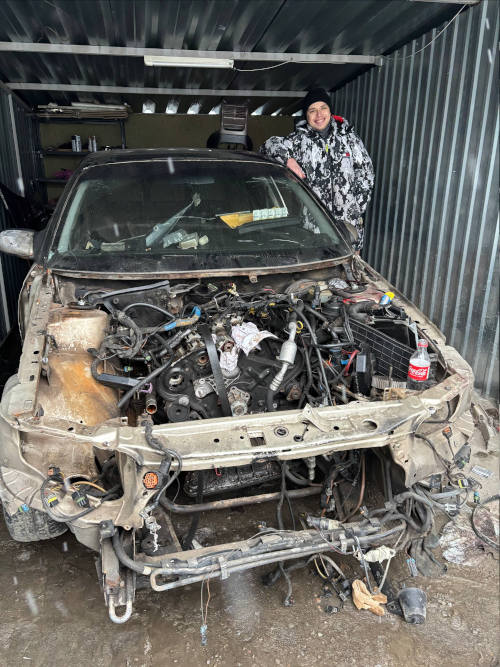
Acura RDX
Acura RDX engine swap compatibility overview
The Acura RDX is a compact luxury crossover SUV that has been sold in the United States since the 2007 model year. Across its production history, the model has used multiple engine families, transmission designs, and drivetrain configurations, including turbocharged inline-four engines, naturally aspirated V6 engines, front-wheel-drive layouts, and Acura's Super Handling All-Wheel Drive (SH-AWD) system. As a result, engine swap compatibility varies significantly depending on generation, drivetrain configuration, electronics architecture, and intended use.
At first glance, many engine swaps appear straightforward because an engine may physically fit inside the engine bay. In practice, however, physical fitment is only one part of the equation. A successful engine swap must also address transmission compatibility, ECU and immobilizer integration, CAN bus communication, emissions compliance, cooling requirements, drivetrain durability, and long-term serviceability. An engine that physically bolts into place may still create major issues if it cannot properly communicate with factory electronics or operate with the original transmission and AWD system.
This is particularly important on the Acura RDX because later generations became increasingly dependent on integrated electronic systems. Features such as drive-by-wire throttle control, advanced transmission management, stability control systems, emissions monitoring, and torque management can significantly affect swap feasibility. For many builds, the greatest challenge is not mounting the engine but making all vehicle systems work together reliably afterward.
This guide evaluates Acura RDX engine swap compatibility across all generations sold in the U.S. market. Later sections will examine factory engine configurations, realistic swap candidates, difficulty levels, drivetrain limitations, electronics integration, execution risks, emissions considerations, and practical recommendations for different project goals.
Entity summary
| Field | Summary |
|---|---|
| Vehicle | Acura RDX |
| Generations covered | First generation (2007–2012), second generation (2013–2018), third generation (2019–present) |
| Production years | 2007–present (U.S. market) |
| Body/platform type | Unibody compact luxury crossover SUV |
| Factory drivetrain layout | FWD and SH-AWD, depending on generation and trim |
| Engine orientation | Transverse front-engine layout |
| Main factory engine families | K-series turbocharged four-cylinder, J-series V6, later K20C turbocharged four-cylinder |
| Transmission types | Automatic transmissions only, varies by generation |
| Main swap difficulty range | Moderate to very high,h depending on engine family and generation |
| Primary compatibility bottleneck | Electronics integration, AWD integration, and transmission control |
| Best-suited swap category | OEM-family and same-generation replacement swaps |
| Highest-risk swap category | Cross-brand, custom-fabrication, or full drivetrain redesign swaps |
Quick verdict
| Category | Assessment |
|---|---|
| Easiest swap type | Same-generation factory engine replacement |
| Best OEM-style swap | Original engine family used by the specific generation |
| Best performance-oriented swap | Honda/Acura performance-oriented engine variant requiring moderate adaptation |
| Most difficult swap category | Cross-brand V8, custom AWD, or full drivetrain redesign projects |
| Biggest mechanical constraint | Transverse SUV packaging and AWD-related fitment limitations |
| Biggest electronic/ECU constraint | ECU, immobilizer, CAN bus, and module communication requirements |
| Biggest transmission constraint | Factory automatic transmission control and compatibility |
| Biggest emissions/legal risk | OBD readiness monitors and emissions compliance |
| Best recommendation | Stay within Honda/Acura engine families whenever possible |
For most owners and builders, the Acura RDX platform is best suited for factory-family swaps rather than highly customized engine conversions. Same-generation replacements and closely related Honda/Acura engine families generally provide the best balance of reliability, compatibility, and long-term serviceability. Performance-oriented swaps are possible, but complexity increases rapidly when drivetrain control systems, AWD integration, and emissions requirements are introduced. Cross-brand swaps may be mechanically achievable, but they are typically advanced fabrication projects rather than practical upgrades. Before evaluating specific engine candidates, it is important to understand what compatibility actually means on this platform.
What “compatible” actually means

Engine swap compatibility is not a simple yes-or-no question. An engine may be compatible in one area while creating major problems in another. Evaluating an Acura RDX swap requires examining multiple systems simultaneously rather than focusing only on whether the engine physically fits.
1. Mechanical compatibility
Mechanical compatibility refers to whether an engine can physically occupy the available space while maintaining proper clearances and serviceability. This includes engine mount locations, oil pan clearance, steering rack clearance, firewall clearance, subframe geometry, exhaust routing, accessory placement, intake packaging, and cooling component positioning.
The Acura RDX uses a transverse engine layout, which naturally favors other transverse Honda and Acura powertrains. Even when an engine belongs to the same manufacturer, differences in mounting points, accessory drives, turbocharger placement, oil pan design, or exhaust routing may require additional work. Physical fitment should therefore be viewed as only the starting point of compatibility analysis.
2. Electronic compatibility
Electronic compatibility is often the most difficult aspect of a modern Acura RDX engine swap. The engine control unit, immobilizer, body control systems, transmission controls, sensors, throttle system, and vehicle communication networks must work together correctly.
Earlier vehicles generally contain fewer networked modules and may be easier to adapt, although this still depends on the exact model year. Later RDX generations rely heavily on CAN bus communication between multiple control modules. If these systems cannot exchange expected data, problems such as warning lights, limp modes, transmission faults, AWD faults, or no-start conditions may occur. A physically installed engine is not necessarily a functional engine if electronic integration remains incomplete.
3. Transmission compatibility
Transmission compatibility extends beyond simple bolt patterns. Bellhousing design, torque converter compatibility, flexplate configuration, transmission control logic, torque management strategies, and drivetrain calibration all influence whether an engine-transmission combination will operate correctly.
The Acura RDX was sold with automatic transmissions throughout its production history, and those transmissions are closely integrated with factory control systems. An engine producing significantly different torque characteristics may require transmission recalibration or additional control strategies. In AWD-equipped vehicles, compatibility must also extend to transfer components, differentials, axles, and driveline geometry.
4. Emissions and inspection compatibility
Many swaps fail not because the engine cannot run, but because the vehicle cannot satisfy emissions requirements. OBD readiness monitors, catalyst monitoring systems, oxygen sensors, EVAP systems, and misfire detection strategies all play a role in determining whether a vehicle passes inspection.
A running engine that triggers emissions-related faults may still be unsuitable for street use. Requirements vary by jurisdiction, but emissions compatibility should always be evaluated before selecting a donor engine. In many cases, retaining factory emissions functionality is significantly more difficult than achieving basic engine operation.
5. Cooling and driveline compatibility
Cooling and driveline compatibility are often overlooked during early planning. Different engines generate different amounts of heat, require different airflow characteristics, and place different loads on driveline components.
Radiator capacity, fan control strategies, intercooler packaging, coolant routing, and heat management can all affect reliability. At the same time, additional torque may increase stress on transmissions, axles, differentials, and AWD components. Even when an engine operates correctly, long-term durability depends on whether the surrounding systems can support it without excessive wear or failure.
Before evaluating specific swap candidates, it is important to establish the factory baseline. The next section examines the Acura RDX platform, its factory engine families, and the drivetrain architecture that defines what swap options are realistically achievable.
Before you start researching parts and pricing, check whether the swap you have in mind actually fits – and whether it's worth doing.
Check My Engine SwapAcura RDX platform reality and factory engine baseline
Before evaluating specific engine swap candidates, it is important to understand the factory platform itself. Engine swaps do not occur in isolation. Every potential swap must work within the mechanical, electronic, transmission, cooling, and emissions framework that Acura originally designed into the RDX. The factory architecture determines which engines are naturally compatible, which require moderate adaptation, and which become major custom-engineering projects.
For the Acura RDX, platform reality is particularly important because the model has evolved through multiple generations with different engine families, transmission designs, electronics architectures, and AWD systems. A swap that may be relatively straightforward in one generation can become significantly more complicated in another due to transmission control logic, CAN bus integration, emissions requirements, or drivetrain packaging.
Platform and chassis reality
The Acura RDX is built as a unibody crossover SUV using a transverse front-engine layout. Unlike traditional body-on-frame trucks or longitudinal-engine performance platforms, the RDX was engineered around compact packaging, front-wheel-drive architecture, and optional Super Handling All-Wheel Drive (SH-AWD) systems. This configuration influences nearly every aspect of swap feasibility.
From a mechanical standpoint, the transverse engine orientation is one of the most important platform characteristics. Factory engines sit sideways in the engine bay and are paired with transaxle-style automatic transmissions. As a result, engine families that share similar transverse layouts generally have a greater chance of maintaining acceptable mount geometry, axle alignment, and drivetrain packaging than engines designed for longitudinal installations.
The unibody structure also limits the amount of modification that can be performed without affecting serviceability and structural integration. The front subframe supports engine mounts, steering components, suspension mounting points, and drivetrain components. Significant changes to engine position frequently create secondary issues involving axle geometry, steering clearance, and exhaust routing.
Space constraints vary by generation, but several areas consistently affect swap planning:
- Steering rack placement limits exhaust routing and engine positioning
- Front subframe geometry influences oil pan design and engine mount locations
- Firewall clearance restricts rear-engine accessory placement and turbocharger packaging
- Radiator and cooling fan packaging limit overall engine length and accessory drive depth
- AWD-equipped models require consideration of transfer components, driveshaft routing, and rear differential integration
SH-AWD-equipped vehicles add another layer of complexity. In addition to fitting the engine and transmission, the builder must consider compatibility with the factory AWD system, output locations, axle geometry, and electronic torque-management strategies. A swap that functions in a front-wheel-drive configuration may require significantly more work if AWD functionality is expected to remain operational.
Exhaust packaging is another commonly overlooked limitation. Modern Acura powertrains rely on closely integrated catalyst placement, oxygen sensor positioning, heat shielding, and emissions-monitoring strategies. Even when physical engine placement appears possible, exhaust routing may become one of the primary packaging constraints.
Generation differences that affect swaps
The Acura RDX can generally be divided into three major generations, each representing a different level of electronic and drivetrain complexity.
The first-generation RDX (2007–2012) introduced the platform with a turbocharged K-series engine and an AWD-oriented drivetrain architecture. While still a modern vehicle, its electronics environment is generally less complex than later generations. Builders may find fewer networked dependencies compared with newer vehicles, although OBD-II emissions compliance, immobilizer integration, and transmission communication still remain important considerations.
The second-generation RDX (2013–2018) transitioned to a naturally aspirated J-series V6 configuration. During this period, powertrain management systems became more integrated, and transmission behavior became increasingly dependent on factory control logic. Swap planning during this generation requires greater attention to ECU strategy, immobilizer compatibility, and emissions monitoring.
The third-generation RDX (2019-present) represents the most electronically integrated version of the platform. The turbocharged K20C powertrain, 10-speed automatic transmission, SH-AWD management systems, and expanded CAN bus communication architecture create a much tighter relationship between engine, transmission, stability systems, body electronics, and diagnostic functions.
Across all generations, OBD-II remains a major consideration. However, emissions monitoring requirements generally become more comprehensive as model years progress. Catalyst monitoring, EVAP diagnostics, misfire detection, readiness monitors, and electronic throttle management become increasingly important factors in maintaining a street-legal and inspection-ready vehicle.
Immobilizer systems and security integration also become more significant in later vehicles. In many cases, the engine control module is expected to communicate correctly with body modules, security systems, instrument clusters, and transmission controllers before full functionality can be achieved. Because these systems vary by model year, exact requirements should always be verified before selecting a donor powertrain.
Factory engines offered
| Engine code/name | Displacement | Configuration | Fuel type | Valvetrain/timing | Power | Torque | Production years | Donor vehicles | Known issues |
|---|---|---|---|---|---|---|---|---|---|
| K23A1 | 2.3L | Turbocharged inline-4 | Gasoline | DOHC i-VTEC | ~240 hp | ~260 lb-ft | 2007–2012 | Acura RDX | Age-related turbo and component wear requires verification by vehicle condition |
| J35Z2 / related J35 family | 3.5L | Naturally aspirated V6 | Gasoline | SOHC i-VTEC | 273–279 hp | 251–252 lb-ft | 2013–2018 | Acura RDX | VCM-related concerns and timing-belt service requirements; specifics require verification |
| K20C4 / K20C6 family | 2.0L | Turbocharged inline-4 | Gasoline | DOHC VTEC Turbo | ~272 hp | ~280 lb-ft | 2019–present | Acura RDX | Direct-injection and turbo-related complexity; exact issues vary by model year |
The factory engine lineup reveals an important pattern: Acura consistently kept the RDX within Honda's established engine families while adapting the surrounding electronics, transmission systems, and drivetrain controls over time. Although the specific engines changed, the vehicle remained fundamentally built around transverse Honda/Acura powertrains rather than longitudinal layouts or body-on-frame architectures.
From a swap-planning perspective, factory engines establish the baseline that determines mounting geometry, transmission pairing, ECU expectations, cooling requirements, emissions strategy, and drivetrain calibration. Engines that remain closer to this baseline generally require fewer compromises than powerplants from unrelated platforms.
Why the factory engine baseline matters
Mount geometry
Factory engine families determine where mounts are positioned, how high the engine sits within the chassis, how the oil pan interacts with the subframe, and where accessories are packaged. Even small differences in engine dimensions can create clearance issues involving steering components, cooling systems, or axle alignment.
Bellhousing and transmission patterns
The factory transmission was designed around specific engine families and bellhousing patterns. Retaining the original transmission often depends on maintaining compatibility with the factory engine architecture. Once a swap moves outside those boundaries, adapter solutions, custom fabrication, or complete drivetrain replacement may become necessary.
ECU and wiring expectations
Every factory engine establishes a specific set of expectations for sensors, throttle control, immobilizer communication, emissions monitoring, and network communication. Modern RDX generations rely heavily on electronic coordination between engine, transmission, AWD, stability control, and body systems. A swap that ignores these relationships may create persistent diagnostic and drivability issues.
Cooling and exhaust capacity
Factory cooling systems are sized around expected heat output. Changes in displacement, turbocharger configuration, or power levels can alter radiator requirements, fan-control strategies, intercooler needs, and exhaust routing. Packaging constraints become increasingly important as engine output diverges from factory specifications.
Emissions and inspection logic
The original powertrain defines how catalyst monitoring, EVAP diagnostics, oxygen sensors, and readiness monitors operate. Maintaining these systems is often essential for inspection compliance. A swap that runs properly but cannot complete required emissions monitors may still be impractical for street use.
Transmission behavior and driveline durability
Factory torque output influences transmission calibration, shift scheduling, AWD behavior, differential loading, and axle durability. Significant changes in power delivery can affect long-term reliability even if the swap functions correctly during initial testing. Understanding the original drivetrain baseline helps identify where supporting modifications may become necessary.
Once the factory platform and engine baseline are understood, the next step is to evaluate potential engine swap candidates and rank them according to difficulty level, integration requirements, and overall compatibility risk.
Enter your vehicle and target engine to see a compatibility verdict, estimated cost, required changes, and whether it's the right move for your build.
Get My Swap VerdictBest engine swap options for the Acura RDX, ranked by difficulty

Once the factory platform, drivetrain architecture, and original engine baseline are understood, potential engine swaps can be evaluated more realistically. For the Acura RDX, the most important factor is not horsepower alone. The real challenge is integration depth. An engine that produces less power may be significantly easier to install and operate reliably than a more powerful engine that introduces transmission conflicts, ECU incompatibilities, AWD issues, or emissions complications.
For this reason, the most practical way to evaluate Acura RDX engine swaps is by difficulty level rather than power output. Difficulty is determined by how much of the factory system can remain intact and how many new variables must be introduced.
How swap difficulty levels actually work
Engine swap difficulty is commonly misunderstood as a purely mechanical problem. In reality, physical installation is often only one portion of the project. Modern Acura vehicles combine engine management, transmission control, immobilizer systems, AWD management, emissions monitoring, and body electronics into a highly integrated system.
For the Acura RDX, the lowest-risk swaps are usually those that remain within the same engine family and factory architecture. These swaps benefit from predictable mount locations, compatible transmission patterns, similar cooling requirements, and ECU strategies that are already known to work within the platform.
Same-manufacturer swaps can also be realistic, particularly when donor engines come from related Honda or Acura vehicles. However, once the swap moves beyond the factory engine family, additional planning is usually required. Mount geometry may change, transmission compatibility may require verification, and ECU integration becomes significantly more important.
Cross-brand swaps create another level of complexity. These projects often introduce incompatibilities involving CAN communication, immobilizer systems, transmission control, emissions monitoring, and AWD functionality. Even if the engine itself can be made to run, retaining factory-like drivability may require extensive custom engineering.
Standalone ECU solutions can simplify engine control in some situations, particularly on highly modified builds. However, they may also complicate inspection compliance, factory gauge operation, transmission integration, traction-control behavior, and diagnostic functionality. The result is often a vehicle that behaves more like a custom project than an OEM-style system.
Higher-output engines also create secondary challenges. Additional torque may exceed the assumptions built into the factory transmission calibration, axle assemblies, differential components, cooling system, and AWD strategy. As a result, the most powerful swap is not always the most practical swap.
Level 1 swaps – lowest risk, OEM-style compatibility
Level 1 swaps are generally the safest and most predictable options. These engines belong to the same platform family, were factory-installed in the RDX, or remain closely tied to the original drivetrain architecture. They offer the highest probability of retaining OEM-style reliability, serviceability, and inspection stability.
| Engine | Why it belongs in Level 1 | Main benefit | Main challenge | Best use case |
|---|---|---|---|---|
| K23A1 | Factory engine for first-generation RDX | Maximum OEM compatibility | Age-related parts availability and condition | Repair, restoration, daand ily driving |
| J35Z2 / factory RDX J35 | Factory engine for second-generation RDX | Predictable transmission and electronics integration | Generation-specific ECU and immobilizer matching | Reliable OEM-style replacement |
| K20C4/K20C6 RDX engine | Factory engine for third-generation RDX | Maintains factory drivetrain architecture | Modern ECU and 10-speed transmission integration | Late-model repair and long-term ownership |
Even these swaps should not automatically be considered bolt-in replacements. Model-year differences, immobilizer pairing, emissions equipment, transmission calibration, and AWD configuration should always be verified before parts are purchased.
Level 2 swaps – moderate complexity
Level 2 swaps remain within the Honda and Acura ecosystem but move outside the exact engine originally used in the vehicle. These projects can be worthwhile because they often benefit from shared engineering DNA, aftermarket support, and existing documentation. However, they should not be viewed as simple replacements.
| Engine | Why it belongs in Level 2 | Main benefit | Main challenge | Best use case |
|---|---|---|---|---|
| K24-series variants | Related Honda K-series architecture | Parts availability and familiarity | Mounting, ECU strategy, transmission planning | Custom daily-driver or project build |
| J35 variants from other Honda/Acura models | Shared J-series family | Similar architecture and support | Accessory layout and electronics differences | Second-generation performance-oriented replacement |
| J37A | Acura/Honda V6 family member | Additional displacement and performance potential | Packaging and drivetrain compatibility verification | Advanced Acura-focused build |
| K20C1 | Performance-oriented Honda turbo engine | Strong aftermarket support | Electronics and drivetrain integration complexity | Performance-focused project |
Level 2 swaps often represent the point where mechanical installation stops being the primary challenge. Electronics integration, transmission strategy, cooling requirements, and emissions planning become increasingly important to overall project success.
Level 3–5 swaps – high-effort custom builds
Level 3–5 swaps move beyond factory-like solutions and enter the realm of custom vehicle construction. These projects may be attractive from a performance perspective, but they typically require substantial engineering work.
At this level, builders frequently encounter custom mounts, custom transmission pairings, standalone ECU strategies, modified cooling systems, custom exhaust fabrication, driveline redesign, and significant wiring work. Maintaining factory traction control, stability control, AWD functionality, automatic transmission behavior, and emissions readiness becomes increasingly difficult.
| Engine | Difficulty | Main benefit | Dominant integration risk | Recommended only if... |
|---|---|---|---|---|
| K24/K20 hybrid builds | 3 | High-performance Honda-based solution | Calibration and emissions complexity | The project is performance-focused |
| LS-series V8 | 4–5 | Large aftermarket and power potential | Complete drivetrain and packaging redesign | Custom fabrication is expected |
| Standalone-ECU turbo builds | 4 | Maximum tuning flexibility | Loss of OEM integration | Factory-like behavior is not the primary goal |
| Diesel conversions | 5 | Unique torque characteristics | Emissions, packaging, electronics, drivetrain conflicts | Extensive custom engineering is acceptable |
| EV conversion | 5 | Complete drivetrain transformation | Full-system redesign | The project is experimental rather than OEM-focused |
Although these swaps can be completed by experienced builders, they should be viewed as custom projects rather than practical replacements. The farther a build moves away from the factory architecture, the more difficult it becomes to retain OEM-style functionality and serviceability.
Engine swap option table
| Engine code/name | Difficulty level | Engine type | Fuel type | Donor vehicles | Main benefits | Main risks | Recommended only if... |
|---|---|---|---|---|---|---|---|
| K23A1 | 1 | Turbocharged I4 | Gasoline | 2007–2012 Acura RDX | Highest OEM compatibility | Parts condition and age | Restoring or repairing a first-generation RDX |
| J35Z2 / RDX J35 | 1 | Naturally aspirated V6 | Gasoline | 2013–2018 Acura RDX | Factory transmission compatibility | Electronics matching | Maintaining OEM reliability |
| K20C4/K20C6 | 1 | Turbocharged I4 | Gasoline | 2019-present Acura RDX | Factory-level integration potential | Modern electronics complexity | Retaining factory functionality |
| K24-series | 2 | Naturally aspirated I4 | Gasoline | Various Honda applications | Availability and familiarity | Adaptation requirements | A moderate-complexity project is acceptable |
| J35 variants | 2 | Naturally aspirated V6 | Gasoline | Various Honda/Acura applications | Shared architecture | Compatibility verification required | Staying within the Honda ecosystem |
| J37A | 2–3 | Naturally aspirated V6 | Gasoline | Acura applications | Additional displacement | Packaging and integration work | Performance gains justify added complexity |
| K20C1 | 3 | Turbocharged I4 | Gasoline | Honda Civic Type R | Performance potential | Electronics and transmission planning | The project prioritizes performance |
| LS-series V8 | 4–5 | V8 | Gasoline | Various GM applications | Power and aftermarket support | Complete custom build requirements | Factory-like behavior is not required |
| EV conversion | 5 | Electric powertrain | Electric | Requires verification | Unique custom project | Total system redesign | The goal is experimentation rather than practicality |
Best swap by use case
Best daily-driver swap: The original factory engine for the vehicle's generation. Whether that means the K23A1, J35, or K20C family, these engines offer the highest probability of retaining factory drivability, emissions stability, transmission behavior, and long-term serviceability. The tradeoff is that performance gains are limited compared with more ambitious projects.
Best budget swap: A used factory replacement engine from the same generation. In most cases, the lowest-cost path is also the least risky because it minimizes fabrication, wiring changes, and transmission adaptation. Availability and engine condition remain important considerations.
Best OEM-style swap: A same-generation factory-family replacement. This approach maintains the original engineering assumptions built into the vehicle and generally creates the fewest compatibility conflicts. It is typically the most inspection-friendly option as well.
Best performance swap: A carefully planned K20C1 or J37-based build may offer meaningful performance improvements while remaining within the broader Honda/Acura ecosystem. The tradeoff is significantly higher integration complexity compared with factory replacements.
Best off-road/towing swap: The Acura RDX is not primarily a towing or off-road platform. For most users, retaining the factory engine family is usually a more practical solution than pursuing a high-torque conversion that could create driveline and transmission durability concerns.
Best race/custom swap: Standalone-ECU Honda performance builds or highly customized powertrain conversions offer the greatest flexibility. However, these projects are best suited to builders who are comfortable sacrificing OEM integration in exchange for performance and customization.
Swap to avoid for most users: Cross-brand V8 swaps, diesel conversions, and other full-custom projects. While technically possible in some cases, they often require extensive fabrication, electronics redesign, drivetrain modification, and ongoing troubleshooting that exceeds the expectations of most owners.
Choosing the engine is only the beginning of the process. The next section examines execution reality, common failure points, integration risks, ownership tradeoffs, cost considerations, legal factors, alternatives to swapping, and the questions builders most frequently ask before starting a project.
Engine swap execution reality for the Acura RDX
After choosing a possible Acura RDX engine swap, the project becomes less about the engine itself and more about how well the vehicle can be made to function as a complete system. The RDX is a transverse unibody crossover with automatic transmissions, factory electronic controls, and, on many models, SH-AWD hardware. That means the result depends on careful planning, accurate measurements, clean wiring decisions, driveline alignment, thermal control, and inspection requirements.
Planning and measurement before removal
An Acura RDX swap should begin with measurement, not parts shopping. The first measurements should include engine bay width, engine height, mount locations, oil pan position, steering rack clearance, subframe shape, firewall clearance, accessory drive space, radiator depth, fan clearance, turbo or exhaust manifold location, and transmission position. On SH-AWD models, the builder also needs to map axle angles, transfer output position, driveshaft routing, and rear driveline alignment before assuming the factory AWD system can stay.
This matters because the RDX does not have the open longitudinal layout of a rear-drive project car. The engine, transmission, axles, exhaust, steering hardware, and cooling system all occupy the same compact front structure. A small mount-position error can move the axle centerline, create vibration, reduce service access, interfere with exhaust routing, or place the engine too close to the radiator and fans. Wiring and emissions planning should also happen before removal, especially on later RDX models where the ECU, transmission controller, immobilizer, body systems, and AWD logic expect specific data from the original powertrain.
Test fitting, mounting, and driveline alignment
The practical installation stage should start with a mockup or test fit. For OEM-style replacements, that may mean confirming the correct engine code, mounts, brackets, sensors, accessories, and transmission compatibility before final installation. For any non-original Honda or Acura engine, mockup becomes more important because the front subframe, steering rack, oil pan, exhaust path, and radiator support can all create hard limits.
Mounting must place the engine and transaxle in a position that preserves axle geometry. A swap that sits slightly too high, too low, or too far forward can still start and run, but it may produce vibration, premature axle wear, driveline bind, or poor serviceability. Bellhousing alignment, torque converter or flexplate compatibility, starter position, transmission mounting, shifter function, and transfer output alignment should be checked as a package. On SH-AWD vehicles, the swap also has to respect the original torque path through the transmission, transfer components, driveshaft, and rear differential.
Wiring, ECU strategy, and first start validation
Wiring strategy is often the point where an RDX swap either becomes usable or turns into a long-term troubleshooting project. The cleanest path is usually retaining the correct OEM ECU and matching powertrain components for the specific generation. A donor ECU may be required when using a different engine variant, but that can introduce immobilizer, body control, cluster, transmission, and CAN communication problems.
A standalone ECU can be useful on a custom or race-focused build, especially when the engine no longer matches factory control logic. However, it can also separate the engine from systems the RDX still expects to communicate with, including automatic transmission control, throttle behavior, traction control, stability control, diagnostics, and emissions readiness. Grounding, shielding, sensor references, crank and cam signals, throttle control, fuel system commands, and charging system behavior should be checked before the first start.
First start is not the finish line. It is only the first validation point. A usable swap still needs confirmed oil pressure, charging voltage, idle stability, coolant circulation, fan operation, throttle response, transmission engagement, no critical communication faults, repeated heat cycles, and road-test behavior under load. Heat soak, restart behavior, shift quality, and readiness monitor behavior should be evaluated over multiple drive cycles, not only in the garage.
Common failure scenarios
| Failure scenario | Why it happens | Symptoms | Prevention |
|---|---|---|---|
| Incomplete or poorly documented wiring | Harness changes are made without clear pinout tracking | No-start, random faults, unstable idle, sensor errors | Document every circuit, connector, ground, and splice before final assembly |
| ECU/immobilizer mismatch | The ECU, key, immobilizer, or body module does not recognize the powertrain. | Crank-no-start, security light, disabled fuel or spark | Use matched modules or verify the immobilizer strategy before buying parts |
| CAN bus communication errors | Later RDX systems expect factory-style engine and transmission data | Warning lights, limp mode, AWD faults, cluster errors | Confirm ECU, TCM, BCM, ABS, and SH-AWD communication requirements |
| Incorrect transmission pairing | The engine does not match the bellhousing, torque converter, or control logic. | No movement, harsh shifts, limp mode, converter issues | Plan the engine and transmission as one package, not separate parts |
| Bad driveline angles | Engine or transmission mounts place axles outside their intended geometry | Vibration, clicking axles, and premature CV joint wear | Measure axle position during mockup before final welding or mount fabrication |
| Undersized cooling system | The swapped engine creates more heat than the factory radiator, and the fans cannot manage it. | Overheating, heat soak, unstable temperatures in traffic | Validate radiator capacity, fan control, coolant routing, and intercooler space where relevant |
| Exhaust heat management problems | Manifold, turbo, or catalyst placement is too close to wiring, mounts, or the firewall area.s | Melted components, heat-related faults, cabin heat and damaged hoses | Plan exhaust routing, heat shielding, oxygen sensor placement, and catalyst location early |
| Accessory belt alignment issues | Accessory brackets or pulley positions differ between engine variants | Belt noise, thrown belts, charging, or A/C problems | Use compatible brackets and verify pulley alignment during mockup |
| Fuel system mismatch | Fuel pressure, delivery, or direct-injection requirements do not match the engine.e | Lean operation, hard starting, misfires, fuel trim faults | Match pump, regulator, injectors, pressure strategy, and ECU expectations |
| Emissions readiness failure | The ECU cannotcomplete thee required OBD monitors after the swap | Check engine light, incomplete monitors, inspection rejection | Retain compatible catalysts, O2 sensors, EVAP hardware, and ECU monitoring logic |
| Poor serviceability after installation | The engine is installed without enough access for maintenance | Difficult belt, sensor, plug, turbo, or exhaust service | Check maintenance access before finalizing mounts and routing |
Engine swap cost and timeline reality

For the Acura RDX, cost is driven more by integration work than by the engine price alone. A same-generation OEM replacement is usually the lowest-cost category because it can reuse the most factory assumptions: mounts, transmission pairing, wiring layout, emissions hardware, cooling design, and diagnostic behavior. Even then, the final cost depends on engine condition, labor rate, parts availability, and whether the vehicle is FWD or SH-AWD.
Same-manufacturer performance swaps can move into a much more expensive category because fabrication, wiring, tuning, exhaust work, cooling changes, and transmission planning can stack quickly. Custom builds grow non-linearly: each solved problem can reveal another issue involving the ECU, driveline, heat management, or inspection readiness. Downtime should also be treated as a real cost. A project that waits for custom brackets, wiring revisions, tuning time, or emissions troubleshooting can remain unfinished far longer than the initial parts list suggests.
Legal and emissions considerations
A swapped Acura RDX can run well and still fail inspection. In OBD-based inspection areas, the vehicle may need to complete readiness monitors, functioning oxygen sensors, catalyst monitoring, EVAP operation, misfire detection, and no emissions-related fault codes. If the ECU strategy does not match the installed emissions hardware, the vehicle may become difficult or impossible to inspect legally for street use.
OEM ECU retention can help preserve emissions logic when the engine and equipment remain close to the factory configuration. Standalone ECUs may work for engine control, but they can create inspection problems if the vehicle no longer reports required OBD information. Rules vary by state, country, model year, engine year, and inspection method, so local regulations should be checked before the swap begins. This is especially important for California-style emissions environments and for any build that removes or relocates factory catalyst, EVAP, or oxygen sensor systems.
When an engine swap is the wrong solution
Not every Acura RDX problem should lead to an engine swap. If the goal is reliability, a rebuild or same-engine replacement is often more sensible than a custom conversion. If the issue is overheating, poor performance, oil consumption, boost problems, or drivability, the better first step may be maintenance restoration, cooling system repair, turbo system diagnosis, ignition/fuel service, transmission service, or correcting existing ECU faults.
For performance goals, it may be smarter to improve the existing platform conservatively rather than replacing the engine. Depending on generation and condition, that could mean repairing the factory setup, improving cooling, addressing exhaust restrictions, using proper tuning where supported, or starting with a more suitable factory performance platform. If the desired swap requires custom mounts, custom wiring, uncertain transmission behavior, and unclear inspection status, the owner should compare the project against buying a different vehicle that already matches the intended use.
Frequently asked questions
What is the easiest engine swap for the Acura RDX?
The easiest swap is usually the same factory engine used in that exact generation. For a first-generation RDX, that means staying with the K23A1 family; for second-generation models, the factory J35 baseline is usually safest; for third-generation models, the RDX-specific K20C setup is the most logical starting point.
What is the cheapest engine swap for the Acura RDX?
The cheapest realistic swap is typically a used factory replacement engine from the same generation. It reduces fabrication, wiring, transmission, and emissions uncertainty compared with custom swaps.
Is a same-family swap better than a cross-brand swap?
For most Acura RDX owners, yes. Same-family Honda/Acura swaps usually preserve more of the factory design logic, while cross-brand swaps tend to require major fabrication and electronics work.
Can the factory transmission be reused?
Sometimes, but only when the engine, bellhousing pattern, control logic, torque converter, or flexplate, and ECU/TCM strategy are compatible. The RDX uses automatic transmissions, so transmission control is a major part of the swap decision.
Do I need a standalone ECU?
Not for most OEM-style swaps. A standalone ECU is more common on custom or race-focused builds, but it can make factory diagnostics, emissions readiness, transmission control, and body-system communication harder.
Why do engine swaps fail inspection?
They often fail because the ECU cannot complete readiness monitors or because emissions equipment no longer matches the control strategy. A running engine is not enough if the catalyst, EVAP, oxygen sensor, or misfire monitoring do not behave correctly.
Can a swapped Acura RDX be reliable?
Yes, but reliability depends on how close the swap remains to the original vehicle architecture and how carefully the wiring, cooling, transmission, and driveline are validated. The more custom the build becomes, the more maintenance and troubleshooting should be expected.
What usually causes RDX swap projects to go over budget?
The common budget killers are wiring revisions, immobilizer issues, custom exhaust work, cooling changes, transmission incompatibility, AWD complications, and rework after poor mockup measurements.
Is a performance swap better than rebuilding the factory engine?
Not always. If the RDX is intended for daily driving, rebuilding or replacing the original engine may provide better reliability, legality, and resale value than a custom performance swap.
Which swap should most owners avoid?
Most owners should avoid cross-brand V8 swaps, diesel conversions, and full custom driveline redesigns. Those projects can be interesting, but they usually exceed the practical needs of an RDX daily driver.
Final rule for choosing the right swap
An Acura RDX engine swap should be treated as a powertrain system redesign, not just an engine replacement. The best choice is not automatically the strongest engine or the most unusual donor. The best swap is the one that keeps the mounts, transmission, ECU strategy, cooling system, emissions equipment, and driveline working together without creating problems the owner cannot verify, budget, or maintain.
If the build cannot preserve that balance, the smarter path is often a factory-engine replacement, a rebuild, or a different platform better suited to the intended powertrain.
Stop comparing specs in your head. Enter your Acura RDX and the engine you want – get a structured verdict with cost, complexity, and a clear recommendation.
See If This Swap FitsYears
No year pages with content are configured for this model yet.