Buying Wheels From a Salvage Yard: Fitment and Condition Checklist
Today · Category: Guides · By Nick Marchenko, PhD
Buying Wheels From a Salvage Yard: Fitment and Condition Checklist
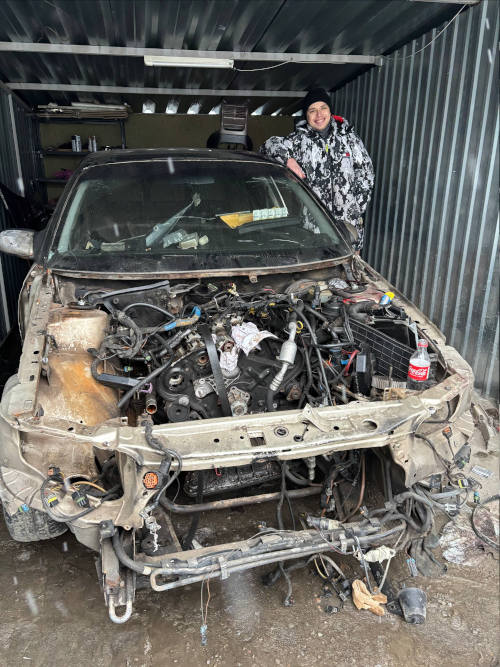
A salvage yard can be a good source of inexpensive used wheels, especially OEM wheels removed from a vehicle with severe body damage but usable suspension and wheels. The main risk is buying a wheel that appears similar but does not fit your vehicle, or accepting hidden structural damage that is difficult to detect after installation.
Treat the purchase as two separate decisions:
- Will the wheel fit and safely carry the vehicle?
- Is its condition good enough to justify the price and installation work?
Do not rely on appearance, wheel diameter alone, or a seller’s statement that the wheel “came off the same model.”
Check whether the swap you're considering actually fits your vehicle – compatibility, estimated cost, required changes, and a clear recommendation.
Check This Engine SwapWhat to request before buying
Ask the salvage yard for enough identifying information to verify the part independently:
- Donor vehicle year, make, model, trim, and drivetrain
- Vehicle identification number (VIN), if available
- Wheel position: front, rear, left, or right
- OEM wheel part number or casting number
- Wheel diameter and width
- Bolt pattern
- Offset, if known
- Center-bore diameter, if known
- Load rating, if marked
- Whether the wheel includes a tire, TPMS sensor, valve stem, center cap, or lug nuts
- Whether the wheel was removed from a running or rolling vehicle
- The reason the donor vehicle was salvaged
- Return or exchange terms
The OEM part number is often more useful than a visual description. Some vehicles use different wheels across trim levels, production years, brake packages, or front and rear axles. A wheel that fits the bolt pattern may still interfere with the brake caliper, suspension, hub, or fender.
Request clear photographs of both sides of the wheel. The useful views include:
- The entire front face
- The entire back side
- The hub mounting pad
- Bolt holes and lug-seat areas
- The inner barrel
- Any casting or identification marks
- Scratches, curb damage, corrosion, repairs, and visible bends
If the yard cannot provide the part number or adequate images, consider that uncertainty part of the purchase risk.
How to verify the wheel or part independently
Use the donor vehicle information and wheel markings to confirm the specification through an authoritative fitment source, such as the vehicle manufacturer’s parts information, a reputable wheel catalog, or a professional wheel supplier. Compare the exact wheel design and part number rather than assuming that all wheels for a model are interchangeable.
Check the following independently:
- Diameter and width: For example, a wheel may be identified as 17 × 7.5. The first number is nominal diameter; the second is nominal width.
- Bolt pattern: This includes the number of lug holes and the pitch-circle diameter, such as 5 × 114.3 mm. Do not substitute a visually similar pattern.
- Offset: The distance from the wheel centerline to the hub mounting face. Positive, zero, and negative offset affect inner clearance, outer position, steering geometry, and fender clearance.
- Center bore: The diameter of the wheel’s hub opening. A smaller bore will not fit over the hub. A larger bore may require correctly sized hub-centric rings where appropriate, but rings do not solve other fitment problems.
- Lug-seat type: The wheel must match the lug nut or bolt seat, such as conical or ball-seat hardware. The thread size and seat shape are separate specifications.
- Brake and suspension clearance: Diameter and bolt pattern alone do not prove clearance. The spoke profile and inner barrel must clear the brake caliper.
- Load rating: The wheel’s rated capacity must meet or exceed the vehicle’s axle and wheel loading requirements.
- Tire compatibility: If buying a complete wheel-and-tire assembly, verify tire size, load index, speed rating, age, and condition separately.
Do not measure a wheel’s bolt pattern casually and treat the result as conclusive. On a multi-lug wheel, the measurement method depends on the number of holes and must be made accurately. A parts catalog or manufacturer documentation is preferable to an estimate from photographs.
Also confirm whether the replacement is intended for the same axle position. Some vehicles use different front and rear widths or offsets, and some wheels are directional or position-specific.
Enter your exact vehicle and target engine to see what it takes – supporting modifications, budget range, complexity, and whether it's worth doing.
Get My Swap VerdictCondition and quality checks
A clean-looking face does not establish structural condition. Inspect the wheel before paying, and inspect the back and inner barrel as carefully as the visible front.
Reject or closely question these defects
- Cracks in the spokes, rim flange, hub area, or inner barrel
- Evidence of welding, brazing, or other structural repair
- A visibly bent rim flange
- Flat spots or waves in the inner barrel
- Elongated, distorted, or cracked lug holes
- Severe corrosion or flaking around the bead seat
- Deep gouges that remove substantial material
- Corrosion-related bubbling around the bead area
- Missing sections, drilled holes, or non-factory modifications
- Damage near the hub mounting face
A structural crack or welded repair is generally a skip for a road wheel unless it has been evaluated and repaired by a qualified wheel-repair specialist under applicable safety requirements. Cosmetic refinishing is different from structural repair, but heavy paint or powder coating can conceal damage and corrosion.
Check for runout
A wheel can look straight while producing vibration. If possible, have the yard place it on a balancer or spin it on suitable equipment. Excessive radial or lateral runout can indicate a bent wheel, but runout readings must account for the mounting equipment and any tire already installed.
If a tire is mounted, ask whether the assembly has been balanced and whether the tire itself is contributing to the vibration. A used tire can have uneven wear, internal damage, or a bent bead that makes it difficult to judge the wheel alone.
Inspect the hardware interfaces
The hub mounting face should be clean and flat. Remove loose rust and dirt before installation, but do not machine or heavily grind the mounting surface. Check that the lug holes are not damaged and that the valve-stem hole is intact.
If the wheel includes a TPMS sensor, confirm its condition and whether it is compatible with your vehicle. A sensor may require programming or relearning after installation. A missing sensor is not necessarily a reason to reject the wheel, but include replacement and installation cost in the total price.
For a wheel with a tire, inspect:
- Tread depth and evenness
- Sidewall cuts, bulges, and puncture repairs
- Tire age and cracking
- Correct load index and speed rating
- Whether the tire size is approved for the vehicle
The wheel and tire should be evaluated separately. A low-priced assembly may not be economical if the tire must be replaced immediately.
Fitment dimensions that must match
Use this comparison table before buying:
| Specification | What must be true |
|---|---|
| Bolt pattern | Exact number of holes and pitch-circle diameter |
| Wheel diameter | Compatible with the vehicle, brakes, and intended tire |
| Wheel width | Within the vehicle’s approved range and compatible with the tire |
| Offset | Within the vehicle’s fitment requirements and clearance limits |
| Center bore | Equal to or larger than the hub bore, with an appropriate centering solution when required |
| Lug-seat type | Matches the vehicle’s specified lug nuts or bolts |
| Thread specification | Correct thread diameter and pitch for the vehicle hardware |
| Load rating | Meets the required wheel and axle loading |
| Brake clearance | Spokes and inner barrel clear the caliper and other components |
| Tire specification | Correct size, load index, speed rating, and condition |
A basic offset relationship can help explain why similar-looking wheels sit differently:
Backspacing ≈ (wheel width ÷ 2) + offset, using consistent units and recognizing that actual measured backspacing can vary with rim design.
This is not a substitute for a vehicle-specific fitment check. Two wheels with the same diameter and bolt pattern can have different offsets, center bores, spoke profiles, or load ratings.
Never use wheel spacers, adapter plates, oversized lug holes, or mismatched lug nuts to force uncertain fitment without qualified engineering and installation advice. These parts can introduce additional clearance, centering, and clamping risks.
Red flags and return-policy considerations
Be cautious if the seller:
- Cannot identify the donor vehicle or part number
- Says “it should fit” without providing specifications
- Shows only the front of the wheel
- Refuses inspection before payment
- Claims a wheel is straight without testing or meaningful evidence
- Omits photos of repairs, corrosion, or the inner barrel
- Offers no return or exchange option on an unverified part
- Describes a wheel as OEM when it is actually aftermarket or replica
- Bundles a worn tire and presents the assembly as a complete bargain
Get the return policy in writing. Clarify the time limit, restocking fee, shipping responsibility, and whether the wheel must remain unmounted and undamaged for a return. Ask what happens if the wheel fails a professional balance or runout check.
A return policy may exclude compatibility mistakes made by the buyer. That makes independent fitment verification essential before installation. If the wheel arrives damaged, photograph the packaging and wheel before mounting it.
Final buy-or-skip checklist
Buy only if you can confirm:
- The exact vehicle and wheel part number are identified
- Bolt pattern, diameter, width, offset, and center bore are verified
- Lug-seat type and thread requirements are correct
- Brake, suspension, and fender clearance are supported by fitment evidence
- Load rating meets the vehicle’s requirements
- The wheel has no crack, weld, serious bend, damaged lug hole, or severe corrosion
- Runout is acceptable or can be checked after purchase
- Any included tire is separately suitable and safe
- TPMS and center-cap requirements are understood
- The return policy covers undisclosed damage or an inaccurately described part
- The total cost remains worthwhile after mounting, balancing, hardware, sensors, and possible tire replacement
Skip the wheel if:
- The specification cannot be verified
- The wheel has structural damage or an unexplained repair
- The seller will not show the back and inner barrel
- The part number conflicts with the claimed application
- Clearance depends on guesswork or an improvised adapter
- The purchase has no practical return option and the condition is uncertain
The best salvage-yard purchase is not simply the cheapest used wheel. It is a wheel with documented fitment, inspectable condition, adequate load capacity, and enough return protection to limit the risk of an incorrect or damaged part.
You've done the research. Now enter your vehicle and the engine you want and get a structured compatibility verdict before you spend money.
See If This Swap Fits