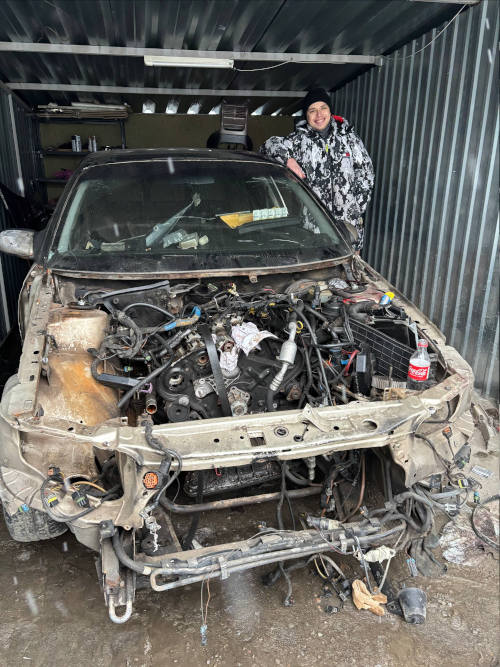
Chevrolet Malibu Engine Swap Guide: Compatibility, Best Options, and Difficulty by Generation
4 months ago · Category: Guides · By Nick Marchenko, PhD
Chevrolet Malibu engine swap compatibility overview
The Chevrolet Malibu is not one single swap platform. This article covers the US-market Chevrolet Malibu nameplate across all generations, including the classic Chevelle Malibu / Malibu lineage from the 1960s through early 1980s and the modern front-wheel-drive Malibu sedans built from the late 1990s onward. Because the Malibu name has been used on very different GM architectures, engine swap compatibility depends heavily on generation, platform, drivetrain layout, factory engine family, transmission, electronics, and emissions requirements.
The most important distinction is between older rear-wheel-drive Malibu-based cars and later transverse front-wheel-drive Malibu models. Classic RWD Malibu and Chevelle Malibu platforms are generally more suitable for traditional GM engine swaps such as small-block Chevrolet, big-block Chevrolet, LS-family, or other longitudinal GM V8 combinations. Modern FWD Malibu generations are more constrained because the engine, transaxle, subframe, ECU, body control module, immobilizer, and emissions systems are closely tied together.
Physical fitment alone is not enough to call a swap compatible. An engine may fit between the shock towers or inside the engine bay, but the swap can still fail if the transmission does not pair correctly, the ECU cannot communicate with the body electronics, the immobilizer prevents starting, the exhaust cannot retain required emissions equipment, or the cooling and driveline systems cannot survive the added load. For the Malibu, “compatible” must include mechanical compatibility, electronic compatibility, transmission compatibility, emissions compatibility, cooling compatibility, and driveline compatibility.
Later sections of this guide should examine factory engines, platform differences, realistic swap candidates, difficulty levels, execution risks, cost variables, and legal considerations before recommending specific swap paths.
Entity summary
| Field | Summary |
|---|---|
| Vehicle | Chevrolet Malibu |
| Generations covered | All US-market generations, including Chevelle Malibu / classic Malibu lineage and modern Malibu sedans |
| Production years | Approximately 1964–1983 for classic Malibu-related RWD lineage; 1997–2025 model-year range for modern Malibu lineage; exact breakouts require verification by generation |
| Body/platform type | Varies by generation: classic GM A-body / downsized RWD intermediate platforms; later GM N-body, Epsilon, Epsilon II, and E2XX-based FWD unibody platforms |
| Factory drivetrain layout | Rear-wheel drive on classic generations; front-wheel drive on modern generations |
| Engine orientation | Longitudinal on classic RWD cars; transverse on modern FWD cars |
| Main factory engine families | Chevrolet inline-six, Chevrolet small-block V8, Chevrolet big-block V8, GM/Buick V6, Oldsmobile diesel in older models; GM 60-degree V6, Ecotec inline-four, High Value V6, High Feature V6, turbo Ecotec, and hybrid systems in later models |
| Transmission types | Manual and automatic RWD transmissions on classic cars; electronic FWD automatic transaxles, CVT, and hybrid drive units on modern cars |
| Main swap difficulty range | Level 1 to Level 5 depending on generation and swap target |
| Primary compatibility bottleneck | Platform split between classic longitudinal RWD architecture and modern transverse FWD electronic architecture |
| Best-suited swap category | Same-platform or same-manufacturer factory-family swaps |
| Highest-risk swap category | Cross-brand swaps, RWD conversions of FWD Malibu models, diesel conversions, hybrid redesigns, and race-only custom builds |
Quick verdict
| Decision point | Practical verdict |
|---|---|
| Easiest swap type | Same engine family, same generation, same transmission/control strategy |
| Best OEM-style swap | Factory Malibu engine package from the same platform and similar model year |
| Best performance-oriented swap | LS-family or small-block Chevrolet swap in classic RWD Malibu platforms |
| Most difficult swap category | Cross-brand engines or V8/RWD conversions in modern FWD Malibu generations |
| Biggest mechanical constraint | Engine orientation, mount geometry, oil pan clearance, subframe/crossmember clearance, and driveline layout |
| Biggest electronic/ECU constraint | ECU, BCM, immobilizer, CAN communication, throttle control, and transmission control |
| Biggest transmission constraint | Bellhousing pattern, transaxle pairing on FWD cars, torque capacity, and electronic shift control |
| Biggest emissions/legal risk | OBD-II readiness, catalyst monitoring, EVAP function, misfire monitoring, and state inspection rules |
| Best recommendation | Treat each Malibu generation as a separate platform before choosing an engine |
The safest Malibu engine swap is usually not the most powerful engine that can physically fit. For older RWD Malibu platforms, same-brand GM swaps are usually the most realistic because the engine bay, transmission tunnel, rear axle layout, and aftermarket support are more favorable. For modern FWD Malibu models, the practical recommendation is to stay close to the original factory engine family or use a complete same-platform donor package. Advanced custom swaps may be possible, but they should be treated as fabrication and systems-integration projects, not simple engine replacements.
What “compatible” actually means
Engine swap compatibility is not a single yes/no question. For a Chevrolet Malibu, compatibility should be judged across several separate systems.
1. Mechanical compatibility
Mechanical compatibility means the engine can physically sit in the vehicle without creating unsolved clearance or structural problems. This includes engine bay space, mount location, oil pan clearance, steering clearance, accessory drive placement, exhaust routing, firewall clearance, and crossmember or subframe interference. On classic RWD Malibu platforms, the main questions are usually engine mounts, headers, oil pan, transmission crossmember, and driveshaft alignment. On modern FWD Malibu models, the front cradle, axle path, transaxle location, radiator space, turbo/downpipe routing, and accessory packaging become much more restrictive.
2. Electronic compatibility
Electronic compatibility determines whether the engine can start, run, communicate, and behave correctly inside the vehicle. Older carbureted Malibu platforms are generally simpler, although emissions-era controls may still matter. Modern Malibu models may depend on the ECU or ECM, transmission controller, body control module, immobilizer, CAN bus, electronic throttle, sensors, ABS, traction control, and instrument cluster communication. A modern swap can fail even when the engine runs on a stand if the vehicle does not receive the expected security, torque, gear, speed, or emissions messages.
3. Transmission compatibility
Transmission compatibility includes more than bolting the engine to a gearbox. The bellhousing pattern, crank flange, flexplate or flywheel, torque converter, clutch system, starter location, transmission mount, driveshaft length, axle spline, gear ratios, and torque capacity all matter. Older RWD cars may require crossmember, shifter, driveshaft, and rear axle changes. Modern FWD Malibu models are often limited by transaxle compatibility and electronic control logic, especially when moving between four-cylinder, V6, turbo, CVT, or hybrid systems.
4. Emissions and inspection compatibility
A running engine is not automatically a legal or inspectable engine. On OBD-II Malibu generations, readiness monitors, catalyst efficiency, oxygen sensor placement, EVAP function, misfire detection, fuel system monitoring, and diagnostic communication can determine whether the vehicle passes inspection. State rules vary, and emissions requirements may depend on vehicle year, engine year, donor configuration, and local inspection procedures. Any swap that deletes or bypasses required emissions equipment carries a significant legal and inspection risk.
5. Cooling and driveline compatibility
Cooling and driveline compatibility determine whether the swap works long term. A higher-output engine may require more radiator capacity, stronger fans, better heat shielding, revised coolant routing, intercooler packaging, upgraded fuel delivery, and improved exhaust heat management. Extra torque can also stress the transmission, clutch, converter, half-shafts, driveshaft, differential, rear axle, mounts, and suspension. A swap that survives a short test drive may still be poorly matched for daily use if heat, vibration, axle angle, or drivetrain strength are not addressed.
Check whether the swap you're considering actually fits your vehicle – compatibility, estimated cost, required changes, and a clear recommendation.
Check This Engine SwapChevrolet Malibu platform reality and factory engine baseline
Before ranking Chevrolet Malibu engine swaps, the original platform has to be separated by generation. The Malibu name covers very different vehicle systems, from classic rear-wheel-drive GM intermediates to modern front-wheel-drive unibody sedans. This matters because the factory platform defines engine placement, transmission alignment, control-module expectations, cooling capacity, emissions logic, and driveline strength. A swap that is realistic in a 1978–1983 RWD Malibu may be completely impractical in a 2016–2025 transverse FWD Malibu unless the project is treated as a full custom build.
Platform and chassis reality
The classic Malibu and Chevelle Malibu generations use a longitudinal engine layout with rear-wheel drive. In practical swap terms, this gives the builder a conventional engine bay, transmission tunnel, rear axle, and driveshaft layout. These cars are generally more suitable for Chevrolet small-block V8, big-block V8, LS-family, and other GM longitudinal engine packages because the vehicle architecture was originally designed around front-mounted engines driving a rear axle. Even on these cars, however, mount position, oil pan shape, steering clearance, header routing, transmission crossmember location, driveshaft length, and rear axle strength still require verification.
The modern Malibu generations are different. From the 1997 model year onward, the Malibu moved into transverse front-wheel-drive unibody platforms such as GM N-body, Epsilon, Epsilon II, and E2XX. These platforms use a front subframe or cradle to locate the engine and transaxle as a compact package. Engine bay width, axle angle, steering rack position, radiator and fan clearance, exhaust routing, and accessory packaging are much tighter than on the older RWD cars. In these generations, the factory transaxle is not just a transmission choice; it is part of the physical packaging, mount layout, axle geometry, and electronic control strategy.
For FWD Malibu models, an engine that is physically similar to the original factory engine family is usually the safest starting point. A transverse GM engine with a matching or closely related transaxle may be realistic if the donor system is well documented. A longitudinal V8, cross-brand engine, or RWD conversion is not a normal engine swap on these cars. It becomes a custom fabrication project involving structure, drivetrain layout, electronics, cooling, and emissions redesign.
Generation differences that affect swaps
Earlier Malibu generations are usually less electronically restrictive, but they are not automatically simple. Carbureted classic cars avoid many modern ECU and CAN-bus problems, yet they still involve mechanical alignment, fuel delivery, cooling, exhaust, brake capacity, and emissions-era equipment depending on year and state rules. Late 1970s and early 1980s cars may also include emissions controls that should not be ignored if the vehicle is intended for road use.
The 1997 and newer Malibu generations add OBD-II requirements and electronic powertrain control. These cars depend on the PCM or ECM to manage fuel, spark, diagnostics, emissions monitors, and often automatic transmission behavior. As the generations get newer, the swap risk generally increases because the engine controller becomes more connected to the body control module, immobilizer, instrument cluster, ABS, traction control, electronic throttle, and transmission controller.
Drive-by-wire throttle, CAN or GMLAN communication, electronic automatic transmission logic, and immobilizer matching are especially important on later Malibu platforms. A donor engine may run with its own harness, but the vehicle may still set faults, enter reduced-power mode, fail inspection, or refuse to start if the control modules do not communicate correctly. Catalyst monitoring, EVAP readiness, misfire detection, oxygen sensor logic, and fuel-system diagnostics also become more difficult to preserve as the swap moves farther away from the factory calibration.
Factory engines offered
| Engine code/name | Displacement | Configuration | Fuel type | Valvetrain/timing | Power | Torque | Production years | Donor vehicles | Known issues |
|---|---|---|---|---|---|---|---|---|---|
| Chevrolet inline-six | 194, 230, 250 cid variants | Inline-6 | Gasoline | OHV | Requires verification | Requires verification | 1960s–1970s, varies by year | Chevelle Malibu / Malibu family; requires verification | Age-related wear; originality-focused baseline |
| Chevrolet small-block V8 | 283, 307, 327, 350, 400 cid variants | V8 | Gasoline | OHV | Varies by year and engine | Varies by year and engine | 1960s–1983, varies by generation | Chevelle Malibu, Malibu, other GM RWD donors; requires verification | Cooling, emissions equipment, worn blocks, driveline stress |
| Chevrolet big-block V8 | 396, 402, 454 cid variants | V8 | Gasoline | OHV | Varies significantly | Varies significantly | Primarily muscle-era applications; exact Malibu relationship requires verification | Chevelle / Chevelle SS / GM big-block donors; requires verification | Heat, weight, header clearance, brake and rear axle demand |
| Chevrolet / Buick / GM V6 | 200, 229, 231 cid variants | V6 | Gasoline | OHV | Requires verification | Requires verification | Late 1970s–early 1980s | G-body Malibu and related GM RWD donors; requires verification | Low output; useful mainly as factory baseline |
| Oldsmobile diesel V6/V8 | 4.3L V6 / 5.7L V8 | V6 or V8 diesel | Diesel | OHV | Requires verification | Requires verification | Early 1980s, limited applications | Diesel Malibu / GM diesel donors; requires verification | Specialized diesel support and reliability concerns require verification |
| LD9 Twin Cam | 2.4L | Inline-4 | Gasoline | DOHC, timing chain | Requires verification | Requires verification | 1997–1999 range | N-body Malibu and related GM FWD donors; requires verification | Timing and age-related issues require verification |
| L82 / LG8 60-degree V6 | 3.1L | V6 | Gasoline | OHV | Requires verification | Requires verification | 1997–2003 range | N-body Malibu and related GM FWD donors; requires verification | Intake gasket and cooling issues require verification |
| L61 Ecotec | 2.2L | Inline-4 | Gasoline | DOHC, timing chain | Requires verification | Requires verification | 2004–2008 range | Malibu, Malibu Classic, and related GM Ecotec donors; requires verification | Timing chain system concerns require verification |
| LX9 / LZ4 / LZ9 High Value V6 | 3.5L / 3.9L | V6 | Gasoline | OHV | Varies by engine and year | Varies by engine and year | 2004–2008 range; some later fleet use requires verification | Malibu, Malibu SS, Malibu Maxx, related GM FWD donors; requires verification | Transaxle, cooling, and wiring differences |
| LE5 / LAT Ecotec | 2.4L | Inline-4 / mild hybrid variant | Gasoline / hybrid | DOHC, VVT; timing chain | Requires verification | Requires verification | 2008–2012 range | Seventh-generation Malibu and related GM donors; requires verification | Hybrid-specific parts where applicable; timing/oil concerns require verification |
| LY7 High Feature V6 | 3.6L | V6 | Gasoline | DOHC, timing chain | Requires verification | Requires verification | 2008–2012 range | Malibu and related GM High Feature V6 donors; requires verification | Timing chain concerns require verification |
| LUK / LCV / LKW Ecotec | 2.4L eAssist / 2.5L | Inline-4 | Gasoline / mild hybrid depending engine | DOHC, direct injection, VVT; timing chain | Requires verification | Requires verification | 2013–2018 range, varies by engine | Epsilon II / E2XX Malibu and related GM donors; requires verification | Direct injection, eAssist, and calibration complexity |
| LTG Ecotec turbo | 2.0L | Turbo inline-4 | Gasoline | DOHC, direct injection, VVT; timing chain | Varies by year | Varies by year | 2013–2022 range, requires verification by trim | Malibu 2.0T and related GM LTG donors; orientation and calibration require verification | Turbo, cooling, PCV, fuel system, and ECU/TCM integration |
| LFV Ecotec turbo | 1.5L | Turbo inline-4 | Gasoline | DOHC, direct injection, VVT; timing chain | Requires verification | Requires verification | 2016–2025 range | Ninth-generation Malibu and related GM small turbo donors; requires verification | Turbo and CVT pairing constraints; engine-specific issues require verification |
| LKN hybrid | 1.8L | Inline-4 hybrid system | Gasoline hybrid | DOHC; hybrid drive unit | Requires verification | Requires verification | 2016–2019 range | Malibu Hybrid; related hybrid architecture requires verification | High-voltage battery, inverter, hybrid controls, and service safety |
This factory engine baseline shows why the Malibu cannot be treated as one continuous swap platform. The older RWD cars share more traditional GM engine and transmission logic, while the modern FWD cars are tied to transverse powertrain packages and electronic transaxle control. The most realistic future swap candidates usually stay close to the original generation, engine family, transmission family, and control strategy.
The table also shows that factory performance baselines vary widely. A classic Malibu with a factory V8 or V8-ready chassis starts from a very different place than a late-model Malibu with a small turbocharged four-cylinder, CVT, body module, immobilizer, and OBD-II emissions monitors. That original baseline determines how much of the vehicle must be changed before a swap becomes reliable.
Why the factory engine baseline matters
Factory engines are not just historical reference points. They define where the engine sits, how the transmission bolts up, what the cooling system was sized to handle, what the exhaust was designed to route around, and what the vehicle electronics expect to see. When a swap stays within the same factory family, fewer systems usually need to be redesigned. When it moves outside that family, every related system must be checked.
Mount geometry is one of the first constraints. The original engine family influences mount position, engine height, oil pan shape, accessory placement, and clearance around the steering, firewall, crossmember, and radiator. On classic RWD Malibu platforms, aftermarket mounts may solve many common GM swap combinations. On modern FWD Malibu platforms, the cradle and transaxle position make mount geometry much less forgiving.
Bellhousing and transmission patterns are equally important. A factory transmission pairing tells the builder what bolt pattern, converter or clutch system, starter location, flexplate or flywheel arrangement, axle or driveshaft layout, and transmission control strategy the vehicle was built around. Retaining the original gearbox may be possible only when the new engine matches the same pattern and torque range. Otherwise, adapters, a different transmission, custom mounts, revised axles, or driveshaft work may be required.
ECU and wiring expectations become a major divider between generations. Factory engine management defines sensor behavior, throttle control, fuel delivery, immobilizer logic, CAN communication, transmission commands, and diagnostic reporting. In later Malibu models, the engine controller does not operate in isolation. It may need valid communication with the BCM, TCM, ABS module, instrument cluster, key/security system, and emissions monitors.
Cooling, exhaust, emissions, and driveline durability also follow the factory baseline. The original engine output influences radiator capacity, fan control, catalyst placement, exhaust diameter, heat shielding, axle strength, transmission calibration, and long-term reliability. A higher-output swap can overwhelm parts that were adequate for the original engine. Once the factory platform and engine baseline are clear, the next step is to rank potential engine swap options by difficulty and integration risk.
Enter your exact vehicle and target engine to see what it takes – supporting modifications, budget range, complexity, and whether it's worth doing.
Get My Swap VerdictBest engine swap options for the Chevrolet Malibu, ranked by difficulty
Once the factory platform and engine baseline are clear, Chevrolet Malibu swap options can be ranked by integration depth rather than horsepower alone. The key split remains the same: classic RWD Malibu platforms can accept traditional longitudinal GM engine packages more realistically, while 1997-newer FWD Malibu models are usually limited to factory-family or complete donor powertrain strategies. A powerful engine is not automatically a good swap if it creates unresolved mount, transmission, ECU, emissions, cooling, or driveline problems.
How swap difficulty levels actually work
Swap difficulty is not only about whether the engine can physically sit in the bay. For the Malibu, the real difficulty comes from how many factory systems must be changed or bypassed. A same-family engine replacement normally keeps the original mount logic, transmission pairing, ECU expectations, cooling layout, and emissions monitoring closer to stock. That makes it the lowest-risk path for reliability and inspection stability.
Same-manufacturer swaps can still be realistic, especially on older GM RWD Malibu platforms, but they often require more planning. An LS-family swap into a classic Malibu, for example, is much more practical than a cross-brand swap, but it still may require swap mounts, an EFI fuel system, ECU integration, exhaust work, cooling upgrades, and a compatible transmission. On modern FWD Malibu models, even a GM engine can become complicated if it was not offered in the same generation or does not share the same transaxle, control modules, and calibration logic.
Cross-brand swaps are the highest-risk category because they usually introduce unrelated ECU systems, CAN communication conflicts, immobilizer issues, transmission adaptation, emissions uncertainty, and custom fabrication. Standalone ECU strategies may simplify engine control, but they can also make factory gauges, automatic transmission behavior, traction control, OBD readiness, and inspection compliance harder to preserve. Higher horsepower or torque also creates secondary problems in the transmission, differential, axles, cooling system, brakes, and chassis.
Level 1 swaps – lowest risk, OEM-style compatibility

Level 1 swaps are same-platform or factory-family swaps. These are the most realistic choices when the goal is to repair the vehicle, keep it streetable, or avoid turning the project into a full custom build. They still require year-specific verification, but the core systems are usually more predictable.
- Same RPO replacement engine: belongs in Level 1 because it keeps the original engine family, calibration logic, mounts, emissions equipment, and transmission strategy. The main benefit is low integration risk. The main challenge is verifying exact year, sensor, harness, and emissions differences. Best use case: daily-driver repair.
- Chevrolet small-block V8 in classic RWD Malibu: belongs in Level 1 when the car already uses or closely supports traditional SBC architecture. The main benefit is parts availability and factory-style GM fitment logic. The main challenge is cooling, exhaust, and emissions-era equipment. Best use case: budget classic RWD street build.
- GM 60-degree 3.1 V6 replacement: belongs in Level 1 for 1997–2003 Malibu models originally built around that engine family. The main benefit is OEM-style serviceability. The main challenge is age, gasket, cooling, and year-specific wiring differences. Best use case: N-body Malibu repair.
- L61 / LE5 / LCV / LKW / LFV Ecotec replacement: belongs in Level 1 when replacing the same engine family in the correct generation. The main benefit is keeping factory transaxle and ECU logic. The main challenge is verifying sensor, throttle, direct-injection, turbo, CVT, or emissions differences by model year. Best use case: modern Malibu repair.
- Factory V6 or turbo package replacement: engines such as LX9, LZ4, LZ9, LY7, or LTG are Level 1 only when the vehicle originally used that powertrain package or a very close same-generation configuration. The main benefit is factory performance without leaving the platform logic. The main challenge is matching the correct transaxle, ECU, harness, cooling, and emissions equipment. Best use case: OEM-style restoration or repair.
Level 2 swaps – moderate complexity
Level 2 swaps are still usually GM-based, but they move beyond a simple replacement. These swaps may be worthwhile, especially on classic RWD Malibu platforms, but they should not be treated as bolt-in repairs. They commonly require mount selection, transmission planning, ECU strategy, fuel system changes, cooling upgrades, exhaust fabrication, and donor-part verification.
- LS-family V8 into classic RWD Malibu: Level 2 because it is a same-manufacturer longitudinal V8 swap with strong aftermarket support, but it changes the fuel system, wiring, ECU, exhaust, cooling, and transmission strategy. Best use case: reliable performance build on a classic Malibu or G-body Malibu.
- Big-block Chevrolet V8 into classic Malibu: Level 2 or higher depending on the original chassis, engine bay, suspension, and drivetrain. The main benefit is period-correct torque. The main challenge is heat, weight, header clearance, front-end load, brake capacity, and rear axle strength. Best use case: classic muscle build with supporting chassis upgrades.
- Buick 3.8 turbo / LC2-style swap into G-body Malibu: Level 2 when using a GM RWD-compatible package, but donor rarity and turbo-system packaging increase planning requirements. The main benefit is period GM performance character. The main challenge is turbo plumbing, intercooling, wiring, fuel delivery, and transmission pairing. Best use case: advanced G-body street build.
- Malibu SS 3.9L-style conversion into a compatible FWD Malibu: Level 2 when based on a same-generation donor package. The main benefit is factory-family V6 performance. The main challenge is retaining the correct transaxle, PCM, harness, mounts, exhaust, and emissions logic. Best use case: documented OEM-style FWD upgrade, not a guesswork swap.
- LTG 2.0T conversion into a non-LTG late Malibu: Level 2 to Level 3 depending on year. The main benefit is factory turbo performance. The main challenge is ECU/TCM calibration, intercooler packaging, exhaust, fuel system, cooling, and CAN communication. Best use case: complete donor-based late-model Malibu project.
Level 3–5 swaps – high-effort custom builds

Level 3–5 swaps turn the Malibu into a custom build rather than a factory-like vehicle system. This category includes major power increases, supercharged engines, modern direct-injection V8 swaps, cross-brand engines, diesel conversions, EV conversions, and any attempt to convert a modern FWD Malibu into a RWD/V8 platform. These swaps can be built, but they should be approached as fabrication, wiring, calibration, emissions, and chassis-engineering projects.
- Supercharged LS or Gen V LT V8: difficulty Level 3 in classic RWD Malibu builds. The main benefit is major power. The dominant risk is fuel system, cooling, ECU, transmission, rear axle, and chassis strength. Recommended only if the car is being built as a serious performance restomod or race-oriented street car.
- LS4 transverse 5.3 V8 into a FWD Malibu: difficulty Level 3 to 4. The main benefit is a GM transverse V8 concept. The dominant risk is packaging, transaxle strength, torque steer, cooling, mounts, wiring, and emissions. Recommended only if the builder has documented donor information and fabrication support.
- Cross-brand engines such as Honda K-series, Toyota JZ, or Ford Coyote: difficulty Level 4 to 5. The main benefit is uniqueness or specific aftermarket goals. The dominant risk is complete custom integration. Recommended only for race, show, or highly custom builds.
- Diesel swaps: difficulty Level 5 unless replacing an original diesel configuration with the correct period-correct system. The main benefit is torque or novelty. The dominant risk is weight, emissions, fuel system, mounts, transmission pairing, and inspection legality. Recommended only with clear legal and technical planning.
Engine swap option table
| Engine code/name | Difficulty level | Engine type | Fuel type | Donor vehicles | Main benefits | Main risks | Recommended only if… |
|---|---|---|---|---|---|---|---|
| Same RPO replacement engine | Level 1 | Same as original | Same as original | Same-generation Malibu or verified compatible GM donor | Lowest integration risk | Year-specific wiring, sensors, emissions differences | The goal is reliable repair or daily use |
| Chevrolet 350 small-block V8 | Level 1–2 | OHV V8 | Gasoline | Classic Chevrolet / GM RWD donors; crate engines | Budget performance, parts support | Cooling, exhaust, emissions, driveline strength | The Malibu is a classic RWD platform |
| Chevrolet big-block V8 | Level 2–3 | OHV V8 | Gasoline | Chevelle / classic GM big-block donors; requires verification | High torque, period-correct character | Heat, weight, clearance, brakes, rear axle load | The chassis and drivetrain are upgraded |
| GM LS-family V8 | Level 2 | OHV V8 | Gasoline | GM trucks, Camaro, Corvette, GTO, CTS-V variants; exact donor requires verification | Modern performance, strong aftermarket | EFI fuel system, ECU, mounts, exhaust, transmission | The car is a classic RWD Malibu |
| Buick 3.8 turbo / LC2-style V6 | Level 2–3 | Turbo V6 | Gasoline | Buick G-body turbo donors; requires verification | GM period performance | Donor rarity, turbo plumbing, wiring, fuel system | The build is a documented G-body-style project |
| GM 60-degree 3.1 V6 | Level 1 | OHV V6 | Gasoline | 1997–2003 Malibu and related GM FWD donors; requires verification | OEM-style repair | Age, gaskets, cooling, wiring differences | The car originally used this engine family |
| L61 / LE5 / LCV / LKW / LFV Ecotec | Level 1 | Inline-4 | Gasoline | Same-generation Malibu or related GM Ecotec donors; requires verification | Factory-family compatibility | DI, turbo, CVT, sensor, and calibration differences | The replacement matches the original generation and control system |
| LX9 / LZ4 / LZ9 High Value V6 | Level 1–2 | OHV V6 | Gasoline | Malibu, Malibu SS, Malibu Maxx, related GM FWD donors; requires verification | Factory-style V6 torque | Transaxle, mounts, harness, exhaust, emissions | A complete same-generation donor package is available |
| LY7 High Feature V6 | Level 1–2 | DOHC V6 | Gasoline | 2008–2012 Malibu and related GM donors; requires verification | Factory V6 performance baseline | Timing chain concerns, 6-speed transaxle, ECU logic | The vehicle is from a compatible generation |
| LTG 2.0T Ecotec | Level 1–3 | Turbo inline-4 | Gasoline | Malibu 2.0T and related GM LTG donors; orientation and calibration require verification | Best late-model factory turbo performance | ECU/TCM/CAN, cooling, intercooler, exhaust, fuel system | The swap uses a complete compatible donor system |
| LS4 transverse 5.3 V8 | Level 3–4 | Transverse V8 | Gasoline | Impala SS, Monte Carlo SS, Grand Prix GXP; requires verification | Unusual GM FWD V8 concept | Packaging, transaxle strength, torque steer, wiring, emissions | The project is custom and well documented |
| Cross-brand engines | Level 4–5 | Varies | Varies | Requires verification | Uniqueness or race-specific goals | Mounts, ECU, transmission, CAN, emissions, fabrication | The build is not expected to remain factory-like |
Best swap by use case
Best daily-driver swap: The best daily-driver choice is usually a same RPO or same-family replacement engine. This keeps the Malibu closest to its original ECU, transmission, emissions, cooling, and service logic. The tradeoff is limited performance gain.
Best budget swap: For classic RWD Malibu platforms, a Chevrolet small-block V8 is usually the most practical budget performance path. For modern FWD Malibu models, the budget answer is normally not a performance swap but a correct factory-family replacement. The tradeoff is that modern FWD upgrades can become expensive quickly once wiring and transaxle changes are involved.
Best OEM-style swap: A complete same-generation factory powertrain package is the best OEM-style path. Examples include staying within the original Ecotec, High Value V6, High Feature V6, or LTG family where applicable. The main requirement is verifying the donor ECU, harness, transmission, mounts, exhaust, and emissions equipment.
Best performance swap: For classic RWD Malibu cars, an LS-family swap is the strongest overall performance recommendation. It offers modern GM power with broad aftermarket support, but it still requires EFI, wiring, fuel system, exhaust, cooling, and transmission planning. For late-model FWD Malibu cars, the LTG 2.0T is the more realistic factory-style performance direction when the platform supports it.
Best off-road/towing swap, if relevant: The Malibu is not an off-road or towing-focused platform, so there is no ideal off-road/towing swap recommendation. High-torque swaps should be evaluated for street or race use instead, with special attention to transmission, axle, cooling, and brake capacity.
Best race/custom swap: A built LS, supercharged LS, Gen V LT, or custom turbo GM package can make sense in a classic RWD Malibu race or restomod project. These builds should be planned around the full drivetrain and chassis, not only the engine. In modern FWD Malibu models, race/custom swaps quickly become fabrication-heavy and may not preserve factory systems.
Swap to avoid for most users: Most users should avoid cross-brand engines and V8/RWD conversions in 1997-newer FWD Malibu models. These swaps can consume far more time and money than the car’s original platform justifies. They are better treated as custom engineering projects than practical engine swaps.
Choosing the engine is only the beginning; the next section should cover execution reality, common failure points, cost, legality, alternatives, and FAQ.
Engine swap execution reality for the Chevrolet Malibu
Choosing an engine for a Chevrolet Malibu is only the beginning of the swap. The actual outcome depends on planning, measurement, wiring quality, control-system integration, cooling capacity, driveline alignment, and inspection requirements. This is especially important because the Malibu name covers both classic RWD platforms and modern FWD platforms. The more the swap moves away from the original factory system, the more it becomes a full vehicle-integration project rather than a simple engine replacement.
Planning and measurement before removal
A Malibu engine swap should begin as a measurement and systems-planning problem, not as a parts-shopping exercise. Before removing the original engine, the builder should document engine bay dimensions, mount location, oil pan clearance, steering clearance, crossmember or subframe position, firewall distance, accessory drive space, radiator and fan packaging, exhaust routing, transmission position, driveshaft or axle geometry, wiring layout, ECU location, and emissions equipment routing.
Small measurement errors can create large problems later. An engine that appears to fit may place the transmission too far forward or rearward, create poor driveshaft angles, force tight exhaust bends, block service access, overheat at idle, or cause vibration under load. On classic RWD Malibu platforms, this usually means verifying engine height, transmission tunnel clearance, header space, and rear driveline alignment. On modern FWD Malibu platforms, the front cradle, half-shafts, steering rack, radiator support, downpipe path, and transaxle mounts are usually the limiting factors.
Test fitting, mounting, and driveline alignment
The test-fit stage should confirm the engine, transmission, mounts, and driveline as one package. A mount kit or custom mount design must be checked with the actual oil pan, accessories, exhaust manifolds or headers, transmission case, shifter location, and cooling components installed. Mockup is especially valuable on older RWD Malibu builds using SBC, big-block, LS, or LT-style engines because oil pan, steering, header, and transmission crossmember clearance can vary by parts combination.
Transmission alignment matters as much as engine placement. Bellhousing pattern, converter or clutch compatibility, flexplate or flywheel selection, starter location, transmission mount position, driveshaft length, axle angle, and shifter location all need to work together. In FWD Malibu generations, the transaxle also controls axle position and mount geometry. A swap that physically starts and moves can still be wrong if the drivetrain geometry causes vibration, axle bind, premature mount failure, or poor service access.
Wiring, ECU strategy, and first start validation
Wiring and ECU strategy often determine whether a swapped Malibu behaves like a usable vehicle or remains a permanent project. The safest approach is usually to retain the OEM ECU strategy when the swap stays within the same engine family. A donor ECU may be required when the engine, transmission, sensors, throttle body, or emissions system changes significantly. A standalone ECU can simplify engine operation on some custom builds, but it may complicate factory gauges, automatic transmission control, CAN communication, immobilizer behavior, OBD readiness, and inspection status.
Modern Malibu swaps must account for the BCM, immobilizer/security handshake, CAN or GMLAN communication, throttle control, transmission control, sensor signals, grounding, shielding, and module expectations. First start is not the finish line. After the engine starts, the builder still needs to verify oil pressure, charging voltage, idle stability, fuel trims, coolant circulation, fan operation, transmission behavior, charging-system stability, heat soak, repeated driving cycles, and diagnostic trouble codes.
Common failure scenarios
| Failure scenario | Why it happens | Symptoms | Prevention |
|---|---|---|---|
| Incomplete or poorly documented wiring | Harness changes are made without diagrams or labeling | No-start, random faults, poor drivability | Use diagrams, label circuits, test power, ground, and sensor signals |
| ECU/immobilizer mismatch | ECU, BCM, key, or security data do not match | Crank/no-start, security light, fuel or spark disabled | Plan ECU, BCM, key, and security strategy before installation |
| CAN bus or module errors | Later Malibu modules do not receive expected messages | Reduced power, warning lights, limp mode | Retain compatible modules or use a proven integration strategy |
| Incorrect transmission pairing | Engine, bellhousing, torque converter, or TCM logic does not match | No movement, harsh shifts, slipping, codes | Match engine, transmission, controller, flexplate, and calibration |
| Bad driveline angles | Engine or transmission is mounted at the wrong height or angle | Vibration, U-joint wear, axle bind | Measure driveline angle before final welding or mount tightening |
| Undersized cooling system | Original radiator or fan system cannot handle the new heat load | Overheating, heat soak, unstable idle temperature | Size radiator, fans, shrouding, coolant routing, and intercooler where needed |
| Exhaust heat problems | Headers, downpipes, or catalysts sit too close to wiring or components | Melted wiring, heat soak, cabin heat, sensor failure | Plan exhaust routing, heat shielding, and sensor placement early |
| Fuel system mismatch | Fuel pressure, return style, pump capacity, or DI requirements do not match | Lean condition, hard start, misfire, poor power | Match pump, regulator, lines, injectors, and ECU requirements |
| Emissions readiness failure | Monitors do not complete or emissions equipment does not match calibration | Check engine light, rejected inspection, incomplete monitors | Preserve catalyst, O2, EVAP, misfire, and ECU readiness logic |
| Poor serviceability | The engine fits but blocks access to plugs, belts, sensors, or mounts | High labor time, repeated disassembly, maintenance avoidance | Check service access during mockup, not after final installation |
Engine swap cost and timeline reality
Cost is driven by integration depth, not engine price alone. A same-family Malibu replacement is usually the lowest-cost category because it keeps the vehicle close to its original mounts, wiring, transmission, cooling, and emissions logic. A moderate same-manufacturer swap can move into much higher cost territory once wiring, tuning, fuel delivery, exhaust, transmission, cooling, and driveline changes are included.
High-effort custom swaps grow non-linearly. A cheap donor engine can become expensive if it requires fabrication labor, custom mounts, a different transmission, ECU integration, tuning, cooling redesign, axle or rear-end upgrades, and repeated troubleshooting. Timeline also depends on parts availability, labor rate, documentation quality, and how much rework is discovered during test fitting. If exact cost matters, the estimate should be built around the complete system, not the engine alone.
Legal and emissions considerations
A Malibu swap can run well and still fail inspection. On OBD-II vehicles, catalyst monitoring, oxygen sensors, EVAP function, misfire monitoring, fuel-system diagnostics, and readiness monitors may determine whether the vehicle is accepted. If the ECU expects emissions equipment that is missing, relocated incorrectly, or disabled, the swap may not be inspection-stable.
OEM ECU retention often helps preserve emissions logic when the swap stays within the factory system. Standalone ECU strategies may be useful for race or custom builds, but they can create street-legality and OBD readiness issues. Local, state, and country regulations must be verified before the project starts. This is not legal advice, and inspection rules vary significantly by location, vehicle year, and intended use.
When an engine swap is the wrong solution
An engine swap is not always the smartest way to improve a Malibu. If the goal is reliability, rebuilding the existing engine or replacing it with the same factory engine may be better than changing the entire vehicle system. If the goal is mild performance, maintenance restoration, a transmission upgrade, cooling system restoration, gearing changes, or buying a higher-trim factory model may be more practical.
Modern FWD Malibu models especially deserve caution. A major custom swap can cost more time and money than starting with a better-suited platform. Avoiding an unnecessary swap can preserve reliability, inspection stability, serviceability, and resale value.
Frequently asked questions
What is the easiest engine swap for the Chevrolet Malibu?
The easiest swap is usually the same engine family from the same generation with matching electronics and emissions equipment. This keeps mount, transmission, ECU, and inspection variables closer to stock.
What is the cheapest engine swap for the Chevrolet Malibu?
The cheapest category is usually a correct factory-style replacement, not a performance swap. For classic RWD cars, a small-block Chevrolet may be cost-effective if the supporting parts are already available.
Is a same-family swap better than a cross-brand swap?
Usually, yes. Same-family swaps reduce conflicts with mounts, bellhousing patterns, sensors, ECU behavior, and emissions logic. Cross-brand swaps are custom projects.
Can the factory transmission be reused?
Sometimes, but only if the engine matches the transmission pattern, torque range, control strategy, and mounting layout. Modern FWD transaxles require especially careful verification.
Do I need a standalone ECU?
Not always. OEM ECU retention is often better for street use and inspection stability. A standalone ECU is more common on custom or race-oriented builds.
Why do engine swaps fail inspection?
They often fail because OBD readiness monitors do not complete, emissions equipment is missing, or the ECU calibration does not match the installed hardware.
Can a swapped Chevrolet Malibu be reliable?
Yes, if the swap preserves system coherence across engine, transmission, wiring, cooling, emissions, and driveline durability. Poorly integrated swaps are rarely reliable.
What usually causes swap projects to go over budget?
Wiring problems, fabrication changes, transmission mismatch, cooling issues, exhaust routing, tuning time, and inspection rework are common causes.
Is a performance swap better than rebuilding the factory engine?
Not always. If the car is a daily driver, a rebuild or same-family replacement may be more reliable, cheaper, and easier to inspect.
Which swap should most owners avoid?
Most owners should avoid cross-brand swaps and V8/RWD conversions in modern FWD Malibu models unless they are prepared for a custom engineering project.
Final rule for choosing the right swap
An engine swap is a system redesign, not just an engine replacement. The best Chevrolet Malibu swap is not always the most powerful engine; it is the engine that preserves compatibility across mounts, transmission, ECU, cooling, emissions, and driveline durability. If the required custom work cannot be verified, budgeted, and maintained, rebuilding the existing setup or choosing a different platform may be the better decision.
You've done the research. Now enter your vehicle and the engine you want and get a structured compatibility verdict before you spend money.
See If This Swap Fits