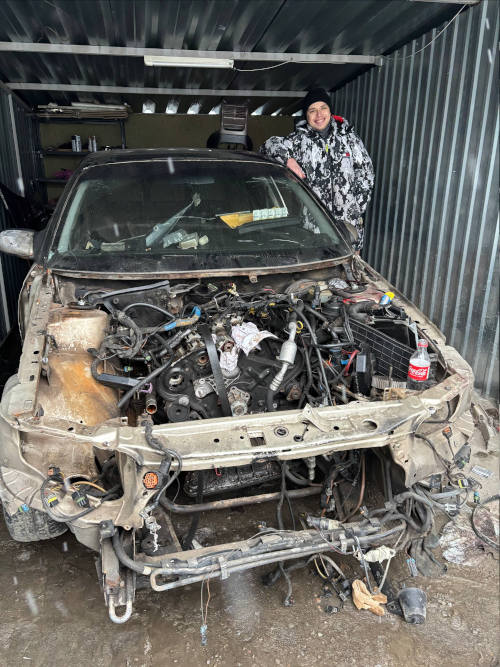
BMW M3
BMW M3 engine swap compatibility overview
The BMW M3 engine swap question depends heavily on generation. This guide covers the US-market BMW M3 across all major generations: E30, E36, E46, E90/E92/E93, F80, and G80. These cars share the M3 name, but they do not share one platform, one engine bay layout, one wiring architecture, or one drivetrain strategy.
A compatible BMW M3 engine swap is not just an engine that physically fits between the strut towers. A swap must work as a complete system: engine, mounts, oil pan, steering clearance, transmission, driveshaft, differential, ECU, immobilizer, CAN communication, cooling, exhaust, and emissions equipment. A mechanic may be able to make an engine run, but that does not automatically mean the car will drive correctly, pass inspection, retain factory systems, or remain reliable.
Older M3 generations are usually more forgiving mechanically and electronically, while newer cars introduce more control-module dependency. An E36 M3 with a BMW inline-six swap is a very different project from a G80 M3 with xDrive, modern turbocharging, encrypted modules, emissions monitoring, and transmission control dependencies.
Later sections should examine the M3 platform baseline, factory engines, realistic swap candidates, difficulty levels, execution risks, costs, and legal considerations before any swap is treated as practical.
Entity summary
| Field | BMW M3 compatibility summary |
|---|---|
| Vehicle | BMW M3, US market |
| Generations covered | E30, E36, E46, E90/E92/E93, F80, G80 |
| Production years | Varies by generation; requires verification by US model year |
| Body/platform type | Unibody performance passenger car; sedan, coupe, and convertible availability varies by generation |
| Factory drivetrain layout | Primarily front-engine, rear-wheel drive; modern G80 models may include xDrive AWD |
| Engine orientation | Longitudinal |
| Main factory engine families | S14 inline-four, S50/S52 inline-six, S54 inline-six, S65 V8, S55 twin-turbo inline-six, S58 twin-turbo inline-six |
| Transmission types | Manual, automatic, SMG, DCT, and modern automatic depending on generation |
| Main swap difficulty range | Level 1 to Level 5 depending on chassis and engine choice |
| Primary compatibility bottleneck | Electronics and drivetrain integration on newer generations; packaging and fabrication on custom swaps |
| Best-suited swap category | Same-generation or same-manufacturer BMW factory-family swaps |
| Highest-risk swap category | Cross-brand swaps, V10 swaps, diesel swaps, modern S58 swaps into older chassis, and AWD/xDrive conversions |
Quick verdict
| Decision point | Practical verdict |
|---|---|
| Easiest swap type | Same-family BMW replacement or generation-correct factory engine swap |
| Best OEM-style swap | Original M engine refresh or factory-family BMW engine replacement |
| Best performance-oriented swap | S54, S65, S55, or S58-based BMW swap only when the chassis, wiring, transmission, and emissions strategy are planned together |
| Most difficult swap category | Cross-brand V8, 2JZ, V10, diesel, or modern turbo swaps with standalone electronics |
| Biggest mechanical constraint | Mount geometry, oil pan clearance, steering/header clearance, exhaust routing, and transmission tunnel alignment |
| Biggest electronic/ECU constraint | DME, immobilizer, CAN bus, throttle control, ABS/DSC, and transmission communication |
| Biggest transmission constraint | Bellhousing pattern, clutch/flywheel matching, DCT or automatic control, driveshaft length, and differential gearing |
| Biggest emissions/legal risk | OBD readiness, catalyst monitoring, EVAP, oxygen sensors, visual inspection, and state-specific rules |
| Best recommendation | Stay close to the original BMW engine family unless the project budget supports custom fabrication, wiring, calibration, and inspection planning |
The BMW M3 is usually best approached as a generation-specific swap platform, not one universal swap recipe. Factory-family swaps are normally the most realistic because the engine layout, BMW parts ecosystem, and drivetrain architecture are closer to what the chassis was designed around. Same-manufacturer performance swaps can work, but they are not automatically simple. Cross-brand builds can be successful, especially for track or custom use, but they should be treated as full-system redesigns rather than bolt-in upgrades.
For example, a builder trying to keep a factory automatic or DCT must solve transmission control, torque messaging, shifter logic, and cooling. A mechanic installing a used BMW M engine may also face an immobilizer mismatch where the engine cranks but does not start because the DME and security modules are not aligned.
What “compatible” actually means

Engine swap compatibility is not a single yes-or-no answer. For a BMW M3, compatibility must be judged across several separate systems.
1. Mechanical compatibility
Mechanical compatibility means the engine can physically sit in the chassis without creating unsolved clearance problems. This includes engine bay length and height, engine mount position, oil pan shape, steering shaft clearance, steering rack clearance, front subframe interference, firewall clearance, exhaust manifold or turbo location, accessory drive placement, and hood clearance.
A BMW inline-six may be easier to package in many M3 chassis than a wide V-engine or turbo cross-brand swap, but that still depends on the generation. An LS or 2JZ-style project may require custom mounts, modified headers, a custom oil pan solution, transmission crossmember work, and custom exhaust routing. Physical fit is only the first checkpoint.
2. Electronic compatibility
Electronic compatibility determines whether the engine, car, and supporting modules can communicate correctly. BMW uses generation-specific engine control units, immobilizer systems, sensors, throttle strategies, ABS/DSC systems, and CAN communication networks. Older cars are generally simpler, while E46 and later cars become increasingly dependent on module communication.
A daily-driver owner may want factory gauges, traction control, cruise control, diagnostics, and inspection readiness to work after the swap. That is very different from making the engine run on a standalone ECU for track use. On newer M3s, missing torque messages or mismatched control modules can create limp mode, warning lights, no-start conditions, or transmission faults.
3. Transmission compatibility
Transmission compatibility includes more than bolting a gearbox to an engine. The bellhousing pattern, clutch or flexplate, flywheel, starter location, pilot bearing, hydraulic clutch system, torque capacity, shifter position, transmission mount, driveshaft length, and differential gearing all matter.
Manual swaps are usually easier to reason through than DCT or modern automatic swaps because they rely less on electronic control. A DCT or ZF automatic may require matching control modules, CAN messages, calibration, cooling, and shifter integration. If those systems are not solved, the engine may run but the car may not shift correctly or drive predictably.
4. Emissions and inspection compatibility
Emissions compatibility is often the difference between a running swap and a street-legal swap. US-market OBD-II cars generally need functioning readiness monitors, catalyst monitoring, oxygen sensors, EVAP operation, misfire detection, and required emissions equipment. A swap can sound healthy and still fail inspection if monitors are incomplete or deleted.
This is especially important for 1996 and newer M3s. State rules vary, and California-style inspections are much stricter than basic non-emissions areas. A standalone ECU, missing catalysts, deleted secondary air equipment, or disabled rear oxygen sensors may create legal and inspection problems even when the mechanical installation is clean.
5. Cooling and driveline compatibility
Cooling and driveline compatibility determine whether the swap survives after installation. Higher-output engines may need upgraded radiator capacity, oil cooling, fan control, coolant hose routing, and heat shielding. Turbo engines add extra heat load around the exhaust, intercooler, charge pipes, and engine bay.
The driveline must also match the torque level. Driveshaft angles, differential strength, axle flanges, clutch capacity, and rear suspension condition all affect reliability. A high-torque swap into an older M3 can expose weak mounts, worn bushings, inadequate cooling, or differential limitations quickly.
The next section should examine the BMW M3 platform reality and factory engine baseline before ranking specific swap options.
Before you start researching parts and pricing, check whether the swap you have in mind actually fits – and whether it's worth doing.
Check My Engine SwapBMW M3 platform reality and factory engine baseline
Before comparing potential engine swaps, it is necessary to understand the platform itself. The original BMW M3 architecture establishes the physical, electronic, transmission, cooling, and emissions framework that every future engine must work within. Swap difficulty is rarely determined by engine size alone. In most cases, the factory platform dictates whether a project remains close to OEM engineering or becomes a full custom build.
Platform and chassis reality
The BMW M3 has always been built on a front-engine, longitudinal-engine, rear-wheel-drive performance platform, although modern G80 models are also available with xDrive all-wheel drive. Across all generations, the M3 uses a unibody chassis rather than a body-on-frame structure. This means engine swaps interact directly with front subframes, suspension geometry, steering systems, transmission tunnels, and structural mounting points.
One reason the M3 has become a popular swap platform is that BMW's longitudinal layout naturally accommodates inline-six engines. The engine bay was originally designed around relatively long inline powerplants, allowing many BMW engine-family swaps to retain reasonable packaging. However, that does not mean every BMW engine is automatically compatible. Oil pan design, engine height, intake routing, accessory placement, and steering clearance still vary significantly between generations.
On E30, E36, and E46 chassis, the steering rack and front subframe create some of the most important packaging constraints. Builders frequently evaluate oil pan shape, sump location, steering shaft clearance, and exhaust manifold routing before considering wiring. An engine may physically fit between the strut towers but still interfere with the front suspension geometry or steering components.
The E9x generation introduced a wider engine bay and factory V8 packaging through the S65. While this creates opportunities for larger engine configurations, it also increases dependency on modern electronics. A V8 physically fitting inside the chassis does not eliminate the need to integrate control modules, sensors, and transmission systems.
F80 and G80 models add another layer of complexity. Turbocharger placement, intercooler plumbing, direct-injection hardware, cooling circuits, and extensive CAN communication become part of the compatibility equation. On G80 xDrive models, the front driveline introduces additional packaging considerations around the front differential, axle routing, oil pan shape, and transmission integration.
A practical example illustrates the difference. An E36 owner installing an S54 may spend considerable effort on mounts, oil pan configuration, and wiring integration. A G80 owner attempting a non-factory engine swap may face those same challenges while also dealing with encrypted modules, network communication, emissions monitoring, and transmission calibration.
Radiator space and cooling capacity also matter. BMW M engines often generate substantial heat, particularly the S65 V8 and turbocharged S55 and S58 families. Cooling systems were engineered around specific thermal loads. A swap that increases output beyond the original design envelope may require radiator upgrades, oil cooling changes, revised fan control strategies, or additional heat shielding.
Generation differences that affect swaps
Not all BMW M3 generations present the same level of integration difficulty.
E30 and early E36 models generally represent the simplest electronic environments in the M3 lineage. Control systems are comparatively straightforward, CAN communication is limited or absent depending on model year, and the number of interconnected modules is relatively low. Mechanical challenges still exist, but electronics are usually less dominant than on later platforms.
Later E36 models transitioned into OBD-II requirements for the US market. At this point, emissions readiness, catalyst monitoring, diagnostic compliance, and sensor strategy became increasingly important. A swap that runs correctly may still create inspection problems if readiness monitors cannot complete.
E46 M3 models introduced a more sophisticated electronic environment centered around the S54 engine, drive-by-wire throttle control, advanced DME management, and immobilizer integration. The platform remains popular because extensive community documentation exists, but successful swaps typically require more electronic planning than comparable E36 projects.
The E90/E92/E93 generation increased complexity again. The S65 V8 relies on modern engine management, advanced diagnostics, electronic throttle control, and communication with multiple vehicle systems. Transmission choices also became more electronically dependent through the introduction of the M DCT.
F80 models built around the S55 engine moved further into the modern BMW architecture. Direct injection, turbocharger management, sophisticated CAN networks, and torque-model-based control strategies become increasingly important. Factory modules expect specific information from the engine and transmission.
G80 models represent the most electronically integrated M3 platform to date. The S58 engine, modern emissions systems, networked control architecture, and optional xDrive drivetrain create compatibility challenges that often exceed the mechanical challenges themselves.
In practical terms, swap difficulty tends to increase as the platform becomes more dependent on module communication, emissions monitoring, and electronic control strategies. However, exact requirements should always be verified by model year, drivetrain configuration, and market.
Factory engines offered
| Engine code/name | Displacement | Configuration | Fuel type | Valvetrain/timing | Power | Torque | Production years | Donor vehicles | Known issues |
|---|---|---|---|---|---|---|---|---|---|
| S14 | 2.3L–2.5L | Inline-4 | Gasoline | DOHC | Varies by market/year | Varies by market/year | E30 era | BMW E30 M3 | Age-related parts availability |
| S50B30US | 3.0L | Inline-6 | Gasoline | DOHC VANOS | 240 hp | 225 lb-ft | 1995 US | BMW E36 M3 | Cooling system age-related concerns |
| S52B32US | 3.2L | Inline-6 | Gasoline | DOHC VANOS | 240 hp | 236 lb-ft | 1996–1999 US | BMW E36 M3 | Cooling system, VANOS wear |
| S54B32 | 3.2L | Inline-6 | Gasoline | DOHC VANOS | 333 hp | 262 lb-ft | 2001–2006 | BMW E46 M3, Z4 M | Rod bearings, VANOS concerns |
| S65B40 | 4.0L | V8 | Gasoline | DOHC | 414 hp | 295 lb-ft | 2008–2013 | BMW E90/E92/E93 M3 | Rod bearings, throttle actuators |
| S55B30 | 3.0L | Twin-turbo Inline-6 | Gasoline | DOHC | 425–444 hp | Varies by model | 2015–2018 | BMW F80 M3 | Crank hub discussions in enthusiast community |
| S58B30 | 3.0L | Twin-turbo Inline-6 | Gasoline | DOHC | 473–503 hp | Varies by model | 2021–present | BMW G80 M3 | Requires verification by model year |
The factory engine history reveals a clear pattern. BMW evolved the M3 from naturally aspirated four-cylinder and inline-six configurations into naturally aspirated V8 power and eventually modern twin-turbocharged inline-six engines. Despite these changes, the platform remained fundamentally longitudinal and performance-oriented.
From a swap-planning perspective, the factory engines establish the most realistic compatibility baseline. Mount locations, transmission pairings, cooling requirements, emissions expectations, and electronic architecture were all designed around these engine families. Factory specifications published by BMW and extensive documentation within the E36, E46, E9x, F80, and G80 owner communities consistently show that later generations become increasingly dependent on electronic integration rather than pure mechanical fitment.
Why the factory engine baseline matters
Mount geometry
The original engine family defines where the engine sits within the chassis. Mount position influences engine height, firewall clearance, oil pan shape, steering clearance, and accessory placement. The farther a swap moves away from the original engine family, the more likely custom mount and clearance work becomes.
Bellhousing and transmission patterns
Factory engines determine which transmissions naturally bolt to the platform. Retaining the original transmission is often easier when using related BMW engine families. Cross-family or cross-brand swaps may require adapter plates, custom flywheel solutions, modified driveshafts, or entirely different transmission packages.
ECU and wiring expectations
The factory DME establishes sensor requirements, throttle control strategy, immobilizer behavior, and communication expectations. On newer generations, transmission controllers, ABS systems, instrument clusters, and body modules may expect specific engine data. Missing information can create faults even when the engine itself runs correctly.
Cooling and exhaust capacity
BMW engineered each M3 generation around a known thermal load. Factory radiator size, fan strategy, oil cooling capacity, catalytic converter placement, and exhaust routing were designed around the original engine package. Significant increases in output often require supporting changes beyond the engine itself.
Emissions and inspection logic
Factory emissions systems establish readiness-monitor expectations, oxygen-sensor strategy, catalyst monitoring, EVAP operation, and diagnostic behavior. Modern M3 generations are considerably less tolerant of emissions-system deviations than early generations.
Transmission behavior and driveline durability
The original torque output influences clutch capacity, transmission calibration, driveshaft loading, differential design, and axle durability. A swap that substantially exceeds factory torque levels may expose weaknesses elsewhere in the drivetrain even if the engine installation itself is successful.
Once the factory platform and engine baseline are understood, the next step is to evaluate potential engine swap candidates and rank them according to difficulty, integration requirements, and long-term feasibility.
Enter your vehicle and target engine to see a compatibility verdict, estimated cost, required changes, and whether it's the right move for your build.
Get My Swap VerdictBest engine swap options for the BMW M3, ranked by difficulty
Once the BMW M3 platform and factory engine baseline are clear, swap choices can be ranked by integration depth instead of horsepower. The most realistic swaps are the ones that stay close to the original BMW architecture: longitudinal engine layout, compatible transmission strategy, predictable engine management, and emissions equipment that can still be made to function. The more the build moves away from the original M3 generation, the more the project depends on fabrication, wiring, calibration, and legal-risk management.
How swap difficulty levels actually work
For the BMW M3, swap difficulty is not mainly about whether an engine can be lowered into the bay. It is about whether the engine, transmission, ECU, immobilizer, cooling system, exhaust, differential, and inspection systems can operate together without creating an unreliable or non-compliant car.
Same-family swaps are the lowest-risk category because they usually preserve more of the original design logic. An E36 M3 staying with an S50/S52-style inline-six, an E46 M3 staying with an S54, or an E9x M3 staying with an S65 is closer to repair or restoration than reinvention. Even then, used engine condition, wiring differences, immobilizer matching, and emissions readiness still require verification.
Same-manufacturer BMW swaps are the next step up. The most common example is an S54 swap into an E36 M3. Documented owner-community guides, including MForum and Bimmerforums discussions, treat the S54-to-E36 path as achievable but wiring- and detail-heavy rather than a simple replacement. Community documentation notes that E36 transmission options can be retained in some S54 swaps, but the final parts combination depends on clutch, flywheel, driveshaft, and wiring choices.
Cross-brand swaps move into advanced territory. LS swaps into E36 and E46 chassis are well documented in the aftermarket, with companies such as Vorshlag and Sikky offering BMW LS swap components. That support lowers uncertainty, but it does not make the swap factory-simple. Headers, steering shaft clearance, transmission crossmembers, driveshafts, wiring, cooling, exhaust, and inspection strategy still need to be solved.
Standalone ECU strategies can help make custom engines run, especially for race cars, drift cars, or track-focused builds. The tradeoff is that factory diagnostics, OBD readiness, traction control, stability control, cruise control, automatic transmission behavior, and street inspection compatibility may become harder to preserve.
Level 1 swaps – lowest risk, OEM-style compatibility
Level 1 swaps are best understood as factory-style replacements or same-generation engine-family swaps. These are the strongest choices for daily-driver reliability, serviceability, and inspection stability.
| Engine code/name | Why it belongs in Level 1 | Main benefit | Main challenge | Best use case | Evidence/source context |
|---|---|---|---|---|---|
| S14 | Original E30 M3 engine family | Preserves factory character and collector value | Parts cost, age, and availability | E30 M3 restoration or OEM-correct repair | Factory-supported engine family |
| S50B30US / S52B32US | US E36 M3 factory engine family | Predictable mounts, transmission logic, and emissions baseline | Cooling system age, VANOS wear, used-engine condition | E36 M3 daily-driver or budget OEM-style replacement | Factory-supported engine family |
| S54B32 | Factory E46 M3 engine | Strong naturally aspirated BMW M performance | Rod bearings, VANOS, DME/EWS matching, maintenance cost | E46 M3 replacement or high-quality BMW inline-six build | Factory-supported in E46 M3; community-documented in E36 swaps |
| S65B40 | Factory E9x M3 engine | OEM BMW V8 character and factory M3 provenance | Rod bearings, throttle actuators, electronics, DCT/manual pairing | E9x M3 engine replacement or advanced OEM-style rebuild | Factory-supported in E90/E92/E93 M3 |
| S55B30 / S58B30 | Factory engines in later M3 generations | Modern BMW turbo performance | Module integration, direct injection, CAN, emissions, security coding | F80 or G80 replacement using correct donor systems | Factory-supported in later M3 generations |
The key caution is that Level 1 does not mean universal interchangeability. An S58 is factory-correct for a G80, not a simple upgrade for an E46. Level 1 means the engine belongs to the original M3 generation or factory family being repaired, not that it drops into every M3 chassis.
Level 2 swaps – moderate complexity
Level 2 swaps stay within BMW but move beyond the exact original platform. These swaps may make sense when the builder wants more performance while keeping BMW engine character, but they require more planning around mounts, wiring, ECU strategy, transmission pairing, cooling, and emissions.
| Engine code/name | Why it belongs in Level 2 | Main benefit | Main challenge | Best use case | Evidence/source context |
|---|---|---|---|---|---|
| S54B32 into E36 M3 | Same manufacturer and similar inline-six layout, but not native to E36 | Major power and response gain while keeping BMW M identity | DME/EWS wiring, throttle integration, exhaust, cooling, calibration | Performance E36 street/track build | Community-documented through MForum and Bimmerforums S54 swap guides |
| S52/S50 replacement into E36 M3 | Factory-family replacement with generation-specific details | Lower cost and lower integration risk than newer M engines | Engine condition, OBD-I/OBD-II differences, emissions equipment | Budget E36 repair or refresh | Factory-supported, but exact year electronics require verification |
| S65 into E46 M3 | BMW M engine and documented custom examples, but not native to E46 | High-revving V8 performance in a lighter earlier chassis | Tight packaging, ECU strategy, transmission pairing, cooling, exhaust | High-budget BMW custom build | Community and shop-documented examples, including Technica Motorsports and Turner-style builds |
| N54 / N55 into older M3 chassis | BMW inline-six architecture, but turbo systems and electronics add complexity | Turbo torque and tuning potential | Turbo plumbing, direct injection, DME integration, intercooling, heat management | Custom BMW turbo project where emissions strategy is planned early | Community-discussed; platform-specific proof requires verification |
The S54-to-E36 path is the most practical Level 2 example because it combines BMW inline-six packaging with substantial community experience. The S65-to-E46 route is more exotic. Documented examples exist, but they generally involve professional-level fabrication, standalone or heavily modified control strategies, and careful packaging around the steering, cooling, and transmission systems.
Level 3–5 swaps – high-effort custom builds
Level 3–5 swaps are no longer factory-style BMW integration projects. These include cross-brand V8 swaps, 2JZ swaps, V10 swaps, diesel swaps, and modern powertrain conversions into older chassis. They can work, but the car becomes a custom system.
| Engine code/name | Difficulty level | Main benefit | Dominant integration risk | Recommended only if… | Evidence/source context |
|---|---|---|---|---|---|
| GM LS / LS3 / LSx | Level 4 | Strong power, broad aftermarket support, common manual transmission options | Mounts, headers, steering shaft clearance, T56 fitment, wiring, emissions | The build is track/custom focused or local inspection rules are understood | Aftermarket-supported by Vorshlag, Sikky, ISR, and documented community builds |
| Toyota 2JZ-GE / 2JZ-GTE | Level 4 | High turbo power potential and strong aftermarket ecosystem | Engine length, turbo routing, transmission adapter, standalone ECU, cooling | The builder accepts fabrication and non-OEM electronics | Community-documented/custom-only for BMW M3 applications; verify chassis-specific support |
| BMW S85 V10 | Level 5 | Extreme BMW M character and unique sound | Size, wiring, ECU, transmission, cooling, cost, serviceability | The project is a show, race, or specialty shop build | Custom-only; not a normal street-swap recommendation |
| BMW S58 into older M3 chassis | Level 4–5 | Very high modern BMW turbo output | Modern DME/security, CAN communication, direct injection, emissions, cooling | A complete donor system and advanced calibration support are available | Requires verification; not currently a simple documented mainstream path |
| BMW diesel M57/N57 | Level 5 | Torque and novelty | Diesel emissions, gearing, electronics, fuel system, inspection legality | The car is custom-only and street legality is not assumed | Theoretical/custom-only for M3 context |
Engine swap option table
| Engine code/name | Difficulty level | Engine type | Fuel type | Donor vehicles | Evidence type | Main benefits | Main risks | Recommended only if… |
|---|---|---|---|---|---|---|---|---|
| S14 | Level 1 | NA inline-4 | Gasoline | E30 M3 | Factory-supported | Originality, value retention | Cost and age-related parts availability | The goal is restoration or OEM-correct repair |
| S50/S52 | Level 1 | NA inline-6 | Gasoline | US E36 M3 | Factory-supported | Predictable E36 integration | Cooling, VANOS, OBD year differences | The car is an E36 and reliability matters more than maximum power |
| S54B32 | Level 1 in E46 / Level 2 in E36 | NA inline-6 | Gasoline | E46 M3, Z4 M | Factory-supported and community-documented | Strong BMW M performance | DME/EWS, rod bearings, VANOS, wiring | The builder wants BMW power without going cross-brand |
| S65B40 | Level 1 in E9x / Level 3 in earlier chassis | NA V8 | Gasoline | E90/E92/E93 M3 | Factory-supported and community-documented custom | High-revving V8 character | Packaging, electronics, cooling, cost | The project budget supports professional-level integration |
| S55B30 | Level 1 in F80 / Level 4 elsewhere | Twin-turbo inline-6 | Gasoline | F80 M3, F82 M4 | Factory-supported; older chassis requires verification | Modern turbo output | CAN, DME, direct injection, cooling | A complete donor electronics strategy is available |
| S58B30 | Level 1 in G80 / Level 4–5 elsewhere | Twin-turbo inline-6 | Gasoline | G80 M3, G82 M4, related M models; verify by year | Factory-supported in G80; custom-only elsewhere | Very high output potential | Modern security, emissions, xDrive/automatic integration | The swap is planned as a high-budget custom build |
| GM LS / LS3 / LSx | Level 4 | NA V8 | Gasoline | Corvette, Camaro, GTO, CTS-V, trucks depending engine; verify exact donor | Aftermarket-supported and community-documented | Power, parts support, manual transmission options | Cross-brand wiring, mounts, headers, emissions | The car is track/custom focused or inspection risk is acceptable |
| 2JZ-GE / 2JZ-GTE | Level 4 | Inline-6 turbo or turbo-converted | Gasoline | Supra, Aristo, Lexus GS/SC variants; verify market | Community-documented/custom-only | High power potential | Length, turbo routing, ECU, transmission adaptation | The builder has fabrication and tuning support |
| S85 V10 | Level 5 | NA V10 | Gasoline | E60 M5, E63/E64 M6 | Custom-only | Extreme BMW M uniqueness | Cost, space, electronics, transmission, serviceability | The goal is a specialty build, not a practical swap |
Best swap by use case
Best daily-driver swap: The best daily-driver choice is usually the original engine family for that M3 generation. An E36 should generally stay close to S50/S52 logic, an E46 should stay close to the S54, and an E9x should stay close to the S65. This protects serviceability, diagnostics, emissions behavior, and resale logic.
Best budget swap: For most owners, the budget answer is not an exotic swap. It is a correct used, rebuilt, or refreshed factory-family engine with known wiring and transmission behavior. This is especially true for E36 M3s, where staying with the S50/S52 family avoids many costs hidden inside more ambitious projects.
Best OEM-style swap: A same-generation M engine replacement is the cleanest OEM-style path. It keeps the car closest to BMW’s original mount geometry, cooling design, emissions strategy, and transmission pairing. The main tradeoff is that factory M engines can be expensive to buy and maintain.
Best performance swap: For older BMW builds, the S54 is often the most balanced performance-oriented BMW swap because it offers a major power increase while preserving naturally aspirated inline-six character. For E46 and newer platforms, performance swaps become more generation-specific and more electronically demanding.
Best off-road/towing swap: This category is not relevant to the BMW M3. The M3 is a unibody performance car, not a towing or off-road platform.
Best race/custom swap: LS swaps are the most supported cross-brand custom path for E36 and E46 chassis because aftermarket mounts, headers, steering-shaft solutions, and transmission crossmembers are available from recognized suppliers. The tradeoff is that the build becomes a cross-brand system with major wiring, exhaust, cooling, and emissions compromises to evaluate.
Swap to avoid for most users: S85 V10, diesel, and modern S58 swaps into older M3 chassis should be avoided by most owners. These can be impressive specialty builds, but they are expensive, electronically difficult, and usually poor choices for a normal street-driven car.
Choosing the engine is only the beginning. The next section should cover execution reality, common failure points, cost exposure, legal risk, alternatives, FAQ, and the practical final rule for deciding whether a BMW M3 swap is worth starting.
Engine swap execution reality for the BMW M3

Choosing an engine is only the beginning of a BMW M3 swap project. The final result depends on planning, measurement accuracy, integration quality, calibration, testing, and compliance with local emissions and inspection requirements. Many projects fail not because the engine choice was wrong, but because critical systems were treated as separate problems instead of one connected vehicle system.
Planning and measurement before removal
A successful BMW M3 swap begins with measurements and systems planning rather than donor-engine shopping. Before the original engine is removed, builders should evaluate engine bay dimensions, mount locations, steering rack position, subframe geometry, oil pan clearance, firewall clearance, radiator packaging, fan placement, accessory drive space, exhaust routing, transmission location, driveshaft geometry, and differential compatibility.
BMW M3 generations differ significantly in packaging. An E36 or E46 chassis may appear to have sufficient room for a larger engine, but steering shaft interference, header clearance, brake booster clearance, or oil pan location can create problems that are not obvious during initial measurements.
Cooling and emissions planning should happen before fabrication begins. A builder planning an S54 conversion into an E36, for example, should already understand how the radiator, fan package, intake routing, wiring harness, catalyst placement, and ECU strategy will be handled. Waiting until final assembly often creates avoidable delays and redesign work.
Small measurement errors can become major problems later. A transmission positioned slightly too high can create driveline vibration. An engine mounted too far rearward can reduce firewall clearance and complicate maintenance. A poorly planned radiator layout can create chronic overheating that does not appear until the vehicle is driven aggressively.
Test fitting, mounting, and driveline alignment
Once the original engine has been removed, the project moves into the validation phase. Test fitting should be treated as a temporary engineering exercise rather than final installation.
The engine and transmission should be positioned together whenever possible. This allows the builder to verify mount geometry, transmission tunnel clearance, shifter location, firewall clearance, steering clearance, and exhaust routing before permanent fabrication begins.
For BMW M3 projects, driveline alignment is particularly important. A drivetrain that physically fits can still create vibration, premature bearing wear, differential stress, or driveshaft problems if operating angles are incorrect. This becomes especially important in LS-swapped E36/E46 cars and high-torque custom builds.
Transmission compatibility should be confirmed before final mounting. Bellhousing pattern compatibility, clutch selection, flywheel choice, starter engagement, hydraulic clutch operation, and shifter location all influence whether the finished car behaves like a factory-engineered vehicle or a constant troubleshooting project.
Serviceability should also be considered during mockup. A tightly packaged swap may require major disassembly for routine maintenance if access to spark plugs, belts, sensors, or cooling components is not considered during installation.
Wiring, ECU strategy, and first start validation
For many BMW M3 swaps, wiring and ECU strategy determine whether the project becomes a usable car or remains an unfinished project.
Builders generally choose between retaining OEM control systems, integrating a donor ECU, or using a standalone ECU. Each approach has advantages and compromises.
OEM ECU retention usually provides the best opportunity to preserve factory drivability, diagnostics, and emissions functionality. However, it may require immobilizer matching, module coding, CAN communication integration, and transmission compatibility work.
Standalone ECUs can simplify engine management for custom builds, but they may complicate OBD readiness, emissions compliance, factory gauge operation, traction control behavior, and automatic transmission integration.
Immobilizer systems are a common obstacle. EWS, CAS, FEM, BDC, and other BMW security architectures vary by generation. A vehicle may crank normally yet refuse to start because security modules do not recognize the engine management system.
Before the first road test, validation should include oil pressure verification, charging-system operation, coolant circulation, fan activation, throttle behavior, idle stability, fuel pressure verification, and leak inspection.
The first successful startup is not the completion of the swap. It is only the beginning of validation. Multiple heat cycles, repeated driving sessions, idle testing, highway testing, and fault-code monitoring are usually required before long-term reliability can be assessed.
Common failure scenarios
| Failure scenario | Why it happens | Symptoms | Prevention |
|---|---|---|---|
| Incomplete wiring integration | Harness modifications performed without documentation | No-start conditions, intermittent faults, sensor errors | Create wiring plans before installation and verify every circuit |
| ECU or immobilizer mismatch | DME and security modules are not synchronized | Cranks but will not start | Verify immobilizer strategy before purchasing parts |
| CAN communication failure | Missing or incompatible module communication | Warning lights, limp mode, transmission faults | Map required CAN communication early in the project |
| Incorrect transmission pairing | Engine and transmission systems are incompatible | Poor shifting, clutch problems, transmission faults | Confirm transmission strategy before fabrication |
| Improper driveline angles | Transmission and differential alignment not verified | Vibration, premature wear, driveline noise | Measure operating angles during mockup |
| Undersized cooling system | Cooling capacity not matched to engine output | Overheating, heat soak, reduced reliability | Size cooling system for actual power level |
| Exhaust heat management issues | Limited space around headers or turbo components | Heat damage, high intake temperatures, wiring failures | Use shielding and thermal management strategies |
| Accessory drive alignment problems | Pulley and belt geometry not validated | Belt noise, belt failure, charging issues | Verify alignment before final assembly |
| Fuel system mismatch | Fuel pressure or fuel delivery does not match engine requirements | Lean conditions, misfires, drivability problems | Design fuel system around engine demands |
| Emissions readiness failure | OBD systems not functioning correctly | Failed inspection despite normal operation | Plan emissions strategy before installation |
| Inspection failure | Local regulations not considered | Vehicle cannot be legally registered | Verify requirements before starting project |
| Poor serviceability | Packaging prioritized over maintenance access | Expensive repairs and extended downtime | Evaluate maintenance access during mockup |
Engine swap cost and timeline reality
Engine price is rarely the largest expense in a BMW M3 swap. Integration depth usually determines final cost.
Low-difficulty factory-family swaps are generally the lowest-cost category because they retain more of the original architecture. Existing mounts, transmissions, cooling systems, and electronics often require fewer modifications.
Moderate-complexity BMW-to-BMW swaps increase cost because wiring, calibration, fabrication, cooling changes, and supporting hardware become more important. The engine itself may represent only part of the budget.
High-effort custom builds enter a different category entirely. Fabrication, custom exhaust systems, driveshaft work, ECU solutions, tuning, cooling upgrades, transmission adaptation, and troubleshooting often exceed the cost of the engine itself.
Project timelines also tend to grow non-linearly. Delays are commonly caused by missing parts, unexpected wiring issues, fabrication revisions, emissions-related complications, and tuning challenges. Downtime should be expected, particularly for Level 3–5 projects.
Legal and emissions considerations
A swap can run perfectly and still fail inspection.
Modern emissions systems monitor catalyst efficiency, oxygen sensor operation, EVAP performance, misfire detection, and readiness status. If the ECU strategy does not properly support these systems, the vehicle may not meet inspection requirements even when drivability appears normal.
BMW M3 generations from the OBD-II era generally require more planning than earlier vehicles. Emissions equipment, catalyst placement, oxygen sensor configuration, and ECU calibration should be considered part of the swap rather than optional additions.
Standalone ECUs deserve special attention. While they can simplify custom engine management, they do not automatically satisfy emissions or inspection requirements. The legality of a standalone-equipped vehicle depends on local regulations and should be verified before beginning the project.
Inspection requirements vary by state, province, country, and model year. Builders should verify local requirements before purchasing engines, ECUs, or fabrication components. This article is not legal advice.
When an engine swap is the wrong solution
Not every performance or reliability goal requires an engine swap.
In many cases, rebuilding the existing factory engine provides a better balance of reliability, cost control, emissions compliance, and long-term serviceability. This is especially true when the vehicle already has a desirable factory engine such as the S54, S65, S55, or S58.
Replacing the engine with the same factory engine family is often the most practical solution for owners focused on daily use.
Cooling-system restoration, differential changes, transmission upgrades, suspension improvements, and maintenance catch-up work frequently produce more meaningful results than an engine swap alone.
In some situations, purchasing a higher-performance factory model may be more cost-effective than building a heavily modified version of an earlier chassis.
The strongest projects are usually the ones that begin with a clear problem statement. If the goal can be achieved without redesigning the entire vehicle, a swap may not be necessary.
Frequently asked questions
What is the easiest engine swap for the BMW M3?
A factory-family replacement is usually the easiest path. Staying close to the original engine family minimizes integration risk.
What is the cheapest engine swap for the BMW M3?
The lowest-cost option is often replacing the original engine with the same family rather than performing a custom swap.
Is a same-family swap better than a cross-brand swap?
For most owners, yes. Same-family swaps typically preserve more compatibility across electronics, driveline components, and emissions systems.
Can the factory transmission be reused?
Sometimes. Compatibility depends on the engine family, bellhousing pattern, control strategy, and torque requirements.
Do I need a standalone ECU?
Not always. Many BMW-based swaps work best with OEM engine management, while custom builds may benefit from standalone systems.
Why do engine swaps fail inspection?
Common reasons include incomplete readiness monitors, missing emissions equipment, catalyst issues, and ECU compatibility problems.
Can a swapped BMW M3 be reliable?
Yes, but reliability depends on integration quality rather than engine choice alone.
What usually causes swap projects to go over budget?
Fabrication, wiring, tuning, cooling upgrades, driveline modifications, and repeated rework are common contributors.
Is a performance swap better than rebuilding the factory engine?
Not necessarily. Many factory M engines already provide excellent performance and may be easier to maintain than a custom swap.
Which swap should most owners avoid?
Most owners should avoid Level 5 projects unless they fully understand the cost, complexity, maintenance, and legal implications.
Final rule for choosing the right swap
An engine swap is not simply an engine replacement. It is a system redesign.
The best BMW M3 swap is rarely the engine with the highest horsepower number. The best swap is the one that preserves compatibility across mounts, transmission strategy, ECU logic, cooling capacity, emissions systems, and driveline durability.
If a proposed swap requires more fabrication, wiring, tuning, maintenance, and legal risk than the owner can confidently verify, budget, and support long-term, rebuilding or upgrading the existing combination is usually the better choice.
The strongest swap is not the most powerful one. It is the one that works as a complete vehicle.
Stop comparing specs in your head. Enter your BMW M3 and the engine you want – get a structured verdict with cost, complexity, and a clear recommendation.
See If This Swap FitsYears
No year pages with content are configured for this model yet.