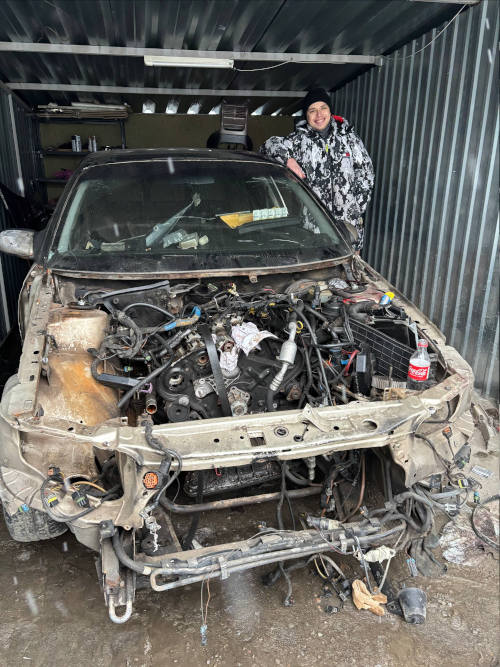
BMW X5
BMW X5 engine swap compatibility overview

The BMW X5 engine swap question is not the same across every year. This guide covers the BMW X5 across all major US-market generations: E53, E70, F15/F85, and G05/F95. That includes early naturally aspirated inline-six and V8 models, later turbocharged gasoline engines, diesel variants, M models, plug-in hybrid versions, and newer mild-hybrid powertrains.
The unique challenge with the X5 is that it combines a longitudinal BMW engine layout with SUV packaging, xDrive/AWD hardware, automatic transmission control, and BMW-specific electronics. An engine may physically sit in the bay, but that does not mean the front differential clears the oil pan, the transfer case lines up, the factory transmission shifts correctly, the immobilizer allows the engine to start, or the OBD monitors complete for inspection.
For that reason, BMW X5 engine compatibility must be judged as a complete system. Mechanical compatibility, electronic compatibility, transmission compatibility, emissions compatibility, cooling compatibility, and driveline compatibility all matter. A same-code replacement engine can be realistic. A same-generation factory-style conversion may be possible with a complete donor. A cross-brand or cross-generation swap quickly becomes a fabrication and control-system project.
Later sections should examine the X5 platform reality, factory engine baseline, realistic swap options, difficulty levels, execution risks, cost ranges, and legal considerations before recommending any specific engine path.
Entity summary
| Field | BMW X5 compatibility summary |
|---|---|
| Vehicle | BMW X5 |
| Generations covered | E53, E70, F15/F85, G05/F95 |
| Production years | US-market X5 from 2000 model year to current production; exact engine availability varies by year and trim |
| Body/platform type | Unibody luxury SUV / BMW SAV platform, generation-specific chassis architecture |
| Factory drivetrain layout | Longitudinal front-engine layout; AWD/xDrive common; some later sDrive RWD variants exist |
| Engine orientation | Longitudinal |
| Main factory engine families | BMW M54, M62, N62, N52, N55, N63, S63, M57/N57 diesel, N20 PHEV system, B58, S68; availability varies by generation |
| Transmission types | BMW/ZF and GM automatic transmissions depending generation; limited manual relevance on early/global models requires verification |
| Main swap difficulty range | Level 1 for same-code replacement; Level 2–3 for same-generation BMW donor conversions; Level 4–5 for cross-brand, diesel conversion, hybrid, or race-style builds |
| Primary compatibility bottleneck | xDrive/front differential/transfer case packaging plus BMW ECU, immobilizer, transmission, and emissions integration |
| Best-suited swap category | Same engine code or same factory engine family within the original generation |
| Highest-risk swap category | LS/custom V8 swaps, B58/S68 retrofits into older chassis, gas-to-diesel conversions, PHEV conversions, and full race builds |
Quick verdict
| Decision point | Practical verdict |
|---|---|
| Easiest swap type | Same-code replacement from the same X5 generation and emissions package |
| Best OEM-style swap | Complete same-generation donor conversion using engine, transmission, DME/EGS, harness, cooling, exhaust, and drivetrain parts |
| Best performance-oriented swap | Factory BMW V8 or M-family upgrade only when a complete donor vehicle and coding support are available |
| Most difficult swap category | Cross-brand/custom swaps, modern B58/S68 retrofits, diesel conversions, and hybrid powertrain swaps |
| Biggest mechanical constraint | Oil pan, front differential, steering, exhaust, subframe, and transfer-case alignment |
| Biggest electronic/ECU constraint | DME/DDE, EGS, immobilizer, CAN communication, DSC, xDrive control, and torque modeling |
| Biggest transmission constraint | Matching bellhousing, torque converter or flexplate, transmission control, driveshaft length, and transfer-case output |
| Biggest emissions/legal risk | OBD readiness, catalyst and EVAP monitoring, diesel SCR/DPF systems, and state inspection rules |
| Best recommendation | Treat the BMW X5 as a factory-family swap platform first and a custom-swap platform only with fabrication, wiring, tuning, and legal planning |
The practical recommendation is conservative: most BMW X5 owners should begin by identifying the exact generation, engine code, transmission, drivetrain layout, and emissions package already in the vehicle. For a daily-driven X5, the cleanest path is usually a same-code replacement or a closely matched factory-family engine from the same generation. A builder trying to turn an inline-six X5 into a V8 X5 should think in terms of a complete donor vehicle, not just an engine purchase. Once the swap crosses into a different BMW generation, a different fuel type, or a non-BMW engine, the project moves away from normal repair work and into advanced custom integration.
What “compatible” actually means
BMW X5 compatibility is not a single yes-or-no answer. A realistic swap must work as a mechanical package, a drivetrain package, an electronic package, and a legal road-use package.
- Mechanical compatibility
For the X5, mechanical compatibility starts with the longitudinal engine bay but quickly depends on the AWD hardware around it. The engine mounts must match the subframe, the oil pan must clear the front differential, and the steering shaft cannot interfere with exhaust manifolds or turbo plumbing. V8 and turbocharged engines also create more heat and packaging pressure around the firewall, radiator area, and downpipe paths.
A common mistake is assuming that because BMW used inline-six and V8 engines in the X5, all BMW inline-six and V8 engines are interchangeable. They are not. Accessory drives, oil pans, engine arms, cooling ports, exhaust routing, and chassis brackets can change by generation.
- Electronic compatibility
On an older E53, electronics are still important, but the control network is less complex than on an F15 or G05. On later X5 models, the engine computer must communicate with the immobilizer, body modules, transmission control, ABS/DSC system, transfer case control, throttle pedal, instrument cluster, and emissions monitors.
A mechanic may install a good engine and still face a no-start condition if the DME does not match the vehicle security system. Another common failure point is a running engine with warning lights, limp mode, no correct torque reporting, or incomplete diagnostic communication. This is why the donor ECU, wiring harness, key/security modules, and coding plan matter before the engine is purchased.
- Transmission compatibility
The X5 is heavily tied to its factory automatic transmission behavior. Bellhousing pattern is only the first check. The flexplate or torque converter must match, the transmission must understand engine torque requests, and the driveshaft and transfer case must sit in the correct position.
For example, keeping a BMW ZF automatic behind a different engine may be harder electronically than physically. The transmission control unit expects specific torque signals and CAN messages. If those signals are wrong, the vehicle may shift poorly, enter limp mode, or fail to operate normally even if the engine starts.
- Emissions and inspection compatibility
A swapped BMW X5 can run and still fail inspection. US OBD-II readiness depends on working catalyst monitoring, oxygen sensors, EVAP checks, misfire detection, fuel-system monitoring, and diesel emissions systems where applicable. Diesel X5 models add another layer through EGR, DPF, SCR/DEF, NOx monitoring, and related sensors.
This matters most for road-driven builds. A standalone ECU or deleted emissions system may make a custom engine easier to run, but it can create inspection and registration problems. State rules vary, and California-style engine-change requirements are especially strict.
- Cooling and driveline compatibility
The X5 is a heavy SUV, so cooling and driveline durability cannot be treated like a light coupe swap. Radiator capacity, fan control, oil cooling, intercooler space, heat shielding, and exhaust temperature management become more important with N63, S63, LS, or other high-output swaps.
Torque also changes the stress path through the transmission, transfer case, driveshafts, axles, and differentials. An engine that makes strong power on a stand may overload a lower-trim driveline or create vibration if the transmission and transfer case are not aligned correctly.
The next section should define the BMW X5 platform baseline and factory engine families before any swap options are ranked by difficulty.
Before you start researching parts and pricing, check whether the swap you have in mind actually fits – and whether it's worth doing.
Check My Engine SwapBMW X5 platform reality and factory engine baseline
Before any BMW X5 swap option can be ranked, the starting platform has to be treated as a complete factory system. The X5 was never a simple body-on-frame SUV with loose engine-bay rules. From the first E53 to the current G05/F95, it has used a longitudinal BMW powertrain layout, independent suspension, electronically managed AWD/xDrive systems, and tightly matched engine/transmission control. BMW described the original X5 as an all-wheel-drive five-door vehicle with an ultra-rigid body structure and independent suspension, while the second generation added enhanced xDrive and a weight-optimized bodyshell.
Platform and chassis reality
The BMW X5 starts with one major advantage for swap planning: it uses a longitudinal engine layout, not a transverse front-drive layout. That gives the platform a more natural relationship with BMW inline-six and V8 engines than a compact crossover would have. However, the advantage is limited by the X5’s front differential, transfer case, front driveshaft, steering layout, and SUV cooling package.
On xDrive/AWD models, the engine does not sit in an empty bay with a simple rear-wheel-drive transmission behind it. The front axle hardware occupies space around the oil pan and lower engine structure. That means an engine swap has to account for sump shape, axle path, front differential clearance, steering clearance, and the position of the transfer case output. A builder looking at an E53 or E70 V8 swap, for example, cannot judge the project only by cylinder count. The V8 must also work with the correct subframe, mounts, exhaust routing, front driveline, cooling package, and transmission position.
The unibody structure also matters. Unlike a truck frame where major crossmember fabrication may be more common, the X5’s structure and suspension geometry are tied closely to the front subframe and body shell. Moving an engine too far forward, backward, or upward can affect firewall clearance, hood clearance, front driveshaft angle, radiator/fan space, and service access. G05 factory specifications show a double-wishbone front axle and five-link rear axle, with DSC networked to xDrive on all-wheel-drive models, which reinforces how deeply the chassis and drivetrain systems are linked.
Exhaust space is another practical limit. Inline-six engines usually leave more side clearance than BMW V8s or cross-brand V8s, but turbocharged engines add downpipes, charge pipes, heat shielding, intercoolers, and catalyst placement. A hot-vee BMW V8 such as the N63/S63 family concentrates heat near the center of the engine, while custom swaps may push exhaust routing into steering, firewall, or catalyst-packaging conflicts.
Accessory placement should also be checked by generation. BMW inline-six engines may share a broad architecture, but oil pans, engine arms, cooling outlets, intake routing, alternator position, and emissions plumbing can differ between an E53 M54, E70/F15 N55, and G05 B58. For X5 swaps, “BMW engine” is not specific enough. The correct question is whether that engine family matches the chassis, subframe, transmission, xDrive system, wiring, and emissions package.
Generation differences that affect swaps
The E53 is usually the most approachable X5 generation for traditional swap work, but it is still not electronically simple. Early models used older BMW engine management and AWD logic, while the 2004 update introduced xDrive as BMW’s newer intelligent all-wheel-drive system. BMW’s 2003 release notes the facelift brought xDrive, a new 315-hp Valvetronic V8 for the 4.4i, a six-speed Steptronic automatic for the 4.4i, and a six-speed manual for the 3.0i.
The E70 raises the difficulty because the chassis moved deeper into electronically coordinated powertrain behavior. BMW’s 2006 launch material describes the second-generation X5 with enhanced full-time xDrive, a standard six-speed automatic with an electronic gear selector, available iDrive, and more advanced chassis options. For swaps, that means the engine, transmission, transfer case, DSC, and body systems must agree with each other more consistently than on an older repair-style engine replacement.
The F15/F85 generation pushes this further. BMW’s 2014 X5 information lists the N55 3.0-liter turbo inline-six, N63 4.4-liter twin-turbo V8, and 3.0-liter diesel options, with all models using an eight-speed automatic transmission. It also notes SCR/AdBlue equipment for the xDrive35d, which is important because diesel swaps must preserve emissions strategy, not just fuel delivery.
The G05/F95 generation is the most restrictive for casual swaps. Current X5 models include 48V mild-hybrid systems, plug-in hybrid hardware, BMW Operating System 8, digital key functions, electric power steering, DSC linked with xDrive, and an eight-speed Steptronic transmission. BMW’s 2024 X5 release specifically describes 48V mild-hybrid technology in the six- and eight-cylinder models and a plug-in hybrid xDrive50e with the electric motor integrated into the eight-speed transmission.
Factory engines offered
| Engine code/name | Displacement | Configuration | Fuel type | Valvetrain/timing | Power | Torque | Production years | Donor vehicles | Known issues |
|---|---|---|---|---|---|---|---|---|---|
| M54B30 | 3.0L | Inline-6 | Gasoline | DOHC, chain, VANOS | 225 hp | Requires verification | E53 3.0i, US market | E53 X5 3.0i; other M54 BMW donors require fitment verification | Cooling system, CCV, DISA, oil leaks; verify by service history |
| M62TUB44 / M62B44 | 4.4L | V8 | Gasoline | DOHC, chain, VANOS on TU versions | 282–290 hp range, year-dependent | Approx. 324 lb-ft on early 4.4i | E53 4.4i early years | E53 X5 4.4i; other M62 BMW V8 donors require accessory/oil pan verification | Timing chain guides, cooling leaks, valley pan, valve cover leaks |
| M62B46 | 4.6L | V8 | Gasoline | DOHC, chain | 342 hp | Approx. 354 lb-ft | E53 4.6is | E53 X5 4.6is | Rare donor, M62-family aging issues |
| N62B44 | 4.4L | V8 | Gasoline | DOHC, chain, Valvetronic, Double VANOS | 315 hp | Requires verification | E53 facelift 4.4i | E53 X5 4.4i; BMW 7 Series-related engine family requires verification | Valve stem seals, oil leaks, coolant transfer pipe concerns |
| N62B48 | 4.8L | V8 | Gasoline | DOHC, chain, Valvetronic, Double VANOS | 350–355 hp | Requires verification | E53 4.8is; E70 4.8i/xDrive48i | E53 4.8is, E70 4.8i/xDrive48i | Same N62-family service risks; donor electronics differ by generation |
| N52B30 | 3.0L | Inline-6 | Gasoline | DOHC, chain, Valvetronic, VANOS | 260 hp | Requires verification | E70 3.0si/xDrive30i | E70 X5 3.0si/xDrive30i | Electric water pump, oil filter housing leaks, valve cover leaks |
| M57 diesel | 3.0L | Turbo inline-6 diesel | Diesel | DOHC, chain, common-rail diesel | 265 hp in US Advanced Diesel form | 425 lb-ft in US Advanced Diesel form | E70 xDrive35d early US diesel years | E70 X5 xDrive35d; other M57 diesel donors require emissions verification | SCR/DEF, EGR, DPF-related service, diesel emissions components |
| N55B30 | 3.0L | Turbo inline-6 | Gasoline | DOHC, chain, direct injection, Valvetronic, VANOS | 300 hp | 300 lb-ft | E70 LCI 35i; F15 35i | E70/F15 X5 35i; other N55 BMW donors require chassis-specific parts | Charge pipe, water pump, valve cover, oil filter housing leaks |
| N57D30 | 3.0L | Turbo inline-6 diesel | Diesel | DOHC, chain, common-rail diesel | 255 hp in F15 xDrive35d | 413 lb-ft | F15 xDrive35d | F15 X5 xDrive35d | SCR/AdBlue, DPF, EGR, NOx sensors; timing chain concerns require verification |
| N63B44 / N63TU | 4.4L | Twin-turbo V8 | Gasoline | DOHC, chain, direct injection, Valvetronic on later TU versions | 400–456 hp, generation-dependent | 450–480 lb-ft range, generation-dependent | E70 50i; F15 50i; early G05 50i | X5 50i variants; other N63 BMW donors require exact variant matching | Heat, oil consumption, injectors, valve stem seals, timing/turbo-related concerns |
| S63B44 | 4.4L | Twin-turbo V8 | Gasoline | DOHC, chain, direct injection, M-specific calibration | 555–617 hp, generation-dependent | Approx. 500–553 lb-ft, generation-dependent | E70 X5 M, F85 X5 M, F95 X5 M | X5 M / X6 M donors | High heat, cooling, turbo, fueling, drivetrain stress |
| N20 PHEV system | 2.0L turbo I4 + electric motor | Inline-4 PHEV | Gasoline plug-in hybrid | DOHC, chain, direct injection, hybrid control | Approx. 308–313 hp system, requires verification | Requires verification | F15 xDrive40e | F15 X5 xDrive40e | N20 timing-chain concerns, hybrid battery/control complexity |
| B58B30 | 3.0L | Turbo inline-6 | Gasoline / mild hybrid on later models | DOHC, chain, direct injection, Valvetronic, Double VANOS | 335–375 hp, year-dependent | 330–398 lb-ft, year-dependent | G05 40i; G05 45e/50e combustion engine basis | G05 X5 40i/45e/50e; other B58 donors require electronics verification | Cooling/oil leaks and modern DI/turbo service items; exact issues vary |
| B58 PHEV system | 3.0L turbo I6 + electric motor | Inline-6 PHEV | Gasoline plug-in hybrid | DOHC, chain, hybrid-specific control | 389–483 hp system, year-dependent | 443–516 lb-ft system, year-dependent | G05 xDrive45e/xDrive50e | G05 PHEV X5 | High-voltage battery, inverter, integrated hybrid transmission, cooling |
| S68B44 | 4.4L | Twin-turbo V8 mild hybrid | Gasoline mild hybrid | DOHC, chain, direct injection, Valvetronic, Double VANOS | 523 hp in X5 M60i | 553 lb-ft | 2024+ G05 M60i; current M models use related architecture | G05 X5 M60i / F95 X5 M family, exact variant verification required | Newer complex engine; 48V system and electronics add difficulty |
This table shows why the BMW X5 is best approached by generation first and engine code second. The early E53 baseline is split between M54 inline-six and M62/N62 V8 packaging. The E70 adds N52/N55/N62/N63/M57/N57-era complexity. The F15 standardizes the eight-speed automatic around turbo gasoline, diesel, and plug-in hybrid systems. The G05 then adds B58, S68, 48V mild hybrid, and PHEV control layers.
The pattern is clear for swap planning: the easiest donor is not always the most powerful donor. The most useful donor is the one that matches the factory architecture closely enough to preserve mounts, drivetrain position, cooling, exhaust, control modules, and emissions behavior.
Why the factory engine baseline matters
Factory engines define the hard points. On the X5, mount geometry is tied to the engine family and the front subframe. An M54, N55, N63, and B58 may all be BMW engines, but they do not automatically share the same engine arms, oil pan shape, accessory layout, turbo plumbing, or cooling connections. The factory engine determines where the engine sits vertically and longitudinally, which then affects hood clearance, firewall clearance, front differential clearance, and serviceability.
The original transmission pairing is just as important. Early E53 models used five- and six-speed automatic/manual combinations depending on trim, E70 moved into six-speed and later eight-speed automatic logic, and F15/G05 models are heavily centered around the eight-speed automatic. A swap that cannot communicate with the BMW transmission may need a custom transmission, adapter plate, standalone control, custom driveshaft, and a new transfer-case solution.
The ECU and wiring baseline controls how much of the vehicle still behaves like a BMW X5 after the engine runs. Factory engine management expects specific crank and cam signals, throttle behavior, fuel control, emissions sensors, immobilizer authorization, and CAN messages. On later X5 generations, the engine computer also needs to coordinate with DSC, xDrive, the instrument cluster, body modules, and the transmission controller.
Cooling and exhaust capacity follow the factory engine. An N52 X5 cooling package should not be assumed adequate for an N63 or S63-style heat load. Likewise, catalyst placement and oxygen sensor layout must match the emissions strategy if the vehicle is expected to pass OBD inspection. Diesel models create their own baseline because SCR/DEF, DPF, EGR, and NOx monitoring are part of the original legal emissions system.
The factory torque rating also shapes driveline durability. A lower-output inline-six X5 may use different supporting hardware than a V8 or M model. Transmission calibration, differential ratio, transfer case behavior, axle strength, and driveshaft geometry all need to be evaluated before adding more torque.
Once the BMW X5 platform and factory engine baseline are clear, the next step is to rank potential engine swap options by difficulty and integration risk.
Enter your vehicle and target engine to see a compatibility verdict, estimated cost, required changes, and whether it's the right move for your build.
Get My Swap VerdictBest engine swap options for the BMW X5, ranked by difficulty

Once the BMW X5 platform and factory engine baseline are understood, swap choices can be ranked by how deeply they disturb the original vehicle system. For this model, horsepower is not the starting point. The practical ranking is based on whether the engine can work with the X5’s longitudinal layout, front differential or xDrive hardware, BMW automatic transmission logic, immobilizer, CAN communication, cooling package, and emissions equipment.
How swap difficulty levels actually work
BMW X5 swap difficulty is mostly determined by how close the new engine is to the vehicle’s original generation and powertrain family. A same-code M54, N52, N55, N63, B58, M57, or N57 replacement is not automatically effortless, but it usually preserves the most important factory assumptions: mount position, oil pan layout, transmission pairing, wiring architecture, sensor strategy, and emissions monitoring.
Same-manufacturer swaps become more difficult when the engine comes from a different generation or a different X5 trim. For example, moving from an inline-six X5 to a factory V8 X5 package may sound OEM-like, but it can require the correct subframe hardware, cooling system, exhaust routing, transmission, DME/EGS, harnesses, and xDrive-related parts. BMW’s own F15 launch data shows how engine choice, diesel emissions equipment, and the eight-speed automatic were part of the factory package rather than separate items.
Cross-brand swaps sit in a different category. E53 LS and Gen V GM V8 swaps are documented in community builds, but those examples are custom projects involving engine/transmission decisions, fabrication, drivetrain strategy, and electronics work rather than normal replacement procedures. Build discussions on Bimmerforums, LS1Tech, Xoutpost, and Engine Swap Depot show that these swaps exist, but the evidence supports them as fabrication-heavy custom builds, not low-risk plug-in options. Bimmerforums includes an E53 Gen V L83/6L80E swap thread as one example of that custom-swap context.
Level 1 swaps – lowest risk, OEM-style compatibility
Level 1 means the engine is the same code, same family, or a direct factory-style replacement within the same X5 generation. These are the best candidates when the goal is to get a daily-driver X5 back on the road without turning the vehicle into a wiring and fabrication project.
| Engine code/name | Why it belongs in Level 1 | Main benefit | Main challenge | Best use case | Evidence/source context |
|---|---|---|---|---|---|
| M54B30 replacement | Factory E53 3.0i engine family | Lowest-risk repair for early inline-six E53 models | Donor accessories, oil pan, harness, and emissions package must match | E53 daily-driver repair | Factory-supported |
| N52B30 replacement | Factory E70 3.0si/xDrive30i engine family | Preserves original naturally aspirated inline-six architecture | Electric water pump, Valvetronic, DME, and donor-year details need checking | E70 repair where simplicity matters | Factory-supported |
| N55B30 replacement | Factory E70 LCI and F15 35i turbo inline-six family | Strong OEM drivability with existing turbo six layout | Charge piping, DME/EGS compatibility, and chassis-specific accessories matter | E70/F15 35i replacement | Factory-supported |
| M57/N57 diesel replacement | Factory diesel X5 engine families | Keeps diesel torque, transmission logic, and emissions structure intact | SCR/DEF, DPF, EGR, NOx sensors, and diesel coding must remain functional | Diesel X5 repair | Factory-supported |
| N63 same-generation replacement | Factory 50i twin-turbo V8 family | Maintains original V8 powertrain layout | Exact N63 version, cooling, injectors, turbo heat, and coding must match | X5 50i repair | Factory-supported |
| B58 same-generation replacement | Factory G05 40i/PHEV combustion-engine family | Best match for modern G05 inline-six architecture | Later mild-hybrid/PHEV variants add 48V or high-voltage complexity | G05 40i, 45e, or 50e repair | Factory-supported |
The important detail is that Level 1 still depends on the exact donor. A long block from a related BMW may not carry the correct X5 oil pan, mounts, turbo plumbing, accessory drive, or emissions parts. For G05 plug-in hybrid and 48V models, even a correct combustion engine may not be enough if the hybrid or mild-hybrid control system is not preserved; BMW describes the 2024 xDrive50e electric motor as integrated into the eight-speed transmission, which makes the powertrain package much more than a simple engine.
Level 2 swaps – moderate complexity
Level 2 swaps stay inside the BMW ecosystem but move beyond a direct replacement. These swaps can be realistic, especially on earlier X5 generations, but they should be planned around a complete donor rather than an isolated engine.
| Engine code/name | Why it belongs in Level 2 | Main benefit | Main challenge | Best use case | Evidence/source context |
|---|---|---|---|---|---|
| E53 3.0i to E53 M62/N62 V8 package | BMW offered V8 E53 models, but the inline-six chassis needs more than the engine | OEM-style V8 character | Subframe, mounts, cooling, exhaust, transmission, DME/EGS, and xDrive details | E53 OEM+ build with donor vehicle | Factory-supported concept; execution requires verification |
| E70 N52 to E70 N55 package | Same X5 generation family, but turbocharged hardware changes the system | Better factory-style performance | Turbo plumbing, intercooling, fuel system, DME/EGS, exhaust, and emissions changes | E70 builder with complete LCI-style donor | Factory-supported concept; requires generation-specific verification |
| E70/F15 N55 donor replacement from another BMW | Same engine family, not always same chassis configuration | More donor availability | X5-specific oil pan, mounts, accessories, and calibration may differ | Repair when an X5-specific donor is unavailable | Same-family documented; requires part-number matching |
| E53 N62B48 / 4.8is-style conversion | Factory high-output E53/E70 V8 family | Period-correct BMW performance | Rare donor parts, V8 cooling, transmission, and generation-specific electronics | E53 enthusiast build | Community-documented and factory-family |
| F15 N63 to S63-style conversion | Same broad BMW hot-vee V8 family, but M hardware and control strategy differ | Factory M-level power potential | M DME, cooling, drivetrain, exhaust, DSC/xDrive, and coding complexity | High-budget F15 project with complete X5 M donor | Community-discussed on F15/X5 forums as a practical-question swap, not a simple replacement |
Level 2 is where many X5 projects become more expensive than expected. A builder may buy an engine because it is “from a BMW X5,” then discover that the transmission, transfer case, cooling module, engine harness, immobilizer, and emissions equipment do not match the recipient vehicle. The safer approach is to buy a complete donor X5 of the same generation and transfer the system as a matched package.
Level 3–5 swaps – high-effort custom builds
High-effort X5 swaps are possible, but they stop behaving like BMW service work. These builds usually require custom mounts, modified oil pan or crossmember strategy, custom exhaust, custom cooling, standalone or hybrid ECU planning, transmission adaptation, driveshaft work, and a decision about whether xDrive, DSC, factory gauges, and OBD readiness will be retained.
| Engine code/name | Difficulty level | Main benefit | Dominant integration risk | Recommended only if… | Evidence/source context |
|---|---|---|---|---|---|
| BMW S62B50 | Level 3–4 | BMW M V8 character in an E53-era chassis | AWD packaging, oil pan, DME, transmission, and emissions strategy | The build is a specialist BMW custom project | Community discussions specifically question S62 into E53 with AWD retained |
| GM LS / LSx V8 | Level 4 | Strong aftermarket support and power-per-dollar | Custom mounts, transmission, electronics, oil pan, exhaust, xDrive deletion or redesign, inspection risk | The vehicle is a custom street, track, off-road, or non-emissions build | E53 LS examples are community-documented |
| GM LY6 / LQ / Gen IV truck V8 | Level 4 | Durable V8 torque and broad GM parts support | Transmission length, transfer-case strategy, front driveline, wiring, and cooling | Fabrication and standalone control are expected | LS1Tech documents a Gen IV LY6 swap discussion into an E53 X5 |
| GM L83 / Gen V V8 with 6L80E | Level 4–5 | Modern GM V8 and matching automatic package | Direct injection control, 6L80E integration, custom driveline, body electronics | The builder accepts full custom integration | Bimmerforums includes an E53 L83/6L80E swap thread |
| B58 retrofit into E53/E70/F15 | Level 4 | Modern BMW inline-six performance and efficiency | Modern DME, 8HP integration, immobilizer, CAN, emissions, and accessories | The shop can integrate modern BMW electronics | Theoretical/custom-only unless a model-specific build is documented |
| S85 V10 or BMW V12 | Level 5 | Novelty and extreme BMW character | Length, cooling, transmission, DME, emissions, serviceability, and cost | The project is show/race/custom with no normal practicality requirement | Requires verification; not recommended for most users |
| Gasoline-to-diesel or diesel-to-gas conversion | Level 5 | Torque or fuel-type change | Fuel system, emissions, DDE/DME, exhaust aftertreatment, body coding, inspection | A complete donor and legal strategy are available | Factory engines exist, but fuel-type conversion is custom-only |
| PHEV or 48V system retrofit | Level 5 | Modern electrified powertrain | High-voltage battery, inverter, integrated transmission motor, 48V architecture, safety systems | The project has OEM-level hybrid integration capability | G05 xDrive50e hardware is factory-integrated with the transmission |
Engine swap option table
| Engine code/name | Difficulty level | Engine type | Fuel type | Donor vehicles | Evidence type | Main benefits | Main risks | Recommended only if… |
|---|---|---|---|---|---|---|---|---|
| M54B30 same-code | 1 | Inline-6 NA | Gasoline | E53 X5 3.0i; related M54 BMW donors require verification | Factory-supported | Cheapest realistic E53 repair path | Donor accessory and emissions mismatch | The recipient is an E53 3.0i |
| N52B30 same-code | 1 | Inline-6 NA | Gasoline | E70 X5 3.0si/xDrive30i | Factory-supported | Simple naturally aspirated baseline | Valvetronic/DME/year differences | The recipient is an E70 N52 model |
| N55B30 same-code | 1 | Turbo inline-6 | Gasoline | E70/F15 X5 35i | Factory-supported | Strong daily-driver balance | Turbo plumbing and DME/EGS matching | The donor matches generation and emissions package |
| M57/N57 same-code | 1 | Turbo diesel inline-6 | Diesel | E70/F15 X5 diesel | Factory-supported | Keeps diesel torque and factory calibration | SCR/DEF/DPF/EGR issues | The diesel emissions system remains intact |
| N63 same-generation | 1–2 | Twin-turbo V8 | Gasoline | X5 50i variants | Factory-supported | Factory V8 performance | Heat, exact N63 version, coding, cooling | The donor is same generation and complete |
| B58 same-generation | 1–2 | Turbo inline-6 | Gasoline/PHEV basis | G05 40i/45e/50e variants | Factory-supported | Modern OEM powertrain | 48V/PHEV electronics on later models | The swap stays within the correct G05 package |
| E53 factory V8 conversion | 2 | NA V8 | Gasoline | E53 4.4i/4.6is/4.8is donors | Factory-supported concept | OEM-style upgrade | Mounts, transmission, cooling, wiring | A full donor X5 is available |
| F15 N63 to S63-style conversion | 3 | Twin-turbo V8 | Gasoline | F85 X5 M / X6 M donors | Community-discussed | Major power increase | M electronics, drivetrain, cooling, cost | A complete M donor and coding support are available |
| S62B50 into E53 | 3–4 | NA BMW M V8 | Gasoline | E39 M5/Z8-related donor, requires verification | Community-documented/custom | BMW M character | AWD retention and electronics | The build is specialist custom |
| LS/LSx V8 | 4 | Pushrod V8 | Gasoline | GM performance/truck donors vary | Community-documented/custom | Power-per-dollar and aftermarket support | Fabrication, transmission, emissions, xDrive loss | Street/custom/race goals justify the work |
| L83/Gen V V8 + 6L80E | 4–5 | Direct-injected GM V8 | Gasoline | GM truck/SUV donors, requires verification | Community-documented/custom | Modern GM drivetrain package | DI control, 6L80E, custom driveline | Full custom integration is expected |
| S85/V12/extreme BMW swap | 5 | V10/V12 | Gasoline | Requires verification | Custom-only | Novelty and high character | Cost, length, electronics, cooling | The vehicle is a show/race build |
| PHEV/48V retrofit | 5 | Hybrid system | Gasoline hybrid | G05/F15 hybrid donors | Factory tech but custom-only as retrofit | Modern electrified performance | High-voltage systems and transmission integration | OEM-level hybrid engineering is available |
Best swap by use case

Best daily-driver swap: The best daily-driver BMW X5 swap is a same-code replacement from the same generation. It keeps the factory ECU, transmission, xDrive behavior, emissions equipment, and cooling layout closest to stock. This is the path least likely to create no-start, limp-mode, readiness monitor, or driveline alignment problems.
Best budget swap: For an older E53 or E70, the budget answer is usually a correct used factory engine, not a more powerful conversion. A cheap donor engine from the wrong BMW can become expensive once X5-specific oil pans, mounts, harnesses, accessories, and coding are considered.
Best OEM-style swap: The best OEM-style upgrade is a complete same-generation donor conversion, such as using the full factory V8 package from the same X5 generation. This is only sensible when the donor includes the engine, transmission, control modules, harnesses, cooling system, exhaust, and drivetrain hardware.
Best performance swap: For performance, the most defensible route is a factory BMW V8 or M-family package from the correct generation. N63 and S63-based paths offer serious output, but they also bring heat, cooling, drivetrain, and coding complexity. They should be treated as complete powertrain conversions rather than engine-only swaps.
Best off-road/towing swap: For towing or off-road-style custom use, diesel replacement or a custom LS/GM V8 build can make sense only under the right conditions. The diesel route keeps factory torque and emissions logic if the original system is preserved. The LS route has real community examples, but those builds are custom and may not retain normal BMW electronics or inspection stability.
Best race/custom swap: The LS/LSx or Gen V GM V8 route is the most documented custom direction for E53 projects. It benefits from broad aftermarket support, but the X5-specific work remains serious: mounts, transmission choice, oil pan clearance, cooling, exhaust, wiring, gauges, driveline, and legal status all need a plan.
Swap to avoid for most users: Most users should avoid B58 retrofits into older X5s, S85/V12 swaps, gas-to-diesel conversions, diesel-to-gas conversions, and PHEV/48V retrofits. These swaps are technically interesting, but the electronics, drivetrain, emissions, and cost usually outweigh the practical benefit.
Choosing the engine is only the first filter. The next section should cover execution reality, common failure points, cost exposure, legality, practical alternatives, and the questions builders usually ask before committing to a BMW X5 swap.
Engine swap execution reality for the BMW X5
Choosing an engine for a BMW X5 is only the first filter. The actual result depends on measurement, donor completeness, wiring quality, ECU strategy, driveline alignment, cooling capacity, and whether the finished vehicle can still pass the inspection rules that apply where it is registered. This is especially true on xDrive models, diesel models, X5 M variants, and G05 plug-in or mild-hybrid vehicles, where the engine is only one part of a larger controlled powertrain system.
Planning and measurement before removal
A BMW X5 swap should start with the vehicle on a lift, not with a shopping cart full of parts. The builder needs to measure engine bay length, engine height, mount position, oil pan depth, steering shaft clearance, front subframe shape, firewall distance, accessory drive space, radiator depth, fan clearance, and exhaust path before the original engine is removed.
The lower half of the X5 bay is usually where the project gets difficult. On AWD/xDrive models, the front differential, axle path, transfer case output, and front driveshaft route leave much less freedom than a simple rear-wheel-drive layout. A small oil pan or mount-position error can push the transmission out of line, create bad driveshaft angles, or place the exhaust too close to steering and suspension parts.
Planning also has to include wiring, ECU choice, and emissions equipment from the beginning. If the swap requires a donor DME, EGS, harness, key/security modules, or diesel aftertreatment components, those parts should be identified before the engine is bought. A cheap engine without the supporting electronics can become the most expensive version of the project.
Test fitting, mounting, and driveline alignment
The test-fit stage should confirm that the engine and transmission sit where the X5 chassis expects a powertrain to sit. Mounts should not simply hold the engine in place; they must control engine height, driveline angle, exhaust clearance, hood clearance, and service access. A mount solution that makes the engine “fit” but moves the transmission output too far from the transfer case or driveshaft centerline can create vibration, axle stress, and premature driveline wear.
Transmission fitment is another critical checkpoint. The bellhousing, torque converter or flexplate, starter position, crank signal, shifter location, cooler lines, and transmission mount all need to match the intended configuration. On xDrive vehicles, the transfer case must also sit correctly relative to the front and rear driveshafts.
Serviceability should be checked during mockup, not after final assembly. If spark plugs, turbo lines, oxygen sensors, belt components, coolant hoses, or oil filters become nearly unreachable, the swap may run but become unpleasant to maintain.
Wiring, ECU strategy, and first start validation
The wiring plan usually determines whether the finished X5 behaves like a usable vehicle or a permanent project. Retaining the OEM ECU is usually best for factory-style swaps because it preserves sensor logic, emissions monitoring, throttle control, transmission communication, and diagnostic behavior. However, the ECU must still match the immobilizer, body modules, CAN communication, and transmission control strategy.
A standalone ECU can simplify engine operation on custom swaps, especially cross-brand builds, but it can also disconnect the engine from the BMW systems that expect torque data, throttle status, coolant data, charging data, and diagnostic messages. That can affect the cluster, DSC, xDrive behavior, automatic transmission control, and OBD readiness.
First start is only the beginning. The engine should be validated for oil pressure, charging voltage, idle control, coolant circulation, fan operation, throttle response, sensor readings, fuel trims, transmission engagement, and fault codes. After that, the vehicle needs heat-soak testing, repeated drive cycles, full-temperature restarts, road-load testing, and checks for coolant leaks, exhaust heat damage, driveline vibration, and readiness monitor completion.
Common failure scenarios
| Failure scenario | Why it happens | Symptoms | Prevention |
|---|---|---|---|
| Incomplete or poorly documented wiring | Donor harnesses are cut, mixed by year, or modified without diagrams | No-start, random faults, dead sensors, unstable idle | Use complete harnesses, label connectors, and keep wiring diagrams for both donor and recipient |
| ECU/immobilizer mismatch | DME/DDE does not match the key, CAS/EWS/FEM/BDC, or body module strategy | Crank-no-start, security faults, no injector pulse | Plan ECU/security synchronization before buying the engine |
| CAN bus or module communication errors | Later X5 modules expect specific torque, throttle, and transmission messages | Limp mode, warning lights, inactive DSC/xDrive functions | Keep matched modules or use a proven integration strategy |
| Incorrect transmission pairing | Engine torque model, bellhousing, converter, or EGS logic does not match | Harsh shifts, no shift, limp mode, vibration | Use the correct factory transmission package or verified adapter/control solution |
| Bad driveline angles | Engine or transmission sits too high, low, forward, or rearward | Driveline vibration, transfer case noise, CV stress | Measure output angles during mockup and correct mount position before final welding |
| Undersized cooling system | Higher-output engine produces more heat than the original package | Overheating, fan running constantly, heat-soak power loss | Match radiator, fan, oil cooling, intercooling, and ducting to the engine load |
| Exhaust heat management problems | Downpipes, cats, or headers sit too close to BMW wiring and steering parts | Melted wiring, cabin heat, sensor failure, steering boot damage | Use heat shielding, proper routing, and adequate clearance |
| Fuel system mismatch | Gasoline, direct-injection, diesel, and hybrid systems require different supply strategies | Lean/rich faults, low-pressure fuel codes, hard starts | Match pumps, lines, filters, injectors, and pressure control to the engine |
| Emissions readiness failure | ECU cannot complete catalyst, EVAP, oxygen sensor, misfire, or diesel monitors | Check engine light, failed inspection, incomplete monitors | Preserve emissions hardware and use an ECU strategy compatible with inspection |
| Poor serviceability | Engine is installed without access planning | Expensive repairs, long labor time, repeated disassembly | Check access to plugs, belts, sensors, filters, hoses, and turbo components during mockup |
Engine swap cost and timeline reality
BMW X5 swap cost is driven more by integration depth than by the engine price. A same-code replacement is usually the lowest-cost category because the chassis already supports the engine family, transmission behavior, cooling layout, and emissions strategy. Even then, costs can rise if the donor engine needs timing work, seals, injectors, turbo service, cooling parts, or coding.
A same-generation BMW conversion usually moves into a higher category because the builder may need the engine, transmission, modules, harnesses, exhaust, cooling package, driveshafts, and coding support from a donor vehicle. The cost grows non-linearly when the project changes from “replace the engine” to “make a different factory powertrain behave correctly.”
Custom swaps are custom-build territory. Fabrication, wiring, tuning, transmission adaptation, exhaust work, cooling changes, driveline work, and repeated troubleshooting can easily exceed the value of an older X5. Timeline also depends on parts availability, shop familiarity, donor completeness, and how many issues appear only after the first road test.
Legal and emissions considerations
A BMW X5 swap can run well and still be a poor street vehicle if it cannot pass inspection. OBD readiness, catalyst monitoring, EVAP function, oxygen sensor behavior, misfire monitoring, and fuel-system diagnostics all matter on gasoline models. Diesel X5 swaps add EGR, DPF, SCR/DEF, NOx sensors, and diesel-specific readiness logic.
Standalone ECUs, deleted emissions systems, missing catalysts, disabled monitors, or incomplete diesel aftertreatment can create registration and inspection problems. Local rules vary by state and country, and strict emissions areas may require the swapped engine to retain the correct emissions equipment for its year and configuration. Regulations should be verified before money is spent, not after the vehicle is assembled.
When an engine swap is the wrong solution
A swap is not always the best answer for a BMW X5. If the goal is reliability, rebuilding the existing engine or replacing it with the same factory engine is often cleaner than changing engine families. If the goal is more power, buying a higher-trim factory X5 may be cheaper than converting a lower-trim chassis.
Many problems blamed on the engine are actually maintenance problems. Cooling system restoration, oil leak repair, turbo service, fuel-system repair, transmission service, differential maintenance, and proper diagnostics may bring the vehicle back without a swap. For an older X5, avoiding an unnecessary custom build can preserve drivability, inspection stability, resale value, and service access.
Frequently asked questions
What is the easiest engine swap for the BMW X5?
The easiest swap is a same-code engine replacement from the same generation and emissions package. It keeps the original mounts, wiring logic, transmission behavior, and emissions strategy closest to factory.
What is the cheapest engine swap for the BMW X5?
Usually, the cheapest realistic option is a correct used factory engine. A cheaper engine from a different BMW can become expensive if it needs X5-specific parts, wiring, coding, or emissions changes.
Is a same-family swap better than a cross-brand swap?
For a street-driven X5, yes. Same-family swaps usually preserve more BMW hardware and diagnostics, while cross-brand swaps require custom control, fabrication, and legal planning.
Can the factory transmission be reused?
Sometimes, but only if the engine, bellhousing, torque converter or flexplate, EGS logic, and torque communication are compatible. Modern BMW automatics are not just mechanical gearboxes; they depend on control-module communication.
Do I need a standalone ECU?
A standalone ECU is common for custom or cross-brand swaps, but it is not always best for a street X5. It may simplify engine control while making factory systems, automatic transmission logic, and inspection readiness harder.
Why do BMW X5 swaps fail inspection?
They often fail because OBD monitors do not complete, emissions sensors are missing, catalysts are not monitored correctly, or diesel aftertreatment is incomplete. A running engine is not the same as an inspection-ready vehicle.
Can a swapped BMW X5 be reliable?
Yes, but reliability depends on donor quality, cooling, wiring, driveline alignment, emissions integrity, and serviceability. The closer the swap stays to a factory package, the better the reliability odds usually are.
What causes X5 swap projects to go over budget?
The usual causes are incomplete donors, wiring rework, coding problems, custom exhaust, cooling upgrades, transmission mismatch, and troubleshooting after first start. The engine price is only one part of the real cost.
Is a performance swap better than rebuilding the factory engine?
Not always. If the vehicle needs to remain reliable, legal, and easy to service, rebuilding or replacing the original engine may be the better decision.
Which swap should most owners avoid?
Most owners should avoid cross-brand V8 swaps, B58 retrofits into older X5s, diesel/gasoline fuel-type conversions, and hybrid/48V retrofits unless they have fabrication, wiring, tuning, and legal support.
Final rule for choosing the right swap
A BMW X5 engine swap is a system redesign, not just an engine replacement. The best swap is not the engine with the most power; it is the one that preserves compatibility across mounts, transmission, ECU, cooling, emissions, and driveline durability. If the required custom work cannot be verified, budgeted, inspected, and maintained, rebuilding the existing engine or choosing a factory-matched replacement is usually the smarter rule.
Stop comparing specs in your head. Enter your BMW X5 and the engine you want – get a structured verdict with cost, complexity, and a clear recommendation.
See If This Swap FitsYears
No year pages with content are configured for this model yet.