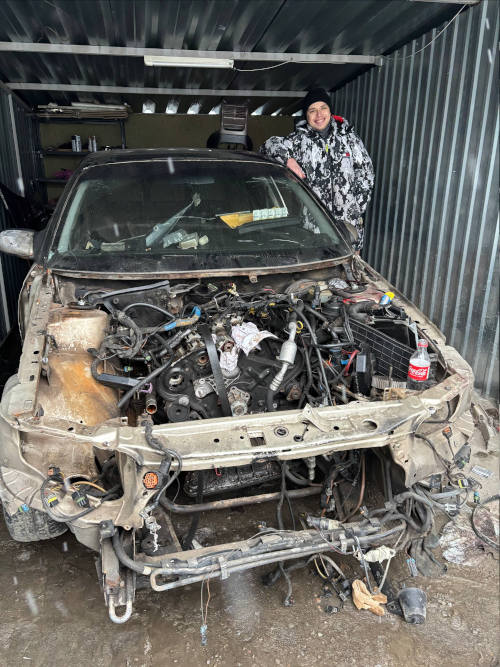
Chevrolet Camaro
The Chevrolet Camaro has never functioned as a blank canvas. At all production years in USA, it is a rear-drive performance platform and has a strong factory identity, but that identity changes in important ways from one generation to the next. The chassis, front structure, package driveline, steering path, cooling volume, electrical architecture, and emissions logic all determine the true compatibility of an engine. A swap prospect that seems good on paper is likely to disappoint the expectation because the platform is engineered for something beyond just physical clearance.
This is particularly true with the Camaro because the name covers a great deal of variance in engineering. Early F-body cars permit mechanical adaptations more easily than later ones because they demand less from the engine in terms of electronics. The fifth and sixth generations reverse that equation. Those engine bays can accept very powerful modern V8 engines, but the platform relies more and more on a set of interdependent networked modules, torque management, and closely matched calibration logic. Camaro compatibility is never just a matter of engine mounts and the shape of the oil pan.
TL;DR
- Engine compatibility in a Camaro means mechanical fitment, electronic integration, and emissions survivability, not just whether the engine physically enters the bay.
- Engines that fit still fail when the drivetrain geometry, cooling load, control strategy, or module communication no longer matches the car.
- First- and second-generation Camaros are mechanically flexible, while fifth- and sixth-generation cars are much less tolerant of incomplete electronic integration.
- Level 1 swaps stay close to factory logic and usually succeed because the engine family, packaging, and control path remain predictable.
- Level 2 swaps still look reasonable on paper, but heat management, accessory packaging, and control strategy begin to dominate the outcome.
- Levels 3 through 5 are not simple engine swaps, they are full system builds with compounding mechanical, electrical, and usability risks.
- Most builders underestimate higher-level swaps because fabrication skill does not solve torque modeling, security logic, emissions readiness, or driveline behavior.
- The lowest-risk Camaro swaps stay inside Chevrolet small-block logic or close factory-family precedents, especially in the generations that already support similar layouts.
- Cross-brand swaps escalate quickly because the engine, transmission, wiring, and control systems stop sharing a common architecture.
- High-effort swaps often require standalone or hybrid control strategies because the original Camaro electronics no longer have a believable way to manage the engine.
- The engine itself is rarely the main cost once the project moves beyond factory-adjacent combinations.
- Budgets expand through wiring, debugging, test-fit revisions, cooling changes, driveline corrections, and repeated rework.
- Timelines stretch because the project stops moving forward in a straight line and starts looping back through the same unresolved systems.
- Most failed swaps do not die on first start, they fail later through heat soak, vibration, load, and real driving conditions.
- Fragmented wiring, incomplete cooling strategy, bad driveline angles, and unstable accessory-drive geometry are the most common delayed failure patterns.
- OEM ECU-based swaps usually have the best chance of preserving diagnostics and inspection survivability in U.S. road-car reality.
- Standalone ECU swaps can solve control problems but often make inspection and full street-car behavior harder to preserve.
- Legality and emissions strategy need to be planned at the beginning because they depend on the finished system, not on the engine choice alone.
- Rebuilding the existing engine, using conservative forced induction, or correcting gearing often solves the real problem with less disruption than a full swap.
- The right tool is the option that solves the actual performance or reliability problem while preserving the most system integrity.
Chevrolet Camaro Engine Swap Compatibility Overview
What "compatible" actually means
Camaro compatibility has three layers. The first is mechanical fitment. In this category, we consider block dimensions, sump location, bellhousing pattern, accessory drive width, steering clearance, header path, crossmember relationship, cooling package demand, and driveline geometry. The second layer is electronic integration. This is about whether the powertrain control strategy can talk to the chassis, body, cluster, anti-lock brake system, and theft deterrent system without having persistent faults or degraded operation. The third layer is about finishing combinations that do not run two monitors and thus do not make the car a permanent non-compliant project when driving through emissions and inspection.
The fact that an engine is mechanically possible does not mean it is Camaro-compatible. An LT direct-injected V8 that has variable valve timing and torque based throttle control is going to fit a lot differently than a big-cube small block. While a traditional carbureted engine is going to fit nicely in an earlier F-body, the same strategy will not make sense in a 2018 Alpha-platform car that is going to expect coordinated control between the ECM, TCM, BCM, driving electronic power steering, and logic-based electronic differential control on some trim. Compatibility means that the whole vehicle still behaves like a coherent system after the engine change.
Mechanical vs electronic vs emissions compatibility
Mechanical compatibility is most visible, so it is the layer most builders recognize first. Engine bays in Camaros promote swaps that respect engine setback, crank centerline height, oil pan rail clearances, and driveline angles. Encroachment is possible with compact engines, too - accessory drives can hit the steering box on early models, the drive/front of the engine can place too much heat in the floor and trans tunnel, and the oil pan can cross the crossmember(s) causing issues during compression of the suspension. This category also includes the cooling needs of the engine. The combination of front-end packaging of the Camaro, the dimensions of the radiator core support, the location of the condenser, and the profile of the hood often limit combinations long before advertised horsepower does.
Starting with the third generation, electronic compatibility becomes a key determinant, becoming the primary factor by the fifth and sixth generations. The engine controller has to send the signals in the expectation and at the matching timing and format. There’s an immobilizer handshake, serial data exchange, pedal-throttle correlation, transmission torque reduction request, fan control strategy, and instrument data broadcasting. A package that ignores torque modeling logic for shift quality and stability will start and idle, but it will behave badly under load. Harsh shifts, traction-control faults, limp mode, nonfunctional gauges, and disabled cruise control are common.
Emissions compatibility is often the least exciting layer and often the one that kills otherwise interesting ideas. A Camaro that runs on the original inspection framework would require oxygen sensor logic and catalyst efficiency monitoring, evaporative system closed loop, system integrity, readiness, and correct reporting of all the diagnostics. On older vehicles, that may be of little interest or loosely enforced based on authority and year. In newer OBD-II Camaros, especially 1996 and newer Camaros, emissions compliance becomes part of the basic utility of the vehicle. An engine that runs strong but cannot complete the monitors or maintain closed loop operation is not street compatible in the context of driving it.
Reasons the fitment of engines that still fail is because the platform most likely rejects one of the other two layers. The common pattern is easily recognizable. The block clears the shock towers, the transmission bolts up with the right case, and the car can be made to move. Then the real problems begin: unstable idle because of load compensation being incorrect, overheating because the airflow and fan logic were not matched to the real thermal load, driveline vibration from the engine’s poor angle, erratic behavior of the clutch or converter, and a warning-light storm because of the communication from the missing modules. The engine fits. The vehicle no longer operates as a complete product.
The sixth-gen Camaro serves as a great example. Engine options such as the LT1 or LT4 look like reasonable targets for transplants since the platform naturally supports Gen V V8s, but it isn't as simple as just putting an engine in. It needs the correct data stream, the right torque logic for interventions, a compatible pedal and throttle + authentication, and calibrations for the trans, chassis, and whatever else controls it. While the fifth gen may be more integrated than the sixth, it still requires the same CAN-based coordination. In contrast, a first-gen car can be more independent from the engine packaging because there is far less networked oversight to satisfy.
Silent failures can be caused by cooling and driveline geometry as well. An engine swap that raises the rear of the transmission too high can alter the relationship between the pinion, and introduce unwanted vibrations that owners may misdiagnose as a bad driveshaft. An engine and radiator package designed for high output with marginal radiator area or poor shrouding can also survive short pulls, and then fail in traffic or on the track. Torque delivery also needs to be considered. Later Camaros come with more sophisticated torque management to protect the driveline from failures and maintain the quality of shifts. An engine that produces power outside the assumptions built into the car can undermine driveline, traction intervention, and transmission management.
Brief generational differences
Camaro designs for 1967-1969 use the early F-body unitized structure with a front subframe and minimal electronics. These designs are more flexible by Camaro standards, but are sensitive to mount placement, header runs, firewall clearance, and front end weight balance. The 1970-1981 2nd generation also stays subframe unitized with front leaf spring solid axle rear ends, but an overall generous and long engine bay. Overall, the 2nd generation remains light with electronics allowing for primarily mechanical and thermal concerns. The 1982-92 3rd generation shifts to more modern control systems with things like fuel injection, e-engine control, overdrive trans, modern emissions, etc. The 1993-2002 4th generation adds more module involvement, packaged OBD-II from 1996, and tighter control around steering and front suspension. Compatibility is still achievable, but the cost of ignoring control and data strategies rises markedly.
The 2010–2015 fifth generation shifts the narrative once again. While large in size, the Zeta-platform Camaro has CAN-based electronics with integrated body functions, which means that the engine has to comply with more digital requirements than any F-body. The 2016–2024 sixth generation goes even further. While the Alpha platform is lighter and stiffer, it is also more tightly integrated. Things like torque modeling, theft deterrence, networked modules, and modern diagnostics lead to far less tolerance for incomplete sets. To put it another way, early Camaros punish fabrication errors. Learly Camaros, on the other hand, punish systemic errors.
Before you start researching parts and pricing, check whether the swap you have in mind actually fits – and whether it's worth doing.
Check My Engine SwapChevrolet Camaro Platform Reality: What It Allows and What It Punishes
Busch Structural Engineering
For all Camaros manufactured within the United States, a unitized body construction approach is utilized as opposed to one using a ladder frame construction method. However, there are variations structurally speaking across different generations. The first and second generations of F-body cars feature a unitized body construction with a front subframe. This means that the front suspension, steering, and engine mounting locations are different from a more modern integrated performance coupe. These early vehicles isolate a large portion of engine loads via the front substructure which means they are more compliant to the installation of traditional V8 engine families. This also means that by modern standards, the torsional rigidity of the chassis is on the low side. Because of this, variations in engine mass and torque output can more adversely affect cowl shake, door alignment, and overall NVH relative to the expectations of the builders of the vehicles.
Although the unitized construction is retained in the third and fourth generation F-body cars, the chassis construction, suspension geometries, and overall integration of loads are more advanced. These vehicles are more sensitive to positions of the driveline, the compliance of the mounting bushings, and the distribution of mass of the exhaust system. Even though a particular driveline fits without modification in the engine compartment, it can, if the mounting system and transmission supports do not control movement, introduce excessive vibration into the passenger compartment. These vehicles are more punishing than their predecessors to poor crossmember and tunnel designs because the relationship between the passenger compartment floor and the driveline system is less forgiving than in older domestic vehicles.
The fifth-generation Zeta Camaro features a much stiffer modern body with an independent rear suspension and an overall larger body size. While it allows most powertrain options, it penalizes more weight in the front and poor thermal packaging. The sixth-generation Alpha chassis provides even more stiffness and a more refined load path. This improves chassis tweak but increases the sensitivity to wrong mount stiffness, exhaust tube pitch, and calibration mismatch. In a modern stiff body, bad integration just isn’t hidden in the chassis flex. It shows up as shake, harshness, fault codes, and drivability that is inconsistent.
Mechanical limits (mounts, crossmembers, steering)
Mounting geometry is the first hard limit. The early Camaro designs broadly favor the Chevrolet small-block and big-block patterns because the platform was originally designed around them. That said, not all conventional engines are created equal. The deck height, exhaust port positioning, starter positioning, oil pan shape, and load up front axle all are significant. A package that is physically taller and heavier will affect hood clearance, brake booster clearance, and the relationship to the steering shaft. While big-displacement engines can be packaged, it is harder to preserve good geometry.
The extended engine bay on second-generation vehicles may lead one to believe they can perform more engine swaps than they actually can. Other than engine compartment length, there are many other considerations that dictate whether an engine combination can be swapped. The area of steering gear, header sweeps, the transmission tunnel, and crossmembers all dictate whether an engine combination is practical for swapping. Vehicles in the third and fourth generations are designed with more narrow engine compartment areas. These areas are designed with lower hood lines, tighter structures for accessory drives, and more defined shapes for transmission tunnels. These affect the practicality and ease of swapping. Additionally, these are designed to affect the usability of intake systems, front drive systems, and specific pairings of bellhousing and transmissions. The differences in the F-body oil pan and other components in the fourth-generation production LS1 Camaro are in place for a reason. General Motors packaged that engine to fit in the vehicle, not just in the engine compartment.
The fifth-generation vehicles appear to offer more space for swaps due to their larger exteriors, and they can be more punishing due to more careless assumption with front accessory depths, packaginig of the cooling stack, paths of exhaust flow, widths of transmission cases and other factors. The sixth generation is more demanding. The engine bay of the Alpha platform is efficient. The placement of the direct injection system, steering system, front suspension geometry, the location of the catalytic converter, and the configuration of the underbody aero all dictate how and what can be done without negative secondary effects. The driveline angle is still a crucial consideration in every generation of vehicle. An engine that is poorly placed can still create problems with u-joint stress, differential loading, and unwanted vibrations, even when components have adequate static clearance.
Electronic restraints (CAN bus, BCM, ABS, security)
With every generation, electronic restraints increase significantly. The early Camaros from 1967-1981 are virtually unencumbered by electronic restraints. They don't have to deal with immobilizer handshakes, ABS plausibility checks, or a body control module that has to agree with the engine before the car can start. The 3rd generation Camaros have a more computer-controlled environment, but the transition to fully integrated control occurs with 4th generation models, especially post-1996 with OBD-II. Depending on the engine choice, early models were able to bypass certain diagnostics, but 4th generation models transmit and receive messages that influence the diagnostics, the behavior of the transmission, and communication with the dashboard instruments.
The 5th generation Camaro is the first to fully utilize a CAN bus architecture. The engine controller is no longer standalone. The car is designed to anticipate collaboration and communication between the engine control module (ECM), the transmission control module (TCM), body control module (BCM), ABS and electronic stability control modules, electronic throttle, and engine immobilizer. Depending on the controller, the vehicle can exhibit power restrictions, no functioning heating, ventilation and air conditioning (HVAC), inoperative dashboard gauges, and incorrect fan control. This generation is also when a shift to torque-based control occurred. The transmission and stability control systems are no longer reactive to engine speed, but they expect a plausible torque value to be sent.
The sixth generation Camaro has even more consolidation. Everything from security, throttle mapping, drive-mode behavior, cooling strategy, transmission control, and even cluster communication, are all dependent on a consolidated electronic ecosystem. The factory LT1 and LT4 combinations work due to GM having a complete conversation between modules. These evaluative engine control systems have to mimic that conversation good enough for the rest of the vehicle to trust them. That’s also why a modern Camaro can have a physically correct engine swapped in and still be an electronic failure. The modern vehicle networks treat the engine as a true black box and no longer as a self contained unit.
Why shortcuts create long-term debugging debt
Shortcuts create long-term debugging debt because they conceal the failure’s true source. A Camaro built with makeshift mounts, partial wiring integration, disabled diagnostics, a rationally chaotic cooling system, and other improvisations may seem like a time saver in the short term. It transforms engineering challenges into recurring symptoms. Intermittent heat soak, parasitic drains, phantom misfire codes, unstable idle during steering load, inoperative cruise control, and random communication errors are seldom isolated faults. These are often clear symptoms that a swap job was never thoroughly engineered.
Camaro imposes increasing levels of debt on later generations of cars. If a fifth or sixth generation car gets a poly-angle powertrain package without corresponding torque strategy, emissions logic, and network expectations, every subsequent issue is that much more difficult to troubleshoot. Shift complaints could actually be an engine torque reporting issue. Inadequate fan operation could be due to incorrect logic surrounding A/C requests. A traction control fault could be due to missing or implausible engine data. More integrated systems mean that poor integration has a greater cost.
Even on earlier cars, cracks in header, collapsed mounts, chronic overheating and NVH complaints show that short cuts have been taken. The key difference is that newer Camaros usually fail in soft systems, whilst older ones fail in hard systems. The chassis of all generations of Camaro has a different core reality. The Camaro chassis has an ability to tolerate power, however, a complete vehicle setup can only tolerate power when all of the systems mechanical, electronic and legal, are fully aligned.
Factory Engines Offered in the Chevrolet Camaro (All Years)
Complete Factory Engine Specification Table
| Engine Code / Name | Displacement | Engine Type & Cylinders | Fuel Type | Valvetrain / Timing | Power | Torque | Production Years | Donor Vehicles | Known Issues |
|---|---|---|---|---|---|---|---|---|---|
| L26 Turbo-Thrift | 230 cu in / 3.8L | Inline-6 | Gasoline | OHV, 2 valves per cylinder, timing gears/chain family | 140 hp | 220 lb-ft | 1967 | 1967 Camaro, Chevrolet Chevy II/Nova six-cylinder applications | Modest output, carburetor tuning drift, oil seepage typical of period inline-sixes |
| L22 Turbo-Thrift | 250 cu in / 4.1L | Inline-6 | Gasoline | OHV, 2 valves per cylinder | 155 hp | 235 lb-ft | 1967–1979 | Camaro, Nova, Chevelle, full-size Chevrolet six-cylinder cars | Carburetor wear, weak performance margin, age-related ignition and cooling issues |
| Z/28 302 | 302 cu in / 4.9L | V8 | Gasoline | OHV, 2 valves per cylinder, timing chain | 290 hp | 290 lb-ft | 1967–1969 | Camaro Z/28 only | Peaky torque curve, high-rpm wear if neglected, solid-lifter maintenance demands |
| L14 | 307 cu in / 5.0L | V8 | Gasoline | OHV, 2 valves per cylinder | 200 hp | 300 lb-ft | 1967–1973 | Camaro, Nova, Chevelle, full-size Chevrolet passenger cars | Limited performance head flow, carburetion wear, age-related oil leaks |
| LF7 / L30 | 327 cu in / 5.4L | V8 | Gasoline | OHV, 2 valves per cylinder | 210–275 hp | 320–355 lb-ft | 1967–1968 | Camaro, Corvette, Chevelle, Nova | Cooling sensitivity when modified, age-related bottom-end wear, carb setup variability |
| L48 / LM1 / LT-1 350 family | 350 cu in / 5.7L | V8 | Gasoline | OHV, 2 valves per cylinder | 185–360 hp | 280–380 lb-ft | 1967–1981 | Camaro, Corvette, Chevelle, Nova, Chevrolet trucks and full-size cars | Huge variation by tune, emissions-era detuning, carburetor and ignition aging issues |
| L35 / L78 / L34 396 | 396 cu in / 6.5L | Big-block V8 | Gasoline | OHV, 2 valves per cylinder | 325–375 hp | 410–415 lb-ft | 1967–1969 | Camaro SS, Chevelle SS, Corvette big-block applications | Front-end weight, heat load, fuel demand, oil leaks common with age |
| L78 402 “396” | 402 cu in / 6.6L | Big-block V8 | Gasoline | OHV, 2 valves per cylinder | 300–375 hp | 410–415 lb-ft | 1970–1972 | Camaro SS, Chevelle and other Chevrolet big-block cars | Heat management, weight penalty, fuel economy, accessory bracket and cooling complexity |
| LE1 Iron Duke | 151 cu in / 2.5L | Inline-4 | Gasoline | OHV, 2 valves per cylinder | 90–92 hp | 130–134 lb-ft | 1982–1986 | Camaro, GM X-body and A-body four-cylinder cars | Weak output, coarse NVH, head cracking and durability concerns in hard use |
| LC1 / LB8 2.8 V6 | 173 cu in / 2.8L | 60-degree V6 | Gasoline | OHV, 2 valves per cylinder | 102–135 hp | 142–165 lb-ft | 1982–1989 | Camaro, S-10, Celebrity, Citation and other GM 60-degree V6 vehicles | Timing cover and intake leaks, modest bottom-end torque, injector and idle issues |
| LH0 3.1 V6 | 191 cu in / 3.1L | 60-degree V6 | Gasoline | OHV, 2 valves per cylinder | 140 hp | 180 lb-ft | 1990–1992 | Camaro, Lumina, Beretta, other GM front-drive and rear-drive 60-degree V6 uses | Intake sealing issues, uneven idle quality, aging sensors and ignition components |
| LU5 / LG4 / L69 / L03 305 family | 305 cu in / 5.0L | V8 | Gasoline | OHV, 2 valves per cylinder | 145–230 hp | 240–300 lb-ft | 1982–1992 | Camaro, Monte Carlo, Caprice, Chevrolet/GMC light trucks | TBI/TPI sensor aging, weak factory heads on some versions, cam wear and intake leaks |
| LB9 305 TPI | 305 cu in / 5.0L | V8 | Gasoline | OHV, 2 valves per cylinder | 190–230 hp | 240–300 lb-ft | 1985–1992 | Camaro IROC-Z/Z28, Pontiac Firebird equivalents | TPI intake limitations at higher rpm, sensor aging, distributor and cold-start issues |
| L98 350 TPI | 350 cu in / 5.7L | V8 | Gasoline | OHV, 2 valves per cylinder | 230–245 hp | 330–345 lb-ft | 1987–1992 | Camaro IROC-Z/Z28, Corvette C4, Firebird Formula/Trans Am | TPI upper-rpm restriction, optispark not applicable here but ignition aging still common, intake gasket leaks |
| L32 3.4 V6 | 207 cu in / 3.4L | 60-degree V6 | Gasoline | OHV, 2 valves per cylinder | 160 hp | 200 lb-ft | 1993–1995 | Camaro, Firebird base models | Intake and front cover leaks, limited performance headroom, age-related ignition issues |
| L36 3800 Series II | 231 cu in / 3.8L | V6 | Gasoline | OHV, 2 valves per cylinder | 200–205 hp | 225–230 lb-ft | 1995–2002 | Camaro, Firebird, Buick and Chevrolet 3800 passenger cars | Upper intake/plenum issues, coolant leak risk on some applications, accessory wear with age |
| LT1 350 | 350 cu in / 5.7L | V8 | Gasoline | OHV, 2 valves per cylinder | 275–305 hp | 325–335 lb-ft | 1993–1997 | Camaro Z28/SS, Corvette C4, B-body Chevrolet and Pontiac performance sedans | OptiSpark sensitivity, cooling system neglect consequences, water pump service complexity |
| LT4 350 | 350 cu in / 5.7L | V8 | Gasoline | OHV, 2 valves per cylinder | 330 hp | 340 lb-ft | 1997 | Camaro SS 30th Anniversary, Corvette Grand Sport | Limited parts specificity, OptiSpark-era service concerns, premium fuel sensitivity |
| LS1 | 346 cu in / 5.7L | V8 | Gasoline | OHV, 2 valves per cylinder | 305–325 hp | 335–350 lb-ft | 1998–2002 | Camaro Z28/SS, Corvette C5, Firebird Formula/Trans Am, GTO lineage family | Oil consumption on some engines, piston slap when cold, rear main and intake sealing issues |
| LLT 3.6 DI V6 | 3.6L | V6 | Gasoline | DOHC, 4 valves per cylinder, VVT, timing chains | 304–312 hp | 273 lb-ft | 2010–2011 | Camaro LS/LT, Cadillac and other GM High Feature V6 applications | Timing chain wear risk, carbon buildup from direct injection, high-pressure fuel system sensitivity |
| LFX 3.6 DI V6 | 3.6L | V6 | Gasoline | DOHC, 4 valves per cylinder, VVT, timing chains | 323 hp | 278 lb-ft | 2012–2015 | Camaro LS/LT, Cadillac ATS/CTS family, other GM V6 cars | Carbon buildup, timing chain stretch if oil maintenance is poor, PCV-related deposits |
| LS3 | 6.2L | V8 | Gasoline | OHV, 2 valves per cylinder | 426 hp | 420 lb-ft | 2010–2015 | Camaro SS manual, Corvette C6, Pontiac G8 GXP, Chevrolet SS family | Valve spring wear in aggressive use, oil control under track load, clutch abuse in manual cars |
| L99 | 6.2L | V8 | Gasoline | OHV, 2 valves per cylinder, AFM | 400 hp | 410 lb-ft | 2010–2015 | Camaro SS automatic, related GM Gen IV V8 automatic applications | AFM lifter concerns, oil consumption on some engines, VVT/AFM calibration sensitivity |
| LSA | 6.2L supercharged | V8 | Gasoline | OHV, 2 valves per cylinder | 580 hp | 556 lb-ft | 2012–2015 | Camaro ZL1, Cadillac CTS-V | Heat exchanger demand, supercharger brick heat soak, high driveline stress |
| LS7 | 7.0L | V8 | Gasoline | OHV, 2 valves per cylinder | 505 hp | 481 lb-ft | 2014–2015 | Camaro Z/28, Corvette Z06, Corvette 427 Convertible | Valve guide concerns on some builds, dry-sump service sensitivity, track heat load |
| LTG 2.0 Turbo | 2.0L | Turbocharged inline-4 | Gasoline | DOHC, 4 valves per cylinder, VVT, timing chain | 275 hp | 295 lb-ft | 2016–2023 | Camaro 1LS/1LT/2LT, Cadillac ATS and other GM turbo four applications | Piston and ringland stress under tuning, carbon buildup, PCV and turbo heat concerns |
| LGX 3.6 V6 | 3.6L | V6 | Gasoline | DOHC, 4 valves per cylinder, VVT, timing chains | 335 hp | 284 lb-ft | 2016–2024 | Camaro LT/RS, Cadillac ATS/CTS/CT6 family | Direct-injection deposits, timing system wear if maintenance slips, cooling sensitivity under track use |
| LT1 Gen V | 6.2L | V8 | Gasoline | OHV, 2 valves per cylinder, DI, VVT | 455 hp | 455 lb-ft | 2016–2024 | Camaro SS/LT1, Corvette C7 Stingray, GM Gen V V8 applications | Direct-injection deposit potential, oil temperature management in track use, AFM not used in Camaro form but lifter architecture still matters by family |
| LT4 | 6.2L supercharged | V8 | Gasoline | OHV, 2 valves per cylinder, DI, VVT | 650 hp | 650 lb-ft | 2017–2024 | Camaro ZL1, Corvette Z06, Cadillac CTS-V/CT5-V Blackwing family lineage | Heat soak management, blower system load, driveline stress, high fuel demand |
Best Engine Swap Options for the Chevrolet Camaro, Ranked by Difficulty
Understanding how swap difficulty levels work
When it comes to assessing swap difficulty, it is not just about engine size, brand, and style of engine fabrication. It is about how far the completed car moves away from the factory logic. A Level 1 Camaro swap keeps the engine family, mounting logic, accessory packaging, transmission relationship, and control strategy close to what the platform already understands. A Level 2 swap is still GM, but it starts to push the car beyond its normal thermal, electronic, or packaging assumptions. Levels 3 to 5 are no longer just engine choices, but rather full vehicle integration programs.
The reason why the scale rises nonlinearly is that each additional deviation exponentially increases the amount of systems that need to work in conjunction. For instance, an oil pan shape change impacts how a crossmember clearance is designed, affecting what height the engine sits at, in turn, modifying hood clearance, steering throw, exhaust routing, and driveline geometry. The same is true when it comes to the electrical components. For example, a newer direct-injected engine requires additional components, including fuel pressure control, spark control, and pedal position logic, as well as other modules that communicate, security alignment, transmission torque messaging, and emissions monitors that operate logically in the electrical context of the Camaro. This is why the leap in the scale when moving from the “mostly fits” to “works like a finished car” is significantly greater than moving from “does not fit” to “fits.”
With the complexity of heat management, electronics and overall vehicle integration at the peak of the scale, the focus shifts to factors outside the engine. The more modern Camaro platforms, in particular the 2010–2015 Zeta cars and the 2016–2024 Alpha cars, require a coherent communication flow in the vehicle between the engine control unit and body functions, anti-theft/immobilizer systems, stability control modules, cooling strategies, and in some cases, even the transmission control module. Therefore, a physically successful installation could still be classified as a Level 4 or Level 5 swap if the engine is not able to communicate properly.
In the same manner, a powertrain that produces a lot more heat than the platform is expecting modifies radiator sizing, airflow management, underhood heat control, and the survival of the catalytic converter.
It helps, but it does not eliminate the difficulty. Outstanding mounts and neat welding won’t direct-injection fuel supply demands, CAN messaging gaps, readiness monitor failures, or a transmission that requires believable torque reduction data to shift in the correct way. The most successful Camaro swaps often look the most conservative because they keep the original assumptions of the vehicle intact and the most difficult ones tend to fail not because of an exotic engine, but because the integrated system started to behave like multiple vehicles.
Level 1 Swaps (Lowest Risk, Near Bolt-In)
These swaps usually work the best because they stay close to factory modifications. This includes options that keep the Chevrolet small-block engine architecture, that make use of GM engines with strong precedent for fitting them in a Camaro, or fit into model years where the platform already supports a similar drivetrain layout. For these combinations, the engine bay, transmission tunnel, cooling system, and accessory placement are predictable enough that the swap does not completely transform into a full chassis redesign. Also, the Camaro’s age usually makes electronics and emissions more manageable because it needs very little digitization or because the engine family integrated well and has strong documented pathways.
| Engine Code / Name | Engine Type & Cylinders | Fuel Type | Donor Vehicles & Years | Valvetrain / Timing | Swap Challenges (Specific to Camaro) |
|---|---|---|---|---|---|
| Chevrolet Gen I 350 Small-Block | OHV V8 | Gasoline | 1967–2000 Chevrolet passenger cars and light trucks, widespread crate and service-replacement support | OHV, 2 valves per cylinder, timing chain | Best fit in 1967–1981 cars, still needs attention to front accessory depth, steering box clearance on early cars, exhaust routing, and front-end weight balance when paired with iron components |
| LS1 / LS6 | OHV V8 | Gasoline | 1998–2002 Camaro/Firebird, 2001–2004 Corvette Z06, 1997–2004 Corvette | OHV, 2 valves per cylinder, timing chain | Strong choice for 1982–2002 F-body projects and older Camaros, but fourth-gen accessory spacing, oil pan selection, steering shaft clearance, and transmission placement still decide whether it behaves like a factory-style install |
| LS3 / LS376 | OHV V8 | Gasoline | 2008–2013 Corvette, 2010–2015 Camaro SS, Chevrolet Performance crate applications | OHV, 2 valves per cylinder, timing chain | Very favorable in 1967–2002 cars and logical in 2010–2015 V8-based conversions, but hood clearance, accessory drive width, oil pan choice, and catalytic packaging still matter in lower-hood F-body cars |
| L99 | OHV V8 | Gasoline | 2010–2015 Camaro SS automatic | OHV, 2 valves per cylinder, timing chain, AFM, VVT | Most sensible inside fifth-generation Camaro chassis, where the main challenge is preserving automatic-transmission behavior, AFM-related calibration expectations, and complete accessory and cooling compatibility rather than solving raw fitment |
| LT1 (Gen V small-block) | OHV V8 | Gasoline | 2014–2019 Corvette, 2016–2024 Camaro SS/LT1, Chevrolet Performance crate engine | OHV, 2 valves per cylinder, timing chain, direct injection, VVT | Near-bolt-in only when the target car already lives close to Gen V small-block logic, especially 2016–2024 Camaro V8-adjacent builds; outside that zone, high-pressure fuel system packaging and electronic integration push it upward fast |
Level 2 Engine Swaps (Moderate Complexity)
This is where the Camaro projects stop being simple engine swaps and require full scope planning. The engines at this level are still GM-based and still well understood, but they present one or more escalation factors: truck accessory spacing, iron-block mass, DI support, supercharger heat, or the engine and target Camaro chassis misalignment. This is a more planning-intensive swap. The swap succeeds when attention to packaging, heat rejection, fuel strategy, control logic, and driveline behavior are aligned.
These are also the swaps that stall most often in actual garages. The engine enters the bay, the transmission choice seems clear, and progress seems solid. Then the project hits the next iceberg, radiator capacity is marginal, steering and header path conflicts, front accessory depth is a compromise, or the electronics package is unclean and does not support the articulation of the chosen transmission and body. Level 2 is also the level where people learn that “GM to GM” is not a synonym for simple.
| Engine Code / Name | Engine Type & Cylinders | Fuel Type | Donor Vehicles & Years | Valvetrain / Timing | Swap Challenges (Specific to Camaro) |
|---|---|---|---|---|---|
| LQ4 / LQ9 6.0 | OHV V8, iron block | Gasoline | 1999–2007 GM full-size trucks and SUVs, including Silverado, Sierra, Express, Suburban, Escalade family | OHV, 2 valves per cylinder, timing chain | Common in 1967–2002 cars, but truck oil pan depth, tall accessory spacing, front-end weight gain, and underhood heat make it less clean than LS passenger-car combinations, especially in third- and fourth-gen F-bodies |
| LM7 / L33 5.3 | OHV V8 | Gasoline | 1999–2007 GM trucks and SUVs, selected aluminum 2005–2007 truck applications for L33 | OHV, 2 valves per cylinder, timing chain | Value-oriented option for older Camaros, but truck intake height, oil pan selection, accessory layout, and F-body steering/shaft clearance still create real packaging work rather than a true bolt-in |
| LFX / LLT 3.6 DI V6 | DOHC V6 | Gasoline | 2010–2015 Camaro V6, Cadillac and other GM High Feature V6 applications | DOHC, 4 valves per cylinder, timing chains, direct injection, VVT | Reasonable mainly for fifth-generation V6-based projects, but direct-injection hardware, exhaust heat management, timing-chain reputation, and module matching keep it from being truly low-risk outside original-family replacements |
| LSA | OHV supercharged V8 | Gasoline | 2009–2015 Cadillac CTS-V, 2012–2015 Camaro ZL1 | OHV, 2 valves per cylinder, timing chain | Logical for fifth-generation cars and adaptable to older Camaros, but blower clearance, intercooler plumbing, heat exchanger packaging, belt drive space, and driveline shock move it beyond factory-adjacent simplicity |
| LT4 | OHV supercharged V8 | Gasoline | 2015–2019 Corvette Z06, 2017–2024 Camaro ZL1, later Cadillac V applications by family | OHV, 2 valves per cylinder, timing chain, direct injection, VVT | Moderate only when the target is a sixth-generation Camaro already close to LT electrical logic, otherwise supercharger heat, high-pressure fuel support, torque management, and complete module cooperation raise difficulty sharply |
| 3800 Series II / L36 | OHV V6 | Gasoline | 1995–2005 GM passenger cars, including Camaro/Firebird base applications and W-body/Buick platforms | OHV, 2 valves per cylinder, timing chain | Best understood in 1993–2002 F-body V6 projects, but it stays Level 2 because accessory placement, fuel-system differences, exhaust packaging, and calibration expectations still matter more than the engine’s reputation suggests |
High-Effort Engine Swaps (Levels 3–5)
At this point, the adjustments needed to be made are beyond an “engine swap,” but rather a “system build.” The “engine” is just one part of the whole decision making system. The mount geometry, transmission control, shifter location, front end weight, differential survival, axle strength, pedal strategy, gauge communication, cooling system, and the layout emissions all change together. The Camaro can handle serious power, but once the engine family leaves the platform’s normal logic, almost every subsystem becomes negotiable.
Cross-brand swaps increase this issue immediately. Even when the block fits, the electronics and driveline ecosystems do not work together. The transmission that is supposed to go with the engine probably won’t fit into the Camaro tunnel easily, and the transmission that will end up fitting the Camaro probably won’t talk to the engine’s computer. Also, the gauge cluster, ABS, stability control, and body control systems may stop talking to each other. This is the reason serious cross-brand Camaro builds have moved to using a standalone or hybrid control system. Standalone systems are not just about the freedom to tune, it’s often the only way to control the engine once the factory control systems’ve been cut.
The problem with packaging becomes a problem with redesigning as opposed to simply selecting which components to use. Turbo inline sixes require more length and more due to exhaust heat, modular overhead-cam V8s increase width and cam cover bulk, and large diesels exceed the front structure assumption overloading it and pushing high-output forced-induction combiantions increase the cooling radiator, intercooler, and underhood airflow needs beyond the original design of the vehicle. Particularly with the 2010–2024 models of the Camaro, later models of the Camaro face challenges beyond simply keeping the engine running. There is the need to contain and preserve the balance of drivability, gearbox function, cooling, and diagnostics within a platform designed to accommodate a certain level of integrated electronic functionality.
| Engine Code / Name | Difficulty Level (3 / 4 / 5) | Engine Type & Cylinders | Fuel Type | Donor Vehicles | Dominant Integration Risks |
|---|---|---|---|---|---|
| LT1 (Gen V) into 1982–2002 Camaro | 3 | OHV V8 | Gasoline | 2014–2019 Corvette, 2016–2024 Camaro SS/LT1, Chevrolet Performance crate engine | Direct-injection fuel support, Gen V controller strategy, accessory and oil pan selection, and matching late torque logic to older F-body transmission and chassis expectations |
| LS7 | 3 | OHV V8 | Gasoline | 2006–2013 Corvette Z06, 2014–2015 Camaro Z/28 | Dry-sump or oiling strategy decisions, hood and induction clearance, thermal load, and driveline shock in cars that were not originally built around a 7.0L high-rpm package |
| 2JZ-GTE | 4 | DOHC inline-6, turbocharged | Gasoline | Toyota Supra, Aristo | Engine length, turbo-side heat concentration, custom transmission and shifter alignment, standalone ECU requirement, and complete loss of factory GM powertrain communication logic |
| Ford Coyote 5.0 | 4 | DOHC V8 | Gasoline | Mustang GT, F-150 by variant | Width across cam covers, brake and steering clearance, transmission integration mismatch, non-GM pedal and ECU strategy, and high calibration complexity for street-car drivability |
| 6.4L Hemi / 392 | 4 | OHV V8 | Gasoline | Challenger, Charger, 300, Jeep SRT family | Cross-brand electronics isolation, accessory and exhaust packaging, transmission adaptation, and limited synergy with Camaro gauges, body controls, and stability logic |
| Duramax 6.6 | 5 | Turbo-diesel V8 | Diesel | GM HD trucks and vans | Front-axle mass, packaging volume, cooling-stack redesign, transmission tunnel and driveline rework, and a complete break from the Camaro’s intended weight, thermal, and NVH envelope |
| Cummins 4BT / 6BT | 5 | Turbo-diesel inline-4 / inline-6 | Diesel | Medium-duty trucks, step vans, industrial and pickup applications | Severe mass and vibration mismatch, crossmember and hood interference, driveline and differential loading changes, and major cooling and chassis-balance penalties that overwhelm normal Camaro use cases |
| Tesla drive unit or full EV conversion set | 5 | Electric motor drive unit | Electric | Tesla rear or front drive units, aftermarket EV conversion packages | Battery packaging, crash structure compromise, thermal management, brake-vacuum and power-steering replacement strategy, weight distribution changes, and total separation from the Camaro’s original powertrain architecture |
Universal Engine Swap Execution Reality
Planning & Measurement
Every engine swap's success or failure begins in the planning stage before any cutting or welding is done to the car. This phase is where the builder will determine if the engine, transmission, front accessory drives, exhaust pathways, cooling components, oil pans, shifter location, and ECU strategy are compatible enough to go into the same chassis. This is especially true for the Chevrolet Camaro platform. Many projects underestimate the difficulty posed by this platform, as it spans the early subframe era, late F-body packaging constraints, and the modern big-tech fifth and sixth generation cars. Swaps like these often begin without taking the entire system into consideration, and as such, many time and money consuming fixes are bound to arise.
The most common failure in planning does not come from using the wrong part, but rather is a result of poor assumptions. Builders will often measure the block and then forget to measure for accessory depth, the structure of the hood, the steering shaft path, the clearance of the transmission tunnel, the position of the driveshaft, or the space for the cooling stack. Later model Camaros are especially difficult for this, as the engine is not a stand-alone component; it becomes part of a network that includes throttle logic, theft deterrent systems, transmission logic, cluster communication, and fan control. Neglecting these relationships from the start creates hidden instability.
When it comes to decision making, building one lever is dependent on another. If positioning of the drivetrains is not established, the decisions for cooling and exhaust become rash. Also, if the wiring integration strategy is not determined before the test-fit, the builder realizes too late that, depending on the selected intake, the location of the firewall, module arrangement, accessory drive, etc., there is no straightforward way to route the electrical wiring. Effective swap planning done may look conservative, but there is no loss of certainty. In contrast, poor planning may look efficient, but it often leads to a lot of rework activities.
Removal of the engine
Although the removal of the engine is often seen as a mechanical activity, it is a systems activity and is the first major audit of the vehicle. This is the stage that all the existing conditions of the wiring, crossmember, steering, firewall modifications, tunnel obstructions, damage from previous owners, cooling system bypass on the heat exchanger, and the wear on the drivetrain become apparent. Many older Camaros reveal fatigue, rust, and improvised repairs on the chassis and mounting points that have experienced decades of load cycles. In contrast, newer Camaros reveal hidden problems, such as the interdependence of modules and harnesses that seemed simple from the exterior of the vehicle.
Most dramatic failures go undetected at first. Components like a car's engine and trans come apart and are removed. Progress seems to be made. However, the project eventually comes to a standstill when the removal phase reveals all the components that must be kept to preserve the car's functionality. We encounter brake lines that might be located in the same space as a chosen path for the exhaust, too little steering shaft movement, overly optimistic transmission choices, and a myriad of removed modules and disconnected wires. These all show that the original plan did not consider the control architecture for the car.
This checkpoint also establishes whether the project is going to remain in a swap stage or get into a deeper level of complexity including restoration, repairs, and integration all at the same time. This is a critical distinction to make, as once the chassis requires correction work, the entire timeline adjusts. Many Camaro builds do not fail because the target engine is wrong. They fail because the project budget and timeline were built around the fantasy of a clean donor shell and a simple removal stage.
Test Fit & Clearance
Test fit is the phase where the project moves from conceptualization into a geometric reality. At this checkpoint the engine is no longer an isolated object. It now contends space with the steering system, the firewall, brake hardware, subframe, hood, radiator, condenser stack, headers, starter location, oil filter, and transmission tunnel. These interdependencies close up quickly in a Camaro, especially from the third generation forward. A combination that clears in one dimension often fails in two others.
The usual error is to consider static clearance to be final. An engine may fit between a frame or subframe boundary, but that’s wrong once engine roll, suspension movement, heat expansion, service access, and exhaust routing are taken into account. When the aim is to have a car that can be used on the street, rather than just start and idle, the problem is even greater. A starter that can only be serviced with major disassembly, a header that bakes the floor, or a transmission case that sits too high in the tunnel are not small inconveniences. They are evidence that the vehicle as a whole was not considered before the drivetrain was placed.
Later Camaros are even more unforgiving to poor test-fit discipline. While the engine bay may physically fit the package, there may be no clear path to facilitate airflow, harness routing, module mounting, or catalytic positioning. At this point, the project starts accumulating increasingly complex compromises. One small fix to hood clearance may affect engine height, then engine height affects driveline angle, which then affects transmission support, and the project progressively moves away from predictability.
Mounting & Driveline Geometry
Mounting isn't only about keeping the engine in place; it also establishes how the entire driveline load is routed through the chassis. In a Camaro, the engine position defines the relationship of the transmission tailshaft, working angle of the driveshaft, pinion, shifter, header path, oil pan depth, and even the vibrational characteristics of the cabin. It is less about the mounts and more about the geometry they contain. Once that geometry is incorrect, the entire project starts to compensate for what is fundamentally a poor baseline.
The builders often ignore how small misalignments can affect a driveline system. A driveline that is positioned a little too high, too far towards the rear, or even at the ‘wrong’ angle may seem acceptable at the time of assembly or the first engine start. But, in service, it manifests as vibrations, low driving comfort, accelerated wear of joints, high seal wear stress, contact with the ground at operational loads, inconsistent clutch engagement or shifter operation. Mistakes are not self-declaring as bad geometry; they are self-declaring as a car that is never settled.
This is also the check point of the weight distribution and the structural behavior at the driveline connection. Early Camaros can accept a large degree of variation in the positioning of the V8 engines; however, they can still provide a nose heavy response, stiff mounts, and altered cross member loadings. Modern Camaros are stiffer and more precise. Their structures are less forgiving of poor mount selections, and will expose them immediately through excessive NVH, inconsistent traction and driveline behavior that is out of character for the platform.
**Wiring & ECU Strategy**
Wiring and ECU strategy determine whether the project stops at running an engine and becomes a full custom finished car. This checkpoint is way past the stage of just connecting wires. This is more about what the engine will say to the rest of the Camaro and how factory-like the end vehicle is intended to be. In older vehicles, this may narrow down to ignition, charging, gauges, and simple fan control. In newer vehicles, more so CAN based Camaros, it becomes a lot more questions about how the vehicle behaves in terms of pedal logic, security, transmission messaging, data in the cluster, torque reduction and cooling control, and emissions monitoring.
The most common errors of failure here is segmentation so there ends up being 4 or more pieces of the control logic where each behaves differently. One control module expects factory signals, another is being controlled with approximates, and the builder eventually loses the ability to reliably and confidently diagnose the control logic. Most of these vehicles will function to some degree. They will start, idle, even drive, but they are never trusted and will never be trusted, because control logic lacks a clear center and a single control strategy. They end up being an unfinished detail control logic.
The standalone control option reduces dependencies, however, it creates a different type of responsibility. With standalone control, the need for the user to document OEM conversations has been removed, but the user is now required to take on more responsibility regarding the calibration, idle behavior, drive ability, load response, fan strategy, and the legal inspection outcome. OEM-based control is more factory behavior-friendly, but it can be extremely sensitive to mismatched modules, and incomplete security and torque logic. There are many different ways to approach this sort of task, and each of the approaches has the ability to be successful. There will be a failure, however, if the decision made on the ECU is made based on convenience and not on the decision that is the best option for the entire vehicle.
First Start and Initial Validation
It's important to understand that a first start is not validation of success. It's only the first milestone that shows multiple systems working together. Even if the engine starts, idles, and the oil pressure light turns on, it is premature to call this operation successfully validated. The real questions are more widespread: will it control heat adequately, recover from a hot restart, communicate to the rest of the vehicle, behave under load, and will the ECU survive basic operation without creating multiple secondary faults? A Camaro that starts but does not stabilize is not near the end of the development process.
The common error is to assume the first start may be taken emotionally. It will take some time until the explanation of the noise, fuel smell, fan behavior, throttle response, charge consistency, gauge response, and transmission response all come together. A first start is not meant to say that temporary bypasses, loose routing, partial cooling, incomplete exhaust, or open electrical assumptions provide information about long-term viability. It only proves that the engine can fire during one very small moment.
The first start also reveals the quality of your sequencing. If the project planned wiring late, the first start usually shows how poor the communication was. If there was rushing on mounting decisions, the first running condition will be evident from vibration or contact under torque reaction. If cooling was more of an afterthought, you can expect idle heat soak to show itself right away. This is not a celebration point. This is to see if the car is one integrated machine or a collection of incomplete subsystems.
Enter your vehicle and target engine to see a compatibility verdict, estimated cost, required changes, and whether it's the right move for your build.
Get My Swap VerdictEngine Swap Cost and Time Expectations
Budget Ranges by Level of Difficulty
The costing for engine swaps goes up based on complexity because numerous factors come into play. In the case of low-risk swaps, budget-friendly Camaro swaps usually fit in ranges of serious hobbyists, and can be predicted with some confidence (assuming the base car is decent and the target is a complete, usable vehicle and not a bare mechanical conversion). For moderate complexity swaps, the budget class changes because order integration is a thing and one purchase won't cover all the required adjustments. Things like wiring, new mounting points, new cooling systems, new exhaust systems, new transmission systems, and numerous others all begin to stack up.
For more difficult swaps, a range is set that is high enough that the engine itself is not the most expensive component. In fact at higher ranges, most of the budget is earmarked for integration, correction, and finisher type work. The project pays for (and pays again for) numerous factors associated with design choices, then without each factor being sufficiently considered the project pays again for assumptions. This is the primary reason the jumps in budget range from a clean Level 1 to a Level 3 or Level 4 concept is a lot larger than builders expect. The engine cost may be only modestly more. However, the reality of a complete vehicle costs significantly more.
The difference between “running” money and “finished” money is substantial. A budget Camaro that starts and drives around and makes noise, falls within one budget range. A Camaro that starts hot and cold, drives through traffic, drives predictably, and passes inspection (where and when is applicable), and requires no further driving adjustments and correction is in another budget range. Most public swap budget speaks to the Camaro that makes noise and drives, while implying the Camaro that runs well and drives predictably.
Realistic Time Estimates
Time scales in the same non-linear way as the swap in the chassis. A straightforward, well-matched swap in a clean chassis, with a well set out plan, and the required components organized in advance, etc., can be done in a few weeks to a few months, provided the time plan, the parts path, and control strategy (for the time plan), and control strategy are clear. If the project includes fabrication, unresolved wiring, and cooling and driveline questions that won’t be answered, then without assembly the project schedule expands sharply. The reason is simple; the project stops moving through the stages, and starts moving backward through the same stages, and starts backward through the same stages, and stops backward through the same stages repeatedly.
As a rough-scope estimate, moderate complexity Camaro swaps will consume substantially more elapsed time than actual time spent working. Waiting due to the need to correct measurements, the need to revise test fitments, engineering decisions on the wiring harness, the need to revise exhaust routing, the need to revise the transmission, and the need to revise the calibrations are due to the extensive time delays caused by the visibility of the progress. High complexity swaps take it a step further, since every system relies on the presence of the others before achieving a sufficiently stable state. With the cooling design depending on the final engine position, the position of the engine depending on the fitment of the transmission, and the ECU strategy depending on the accessory and sensor packaging trade-offs, the project cannot be completed in a straight line.
There are a few key issues. A car that sits unused for months or years is more than a schedule issue. It is an issue of utility and an issue of focus. A lot of Camaro projects end more gradually than with a single dramatic incident. They tend to stall because the remaining tasks become too fragmented, too costly, or too mentally costly to continue to keep in the correct order.
Estimating Errors Made By Builders
Consistently, builders fail to estimate costs associated with wiring, thermal management, rework, and finish labor. Builders tend to think the hard part is deciding on an engine choice and putting it in. In fact, the project often becomes expensive only after those decisions are made. The first iteration of the plan almost never survives contact with the car, and every revision impacts several systems in a cascading fashion. That rework is more expensive and consumes more of the budget than the first concept acknowledged.
Another area builders tend to overlook is debugging. Just heat-soaked, a car that does not idle cleanly, with intermittent communication faults, vibrations present under light loads, and strange cycling of fan control can be expensive to debug without major visible damage. These problems are not glamorous, but they are vital to defining whether the finished Camaro can actually be used. Builders budget for installation but do not tend to budget for this phase.
Swap finishing costs more than builders budget for, as a swap is judged on the last twenty percent of the project… not the first eighty percent. Most of the work falls on the last end of the project. That is where many cars remain forever unfinished. The car may be technically running but never fully resolved.
Common Chevrolet Camaro Engine Swap Failure Scenarios
Incomplete or Fragmented Wiring
Fragmented wiring often survives the first start and fails later, which makes it especially deceptive. The car may run well enough in short sessions, then begin showing random no-start behavior, sensor plausibility faults, unstable idle after heat soak, charging inconsistencies, or intermittent module communication problems. These failures appear late because temperature, vibration, grounding quality, and real operating cycles expose weaknesses that static assembly never reveals. The harness does not need to be visibly catastrophic to be systemically wrong.
In a Camaro, this kind of failure is especially common when the engine management path is never fully unified. Part of the car still expects OEM logic, another part is handled by workarounds, and the final behavior becomes context-dependent. The result is a car that can seem fixed after one correction and then fail again in a different condition. That pattern is a signature of architecture problems, not isolated bad luck.
Under-Sized or Misapplied Cooling Systems
Cooling problems rarely show their full severity on the first day. Many swaps idle acceptably in mild weather, complete short drives, and then begin to fail once airflow demand, ambient temperature, traffic time, or repeated heat soak increases. The issue is not only radiator size. It is the total cooling system logic, airflow path, fan control behavior, heat rejection under real load, and the relationship between engine output and the Camaro’s available front-end packaging.
Misapplied cooling systems often create delayed secondary damage before the builder fully recognizes the root problem. Electrical components suffer from sustained underhood heat, intake air temperatures climb, fuel behavior worsens, seals age faster, and hot restart behavior becomes inconsistent. In forced-induction or modern direct-injection combinations, this deterioration accelerates because the vehicle now lives closer to the edge of its thermal margin. The car does not fail because the engine is too powerful in theory. It fails because the complete heat-management strategy was incomplete.
Misaligned Driveline Angles
Driveline angle problems also hide well at first. A Camaro may leave the garage, accelerate cleanly, and seem acceptable at low speed. After real miles it develops vibration at certain load points, harshness through the floor, accelerated joint wear, tailshaft stress, seal issues, or a general sense that the car never feels mechanically relaxed. These failures emerge with time because the geometry error only becomes visible under repeated rotational load and chassis movement.
The most dangerous part is that builders often chase symptoms rather than geometry. They replace driveshafts, mounts, bushings, and differential components without addressing the fundamental relationship between engine position, transmission angle, and rear driveline alignment. That is why this failure pattern tends to persist. The car keeps receiving new parts while the underlying geometry remains wrong.
Accessory Drive & Belt Geometry Issues
Accessory drive problems are classic delayed failures in Camaro swaps because they often begin as packaging compromises that appear harmless. A front drive is selected because it barely clears the radiator, steering path, or hood line. The engine starts and the belt turns, so the problem seems solved. Later the car begins throwing belts, wearing tensioners unevenly, overheating in ways that do not look obvious at first, or showing charging inconsistency at idle and high load.
These failures appear with time because belt systems care about alignment, operating range, heat, and sustained movement, not only static clearance. When the accessory path is slightly mispositioned, or when mount movement under load changes pulley relationship, the error grows with use. Camaro swaps are vulnerable here because front-end packaging often forces tight compromises, especially in third- and fourth-generation cars and in modern builds with dense cooling stacks. An accessory drive that only barely works will usually stop working once the car is asked to behave like a real street car.
Legal & Emissions Considerations (USA)
OEM ECU-Based Swaps
OEM ECU-based swaps generally have the best chance of surviving inspection because they preserve the logic the rest of the system was designed around. That does not make them automatically legal or simple, but it does mean the engine management, diagnostic readiness, evaporative behavior, catalyst monitoring, and fault reporting are more likely to behave coherently. In inspection-driven reality, coherence matters more than theoretical horsepower. A car that runs cleanly and reports plausible data stands a better chance of being usable than a more radical combination that cannot complete its own self-checks.
This is especially important in OBD-era Camaros. Once the car belongs to a diagnostic framework, the engine management system is not only responsible for running the engine. It also has to explain itself. OEM-style control gives the project a better chance of meeting that expectation, provided the rest of the integration is equally complete.
Standalone ECU Swaps
Standalone ECU swaps often solve packaging and control freedom problems while creating inspection problems. They are strong tools when the engine family has no realistic OEM communication path into the target Camaro, or when the project is too far from factory assumptions for stock control logic to make sense. The tradeoff is that the finished car may lose the very behaviors that inspection systems expect to see, especially in later model years. A powerful, clean-running engine is not the same thing as an inspection-compatible engine.
At a system level, standalone control also changes responsibility. The builder or calibrator now owns idle behavior, transient response, fan logic, load compensation, and sometimes the strategy for interacting with any remaining body or transmission systems. That may be acceptable in a dedicated build. It is often much less acceptable in a street-driven Camaro that still needs to behave like a complete road car.
Inspection Reality
Inspection reality is usually harsher than swap discussions suggest because inspectors evaluate finished behavior, not intention. They do not care that the engine choice was clever or that the packaging was difficult. They care whether the car starts, idles, reports correctly, avoids persistent warning states, and presents a believable, complete emissions-control strategy. The farther the swap moves away from OEM-style coherence, the harder this becomes.
That does not mean every ambitious Camaro swap fails inspection-driven reality. It means that legality and usability increasingly depend on system completeness, not just powertrain function. A swap that can only be kept alive by disabling checks, bypassing faults, or accepting perpetual diagnostic compromises may still be interesting mechanically. It is not a clean solution for a road car that has to exist in the real world.
When an Engine Swap Is the Wrong Solution
Rebuilding the Current Engine
An engine swap is a popular choice, especially with that generation Camaro, because the owner assumes that the current engine has no meaningful future. While this is often the case, it can also be a significant misconception. With a disciplined rebuild, the car can be kept to the existing fitment logic, driveline geometry, cooling expectations, wiring structure, and inspection routines. While this may not deliver as much headline swapping an engine out, it is true that it delivers a much more complete, stable, and usable car. If the engine is simply worn out, fatigued, or moderately underperforming, or even the real problem, a rebuild can address that with considerably less disruption than the replacement.
This is especially true when the rest of the car is already balanced around the existing powertrain, as is the case with many respectable first-gen Camaros. A good Camaro does not automatically become better just because the engine family changes. Often, the best engineering decisions are simply to renew what already fits the chassis.
Conservative Forced Induction
Conservative forced induction may avoid the wrong-power problem more effectively than a swap. If the existing engine family is healthy and emission compliant and well understood in the application, and if the moderate boost is in the right place, performance changes significantly while preserving factory-level fitment, service access, driveline relationship, electronic behavior, etc. It doesn’t make the solution trivial. It means the builder is enhancing a system that wants to be in the Camaro and not inventing a new one.
The keyword is conservative. Once boost strategy crosses the tolerances of the existing fuel system, cooling, driveline, or calibration gap, it is no longer the simpler tool. However, in a lot of instances, the owner does not, in fact, need a different engine. What the owner requires is a moderate step up in the available torque and usable power, all without violating platform coherence.
Gearing and Drivetrain Adjusting
Some owners think there is something wrong with their engines when the real issue is about drivetrain character. They may think the car is lazy, getting stuck outside of a given powerband, strangely cruising, or not responding like they want. In these cases, changes made to the gearing, differentials, trans, converters, clutches, and tire combinations may improve usable performance more than an engine swap. AbraCadabra, there may not actually be an issue as the car may not be 'overpowered'.
Usually, people ignore this option and go with the more apparent choice - a completely new engine. But this is usually a worse choice. An engine swap can be substantially more expensive, and often, the 'new' engine results in worse street performance, less predictability, and worse reliability. When the complaint is about how a Camaro applies its power, changing the engine may be the most expensive way to solve the wrong problem.
Final Rule: Choosing the Right Tool
The best engine swap is not about who gets the biggest number and not who gets the most fake internet points. It's about preserving the Chevrolet Camaro's credibility as a coherent machine after the attention and novelty has worn off. While the engine's reputation is valuable, cost, reliability, inspection survivability, service access, driveline stability, electrical completeness, heat, and other critical aspects matter a lot more. If the new powertrain forces the car into permanent compromises, then the project is mis-specified. The most important guiding principle is that the best option is the one that addresses the most critical problem in the most system preserving way. If that most preserving way is a swap, then it is because the complete vehicle can absorb it cleanly. If not, then the engine swap is a downgrade disguised as ambition.
Frequently Asked Questions
Why do 1967–1981 Camaros tolerate traditional Chevrolet V8 swaps better than later generations, even when newer cars have better aftermarket support?
Early Camaros usually reward traditional Chevrolet small-block logic because the car itself asks less from the engine once it is installed. The first- and second-generation chassis give the powertrain more freedom to exist as a mechanical package rather than as one node inside a dense electronic system. That does not make these cars easy in an absolute sense, but it does mean the swap is judged mostly by fit, geometry, cooling behavior, and serviceability rather than by whether multiple modules agree with the engine strategy. Chevrolet’s own performance catalog continues to center LS- and LT-family crate engines around retrofit use, which reflects how durable the small-block packaging logic remains in older GM platforms. :contentReference[oaicite:0]{index=0}
Later Camaros reverse that advantage. The fifth- and sixth-generation cars have stronger factory structure, better suspension, and higher baseline capability, but they also expect much tighter cooperation between engine management and the rest of the vehicle. In those cars, aftermarket support helps only if the chosen engine still behaves in a way the chassis, transmission, and body electronics can live with. That is why an older Camaro can feel more forgiving with a mechanically conventional V8, while a newer Camaro can become difficult very quickly even when the engine family is technically more modern.
Why is the 1998–2002 Camaro such a special case in the swap world compared with the 1993–1997 LT1 cars?
The 1998–2002 Camaro matters because GM already solved a very specific version of LS packaging for the fourth-generation F-body. That factory precedent changes the whole decision landscape. The oil pan relationship, accessory positioning, hood and steering constraints, and general engine-bay logic are no longer theoretical, because Chevrolet engineered that platform around the LS1 in production form. That gives fourth-gen LS-based projects a narrower, more believable target than earlier fourth-gen LT1 cars trying to jump into a different engine architecture. :contentReference[oaicite:1]{index=1}
The difference is not only mounting. The 1993–1997 LT1-era cars still belong to one control and packaging era, while the 1998–2002 LS1 cars belong to another. As soon as a builder crosses that line, the project stops being a same-generation refinement and becomes a translation problem between two different powertrain assumptions. That is why many people talk about fourth-gen Camaros as one family when they really need to split them into pre-LS and LS-native decision zones.
Does the fifth-generation Camaro’s size make engine swaps easier than the sixth-generation car?
Physically, the 2010–2015 Camaro often looks easier because it is a larger car with a visually larger engine bay. That impression is only partly true. The extra space does help with some packaging moves, especially around front-end volume and general service access, but size alone does not reduce integration difficulty. Once the engine choice starts changing cooling demand, transmission logic, pedal behavior, and body-module expectations, the bigger shell stops being a major advantage.
The sixth-generation car usually feels tighter because the Alpha platform is more compact and more efficiently packaged. That creates a narrower mechanical envelope, but the larger problem is not merely physical. The later car expects more precise module cooperation and more complete system behavior, so a swap that seems mechanically manageable can still become harder overall than the same idea in a fifth-gen chassis. In practice, the fifth-generation car can be more tolerant of imperfect packaging, while the sixth-generation car is less tolerant of incomplete integration.
Why do third- and fourth-generation Camaros react so strongly to oil pan and accessory-drive choices?
Those generations sit in the uncomfortable middle ground between old-school openness and modern density. They are not as electronically demanding as the newest Camaros, but they package the drivetrain tightly enough that front accessory depth, oil pan shape, steering clearance, and transmission angle all influence one another. A choice that looks minor on the engine stand can move the engine vertically or longitudinally just enough to change header clearance, hood relationship, shifter location, or driveshaft behavior once installed.
This is why many third- and fourth-generation projects fail in quiet, frustrating ways. The engine goes in, the drivetrain appears to fit, and the builder assumes the hard part is done. Later the car develops persistent compromise, difficult service access, vibration under load, or heat exposure in places the chassis never wanted it. In these Camaros, the accessory drive and oil pan are not secondary details. They are structural decisions about where the engine can realistically live.
Why do direct-injection LT-based swaps change the decision more than their horsepower numbers suggest?
LT-family engines look attractive because they preserve Chevrolet small-block lineage while offering strong output and modern efficiency. Chevrolet Performance identifies the LT1 crate engine as a direct-injection Gen V small-block with variable valve timing and a modern control environment, and that description matters more than the raw 455-horsepower figure. The engine is not just a stronger LS. It carries a different fuel-system logic, a different calibration expectation, and a more modern electronic personality. :contentReference[oaicite:2]{index=2}
That changes the decision because direct injection increases the amount of system planning required for the engine to behave correctly in a non-native Camaro. The builder now has to think in terms of high-pressure fuel strategy, control architecture, heat management, and how much factory-style behavior the car must retain. On an older Camaro, an LT swap can still make sense, but it stops being a “same family, same idea” decision. It becomes a move into a more demanding engine ecosystem.
Why do some Camaro swaps feel finished on the street while others always feel like projects, even when both make similar power?
The difference usually comes from how much system agreement survives after the swap, not from the dyno number itself. A finished-feeling Camaro starts cleanly, idles plausibly in traffic, recovers from heat soak, accepts throttle naturally, carries stable driveline manners, and does not constantly expose the compromises behind the build. That behavior comes from alignment between engine character, drivetrain geometry, thermal load, and control strategy. When those pieces agree, the car feels cohesive even if the actual power increase is moderate.
An unfinished-feeling car usually has at least one unresolved mismatch that keeps surfacing in normal use. It may be a driveline angle that never feels relaxed, a calibration that acts strangely at part throttle, a cooling package that struggles in traffic, or a wiring strategy that creates periodic trust issues. Those cars often impress briefly and then disappoint repeatedly. The problem is not lack of effort. It is that power was added faster than system integrity was preserved.
Why do builders often overvalue cross-brand engines in Camaros and undervalue factory-family engines?
Cross-brand engines attract attention because they promise novelty, identity, or a break from the expected GM formula. In theory, that can produce an interesting Camaro. In practice, the platform tends to reward engines that already share some relationship with its mounting logic, driveline behavior, and control architecture. Chevrolet Performance’s long-running emphasis on LS- and LT-family crate solutions reinforces that reality: the small-block family remains powerful not only because it makes good numbers, but because it carries deep compatibility with GM performance platforms. :contentReference[oaicite:3]{index=3}
Factory-family engines are often undervalued because they look less dramatic on paper. Yet they usually preserve more serviceability, more predictable balance, and more believable street behavior once the car is complete. Cross-brand swaps can work, but they shift the burden away from straightforward packaging and toward translation between unrelated systems. That often makes the finished car less usable than the owner imagined, even when the concept sounded more exciting at the beginning.
Is there a point where a sixth-generation Camaro becomes a worse swap candidate than a better stock-platform tuning candidate?
Yes, and that point arrives sooner than many people expect. The sixth-generation Camaro begins with a strong factory baseline, especially in V8 form, and the Alpha platform gains much of its quality from how tightly the powertrain, chassis, and electronics are coordinated. Once a swap asks the car to abandon too much of that coordination, the project stops building on the platform’s strengths and starts fighting them. That is a bad trade unless the new engine solves a very specific problem that the original architecture truly cannot address.
This is one reason late Camaros often reward conservative decisions more than radical ones. The car already has a high-quality mechanical and electronic foundation, so the margin for improvement through full engine replacement is narrower than it seems. If the swap cannot preserve the original level of integration, the result may be objectively faster yet subjectively worse as a complete road car.
Why do Camaro owners underestimate thermal behavior when the car drives fine in short sessions?
Because short sessions rarely expose the true thermal steady state of the finished build. A Camaro can idle, rev, and complete a quick road test while still hiding an incomplete airflow path, insufficient radiator margin, poor underhood heat evacuation, or control logic that does not manage fans and load transitions correctly. Those problems usually reveal themselves only after repeated hot starts, traffic time, longer pulls, or ambient-temperature increase. The car did not “suddenly” develop a cooling problem. It simply reached the operating condition the builder never validated.
This issue is especially common in swaps that pair a strong engine with tight front-end packaging. Once condenser placement, radiator volume, air sealing, underhood pressure behavior, and exhaust heat concentration start interacting, the whole system can deteriorate under real use. That is why some Camaro projects seem healthy for weeks and then become unreliable in predictable ways. The thermal problem was always there, but only dynamic use made it visible.
Why does an LS3 often remain the benchmark answer in Camaro swap discussions, even when newer engines exist?
The LS3 stays central because it sits at a very favorable point in the Camaro decision map. Chevrolet describes it as a Gen IV 6.2L small-block V8 with strong factory-backed crate support, and that combination gives builders a known balance of displacement, packaging, aftermarket familiarity, and manageable control complexity. It is modern enough to feel contemporary, but not so electronically demanding that it automatically drags the project into the deeper LT-era integration burden. :contentReference[oaicite:4]{index=4}
Just as important, the LS3 does not ask the builder to invent a new Camaro identity. It enhances a path the platform already understands, especially in older cars and in projects that want strong performance without rewriting every layer of the vehicle. Newer engines can outperform it, but they often do so by increasing system complexity faster than they increase real-world usability. The LS3 remains a benchmark because it usually keeps the tradeoff curve in the right place.
Why do some Camaro swaps struggle more with transmission behavior than with the engine itself?
The transmission often becomes the real judge of whether the swap belongs in the car. An engine can be made to run with relative independence, especially in older chassis, but the transmission has to live at the intersection of torque delivery, shifter location, tunnel packaging, driveshaft geometry, control logic, and road manners. In modern Camaros the problem deepens further because transmission behavior may depend on believable engine torque data and coordinated control strategy rather than on simple mechanical fit.
This is why builders sometimes solve the engine and still feel stuck. The car moves, yet the gearbox feels unconvincing, harsh, oddly delayed, or simply out of character for the platform. At that point the issue is no longer powertrain installation in the narrow sense. It is that the engine and transmission were chosen as separate answers to one question, when the Camaro needed them to behave as one answer from the beginning.
Why do first-generation Camaros still attract extreme engine ideas that would be poor decisions in a fifth- or sixth-generation car?
The first-generation Camaro continues to attract ambitious swap concepts because the chassis gives the builder more control over the project’s identity. It does not begin with the same level of electronic dependency, and it does not lose a highly optimized factory network when the engine changes. That means the builder can impose a different powertrain philosophy without first dismantling a deeply integrated modern vehicle. The tradeoff is that the car also gives up modern refinement much more easily, so the build has to be judged by classic-car standards rather than by contemporary OEM standards.
In a fifth- or sixth-generation Camaro, the opposite is true. Those cars begin as tightly engineered systems, so a radical engine idea has to overcome not only packaging difficulty but also the loss of factory harmony. A first-generation car can absorb eccentric decisions because the platform itself is relatively open-ended. A modern Camaro starts with much more to lose, which is why the same extreme concept can be intriguing in one era and self-defeating in another.
Stop comparing specs in your head. Enter your Chevrolet Camaro and the engine you want – get a structured verdict with cost, complexity, and a clear recommendation.
See If This Swap FitsYears
No year pages with content are configured for this model yet.