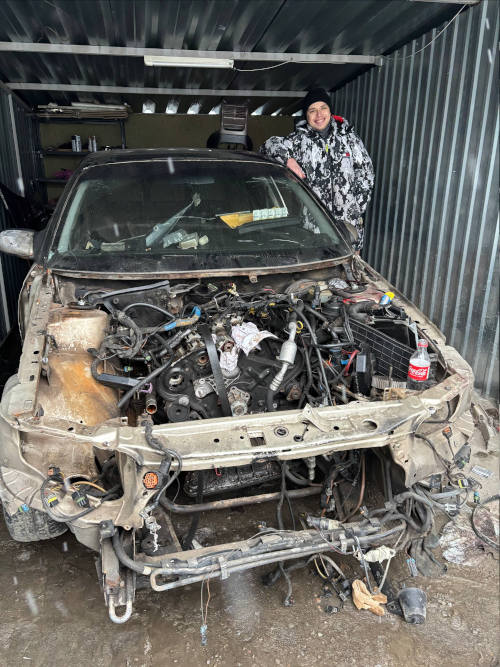
Chevrolet Colorado
The Chevrolet Colorado is a body-on-frame midsize pickup sold in the US market across multiple generations, with very different engine swap realities depending on model year. This article covers the Chevrolet Colorado family from the first-generation 2004–2012 GMT355 trucks, through the second-generation 2015–2022 trucks, and into the third-generation 2023+ trucks. It also treats the GMC Canyon as a closely related reference point where platform, drivetrain, and powertrain information overlap, although final compatibility should always be verified by exact year, trim, drivetrain, and emissions configuration.
A Colorado engine swap requires more planning than simply asking whether another engine will physically fit in the engine bay. The platform has used several different factory engine families, including GM Atlas inline engines, factory 5.3L V8 applications in selected first-generation trucks, later 2.5L and 3.6L gasoline engines, the 2.8L Duramax diesel, and the modern 2.7L turbocharged gasoline engine family. Each generation also uses different transmissions, control modules, wiring architecture, emissions equipment, and drivetrain packaging.
Physical fitment is only the first layer of compatibility. A swap that clears the frame and mounts may still fail if the ECU cannot communicate with the body control module, the automatic transmission cannot receive the correct torque data, the immobilizer prevents starting, or the OBD-II emissions monitors will not complete. This becomes especially important on 2015+ Colorado models, where CAN communication, transmission control, stability systems, and emissions readiness can turn a mechanically possible swap into a difficult full-system integration project.
For that reason, Chevrolet Colorado compatibility should be evaluated through mechanical compatibility, electronic compatibility, transmission compatibility, emissions compatibility, cooling compatibility, and driveline compatibility. Later sections should examine the factory engine baseline, platform differences, realistic swap candidates, difficulty levels, execution risks, cost range, legal exposure, and practical alternatives.
| Field | Summary |
|---|---|
| Vehicle | Chevrolet Colorado |
| Generations covered | First generation, second generation, third generation |
| Production years | 2004–2012, 2015–2022, 2023+; exact model-year details require verification |
| Body/platform type | Body-on-frame compact/midsize pickup; platform varies by generation |
| Factory drivetrain layout | Front-engine, longitudinal layout; RWD and 4WD configurations depending on year and trim |
| Engine orientation | Longitudinal |
| Main factory engine families | GM Atlas I4/I5, GM Gen IV 5.3L V8, 2.5L Ecotec I4, 3.6L High Feature V6, 2.8L Duramax diesel, 2.7L turbocharged gasoline I4 family |
| Transmission types | Manual and automatic transmissions vary by generation; includes 5-speed manual, 6-speed manual in limited later use, 4-speed automatic, 6-speed automatic, and 8-speed automatic applications. |
| Main swap difficulty range | Level 1 to Level 5, depending on generation, donor completeness, drivetrain, wiring, emissions, and inspection requirements |
| Primary compatibility bottleneck | Electronics and emissions on newer trucks; 4WD packaging and drivetrain alignment on many mechanical swaps |
| Best-suited swap category | Same-engine replacement, same-generation factory-family swap, or first-generation factory-style 5.3L V8 conversion where parts and documentation support it |
| Highest-risk swap category | Cross-brand swaps, diesel retrofits without a complete donor system, and modern 2023+ powertrain conversions |
Quick verdict
| Decision point | Practical answer |
|---|---|
| Easiest swap type | Same engine code or same factory engine family with matching electronics and emissions equipment |
| Best OEM-style swap | First-generation 5.3L V8-style conversion using factory-style GM donor parts where applicable |
| Best performance-oriented swap | LS-family V8 swap in a first-generation truck, assuming proper mounts, transmission, cooling, wiring, and legal planning |
| Most difficult swap category | Cross-brand, standalone ECU, diesel retrofit, or third-generation modern CAN-dependent swaps |
| Biggest mechanical constraint | Oil pan, steering, front differential, front driveshaft, exhaust, and mount geometry |
| Biggest electronic/ECU constraint | ECM, TCM, BCM, immobilizer, CAN communication, throttle control, and torque-management integration |
| Biggest transmission constraint | Bellhousing pattern, converter or clutch compatibility, automatic transmission control, torque capacity, and driveshaft alignment |
| Biggest emissions/legal risk | OBD readiness, catalyst monitoring, EVAP function, diesel emissions hardware, and state inspection compliance |
| Best recommendation | Stay as close as possible to a factory-supported engine family unless the build has the budget and documentation for a full custom integration. |
The Chevrolet Colorado is not one single swap platform. The first-generation truck is generally the most approachable for performance swaps because selected versions were offered with a factory 5.3L V8, creating a useful factory precedent for packaging and GM drivetrain integration. The second generation can support factory-style engine work, but swaps outside the original powertrain families become more dependent on module communication and emissions strategy. The third generation should be treated as the least beginner-friendly swap platform because its 2.7L turbo powertrain, modern control systems, and vehicle network are more tightly integrated.
For most owners, the safest path is a same-engine replacement or a swap that follows a documented factory-family pattern. Same-manufacturer swaps can be realistic, but they are not automatically simple. Advanced LS, LT, diesel, or cross-brand swaps should be treated as custom builds, not basic engine replacements.
What “compatible” actually means

Engine swap compatibility is not a single yes-or-no question. An engine can physically fit inside a Chevrolet Colorado and still be incompatible with the truck as a complete road vehicle. True compatibility means the engine, transmission, electronics, emissions system, cooling system, and driveline can operate together reliably and legally for the intended use.
1. Mechanical compatibility
Mechanical compatibility starts with physical fitment. The replacement engine must fit between the frame rails, clear the hood, sit correctly on the mounts, and leave room for accessories, intake routing, exhaust routing, cooling hardware, and service access. On 4WD Colorado models, the front differential, front driveshaft, oil pan, and exhaust path are major constraints. Steering shaft clearance, firewall clearance, crossmember position, and transmission tunnel fitment also need to be checked before assuming that a swap is realistic.
2. Electronic compatibility
Electronic compatibility becomes more important with each newer Colorado generation. The engine control module must operate the engine, but it also may need to communicate with the body control module, transmission control module, gauge cluster, ABS module, immobilizer, throttle pedal, fuel system, and stability control systems. Older trucks may be more forgiving, but they still require correct security, sensor, and diagnostic behavior. Later trucks rely more heavily on CAN communication and torque modeling, so a running engine does not necessarily mean the vehicle electronics are properly integrated.
3. Transmission compatibility
Transmission compatibility includes more than bolting a transmission to the engine. The bellhousing pattern, crank spacing, flexplate or flywheel, torque converter, clutch system, starter location, shifter position, crossmember, driveshaft length, and transfer case must all be considered. Automatic transmissions add another layer because shift timing, line pressure, torque reduction, and limp-mode behavior depend on correct ECM/TCM communication. A high-torque V8, turbo, or diesel swap may also exceed the safe limits of the original transmission, driveshaft, differential, or axle hardware.
4. Emissions and inspection compatibility
Emissions compatibility is often the difference between a usable street swap and an off-road-only project. A swapped Colorado may need working OBD-II readiness monitors, catalytic converters, oxygen sensors, EVAP equipment, misfire monitoring, and correct diagnostic behavior. Diesel swaps may also require diesel-specific emissions systems such as EGR, DPF, SCR/DEF hardware, and NOx monitoring where applicable. A vehicle can start, drive, and make good power, but still fail inspection if the check engine light is on, monitors are incomplete, required emissions equipment is missing, or the engine configuration is not acceptable under local rules.
5. Cooling and driveline compatibility
Cooling and driveline compatibility determine whether the swap survives long-term use. A more powerful engine may need a larger radiator, better fan control, improved transmission cooling, intercooler packaging for turbo applications, and careful heat management around exhaust and wiring. The driveline must also handle the new torque output without excessive vibration, bad pinion angles, weak axle components, or transfer-case stress. For a daily-driven or towing Colorado, long-term durability matters more than whether the engine can be made to run once.
The next section should examine the Chevrolet Colorado platform reality and factory engine baseline before ranking specific swap options.
Chevrolet Colorado platform reality and factory engine baseline
Before ranking Chevrolet Colorado engine swap options, the original vehicle system has to be understood as a complete platform. The factory layout defines more than the size of the engine bay. It also defines mount geometry, oil pan shape, transmission position, front differential clearance, wiring expectations, emissions monitoring, cooling capacity, and driveline durability. A swap that works in one Colorado generation may be much harder in another because the chassis, electronics, and factory powertrain strategy changed significantly over time.
Platform and chassis reality
The Chevrolet Colorado uses a front-engine, longitudinal powertrain layout with rear-wheel drive or four-wheel drive, depending on configuration. This is important because most realistic swap candidates need to work with a truck-style longitudinal transmission, driveshaft, rear axle, and, on 4WD models, a transfer case and front driveline. Unlike a transverse front-wheel-drive vehicle, the Colorado has a layout that can physically support inline engines, V6 engines, and V8 engines, but that does not make every swap simple.
All covered Colorado generations are body-on-frame pickups. The first-generation 2004–2012 trucks are based on the GMT355 platform, while the second-generation 2015–2022 trucks use the later midsize truck architecture commonly associated with GMT31XX. The 2023+ third-generation Colorado uses a revised, newer architecture related to the modern midsize truck platform. Exact platform-code references should be verified by model year, but the practical swap point is clear: the frame, crossmembers, cab structure, front suspension, engine mounts, and driveline packaging are not identical across generations.
In swap terms, the engine must sit in the correct position relative to the front crossmember, firewall, radiator support, transmission tunnel, and driveshaft centerline. Engine height affects hood clearance, intake routing, oil pan clearance, and exhaust manifold placement. Engine setback affects firewall clearance and transmission mount position. If the engine is moved too far forward, the radiator and fan packaging can become difficult. If it is moved too far rearward, firewall, heater box, bellhousing, and service-access problems may appear.
Four-wheel-drive Colorado models add a major constraint. The front differential, front driveshaft, transfer case, and related suspension packaging can interfere with oil pans, exhaust routing, starter placement, and transmission bellhousing clearance. A swap that is manageable in a 2WD truck may require a different oil pan selection, custom exhaust fabrication, or additional clearance work in a 4WD truck. This is especially important when planning LS-family, LT-family, diesel, or cross-brand swaps.
Exhaust space is another limiting factor. The factory engine bay and frame rails leave only so much room for manifolds, downpipes, catalytic converters, oxygen sensors, and heat shielding. Swaps that require custom headers or turbo plumbing must still leave space for the steering shaft, brake components, front suspension, wiring, and emissions hardware. Accessory drive placement also matters because the alternator, power steering components where applicable, air conditioning compressor, belt routing, radiator fan, and intake system must fit without creating long-term service problems.
Generation differences that affect swaps
The first-generation Colorado is generally the most straightforward starting point for custom swaps, especially because selected 2009–2012 trucks were offered with a factory 5.3L Gen IV V8. That factory V8 precedent does not make every LS swap bolt-in. Still, it does create useful reference points for engine bay packaging, cooling, exhaust routing, transmission pairing, mounts, and GM control-system strategy. First-generation trucks still require correct wiring, security, OBD-II behavior, and emissions equipment, but they are usually less electronically integrated than later trucks.
The second-generation 2015–2022 Colorado is more complex because the truck relies more heavily on modern module communication. Engine swaps must account for the ECM, TCM, BCM, immobilizer, CAN bus, electronic throttle control, gauge cluster, ABS, traction control, and emissions monitors. The factory 2.5L gasoline I4, 3.6L V6, and 2.8L Duramax diesel configurations each have different wiring, emissions, fuel systems, transmissions, and calibration requirements. A swap between factory-style second-generation powertrains may be possible with enough donor parts and programming, but it should not be treated as a simple engine-only job.
The third-generation 2023+ Colorado should be treated as the most electronically sensitive platform in this group. These trucks are centered around the 2.7L turbocharged gasoline engine family, with output and calibration differences depending on trim and model year. Because the engine, automatic transmission, body systems, torque management, emissions strategy, and vehicle network are tightly connected, non-factory swaps in this generation require very careful verification. A running engine alone is not enough if the truck cannot maintain proper transmission behavior, diagnostic codes, immobilizer authorization, and emissions readiness.
Across all generations, OBD-II inspection logic matters. Catalyst monitoring, EVAP function, misfire detection, oxygen sensor behavior, fuel-system diagnostics, and readiness monitors can determine whether a swapped truck remains street-usable in inspection states. Diesel-equipped trucks add additional risk because diesel emissions systems may include EGR, DPF, SCR/DEF hardware, NOx sensors, and regeneration logic depending on the exact year and configuration.
Factory engines offered
| Engine code/name | Displacement | Configuration | Fuel type | Valvetrain/timing | Power | Torque | Production years | Donor vehicles | Known issues |
|---|---|---|---|---|---|---|---|---|---|
| LK5 / Vortec 2800 | 2.8L | Inline-4 | Gasoline | DOHC Atlas-family; exact timing details require verification | Approximately 175 hp | Approximately 185 lb-ft | 2004–2006 | Chevrolet Colorado / GMC Canyon; related applications require verification | Age-related sensor, wiring, and engine-condition issues; specific pattern failures require verification |
| L52 / Vortec 3500 | 3.5L | Inline-5 | Gasoline | DOHC Atlas-family; exact timing details require verification | Approximately 220 hp | Approximately 225 lb-ft | 2004–2006 | Chevrolet Colorado / GMC Canyon; Hummer-related references require verification | Early Atlas I5 cylinder-head or misfire concerns are commonly discussed but require verification by year |
| LLV / Vortec 2900 | 2.9L | Inline-4 | Gasoline | DOHC Atlas-family; exact timing details require verification | Approximately 185 hp | Approximately 190 lb-ft | 2007–2012 | Chevrolet Colorado / GMC Canyon | Requires verification |
| LLR / Vortec 3700 | 3.7L | Inline-5 | Gasoline | DOHC Atlas-family; exact timing details require verification | Approximately 242 hp | Approximately 242 lb-ft | 2007–2012 | Chevrolet Colorado / GMC Canyon; Hummer H3 applications require verification | Requires verification |
| LH8 / LH9 5.3L V8 | 5.3L | V8 | Gasoline; flex-fuel capability varies by application and requires verification | OHV Gen IV GM small-block / LS-family | Approximately 300 hp | Approximately 320 lb-ft | 2009–2012, depending on engine code and model year | Selected Chevrolet Colorado / GMC Canyon V8 models; Hummer H3 Alpha / H3T Alpha references may be relevant | Requires verification; cooling, emissions, wiring, and transmission condition matter |
| LCV 2.5L Ecotec | 2.5L | Inline-4 | Gasoline | DOHC, direct injection, VVT | Approximately 200 hp | Approximately 191 lb-ft | 2015–2022 | Chevrolet Colorado / GMC Canyon; other GM applications require verification | Direct-injection and fuel-system concerns require verification |
| LFX 3.6L V6 | 3.6L | V6 | Gasoline | DOHC, direct injection, VVT | Approximately 305 hp | Approximately 269 lb-ft | 2015–2016 | Chevrolet Colorado / GMC Canyon; other GM High Feature V6 applications require verification | Timing-chain and direct-injection concerns require verification by year and service history |
| LGZ 3.6L V6 | 3.6L | V6 | Gasoline | DOHC, direct injection, VVT; additional features require verification | Approximately 308 hp | Approximately 275 lb-ft | 2017–2022 | Chevrolet Colorado / GMC Canyon | Transmission calibration and 8-speed behavior should be checked with the service history |
| LWN 2.8L Duramax | 2.8L | Turbo inline-4 | Diesel | Common-rail diesel; exact valvetrain details require verification | Approximately 181 hp | Approximately 369 lb-ft | 2016–2022 | Chevrolet Colorado / GMC Canyon diesel | Diesel emissions hardware, DEF/DPF/SCR/NOx systems, and sensor issues require verification |
| L2R 2.7L Turbo | 2.7L | Turbo inline-4 | Gasoline | DOHC, direct injection, turbocharged; exact features require verification | Approximately 237 hp | Approximately 260 lb-ft | 2023–2024 in selected trims; later availability requires verification | Chevrolet Colorado / GMC Canyon lower-output applications | Modern turbo, cooling, calibration, and transmission-control dependencies |
| L3B 2.7L Turbo / TurboMax | 2.7L | Turbo inline-4 | Gasoline | DOHC, direct injection, turbocharged; exact output package varies by year and trim | Approximately 310 hp in high-output Colorado applications | Approximately 391–430 lb-ft, depending on calibration and model year | 2023+ | Chevrolet Colorado / GMC Canyon; related Silverado/Sierra applications require verification | Calibration, boost control, thermal management, and 8-speed transmission integration require verification |
The factory engine table shows why the Colorado cannot be treated as one uniform swap platform. The first generation has a clear Atlas I4/I5 baseline and a limited but important factory 5.3L V8 precedent. The second generation adds modern gasoline and diesel powertrains with more complex emissions and transmission control. The third generation moves toward a turbocharged four-cylinder strategy where output differences are tied closely to calibration, electronics, cooling, and transmission behavior.
In swap terms, the most useful factory baseline is the one closest to the intended donor engine. A first-generation V8-style build has more factory reference value than a third-generation custom V8 conversion. A second-generation diesel retrofit requires much more than the engine itself because the factory diesel system includes fuel, exhaust, electronic, and emissions components that must work together.
Why the factory engine baseline matters
Factory engines are not only historical specifications. They define the mechanical and electronic starting point for any Chevrolet Colorado swap. The original engine family determines mount position, engine height, oil pan design, accessory layout, exhaust path, cooling demand, bellhousing compatibility, and the control modules the truck expects to see.
Mount geometry is one of the first baseline constraints. Atlas inline engines, High Feature V6 engines, LS-family V8 engines, Duramax diesel engines, and the modern 2.7L turbo engines do not share the same physical shape or mounting strategy. Changing the engine family may require custom mounts, a different oil pan selection, accessory relocation, and careful measurement around the steering system, front differential, radiator, and firewall.
Bellhousing and transmission patterns also come from the factory baseline. A transmission originally paired with an Atlas I5 is not automatically compatible with a later V6, LS V8, diesel, or turbocharged four-cylinder. Even when a transmission can be physically adapted, the flexplate, torque converter, crank spacing, starter location, transfer case, crossmember, and driveshaft length may still need changes. Automatic transmissions add software risk because shift quality and limp-mode behavior depend on correct torque and control data.
The ECU and wiring baseline are equally important. The factory engine management system defines sensor signals, throttle control, immobilizer behavior, CAN communication, emissions diagnostics, and module expectations. On newer Colorado models, the engine controller does not operate in isolation. It communicates with the TCM, BCM, gauge cluster, ABS, traction control, and other systems. If those systems do not receive expected messages, the truck may start with warnings, shift poorly, fail inspection, or refuse to run correctly.
Cooling, exhaust, and emissions capacity also follow the original engine package. A truck designed around a low-output four-cylinder may need upgrades for a V8, diesel, or high-output turbo engine. Radiator size, fan control, transmission cooling, catalyst location, oxygen sensor placement, EVAP routing, and heat shielding all affect whether the swap is stable in real use. A street-driven swap must also satisfy OBD readiness and inspection expectations, not merely run well during a short test drive.
Finally, factory torque output shapes driveline durability. Transmissions, driveshafts, transfer cases, differentials, axle shafts, mounts, and cooling systems were selected around the original engine’s output and use case. A higher-torque engine can expose weak points even when the installation appears successful. Once the factory platform and engine baseline are clear, the next step is to rank potential Chevrolet Colorado engine swap options by difficulty and integration risk.
Before you start researching parts and pricing, check whether the swap you have in mind actually fits – and whether it's worth doing.
Check My Engine SwapEnter your vehicle and target engine to see a compatibility verdict, estimated cost, required changes, and whether it's the right move for your build.
Get My Swap VerdictBest engine swap options for the Chevrolet Colorado, ranked by difficulty
Once the Chevrolet Colorado platform and factory engine baseline are clear, swap options can be ranked by integration depth rather than by horsepower alone. The best swap is not always the most powerful engine. For this truck, the realistic difficulty depends on generation, drivetrain, donor completeness, transmission pairing, ECU strategy, emissions requirements, and whether the build stays close to a factory-supported GM configuration.
How swap difficulty levels actually work
Chevrolet Colorado engine swap difficulty is not only a mechanical question. The engine may physically fit between the frame rails, but the swap can still fail as a usable vehicle if the transmission cannot be controlled, the immobilizer blocks starting, the CAN network loses required messages, or the OBD-II readiness monitors will not complete. This is why a same-family engine replacement is usually much easier than a custom high-output build.
Same-family and factory-platform swaps are the lowest-risk category because they work with parts, mounting logic, transmission pairings, wiring expectations, and emissions systems that were already used in the Colorado or closely related GM trucks. A first-generation Atlas I4 or I5 replacement, for example, is normally more predictable than installing an unrelated engine family. A first-generation 5.3L V8-style swap also has a longer factory reference value than most other performance swaps because selected 2009–2012 Colorado and Canyon models were offered with a 5.3L V8.
Same-manufacturer swaps can still be realistic, but they often require more planning. GM LS-family, LT-family, High Feature V6, Duramax diesel, and 2.7L turbo engines do not all share the same mounts, bellhousing logic, electronics, fuel-system requirements, or emissions strategy. A GM engine is not automatically plug-and-play just because it comes from the same manufacturer.
Cross-brand swaps are the most complex because they usually introduce unrelated ECU behavior, immobilizer logic, transmission control, sensor strategy, CAN communication, and emissions requirements. A standalone ECU can simplify engine operation, but it may make factory gauges, automatic transmission control, traction control, stability control, inspection readiness, and street legality more difficult. For a Colorado that needs to remain road legal, the electronic and emissions side is often harder than the fabrication.
Higher power also creates secondary problems. More torque can overload the original transmission, transfer case, driveshafts, differential, axle shafts, cooling system, engine mounts, and exhaust packaging. This is especially important on 4WD Colorado models, where the front differential, front driveshaft, transfer case, and oil pan clearance already limit the available space.
Level 1 swaps – lowest risk, OEM-style compatibility

Level 1 swaps stay closest to the original Colorado platform. These are same-code replacements, same-generation factory engines, or closely related factory-family swaps. They are the best candidates for daily-driver reliability, serviceability, and inspection stability because the factory systems are easier to preserve.
| Engine code/name | Why it belongs in Level 1 | Main benefit | Main challenge | Best use case |
|---|---|---|---|---|
| Same-code factory replacement | Uses the same engine family, sensors, mounts, ECU strategy, and emissions logic as the original truck | Lowest overall risk and easiest inspection path | Must match year, emissions package, drivetrain, and calibration closely | Repairing a failed engine while keeping the truck factory-like |
| LK5 2.8L / LLV 2.9L Atlas I4 | Factory first-generation Colorado four-cylinder family | Predictable packaging and a simpler replacement path than changing engine families | Year-specific wiring, sensors, ECU, and emissions differences require verification | Budget first-generation repair or mild factory-family update |
| L52 3.5L / LLR 3.7L Atlas I5 | Factory first-generation Colorado inline-five family | Stronger factory-style option than the I4 while staying within the original platform logic | Earlier-to-later Atlas swaps may require matching harness, ECU, exhaust, and calibration parts | First-generation owner wanting a practical factory-family upgrade |
| LCV 2.5L Ecotec | Factory second-generation base gasoline engine | Most straightforward second-generation repair path when replacing like-for-like | Direct-injection fuel system and calibration details must match the truck | 2015–2022 repair where reliability and inspection stability matter more than power |
| LFX / LGZ 3.6L V6 | Factory second-generation V6 family | Strongest normal gasoline factory baseline for many 2015–2022 trucks | Not automatically simple when converting from a 2.5L truck; wiring, ECM/TCM, exhaust, cooling, and programming must be checked | OEM-style second-generation gasoline performance repair or conversion with a complete donor setup |
| L2R / L3B 2.7L turbo family | Factory third-generation Colorado engine family | Best third-generation path because the truck was designed around this engine family | Output differences may depend on hardware, transmission RPO, cooling, and calibration; requires verification | 2023+ factory-style repair or carefully verified output-package conversion |
Level 1 does not mean “no work.” It means the swap stays close enough to the original platform that the major systems are more predictable. Even a factory-family swap can require donor-specific wiring, ECU programming, emissions hardware, transmission matching, and security relearn procedures.
Level 2 swaps – moderate complexity
Level 2 swaps usually stay within the GM ecosystem but move farther away from the exact factory configuration. These swaps can make sense when there is a clear donor path, strong aftermarket support, or documented examples, but they should not be treated as basic replacements. Mounts, cooling, exhaust, transmission control, fuel delivery, and emissions logic often become project-defining issues.
| Engine code/name | Why it belongs in Level 2 | Main benefit | Main challenge | Best use case |
|---|---|---|---|---|
| LH8 / LH9 5.3L V8 factory-style swap | The first-generation Colorado had selected factory 5.3L V8 applications, making this the most defensible V8 path for 2004–2012 trucks | Strong OEM-style performance potential with GM small-block support | Requires V8-specific mounts, exhaust, cooling, ECU/PCM, transmission planning, and 4WD clearance checks | First-generation performance street truck using as many factory-style donor parts as possible |
| 4.8L / 5.3L LS-family truck V8 | Same manufacturer and common swap ecosystem, but not always a factory Colorado configuration | Common donor availability, compact V8 packaging, strong aftermarket support | Custom mounts, oil pan, wiring, exhaust, cooling, transmission pairing, and inspection risk | Budget or performance first-generation V8 build, where fabrication and wiring are expected |
| LGZ 3.6L V6 into a lower-output second-generation truck | Factory second-generation engine family, but conversion from another powertrain is not engine-only | Factory-style gasoline power increase without moving to V8 fabrication | ECM/TCM, harness, exhaust, cooling, fuel system, and immobilizer details require donor-level planning | 2015–2022 owner with access to a complete,e compatible donor truck |
| LWN 2.8L Duramax into a gas second-generation Colorado | Factory Colorado diesel option, but the diesel system is much more than the long block | Factory diesel torque and towing-oriented character | Diesel fuel system, ECM/TCM, DEF, DPF, SCR, NOx sensors, exhaust, cooling, and inspection complexity | Specialized diesel conversion using a complete donor, not a casual engine swap |
The best Level 2 swaps are the ones that use complete donor systems rather than isolated engines. A Colorado V6, V8, or diesel conversion becomes more realistic when the builder has the matching transmission, wiring, ECU, modules, exhaust pieces, cooling parts, and emissions hardware. Without those parts, the swap can quickly move into Level 3 or higher.
Level 3–5 swaps – high-effort custom builds
Level 3–5 swaps turn the Chevrolet Colorado into a custom build rather than a factory-like system. These swaps may be worthwhile for racing, off-road projects, show builds, or experienced fabricators, but they are not the best recommendation for most owners who want a reliable street truck. The dominant risk is full-system integration, not simply engine mounting.
| Engine code/name | Difficulty level | Main benefit | Dominant integration risk | Recommended only if… |
|---|---|---|---|---|
| 6.0L LS-family V8 | Level 3 | More torque and power than a basic 4.8L or 5.3L LS swap | Cooling, transmission capacity, axle stress, exhaust packaging, and emissions compliance | The truck is being built as a serious performance project with upgraded supporting systems |
| LS3 / 6.2L Gen IV V8 | Level 3–4 | High naturally aspirated performance and large aftermarket support | Cost, custom wiring, transmission choice, cooling, traction, and inspection legality | The build budget supports a full drivetrain and control-system plan |
| Gen V LT-series V8 | Level 4 | Modern GM V8 power and efficiency potential | Direct injection, high-pressure fuel system, ECU security, CAN communication, and transmission integration | The builder can use a complete modern donor strategy and handle advanced electronics. nics |
| L3B 2.7L TurboMax into an older Colorado | Level 4 | Modern torque from a compact turbocharged GM four-cylinder | Turbo plumbing, direct injection, modern ECU/TCM logic, CAN integration, cooling, and emissions readiness | The project is experimental,l and the builder can solve modern GM electronics |
| Cummins R2.8 or 4BT-style diesel | Level 5 | Diesel torque and custom off-road appeal | Mounts, vibration, weight, transmission adaptation, emissions legality, cooling, gearing, and driveline stress | The vehicle is off-road, race, export, or otherwise not dependent on normal street inspection .ection |
| Cross-brand engines such as 2JZ, Ford Coyote, or Hemi V8 | Level 5 | Unique build identity or race-specific performance target | Cross-brand ECU, immobilizer, transmission, mounts, exhaust, CAN, gauges, and emissions conflicts | The goal is a custom fabrication project, not a practical Colorado swap |
These high-effort swaps can work in the hands of experienced builders, but they should be described accurately. A Level 4 or Level 5 Colorado swap usually requires custom mounts, custom transmission strategy, custom exhaust, upgraded cooling, revised fuel delivery, driveline reinforcement, and either deep OEM electronics integration or a standalone ECU plan. For a street truck, the standalone route may create inspection and factory-system problems even if the engine runs well.
Engine swap option table
| Engine code/name | Difficulty level | Engine type | Fuel type | Donor vehicles | Main benefits | Main risks | Recommended only if… |
|---|---|---|---|---|---|---|---|
| Same-code factory replacement | Level 1 | Original engine family | Same as original | Same-generation Chevrolet Colorado / GMC Canyon; exact donor must match year and configuration | Lowest risk, best serviceability, easiest inspection path | Incorrect year, emissions package, wiring, or calibration mismatch | The goal is reliable repair rather than major performance change |
| LK5 / LLV Atlas I4 | Level 1 | Inline-4 | Gasoline | First-generation Colorado / Canyon; exact applications require verification | Factory-family compatibility and predictable packaging | Year-specific electronics and emissions differences | The truck is a first-generation I4 mode,l and the swap stays factory-family |
| L52 / LLR Atlas I5 | Level 1–2 | Inline-5 | Gasoline | First-generation Colorado / Canyon; Hummer H3 references require verifi.cation | Factory-style power increase over I4 engines | ECU, harness, exhaust, and emissions compatibility by model year | A complete matching donor setup is available |
| LH8 / LH9 5.3L V8 | Level 2 | V8 | Gasoline | Selected first-generation Colorado / Canyon V8 models; Hummer H3 Alpha references may help | Best OEM-style V8 direction for first-generation trucks | Mounts, oil pan, 4WD clearance, cooling, exhaust, wiring, and inspection requirements | The build follows factory-style V8 reference parts and uses correct supporting systems |
| 4.8L / 5.3L LS-family truck V8 | Level 2–3 | V8 | Gasoline | GM trucks, vans, and SUVs; exact donor years require verification | Common donors, strong aftermarket, good performance potential | Custom mounting, transmission pairing, ECU/TCM strategy, cooling, exhaust, and legal risk | The builder understands LS swap integration and has a complete parts plan |
| LGZ 3.6L V6 | Level 2 | V6 | Gasoline | 2017–2022 Colorado / Canyon; exact donor configuration requires verification | Factory second-generation performance baseline | ECM/TCM, 8-speed automatic behavior, harness, emissions, and programming | A second-generation donor system is available, and the conversion is verified by the year |
| LWN 2.8L Duramax | Level 2–3 | Turbo inline-4 diesel | Diesel | 2016–2022 Colorado / Canyon diesel | Factory diesel torque and towing-oriented character | DEF/DPF/SCR/NOx hardware, fuel system, ECM/TCM, cooling, and inspection risk | The swap uses a complete diesel donor, and emissions equipment can be retained |
| L2R / L3B 2.7L turbo family | Level 1–3 within third gen; Level 4 into older trucks | Turbo inline-4 | Gasoline | 2023+ Colorado / Canyon; related GM truck applications require verification | Modern torque and factory third-generation relevance | Calibration, turbo plumbing, DI fuel system, cooling, transmission RPO, and CAN integration | The build stays within a verified third-generation configuration or is treated as experimental |
| 6.0L LS-family V8 | Level 3 | V8 | Gasoline | GM heavy-duty trucks, vans, and SUVs; exact donors require verification | More torque and stronger performance potential | Driveline stress, cooling, transmission capacity, exhaust, fuel use, and emissions | Colorado has upgraded its supporting systems, and the use case justifies the added stress |
| Gen V LT V8 | Level 4 | V8 | Gasoline direct injection | Modern GM trucks, SUVs, Camaro, Corvette, or crate packages; exact donor requires verification | Modern GM V8 output and efficiency potential | Direct injection, high-pressure fuel system, ECU security, CAN, transmission, and emissions integration | The builder has advanced electronics support and a complete donor/control strategy |
| Cummins R2.8 / 4BT-style diesel | Level 5 | Turbo diesel inline engine | Diesel | Crate or industriadoor/step-van-style door,onors depeon the nding engine; requires verification | Diesel torque and off-road custom appeal | Weight, vibration, mounts, transmission adapters, emissions legality, cooling, and gearing | The truck is a custom/off-road project, and normal inspection compliance is not assumed |
| Cross-brand performance engines | Level 5 | Varies | Varies | Toyota, Ford, Stellantis, or other non-GM donors; exact applications require verification | Unique build identity | Maximum wiring, ECU, transmission, mount, emissions, gauge, and driveline integration risk | The goal is a custom fabrication project rather than a practical swap |
Best swap by use case
Best daily-driver swap: The best daily-driver swap is usually a same-code factory replacement or a same-generation factory-family engine. This keeps the truck closest to its original ECU, transmission, emissions, cooling, and service logic. It is the least exciting option on paper, but it is usually the best choice when the vehicle needs to start every day, pass inspection, and be easy to diagnose later.
Best budget swap: For most owners, the budget answer is not the biggest engine that can be bought cheaply. It is the engine that requires the fewest additional parts. On a first-generation Colorado, that usually means staying with an Atlas I4/I5 family replacement unless the truck is already being built specifically for a V8 swap. A cheap LS donor can become expensive once mounts, exhaust, wiring, cooling, transmission, driveshaft, and inspection issues are included.
Best OEM-style swap: The strongest OEM-style performance direction is a first-generation 5.3L V8-style build using factory-style Colorado/Canyon or related GM reference parts where applicable. This path has more credibility than most custom swaps because GM offered selected first-generation trucks with a 5.3L V8. The tradeoff is that the builder still needs correct V8-specific hardware, electronics, cooling, transmission planning, and emissions support.
Best performance swap: A 4.8L, 5.3L, or carefully planned 6.0L LS-family V8 is the most practical performance direction for many first-generation Colorado builds. The LS ecosystem has strong aftermarket support, but the swap should still be treated as a full drivetrain and wiring project. For second-generation and third-generation trucks, V8 swaps become much more electronically and legally complicated.
Best off-road/towing swap: For a second-generation truck, the factory LWN 2.8L Duramax is the most relevant diesel/towing-oriented reference because it was offered in the Colorado platform. However, converting a gas truck to diesel is not simple and should only be considered with a complete donor system. Diesel emissions hardware and inspection requirements can make this swap harder than its factory availability suggests.
Best race/custom swap: LS3, Gen V LT, large LS-family V8, Cummins-style diesel, or cross-brand swaps belong in the race/custom category. These engines can make sense when the truck is being built around fabrication, standalone or advanced OEM electronics, upgraded driveline parts, and a non-standard use case. They are not the best answer for anorma a daily-driven Colorado.
Swap to avoid for most users: Most users should avoid cross-brand swaps, third-generation custom V8 swaps, and diesel conversions without a complete donor vehicle. These swaps create too many simultaneous problems: mounts, transmission, ECU, CAN, immobilizer, emissions, cooling, exhaust, gauges, and inspection. They may be interesting projects, but they are not the practical answer for most Colorado owners.
Choosing the engine is only the beginning. The next section should cover execution reality, common failure points, cost, legality, practical alternatives, and the questions owners usually ask before starting a Chevrolet Colorado engine swap.
Engine swap execution reality for the Chevrolet Colorado

Choosing an engine for a Chevrolet Colorado is only the beginning of the project. The final result depends on measurement, donor selection, wiring strategy, transmission control, cooling capacity, emissions planning, and validation after the first start. A swap that looks reasonable on paper can become unreliable or legally risky if the engine, transmission, ECU, cooling system, emissions equipment, and driveline are not treated as one connected system.
Planning and measurement before removal
A Colorado engine swap should begin as a measurement and systems-planning problem, not as a parts-shopping exercise. Before removing the original engine, the builder should document engine bay dimensions, mount locations, oil pan clearance, steering clearance, firewall space, radiator and fan position, accessory drive location, exhaust routing space, transmission location, driveshaft angles, and front differential clearance on 4WD models.
This matters because small measurement errors can create expensive problems later. An engine that sits slightly too high may create hood or intake clearance issues. An engine placed too far forward may reduce radiator and fan space. Poor transmission, alvibrational drive shaftadrive shaftteshaft wear, or transfer-case stress. On 4WD Colorado models, oil pan shape, front driveshaft clearance, and exhaust routing should be checked before assuming that a V8, diesel, or turbo swap is practical.
The wiring and emissions plan should also be decided before parts are purchased. The builder needs to know whether the swap will use the factory ECU, a donor ECU, a reworked harness, or a standalone ECU. For a street-driven truck, the plan should also include catalytic converters, oxygen sensors, EVAP hardware, diesel emissions equipment where applicable, and OBD-II readiness behavior.
Test fitting, mounting, and driveline alignment
The test-fit stage determines whether the chosen engine can be installed without creating poor geometry or impossible service access. Engine mockup, mount design, bellhousing alignment, transmission crossmember position, shifter location, transfer-case position, and driveshaft angles all need to be checked together. A swap that physically fits can still fail if the driveline angle is wrong or if the transmission sits in a position that creates vibration, exhaust conflict, or transfer-case misalignment.
Clutch, flexplate, flywheel, torque converter, starter position, and bellhousing compatibility should be verified before final installation. This is especially important when mixing engine families or using a transmission that was not originally paired with the engine. On higher-torque swaps, the rear differential, axle shafts, U-joints, transmission, transfer case, and mounts may also need upgrades or closer inspection.
Serviceability should not be ignored. If spark plugs, sensors, belts, oil filters, exhaust fasteners, or wiring connectors become unreachable after installation, the truck may be difficult to maintain even if the swap works.
Wiring, ECU strategy, and first start validation
Wiring and ECU strategy often determine whether a swapped Colorado behaves like a usable vehicle or a permanent project. OEM ECU retention can help preserve diagnostics, emissions monitors, and transmission behavior, but it requires correct sensors, pedal signals, immobilizer logic, and module communication. A donor ECU can work when the supporting harness, modules, and calibration are properly matched. A standalone ECU may simplify engine control, but it can complicate factory gauges, automatic transmission control, traction control, inspection readiness, and street legality.
Modern Colorado generations are more sensitive to module communication. The ECM, TCM, BCM, immobilizer, throttle pedal, ABS, gauge cluster, and stability systems may expect valid CAN messages. Poor grounding, weak shielding, undocumented splices, or missing sensor data can cause intermittent faults that are harder to diagnose than mechanical fitment problems.
First start is not the end of the swap. It is the beginning of validation. Oil pressure, charging voltage, coolant circulation, idle stability, throttle response, fan control, fuel trims, transmission engagement, scan-tool data, and fault codes should be checked before road use. Repeated heat cycles, road testing, stop-and-go driving, highway driving, and heat-soak conditions should be used to confirm that the truck remains stable after the initial start.
Common failure scenarios
| Failure scenario | Why it happens | Symptoms | Prevention |
|---|---|---|---|
| Incomplete wiring documentation | Harness changes are made without diagrams or labels | No-start, random faults, poor diagnostics | Use wiring diagrams, label circuits, and document every splice |
| ECU o, theizer misThe engine | The engine controller does not match the truck security system | Crank-no-start, security light, immediate stall | Plan ECU, BCM, key, and security relearn strategy before installation |
| CAN communication errors | Required module messages are missing, especially on 2015+ trucks | Warning lights, limp mode, inoperative gauges | Retain required modules or use a verified integration strategy |
| Incorrect transmission pairing | Bellhousing, converter, TCM, or torque data does not match | No movement, harsh shifts, limp mode, vibration | Verify engine/transmission compatibility as a package |
| Bad driveline and the engineThe engine | Either transmission sits in the wrong position | Vibration, U-joint wear, transfer-case stress | Measure transmission angle, pinion angle, and driveshaft length before final welding |
| Undersized cooling system | Higher-output engine exceeds factory cooling capacity | Overheating, fan overuse, transmission heat | Upgrade radiator, fans, shrouding, coolant routing, and transmission cooling as needed |
| Exhaust heat damage | Custom headers or downpipes sit too close to wiring and brake components | Melted wiring, heat soak, sensor failure | Plan heat shielding, routing, and catalyst placement early |
| Fuel system mismatch | Fuel pressure, return strategy, diesel hardware, or DI requirements do not match | Lean condition, hard start, fuel codes | Match pump, regulator, injectors, fuel lines, and ECU expectations |
| Emissions readiness failure | ECU monitors cannot complete after the swap | Incomplete monitors, check engine light, failed inspection | Keep emissions equipment consistent with the ECU and local requirements |
| Poor serviceability | The engine fits, but routine parts are blocked | Expensive maintenance, repeated disassembly | Check access to plugs, sensors, belts, filters, and exhaust fasteners dduring maintenance |
Engine swap cost and timeline reality
Colorado swap cost is driven by integration depth, not engine price alone. The lowest-cost category is usually a same-code replacement or factory-family repair because it reuses the most original systems. Moderate same-manufacturer swaps cost more because they may require mounts, wiring work, ECU programming, exhaust changes, cooling upgrades, transmission planning, and donor-specific parts.
High-effort custom swaps can move into custom build territory quickly. Fabrication labor, tuning, rework, driveline upgrades, cooling changes, fuel-system changes, and troubleshooting often cost more than the engine itself. Project delays are common when the donor engine is incomplete, wiring is undocumented, parts must be modified multiple times, or emissions requirements were not considered early.
Exact cost and timeline vary by generation, location, labor rate, parts condition, owner skill level, and inspection requirements. A realistic budget should include the engine, transmission adapter parts, ECU/harness work, cooling, exhaust, fuel system, mounts, fluids, sensors, driveshaft work, tuning, diagnostics, and unexpected rework.
Legal and emissions considerations
A swapped Colorado can run well and still fail inspection. Street legality depends on local, state, or country rules, and those rules must be verified before starting the project. In many inspection environments, OBD-II readiness, catalyst monitoring, EVAP function, oxygen sensor behavior, misfire monitoring, and check-engine-light status are as important as mechanical quality.
Gasoline swaps should preserve emissions equipment that matches the ECU strategy. Diesel swaps can be even more sensitive because diesel emissions systems may include EGR, DPF, SCR/DEF hardware, NOx sensors, and regeneration logic depending on year and configuration. A standalone ECU may be useful for race or off-road builds, but it is often risky for street vehicles that must pass OBD-based inspection.
This section should not be treated as legal advice. The practical rule is simple: verify the inspection path before buying the engine, not after the truck is assembled.
When an engine swap is the wrong solution
An engine swap is not always the best fix for a Colorado. If the goal is basic reliability, rebuilding the existing engine or replacing it with the same factory engine may be cheaper, faster, easier to inspect, and easier to service. If the goal is better drivability, maintenance restoration, cooling system repair, gearing changes, differential service, or a transmission upgrade may solve the real problem without redesigning the truck.
If the owner wants significantly more power, it may be more practical to buy a factory V8 first-generation truck, a higher-output factory model, or a different platform that already supports the desired engine. Avoiding an unnecessary swap can save money, downtime, and reliability problems.
Frequently asked questions
What is the easiest engine swap for a Chevrolet Colorado?
The easiest swap is usually a same-code factory engine replacement. It keeps the truck closest to its original mounts, wiring, ECU, transmission, emissions equipment, and inspection logic.
What is the cheapest engine swap for a Chevrolet Colorado?
The cheapest complete swap is usually the one that requires the fewest extra parts, not the cheapest engine. Same-family replacements are usually cheaper than custom V8, diesel, or cross-brand swaps once wiring, exhaust, cooling, and tuning are included.
Is a same-family swap better than a cross-brand swap?
For most owners, yes. A same-family swap usually preserves more factory compatibility, while a cross-brand swap creates new problems with mounts, electronics, transmission control, gauges, emissions, and serviceability.
Can the factory transmission be reused?
Sometimes, but it depends on engine family, bellhousing pattern, torque capacity, electronics, and drivetrain layout. Reusing the factory transmission is easiest when the replacement engine belongs to the same original powertrain family.
Do I need a standalone ECU?
Not always. A standalone ECU can help with custom engine control, but it may create problems with emissions readiness, automatic transmission control, factory gauges, traction control, and inspection compliance.
Why do engine swaps fail inspection?
Common reasons include incomplete OBD readiness monitors, missing catalysts, EVAP faults, oxygen sensor errors, check engine lights, diesel emissions deletes, or an ECU strategy that does not match the required emissions equipment.
Can a swapped Chevrolet Colorado be reliable?
Yes, but reliability depends on integration quality. The swap must have correct cooling, wiring, mounts, driveline geometry, transmission control, fuel delivery, and emissions behavior.
What usually causes swap projects to go over budget?
Incomplete donor parts, undocumented wiring, fabrication rework, tuning delays, cooling problems, exhaust changes, transmission issues, and inspection problems are common budget drivers.
Is a performance swap better than rebuilding the factory engine?
Not always. If the truck is a daily driver, rebuilding or replacing the factory engine may be more reliable and less expensive than a custom swap.
Which swap should most owners avoid?
Most owners should avoid cross-brand swaps, diesel conversions without a complete donor system, and modern 2023+ custom swaps unless they have the budget, tools, documentation, and legal path to finish the full system.
Final rule for choosing the right swap
A Chevrolet Colorado engine swap is a system redesign, not just an engine replacement. The best swap is not the most powerful engine; it is the engine that can work coherently with the mounts, transmission, ECU, cooling system, emissions equipment, and driveline. If the required custom work cannot be verified, budgeted, and maintained, rebuilding the factory setup or choosing a more suitable platform is usually the smarter decision.
Stop comparing specs in your head. Enter your Chevrolet Colorado and the engine you want – get a structured verdict with cost, complexity, and a clear recommendation.
See If This Swap FitsYears
No year pages with content are configured for this model yet.