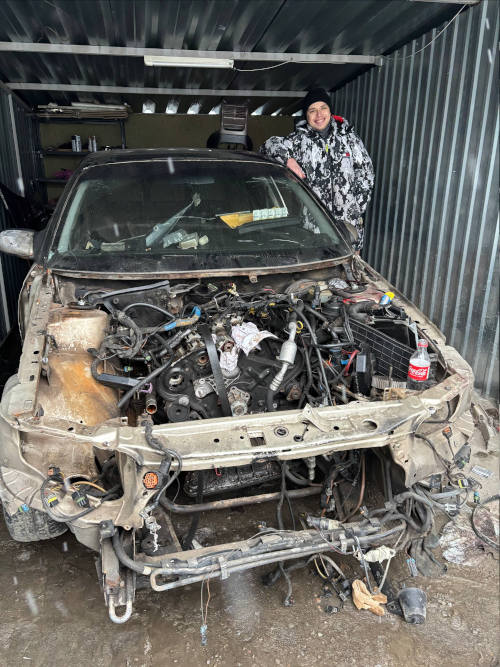
Chevrolet Corvette
Chevrolet Corvette engine swap compatibility overview
The Chevrolet Corvette is not a one-engine-swap platform. It is a long-running model family covering C1 through C8 generations, with major differences in chassis structure, drivetrain layout, engine control systems, transmission placement, and emissions requirements. A 1960s small-block Corvette, a C5 with a rear transaxle, a C7 with Gen V LT electronics, and a C8 with a mid-engine DCT layout should not be evaluated with the same swap logic.
The strongest Corvette swap angle is also the biggest trap: the car has excellent Chevrolet V8 family support, but the chassis architecture changes dramatically by generation. Early C1–C4 cars are generally more tolerant of traditional small-block Chevy, big-block Chevy, and LS-family conversions. C5–C7 cars are more sensitive because the engine must work with the torque tube, rear transaxle, differential, electronics, and factory control modules. C8 cars are in a separate category because the engine, DCT, cooling system, rear cradle, and vehicle network are integrated around a rear-mid-engine layout.
Physical fitment alone is not enough. An engine that can be lowered into a Corvette engine bay may still be incompatible if the oil pan hits the crossmember, the exhaust cannot route around the steering, the factory transmission cannot be controlled, the immobilizer blocks startup, or the OBD-II monitors never complete. For street-driven cars, true compatibility includes mechanical compatibility, electronic compatibility, transmission compatibility, emissions compatibility, cooling compatibility, and driveline compatibility.
Later sections should examine the Corvette platform baseline, factory engines, realistic swap candidates, difficulty levels, execution risks, cost ranges, and legal considerations before making a final swap recommendation.
Entity summary
| Field | Corvette-specific summary |
|---|---|
| Vehicle | Chevrolet Corvette |
| Generations covered | C1, C2, C3, C4, C5, C6, C7, C8 |
| Production years | 1953–present; exact model-year details require verification by generation |
| Body/platform type | Two-seat sports car; composite/fiberglass-style body construction varies by generation |
| Factory drivetrain layout | Front-engine/RWD for C1–C7; rear-mid-engine/RWD or electrified AWD variants for C8 |
| Engine orientation | Longitudinal layout; front-mounted through C7, rear-mid-mounted in C8 |
| Main factory engine families | Early Chevrolet inline-6, small-block Chevy, big-block Chevy, Gen II LT, LT5 DOHC ZR-1 engine, Gen III/IV LS, Gen V LT, C8 LT2/LT6/LT7 family |
| Transmission types | Manual and automatic transmissions vary by generation; C5–C7 use rear transaxle/torque-tube architecture; C8 uses an 8-speed dual-clutch transaxle |
| Main swap difficulty range | Level 1 to Level 5, depending on generation and engine choice |
| Primary compatibility bottleneck | Drivetrain architecture: conventional front-engine layout in older cars, torque tube/rear transaxle in C5–C7, mid-engine DCT integration in C8 |
| Best-suited swap category | Same-family Chevrolet V8 swaps matched to the Corvette generation |
| Highest-risk swap category | C8 powertrain swaps, cross-brand swaps, diesel swaps, EV conversions, and any swap that requires full ECU/TCM/body-module redesign |
Quick verdict
| Decision point | Practical verdict |
|---|---|
| Easiest swap type | Same-code replacement or same-generation factory-family upgrade |
| Best OEM-style swap | Staying inside the original Chevrolet engine family for that generation: SBC/BBC for classic cars, LS for C5/C6, Gen V LT for C7, same C8 engine family for C8 |
| Best performance-oriented swap | LS-family upgrades are usually the most practical performance path for older Corvettes; LS3-style swaps are commonly favored where documentation and parts support exist. |
| Most difficult swap category | C8 engine/DCT/hybrid-related swaps and cross-brand custom swaps |
| Biggest mechanical constraint | Engine placement, oil pan clearance, steering/header clearance, torque-tube alignment, or C8 rear-cradle packaging |
| Biggest electronic/ECU constraint | Modern ECM/TCM/BCM/CAN communication, immobilizer matching, throttle control, and torque modeling |
| Biggest transmission constraint | C5–C7 rear transaxle compatibility and C8 DCT control |
| Biggest emissions/legal risk | OBD-II readiness, catalyst/EVAP/O2 monitoring, and state inspection rules |
| Best recommendation | Choose the swap around the Corvette generation first, then select the engine family; do not buy an engine before confirming mounts, transmission strategy, electronics, cooling, and emissions path. |
For most builders, the Corvette is best approached as a factory-family swap platform, not a blank-slate custom chassis. A C3 owner considering an LS swap has a much clearer path than a C7 owner trying to mix unrelated Gen V electronics, or a C8 owner trying to replace the engine without solving DCT and controller integration. Same-manufacturer swaps can be realistic, but they are not automatically simple. Cross-brand engines, diesel swaps, and C8 custom powertrain projects should be treated as advanced fabrication builds rather than normal compatibility swaps.
What “compatible” actually means
- Mechanical compatibility
Mechanical compatibility means the engine can physically occupy the correct space and operate without structural interference. On a classic C1–C3 Corvette, this usually involves engine mounts, oil pan shape, steering clearance, header routing, accessory drive spacing, hood clearance, and radiator position. On C4 cars, the tighter engine bay and later front suspension layout add more packaging checks. On C5–C7 cars, the engine is not just sitting in front of a conventional transmission; it must align correctly with the torque tube and rear transaxle. On C8 cars, mechanical compatibility depends on rear cradle packaging, intake/exhaust direction, DCT interface, and cooling layout, so traditional “small-block fits Corvette” assumptions do not apply.
- Electronic compatibility
Electronic compatibility becomes more important as the Corvette gets newer. Early carbureted cars can often run with relatively simple ignition and fuel systems, although street legality still depends on the vehicle year. EFI C4 cars introduce factory engine control, sensors, and security considerations. C5 and C6 LS cars are better supported by the aftermarket, but the PCM still has to communicate correctly with the vehicle systems. C7 Gen V LT swaps add direct injection, electronic throttle, torque modeling, and more involved module communication. C8 swaps are the highest-risk electronically because the engine controller, DCT controller, body systems, drive modes, cooling logic, and chassis systems are deeply connected.
- Transmission compatibility
Transmission compatibility is not limited to whether the bellhousing bolts up. The swap must account for clutch or flexplate design, converter spacing, crankshaft flange differences, starter position, shift linkage, automatic transmission control, and torque capacity. In older Corvettes, a builder may be choosing between a manual gearbox, a traditional automatic, or a modern overdrive conversion. In C5–C7 cars, the rear transaxle and torque tube make alignment and control strategy central to the swap. A builder trying to keep the factory automatic may discover that the engine runs, but the transmission will not shift correctly without matching controller logic and calibration.
- Emissions and inspection compatibility
A running engine can still be an illegal or inspection-failing swap. For OBD-II Corvettes, emissions compatibility includes readiness monitors, catalyst monitoring, EVAP operation, oxygen sensor placement, misfire detection, and the absence of permanent diagnostic trouble codes. Deleting emissions equipment may make a race car easier to finish, but it can make a street car impossible to register or inspect in some states. A daily-driven C5, C6, or C7 swap should be planned around the emissions system before the engine is purchased, not after the car already has a check-engine light.
- Cooling and driveline compatibility
Cooling and driveline compatibility determine whether the swap survives after the first startup. Higher-output LS, LT, supercharged, turbocharged, or big-block combinations may require more radiator capacity, better fan control, oil cooling, power steering cooling, transmission cooling, and heat shielding. The driveline also has to tolerate the new torque curve. Differential strength, half-shafts, U-joints, clutch capacity, driveshaft or torque-tube alignment, and axle angles all matter. In a Corvette, poor heat management or driveline mismatch can turn an otherwise well-planned engine installation into a car that overheats, vibrates, breaks parts, or cannot be driven reliably.
The next section should examine the Corvette platform reality and factory engine baseline before ranking specific swap options.
Before you start researching parts and pricing, check whether the swap you have in mind actually fits – and whether it's worth doing.
Check My Engine SwapChevrolet Corvette platform reality and factory engine baseline
Before Corvette engine swaps can be ranked by difficulty, the original vehicle system has to be separated by generation. The Corvette name covers everything from early body-on-frame small-block cars to LS-powered rear-transaxle cars and the current C8 mid-engine platform. That means the factory layout defines more than engine history. It defines mount position, transmission strategy, ECU expectations, emissions logic, cooling capacity, and the practical limit of what can be called a realistic swap.
Platform and chassis reality
The Corvette’s unique swap angle is its strong Chevrolet V8 continuity combined with major chassis architecture breaks. Early C1, C2, and C3 cars are traditional front-engine, rear-wheel-drive Corvettes with longitudinal engines and separate frame-style construction. Corvette Action Center’s generation-specific Tech Center organizes C1 through C7 data by model year, which is useful because engine, transmission, and chassis details vary heavily across this model family.
For C1–C3 builds, the practical questions are familiar: where the mounts land, whether the oil pan clears the crossmember, whether the steering linkage or box conflicts with headers, and whether the radiator and fan package can support the new engine. These cars usually give builders more freedom than later Corvettes, but they are not open engine bays. A big-block or LS swap can still create hood clearance, exhaust routing, and heat-management problems, especially when the owner wants power steering, air conditioning, full exhaust, and street-friendly cooling.
C4 Corvettes keep the front-engine/RWD layout but introduce a more modern chassis, tighter packaging, and more factory electronics. The 1984–1996 C4 generation listed in the C4 Corvette Tech Center is especially important for swap planning because early Cross-Fire Injection cars, later Tuned Port Injection cars, LT1/LT4 cars, and ZR-1 LT5 cars do not share the same control-system assumptions. A mechanic replacing a tired L98 with another small-block has a different job than a builder trying to wire an LS engine into a C4 while keeping factory gauges and drivability.
C5, C6, and C7 Corvettes are the major turning point. They remain front-engine, rear-wheel-drive cars, but the transmission is no longer mounted directly behind the engine in the conventional muscle-car sense. These generations use a rear transaxle connected through a torque tube, so engine placement and crankshaft centerline alignment become part of transmission compatibility. Corvette Action Center separates C5, C6, and C7 technical data by generation, which matters because LS1/LS6, LS2/LS3/LS7/LS9, and Gen V LT1/LT4/LT5 cars have different engine management and transmission behavior.
The C8 is a separate platform reality. Chevrolet’s current Corvette pages describe the Stingray with a rear-mid-mounted LT2 V8 and an 8-speed dual-clutch transmission, while the Z06 and ZR1 use more specialized C8 engine families. The 2026 Corvette Stingray page lists the LT2 6.2L V8 and the optional Z51 output increase, and the 2026 Corvette ZR1 page lists the LT7 twin-turbo 5.5L V8 with the C8 dual-clutch layout. For swaps, this means the rear cradle, DCT, cooling circuits, exhaust direction, and vehicle software must be treated as one integrated system.
Generation differences that affect swaps
Earlier Corvettes are generally simpler because fewer systems need to agree before the engine runs. A carbureted C1, C2, or early C3 can often be planned around fuel delivery, ignition, mounts, exhaust, and cooling. That does not make the swap automatically legal or clean, but it reduces the number of factory modules involved. Later C3 and C4 cars add emissions equipment, early electronic controls, and model-year-specific fuel and ignition systems, so the builder must check the exact year before assuming a simple small-block replacement.
The 1996 model year transition to OBD-II is an important dividing line for street-driven Corvettes. C5 and newer cars expect the engine controller, transmission controller or control strategy, oxygen sensors, catalyst monitoring, EVAP system, and diagnostic readiness logic to behave correctly. A C5 owner may be able to make an LS-family engine run, but if the calibration does not support the installed transmission, emissions monitors, and body systems, the car can still be a poor street swap.
C7 and C8 cars require the most electronic discipline. C7 Gen V LT engines use direct injection, electronic throttle control, torque-based engine management, and more involved communication with the rest of the vehicle. C8 goes further because the DCT, drive modes, cooling control, chassis systems, and powertrain controller logic are tied to the mid-engine architecture. A custom C8 engine swap is therefore not just an engine-mount problem; it is a controller, software, cooling, transmission, and packaging problem.
Factory engines offered
| Engine code/name | Displacement | Configuration | Fuel type | Valvetrain/timing | Power | Torque | Production years | Donor vehicles | Known issues |
|---|---|---|---|---|---|---|---|---|---|
| Blue Flame I6 | 235 cu in / 3.9L | Inline-6 | Gasoline | OHV | 150–155 hp range; verify by year | Requires verification | 1953–1955 approx. | C1 Corvette | Age, low output, restoration-specific parts |
| 265 small-block V8 | 265 cu in / 4.3L | V8 | Gasoline | OHV pushrod | Requires verification | Requires verification | 1955–1956 approx. | C1 Corvette | Age, period-correct parts, cooling checks |
| 283 small-block V8 | 283 cu in / 4.6L | V8 | Gasoline | OHV pushrod | Wide range; verify by induction and year | Requires verification | 1957–1961 approx. | C1 Corvette | Carburetion/fuel-injection condition, age |
| 327 small-block V8 | 327 cu in / 5.4L | V8 | Gasoline | OHV pushrod | 250–375 hp range depending on version; verify exact RPO | Requires verification | 1962–1967 approx. | C1/C2 Corvette | Solid-lifter maintenance on some versions, originality concerns |
| 396/427/454 big-block V8 family | 6.5L–7.4L | V8 | Gasoline | OHV pushrod | Varies widely by RPO and gross/net rating | Requires verification | 1965–1974 approx. | C2/C3 Corvette | Heat, weight, collector-value risk, emissions-era variation |
| 350 small-block V8 / L48 / L82 / L81 / L83 / L98 | 350 cu in / 5.7L | V8 | Gasoline | OHV pushrod | Varies heavily by year and emissions era | Requires verification | 1969–1991 approx. | C3/C4 Corvette | Cross-Fire/TPI age, oil leaks, low-output emissions-era versions |
| LT1 / LT4 Gen II | 5.7L | V8 | Gasoline | OHV pushrod | Approx. 300–330 hp; verify exact year/model | Requires verification | 1992–1996 approx. | C4 Corvette | Optispark, cooling sensitivity, age-related wiring |
| LT5 DOHC ZR-1 | 5.7L | V8 | Gasoline | DOHC 32-valve | 375–405 hp range; verify by year | Requires verification | 1990–1995 approx. | C4 ZR-1 | Unique parts, cost, specialized electronics |
| LS1 | 5.7L | V8 | Gasoline | OHV pushrod | 345–350 hp range | 345–365 lb-ft range; verify by year | 1997–2004 | C5 Corvette | Age, oil leaks, sensor/wiring condition |
| LS6 | 5.7L | V8 | Gasoline | OHV pushrod | Up to 405 hp; verify year | Requires verification | 2001–2004 approx. | C5 Z06 | Valve spring/age checks, donor cost |
| LS2 | 6.0L | V8 | Gasoline | OHV pushrod | Approx. 400 hp | Requires verification | 2005–2007 approx. | C6 Corvette | Reluctor/sensor matching, age |
| LS3 | 6.2L | V8 | Gasoline | OHV pushrod | Approx. 430–436 hp depending on exhaust/package | Requires verification | 2008–2013 approx. | C6 Corvette / Grand Sport | Dry-sump/wet-sump differences by application |
| LS7 | 7.0L | V8 | Gasoline | OHV pushrod | Approx. 505 hp | Requires verification | 2006–2013 approx. | C6 Z06 | Valve guide/valvetrain concerns require verification |
| LS9 supercharged | 6.2L | V8 | Gasoline | OHV pushrod | Approx. 638 hp | Requires verification | 2009–2013 approx. | C6 ZR1 | Cooling, supercharger packaging, cost |
| LT1 Gen V | 6.2L | V8 | Gasoline | OHV pushrod, DI, VVT | 455–460 hp range | 460–465 lb-ft range | 2014–2019 | C7 Stingray / Grand Sport | DI fuel system, AFM, ECU complexity |
| LT4 supercharged | 6.2L | V8 | Gasoline | OHV pushrod, DI, VVT | 650 hp | 650 lb-ft | 2015–2019 approx. | C7 Z06 | Heat soak, cooling demand, torque management |
| LT5 supercharged | 6.2L | V8 | Gasoline | OHV pushrod, DI/port injection; verify details | 755 hp | 715 lb-ft | 2019 | C7 ZR1 | Heat, cost, calibration complexity |
| LT2 | 6.2L | V8 | Gasoline | OHV pushrod, DI, VVT | 490–495 hp depending on package | 465–470 lb-ft depending on package | 2020–present; current data should be checked by model year | C8 Stingray / E-Ray combustion engine | C8 packaging, DCT integration, cooling complexity |
| LT6 | 5.5L | V8 | Gasoline | DOHC flat-plane crank | 670 hp | Requires verification | 2023–present approx. | C8 Z06 | High-rpm valvetrain, dry-sump system, cost |
| LT7 twin-turbo | 5.5L | V8 | Gasoline | DOHC flat-plane crank, twin turbo | 1,064 hp | 828 lb-ft | 2026 ZR1 data; verify by model year | C8 ZR1 | Extreme heat load, turbo packaging, DCT/software dependency |
The table shows why Corvette swaps are usually easiest when the builder stays close to the original engine family. The classic cars were designed around Chevrolet pushrod engines, C5 and C6 cars were built around LS architecture, C7 cars expect Gen V LT control logic, and C8 cars are engineered around a mid-engine powertrain package rather than a traditional front-engine swap envelope.
It also shows why exact year verification matters. A “350 Corvette” can mean a carbureted C3 engine, a Cross-Fire Injection L83, or a Tuned Port L98 baseline. An “LT5 Corvette engine” can mean the C4 ZR-1 DOHC engine or the C7 ZR1 supercharged Gen V engine. Those names are not interchangeable in mount design, wiring, service parts, or swap difficulty.
Why the factory engine baseline matters
Factory engines are the starting geometry for the entire swap. Mount pads, engine height, accessory location, oil pan shape, and hood clearance all trace back to what Chevrolet originally packaged in that generation. A small-block replacement in a C2 starts from a very different baseline than an LT4 conversion in a C7 or an LT6 discussion around a C8.
Bellhousing and transmission patterns are just as important. Older Corvettes can often be planned around conventional manual or automatic transmission choices, while C5–C7 cars force the engine to cooperate with a torque tube and rear transaxle. If the builder wants to retain the factory automatic, the transmission controller and calibration become part of the engine choice, not an afterthought.
The ECU baseline determines how much wiring work is realistic. Carbureted cars can be mechanically direct, early EFI cars need sensor and harness discipline, LS cars need PCM integration, and Gen V LT/C8 cars require more control-module coordination. The factory cooling and exhaust baseline also matters because Chevrolet sized radiators, fans, catalysts, exhaust paths, and heat shielding around specific factory output levels.
Finally, the factory torque level shapes driveline durability. A mild small-block swap may stay within the original differential and axle comfort zone. A supercharged LS, LT4, LT5, or LT7-style power level can exceed the practical limits of cooling, clutch capacity, transaxle life, axle strength, and street emissions compliance if the rest of the car is not upgraded with the engine.
Once the factory platform and engine baseline are clear, the next step is to rank potential Corvette engine swap options by difficulty and integration risk.
Enter your vehicle and target engine to see a compatibility verdict, estimated cost, required changes, and whether it's the right move for your build.
Get My Swap VerdictBest engine swap options for the Chevrolet Corvette, ranked by difficulty

Once the Corvette platform and factory engine baseline are clear, engine choices can be ranked by integration depth instead of horsepower alone. A small-block replacement in a C2, an LS3 into a C5, an LT4-style C7 conversion, and a C8 powertrain swap are not equal projects. The useful question is not simply “which engine makes more power?” It is whether the engine can work with the Corvette generation’s mounts, transmission layout, ECU strategy, cooling system, driveline, and emissions requirements.
How swap difficulty levels actually work
For the Corvette, swap difficulty follows the generation split. C1–C3 cars usually favor small-block Chevy, big-block Chevy, and LS-family swaps because the layout is conventional front-engine/RWD and the aftermarket has decades of experience with these cars. Holley’s 1968 Corvette LS swap systems and BRP Hot Rods’ 1968–1982 Corvette LS parts show that C3 LS conversions have real aftermarket support, but they still require correct oil pan, mounts, headers, EFI fuel supply, cooling, and wiring choices.
C4 swaps sit in the middle. The car is still front-engine/RWD, but its factory electronics, gauge behavior, packaging, and later LT1/LT4 controls make the job less forgiving than a carbureted C3.
C5 and C6 cars are usually most comfortable with LS-family upgrades because the platform already uses LS architecture. Even there, the rear transaxle and torque tube matter. A builder installing an LS3 into a C5 may keep the basic LS logic, but still has to solve injector connectors, harness compatibility, calibration, intake packaging, and accessory details. MotorTrend’s LS3-into-C5 coverage is useful because it shows a real example of parts-level integration rather than just quoting LS3 power numbers.
C7 and C8 swaps are where “same manufacturer” no longer means low risk. Gen V LT engines use direct injection, electronic throttle control, torque-based management, and more involved module communication. C8 adds the rear-mid-engine layout and 8-speed dual-clutch transaxle. A standalone ECU can make a custom engine run, but it may also separate the engine from factory traction control, transmission logic, OBD readiness, and inspection stability.
Level 1 swaps – lowest risk, OEM-style compatibility
Level 1 Corvette swaps are same-generation or factory-family repairs and upgrades. These are the swaps most likely to preserve serviceability, drivability, emissions logic, and transmission behavior, provided the builder matches the correct model year, sensors, calibration, and emissions equipment.
- Same-code replacement engine: Best for stock repair, restoration, and inspection stability. The main challenge is verifying year-specific parts, RPO details, and whether the replacement is truly equivalent to the original engine.
- SBC 327/350 or period-correct big-block: Logical for C1–C3 cars when the goal is a factory-style or period-correct build. The benefit is mount and drivetrain familiarity; the challenge is heat, originality, emissions-era equipment, and exact RPO verification.
- C5 LS1 to LS6-style upgrade: A natural C5 performance path because both engines belong to the same LS generation and Corvette platform era. The challenge is sourcing correct accessories, calibration, and supporting parts rather than assuming every LS part interchanges.
- C6 LS2/LS3/LS7 same-family replacement: Usually more predictable than cross-family swaps because the C6 already uses Gen IV LS architecture. The main challenge is matching wet-sump/dry-sump hardware, sensors, clutch or converter setup, and cooling requirements.
- C7 LT1/LT4/LT5 factory-family work: Best kept within the C7 Gen V LT ecosystem. Even then, direct injection, torque management, cooling, and transmission calibration make it more complex than an older LS swap.
- C8 same-engine-family replacement: The only low-risk C8 direction is staying close to the original C8 powertrain family. Anything beyond that quickly becomes a DCT, controller, cooling, and packaging project.
Level 2 swaps – moderate complexity
Level 2 swaps are still realistic Corvette projects, but they require more planning than a same-code replacement. This is where many older Corvette LS swaps belong. A C3 LS3 build, for example, benefits from aftermarket mounts and swap parts, but it is still changing the fuel system, wiring strategy, exhaust layout, accessory drive, cooling package, and sometimes transmission choice.
- LS3 into C1–C4: Strong same-manufacturer choice with excellent parts support. The engine is a common modern small-block option, but chassis compatibility still depends on the Corvette generation.
- Truck-based LS engines into C1–C4: Often considered for budget builds because donor availability can be better than Corvette-specific engines. The risk is not the LS architecture itself; it is the truck accessory drive, intake height, oil pan, iron-block weight, and emissions mismatch.
- LS3 into C5: Moderate rather than extreme because the C5 already uses LS architecture. The challenge is the detail work: harness connectors, fuel injectors, calibration, accessory fit, and making the rear-transaxle car behave like a factory system.
- LS7 into a non-Z06 C6: A serious performance upgrade, but not just an engine drop. Dry-sump hardware, cooling, clutch capacity, exhaust, and calibration must be treated as part of the swap.
- LT4 into C7 Stingray or Grand Sport: Same generation, but supercharged Gen V LT integration adds heat exchangers, charge cooling, fuel-system control, torque management, and transmission stress. LT4 controller kit listings show how much control hardware is involved even when using Chevrolet Performance-style components.
Level 3–5 swaps – high-effort custom builds
Level 3–5 swaps move the Corvette away from a factory-like system. These are not automatically bad projects, but they should be treated as custom builds with fabrication, wiring, calibration, driveline, cooling, and inspection risk. The higher the generation number, the harder it becomes to preserve factory behavior.
- LSA, LS9, or boosted LS builds: Level 3 in many older Corvettes and C5/C6 projects. The power potential is high, but charge cooling, fuel delivery, clutch or automatic capacity, differential strength, and heat management become major constraints.
- Gen V LT1/LT4 into C1–C4: Level 3–4 because direct injection and modern controller expectations add complexity beyond a Gen III/IV LS swap. It can be done as a custom project, but it is not the simplest path for an older Corvette.
- LT6 or LT7 outside a C8: Level 5 for most builders. These C8 engines are tied to specialized packaging, controls, oiling, exhaust direction, cooling, and DCT-related assumptions.
- Cross-brand engines such as Coyote, 2JZ, RB, Hemi, or Barra: Level 4 custom-only swaps. These may appear in one-off builds, but they introduce non-GM ECU, transmission, mount, CAN, exhaust, and emissions conflicts.
- Diesel or EV conversions: Level 5 because they redesign the Corvette’s weight balance, structure, driveline, controls, cooling, and inspection profile. They should not be presented as normal street-swap options.
Engine swap option table
| Engine code/name | Difficulty level | Engine type | Fuel type | Donor vehicles | Evidence type | Main benefits | Main risks | Recommended only if… |
|---|---|---|---|---|---|---|---|---|
| Same-code factory replacement | 1 | Original Corvette engine family | Gasoline | Same generation Corvette; exact donor requires verification | Factory-supported | Lowest integration risk, best for factory systems | Wrong year/RPO parts can still create compatibility problems | The goal is repair, restoration, inspection stability, or OEM behavior |
| 327/350 small-block Chevy | 1–2 | OHV small-block V8 | Gasoline | C1–C4 Corvette and Chevrolet small-block applications; verify year | Factory-supported / aftermarket-supported | Strong classic Corvette compatibility and parts support | Emissions-era equipment, cooling, originality, exact mount/accessory differences | The car is a classic Corvette, and the owner wants a period-style or simple V8 build |
| 396/427/454 big-block Chevy | 1–3 | OHV big-block V8 | Gasoline | C2/C3 Corvette and Chevrolet big-block applications; verify RPO | Factory-supported / custom-supported | Period-correct torque and factory heritage | Heat, weight, collector-value risk, brake/suspension/driveline stress | The chassis and cooling system are prepared for big-block weight and heat |
| LS1 | 1–2 | Gen III LS V8 | Gasoline | C5 Corvette, F-body applications; verify donor year | Factory-supported / same-family documented | Good LS baseline, simpler than Gen V LT | Age, harness condition, emissions and calibration matching | The builder wants a practical LS swap or C5-compatible repair path |
| LS6 | 1–2 | Gen III LS V8 | Gasoline | C5 Z06; other LS6 applications require verification | Factory-supported | OEM C5 performance character | Donor cost, valvetrain age, calibration details | The project is a C5 upgrade or OEM-style performance repair |
| LS3 | 2 | Gen IV LS V8 | Gasoline | C6 Corvette, Camaro SS, Chevrolet Performance crate engines; verify exact source | Factory-supported / aftermarket-supported / community-documented | Best balance of modern LS power, reliability, and support | Oil pan, accessory drive, wiring, fuel system, emissions, and transmission matching | The builder wants a practical performance swap and is ready to solve integration details |
| Truck LS family | 2–3 | Gen III/IV LS-based V8 | Gasoline | Silverado, Sierra, Tahoe, Suburban, vans; donor details require verification | Community-documented / aftermarket-supported | Budget availability and strong power potential | Truck accessories, oil pan, intake height, iron-block weight, emissions mismatch | Budget matters more than OEM-style simplicity |
| LS7 | 2–3 | Gen IV LS V8 | Gasoline | C6 Z06, Corvette 427 variants; verify donor | Factory-supported / same-family documented | High-output naturally aspirated Corvette engine | Dry-sump hardware, cooling, cost, valvetrain verification | The build is performance-focused, and the supporting systems match the engine |
| LSA / LS9 / boosted LS | 3 | Supercharged or boost-ready LS V8 | Gasoline | C6 ZR1 for LS9; CTS-V/Camaro ZL1 for LSA; verify donor | Factory-supported for some engines / custom-supported | Large power increase with GM V8 architecture | Heat, fuel system, charge cooling, driveline stress, inspection risk | The car is being built around forced induction, not just a replacement engine |
| LT1 Gen V | 2–4 | Gen V LT V8 | Gasoline | C7 Corvette, Camaro SS, related GM applications; verify donor | Factory-supported / custom-supported | Modern power and efficiency | Direct injection, controller strategy, fuel-system complexity, emissions | The builder accepts Gen V electronics and fuel-system integration |
| LT4 Gen V | 3–4 | Supercharged Gen V LT V8 | Gasoline | C7 Z06, Camaro ZL1, CTS-V; verify donor | Factory-supported / aftermarket-supported | OEM-style supercharged GM performance | Charge cooling, torque modeling, transmission stress, heat management | The car has a complete cooling, fuel, control, and driveline plan |
| LT2 / LT6 / LT7 C8 engines | 4–5 | C8-specific LT-family V8 | Gasoline | C8 Stingray, Z06, ZR1; verify model year | Factory-supported in C8 / custom-only outside C8 | Modern Corvette powertrain technology | Rear-mid-engine packaging, DCT control, cooling, software, cost | The project is a C8 service/replacement job or a race-level custom build |
| Cross-brand V8/I6 engines | 4 | Coyote, Hemi, 2JZ, RB, Barra, or similar | Gasoline | Requires verification by engine | Custom-only / community-documented in isolated builds | Novelty, unique tuning path, brand-specific performance culture | Custom mounts, transmission adaptation, ECU/CAN conflicts, emissions risk | The builder is intentionally creating a custom fabrication project |
| Diesel or EV conversion | 5 | Diesel engine or electric drive system | Diesel or electric | Requires verification | Theoretical/custom-only | Novelty, torque, experimental value | Weight balance, structure, cooling, controls, registration and inspection risk | The car is not expected to remain a conventional OEM-like street Corvette |
Best swap by use case
Best daily-driver swap: The best daily-driver choice is usually a same-family engine matched to the Corvette generation. For C5/C6 cars, that usually means staying within LS architecture; for C7, staying within Gen V LT logic is safer. Daily use rewards clean calibration, stable cooling, working diagnostics, and a transmission strategy that behaves like a factory car.
Best budget swap: For older C1–C4 cars, a small-block Chevy or carefully planned truck-LS swap is usually the most realistic budget path. The truck-LS route can save money on the engine itself, but accessory drive, pan, wiring, intake height, and fuel-system changes can erase the savings if they are not planned early.
Best OEM-style swap: A same-code replacement or factory-family upgrade is the best OEM-style route. This is the cleanest answer for rare or valuable Corvettes because it protects serviceability and avoids turning a collectible chassis into an irreversible custom project.
Best performance swap: The LS3 is often the most practical performance answer for older Corvettes and some C5/C6 upgrade plans because it has strong output, wide parts support, and less complexity than Gen V LT swaps. It still needs correct mounts, oil pan, ECU, exhaust, cooling, and transmission planning.
Best off-road/towing swap: Not relevant for the Corvette as a normal use case. The Corvette is a sports-car platform, so high-torque truck, diesel, or towing-style swaps should be treated as custom novelty builds rather than practical recommendations.
Best race/custom swap: A built LS, LSX, LS7, or boosted LS combination is usually the most logical custom race direction because it keeps the project inside the GM V8 ecosystem while allowing serious power. Once the target power rises, the engine becomes only one part of the build; cooling, differential strength, clutch or automatic capacity, axle durability, and safety equipment become just as important.
Swap to avoid for most users: Most users should avoid C8 powertrain swaps, cross-brand engines, diesel swaps, and EV conversions unless they specifically want a fabrication-heavy custom project. These swaps may be possible in isolated builds, but they are not practical “best engine swap” answers for a Corvette owner who wants predictable drivability, inspection stability, and manageable troubleshooting.
Choosing the engine is only the beginning. The next section should cover execution reality, common failure points, cost, legality, alternatives, and the questions buyers should answer before purchasing a donor engine.
Engine swap execution reality for the Chevrolet Corvette

Choosing the engine is only the first decision. In a Chevrolet Corvette, the final result depends on measurement, drivetrain alignment, controller strategy, cooling capacity, emissions planning, and validation after the first start. This is especially important because a C3 small-block swap, a C5 LS upgrade, a C7 LT conversion, and a C8 powertrain change are completely different execution problems.
Planning and measurement before removal
A Corvette swap should start with measurements, not parts shopping. Before removing the original engine, measure engine bay length and width, mount location, oil pan clearance, steering clearance, crossmember position, firewall space, accessory drive depth, radiator and fan room, exhaust exit paths, transmission position, and driveline geometry. On C1–C4 cars, the biggest checks are usually steering, headers, oil pan shape, hood clearance, and radiator packaging. On C5–C7 cars, the torque tube and rear transaxle make engine position more sensitive. On C8 cars, rear cradle packaging and DCT integration dominate the planning stage.
Small errors become expensive later. An engine sitting slightly too high can create hood or intake clearance issues. A pan that clears during mockup may hit under load. Exhaust that fits without the steering shaft installed may become unusable once the car is assembled. A daily-driven Corvette also needs room for service access, heat shielding, catalysts, oxygen sensors, wiring, hoses, and fans, not just the engine block itself.
Test fitting, mounting, and driveline alignment
The practical build stage should include a mockup before final paint, wiring, or exhaust work. The engine and transmission path must be checked as a complete system. Mount kits should be verified against the exact Corvette generation, engine family, pan, accessory drive, and transmission plan. A swap that works in a C3 does not automatically work in a C4, and a C6 rear-transaxle car cannot be treated like a conventional front-transmission muscle car.
Bellhousing alignment, clutch or flexplate compatibility, flywheel spacing, converter engagement, shifter position, and starter clearance all need to be confirmed before final assembly. For C5–C7 cars, the torque tube, rear transaxle, differential, and axle system are part of the swap. Incorrect alignment can create vibration, clutch problems, bearing wear, or driveline failure even when the engine starts and idles correctly.
Wiring, ECU strategy, and first start validation
Wiring often decides whether the Corvette becomes a usable car or a permanent project. Older carbureted cars may be able to run with a simpler ignition and fuel system, but EFI, LS, LT, and C8 powertrains require a clear ECU strategy. The builder must decide whether to retain the OEM ECU, integrate a donor ECU, use a standalone ECU, or combine factory and aftermarket control systems.
Modern Corvettes add immobilizer logic, BCM expectations, CAN communication, electronic throttle control, transmission control, sensor compatibility, grounding quality, and shielding requirements. First start should confirm oil pressure, charging voltage, fuel pressure, idle stability, coolant circulation, fan operation, throttle response, and scan-tool data. A successful first start is not the finish line. The car still needs heat-soak testing, repeated drive cycles, road-load validation, and inspection-readiness checks if it will be street driven.
Common failure scenarios
| Failure scenario | Why it happens | Symptoms | Prevention |
|---|---|---|---|
| Incomplete or poorly documented wiring | Harness changes are made without diagrams or labels | No-start, random sensor faults, unstable idle | Use documented pinouts, label circuits, and test power, ground, and signal paths. |
| ECU or immobilizer mismatch | ECM, BCM, key/security, or calibration do not agree | Crank-no-start, security light, disabled fuel or spark | Plan the ECU, BCM, and security strategy before buying the engine |
| CAN bus or module communication errors | Common on later C5–C8 builds when factory modules are removed or mismatched.d | Warning lights, limp mode, dead gauges, transmission faults | Keep required modules or use proven integration hardware and calibration support |
| Incorrect transmission pairing | Engine torque, controller logic, bellhousing, or converter/flywheel setup is wrong | Harsh shifts, no shifts, clutch drag, vibration | Match the engine, transmission, controller, converter or clutch, and calibration as one sys.tem |
| Bad driveline angles | Engine or transmission position is slightly wrong | Vibration, bearing noise, U-joint or axle wear | Measure alignment during mockup, especially on C5–C7 torque-tube cars |
| Undersized cooling system | Higher-output engine exceeds radiator, fan, oil cooler, or airflow capacity. | Overheating, heat soak, coolant pushout, reduced power | Upgrade cooling based on power level, use case, and packaging limits |
| Exhaust heat management problems | Headers, catalysts, or turbo/supercharger parts sit too close to body, wiring, or steering.g | Melted wiring, hot cabin, starter heat soak, sensor damage | Plan heat shields, routing, catalyst placement, and service access early |
| Fuel system mismatch | Carb, port EFI, LS EFI, and Gen V LT direct injection need different fuel strategies. | Lean condition, hard start, misfire, fuel pressure faults | Match pump, regulator, lines, injectors, and ECU calibration to the engine |
| Emissions readiness failure | OBD-II monitors, catalysts, EVAP, or oxygen sensors do not match the calibration | Check-engine light, unset monitors, failed inspection | Design the emissions system around the ECU strategy before final exhaust work |
| Poor serviceability after installation | The engine fits, but plugs, belts, sensors, starter, or headers cannot be accessed.d | Expensive maintenance, repeated disassembly, unreliable repairs | Check service access during mockup, not after final assembly |
Engine swap cost and timeline reality
Cost is driven by integration depth, not the engine price alone. A same-code Corvette replacement is usually the lowest-cost category because the mounts, wiring logic, exhaust layout, cooling system, and transmission plan are already known. A moderate same-manufacturer swap, such as an LS into an older Corvette, can move into moderate five-figure territory once wiring, tuning, fuel system, exhaust, mounts, cooling, and transmission details are included.
High-effort custom builds grow non-linearly. Cross-brand swaps, C8 custom powertrain work, diesel conversions, and EV conversions can require fabrication, controller development, custom cooling, custom exhaust, driveline upgrades, repeated test fitting, and troubleshooting time. Downtime is often underestimated. The car may be immobile for months if key parts, tuning support, or fabrication changes are not ready when the engine is removed.
Legal and emissions considerations
A swapped Corvette can run well and still fail inspection. For OBD-II cars, the engine management strategy must support readiness monitors, catalyst monitoring, EVAP operation, oxygen sensor logic, misfire detection, and the required diagnostic checks for the vehicle’s market. A standalone ECU may simplify engine operation, but it can also make factory OBD readiness and street inspection more difficult.
Inspection rules vary by state, country, model year, and vehicle use. Some areas focus on OBD readiness, some require visual emissions equipment, and some treat engine changes more strictly. Before starting a street-driven Corvette swap, verify local rules for engine year, emissions equipment, catalysts, evaporative controls, ECU calibration, and whether the vehicle will be registered for road use or race/off-road use only.
When an engine swap is the wrong solution
An engine swap is not always the most efficient way to get a better Corvette. If the existing engine is correct for the car, a rebuild, same-engine replacement, cooling system restoration, transmission repair, gearing change, or conservative power upgrade may produce a more reliable result. This is especially true for rare trims, clean C4 ZR-1 cars, C5 Z06 examples, C6 Z06/ZR1 cars, C7 Z06/ZR1 cars, and C8 models where originality and system integration matter.
Buying a higher-trim factory Corvette can also be smarter than converting a lower-trim car. A factory Z06, Grand Sport, or ZR1-style package may already include supporting brakes, cooling, suspension, driveline parts, and calibration that a swap would have to recreate. If the swap requires custom work the owner cannot verify, budget, or maintain, the better answer may be to improve the original platform instead.
Frequently asked questions
What is the easiest engine swap for the Chevrolet Corvette?
The easiest swap is usually a same-code replacement or same-family engine from the same generation. For classic cars, that often means staying with small-block or big-block Chevrolet architecture; for C5–C7 cars, it means staying close to LS or LT factory logic.
What is the cheapest engine swap for the Chevrolet Corvette?
The cheapest complete swap is usually not the cheapest engine. A budget truck LS or used small-block may look inexpensive, but the final cost depends on mounts, wiring, fuel system, exhaust, cooling, transmission, and tuning.
Is a same-family swap better than a cross-brand swap?
Usually, yes. Same-family swaps keep more of the Corvette’s mounts, transmission logic, sensors, and emissions strategy within a known ecosystem. Cross-brand swaps are custom projects.
Can the factory transmission be reused?
Sometimes, but it depends on generation, torque capacity, controller compatibility, bellhousing pattern, and driveline layout. C5–C7 rear-transaxle cars require especially careful planning.
Do I need a standalone ECU?
Not always. A standalone ECU can help race or custom builds, but it may complicate factory gauges, transmission control, traction control, emissions readiness, and inspection.
Why do engine swaps fail inspection?
They commonly fail because OBD monitors do not set, catalysts or EVAP systems are missing, oxygen sensor logic is incorrect, or the ECU calibration does not match the installed emissions hardware.
Can a swapped Corvette be reliable?
Yes, if the swap is planned as a complete system. Reliability depends on cooling, wiring quality, calibration, driveline strength, fuel delivery, and serviceability.
What usually causes Corvette swap projects to go over budget?
Unplanned wiring, tuning, exhaust, fuel system, cooling, clutch, transmission, differential, and fabrication work usually cause the budget to grow. Rework is often more expensive than planning.
Is a performance swap better than rebuilding the factory engine?
Not always. A rebuild or same-family upgrade may be more reliable, more legal, and easier to service than a custom swap.
Which swap should most owners avoid?
Most owners should avoid C8 custom powertrain swaps, diesel conversions, EV conversions, and cross-brand swaps unless they intentionally want a fabrication-heavy project.
Final rule for choosing the right swap
A Corvette engine swap is a system redesign, not a simple engine replacement. The best swap is not the engine with the highest power number. The best swap is the one that preserves compatibility across mounts, transmission, ECU, cooling, emissions, and driveline durability. If that system cannot be verified, budgeted, and maintained, rebuilding or upgrading the existing Corvette powertrain is usually the smarter path.
Stop comparing specs in your head. Enter your Chevrolet Corvette and the engine you want – get a structured verdict with cost, complexity, and a clear recommendation.
See If This Swap FitsYears
No year pages with content are configured for this model yet.