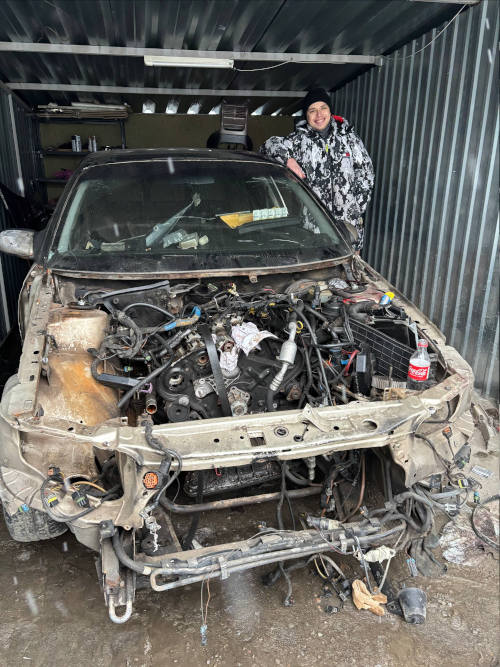
Chevrolet Malibu
The Chevrolet Malibu has no unified engine-swap profile. Throughout US production it has two completely different structural eras: rear-wheel-drive, body-on-frame vehicles from 1964 to 1983 and, front-wheel-drive, unibody vehicles from 1997 to 2025. That split alters all pertinent aspects of swap planning, from engine bay design and driveline configuration to network and inspection passability. Any substantive analysis of compatibility must begin with a generation distinction before discussing engines.
TL;DR
- In a Chevrolet Malibu, engine compatibility means mechanical fitment, electronic integration, and emissions survivability at the same time.
- An engine that physically fits can still fail because the Malibu rejects its control logic, cooling load, driveline geometry, or inspection behavior.
- Level 1 swaps stay close to factory engine families and platform logic, so they carry the lowest system risk.
- Level 2 swaps still have a real path, but heat, transmission pairing, donor completeness, and calibration start to dominate the outcome.
- Levels 3–5 are full vehicle builds, not simple engine changes.
- Most builders underestimate higher levels because fabrication is only one layer, while electronics, cooling, driveline behavior, and validation multiply the difficulty.
- The lowest-risk Malibu swaps are classic Chevrolet small-block swaps in the older rear-wheel-drive cars and 60-degree V6 family swaps in the 1997–2003 front-wheel-drive cars.
- Factory-adjacent V6 and turbo upgrades in later Malibus escalate quickly once the transmission, harness, cooling, and torque-management systems no longer match.
- LS-family swaps in classic Malibus are proven, but they are still EFI conversions that need a complete supporting system, not just an engine.
- Cross-brand or cross-architecture swaps escalate fast because the Malibu’s chassis, transmission, electronics, and thermal behavior were not designed around them.
- Standalone ECUs become more common in Levels 3–5, but they solve engine control more easily than they solve full road-car behavior.
- The engine is usually not the main cost, because compatibility work, wiring, cooling, geometry correction, rework, and debugging consume more of the budget.
- Timelines stretch because swaps slow down after first fit or first start, when validation, heat management, and unresolved system conflicts finally appear.
- Budgets and motivation usually die from fragmented planning, repeated direction changes, and the hidden cost of finishing details.
- Malibu swaps most often fail from incomplete wiring, weak cooling strategy, bad driveline geometry, or unstable accessory-drive alignment.
- Most failures are delayed, not immediate, and show up after heat soak, load, repeated cycling, or time on the road.
- In the US, OEM ECU-based swaps give the best chance of preserving OBD behavior and inspection survivability.
- Standalone ECU swaps make engine operation easier but usually make inspection, readiness, and full vehicle integration harder.
- Legality has to be planned early, because a clean-running Malibu is not automatically an inspection-ready Malibu.
- Rebuilding the original engine, using conservative boost, or improving gearing often solves the real problem with fewer system penalties than a swap.
- The final rule is simple: choose the solution that fixes the real weakness with the least added systems debt.
Before you start researching parts and pricing, check whether the swap you have in mind actually fits – and whether it's worth doing.
Check My Engine SwapChevrolet Malibu Engine Swap Compatibility Overview
What “compatible” actually means
In the Malibu world, “compatible” means more than just shoving an engine into the bay. A swap is only genuinely compatible when an engine meets all of the following criteria: it fits mechanically, the vehicle electronics accept it, and the finished vehicle is free to unfettered emissions and inspection logic for the state where it will be registered. If any one system of the swap fails, the swap is incomplete, even if the engine starts and runs.
Mechanical fitment encompasses mount geometry, oil pan configuration, exhaust routing, steering, radiator and fan clearances, accessory drives, transmission pairs, and final driveline angles. Electronic integration is necessary for the PCM, BCM, immobilizer, transmission control, ABS/traction system, cluster, and torque management systems. To survive emissions, a vehicle must have catalyst placement and evaporative control systems, OBD readiness and sensor strategies, and be able to complete a drive cycle without permanent faults.
This is why “same brand” or “same displacement family” does not automatically mean easy. A Chevrolet engine that has similar bellhousing logic to another GM application could still not work because the Malibu may expect a different crank signal pattern, different transmission message set, or different strategies for cooling fan commands. Compatibility is not a label on a bin full of parts; it is a systemic outcome.
Let’s break it down by the different kinds of compatibility: Mechanical, electronic, and emissions.
Mechanical compatibility has been around the longest and is the most straightforward. For the 1964–1983 cars, it involves the frame motor mounts, rear crossmember position, transmission tunnel space, steering column box clearance, cooling system size, and the way a heavier and longer engine change front spring load and pinion angle. For cars made between 1997-2025, the front frame cradle, transverse engine location, half shaft length, steering rack location, cross member shape, and crash structure box make the space to work with more limited and overall less forgiving.
In more recent cars, electronic compatibility becomes critical. For 1997–2003 Malibus, while they are relatively simple compared to modern vehicles, they still rely on a number of vehicle systems that are controlled by a main engine computer. Additionally, 2008-2012 Malibus have a high and low speed communication network, electronic throttle control, and sophisticated security systems that rely on the factory engine and transmission systems. Finally, for 2013–2025 vehicles, there are many more control systems that require the correct engine and transmission systems to work as designed; these include direct and stop-start systems, hybrid systems, and advanced brake and body control systems.
If a car can't have emissions testing done, potential running swaps often become no longer registrable vehicles. While classic vehicles can frequently be evaluated based on regulations involving specific years and regional inspection standards, the newer Malibus exist in an OBD-II ecosystem and rely on the completion of specific monitors. If certain monitors in the emissions system (e.g. catalytic converter, purge fuel tank, rear oxygen, mitfire monitoring, etc.) do not align with the expectations of the vehicle, the vehicle will have either an illuminated check engine light or unmonitored readiness.
Where other vehicles and their engines fail
The greater overall vehicle integration process & components alignment, the easier it becomes to over-value the physical integration of an engine. While an engine & transmission may be able to pass through the chassis rails and engine bay, irreversible damage may occur as a result of an incorrect transmission calibration, an engine control module security handshake that's not forwarded to the body control module, unaddressed torque requests on the abs control module, and control messages to the instrument cluster that go unreceived. For newer Malibus, the result of this type of damage is often manifested in no-start, reduced power mode, poor shifting, a lack of control from the cruise control, muted air conditioning, and lit warning lights.
Likewise, closure of the gap in control systems resulting from a lack of inline alignment, ranging from an engine cooling system & front end airflow to a driveline assembly to poorly integrated via a combination of overheight engine mounts, incorrect engine mount spacing or position, and inadequate airflow & radiator assembly design may render a vehicle that previously plausibly remains within its design specs to achieve functionality, an otherwise simple, combined control systems closure result to be frustrated by a road load.
Another typical hidden failure point is torque modeling. In contrast, later-model GM powertrains do not deliver throttle openings solely based on the angle of the pedal. The PCM, transmission, stability control, and body controller modules operate based on a shared torque expectation. If that expectation is unmet, the vehicle may operate, however, it will not perform as a properly sorted OE-calibrated system.
Brief generational differences
From 1964 to 1983, all Malibu vehicles had rear-wheel drive and maintained an old-school feel. 1964-1977 models are built on GM's A-Body platform, while 1978-1983 models transitioned to the A/G-body platform. These models are body-on-frame constructions and are on the simpler end of the electronic spectrum, featuring carbureted fuel systems for the majority of their production run, as well as relatively minimal module interdependence. From a mechanical swap point of view, they are decently honest, but still are sensitive to a number of considerations, including weight, steering clearance, crossmember placement, the cooling requirements of the engine, and emissions equipment on the later models built during smog regulations.
Model years 1997-2003 Malibu is built on GM’s N-car/P-90 architecture, and is a front wheel drive, unibody construction. While still on the simpler end of the electronic spectrum, it is no longer analog the way the '60s models are. Instead, it relies on body control module logic, electronic control of the transmission, as well as an anti-theft module, and therefore swaps are about signal compatibility, not just brackets.
2004-2007 Malibu models are the first to use the Epsilon platform, which incorporates a significantly upgraded unibody design that is sturdier, as well as a bolt-in subframe design as opposed to the welded arrangements of the previous modules. These changes enable tighter transverse arrangements of the engine, and increase modular electronic systems. Models 2008-2012 Malibu models also use a transverse front-wheel drive engine design, but add to that an advanced integrated GMLAN communication system that enables an integrated powertrain dependency.
Starting from the Malibu Limited generation, which was produced from 2013-2016, the Malibu now operates on the Epsilon II platform in North America, with almost all models using four-cylinder engines including ones with direct injection and mild hybrid technology. From 2016-2025, the Malibu was built on the E2XX platform and features a variety of hybrid options, as well as turbocharged engines with stop-start technology which makes them the most electronically demanding turbocharged Malibus in the U.S. market. Later models from 2015 on E2XX with 1.5L engines have Continuously Variable Transmissions (CVT) and a much tighter relationship between engine controls, body controls, and vehicle dynamics. Later models of the Malibu from 2015 on have much higher penalties for incomplete integration than previous models of the Malibu.
Chevrolet Malibu Platform Reality: What It Allows and What It Punishes
Benefits and limitations of body-on-frame construction
Applicable years: 1964 - 1983. The Malibu models produced in this time period benefit from the use of body-on-frame construction as it allows for a greater degree of freedom as compared to a body-on-frame design. It allows for greater front engine, rear drive configurations, flex-down rear suspension designs, and bolt-in component replacements than modern FTP engine cradles.
There are limits of of B-frame designs of the 1964-1983 Malibu models. They are subject to the same limits imposed by unibody construction (frame rails, steering gear, front cross member, cross member, and brake booster, etc.)). Older cars constructed with unibody technology are subject to flexing of the unibody, an issue that the older body-on-frame design construction eliminates. However, older body-on-frame designs are subject to load flex, bushing collapse, and spring-rate mismatch that can create seemingly simple replacements into a vibrating, header-clearance, or, driveshaft-angle problem during real acceleration.
The years of relevance for the Malibu models in question are 1997-2025. They are unibody vehicles and behave quite differently. The shell and front subframe define the engine package, load paths, crash structure, and NVH tuning. This means the platform strongly rewards factory-like mas, mount placement, and axle geometry, while punishing width, height, turbo heat, and unsupported torque. The tighter the generation, the more the chassis fights non-native powertrains.
Mechanical constraints (mounts, crossmembers, steering)
For the 1964-1983 vehicles, the primary mechanical questions are relatively straightforward but firm: where the engine mounts are positioned on the frame, whether the oil pan is in crossmember clearance, how the steering box or shaft interacts with the manifolds and header, whether the bellhousing and transmission are of a length that the shifter is positioned correctly, and whether the final driveshaft angle is stable. Weight distribution is more important than many builders want to acknowledge. A heavier big-block or diesel modifies front ride height, spring behavior, braking feel, and cooling demand simultaneously.
The packaging battle for vehicles from 1997–2025 is much more severe. The transverse layout of the Malibu means engine width, transmission bulk, differential location, rack clearance, and accessory drive depth all compete for the same limited space. The true stopping points are often hood height, radiator stack height, location of the catalytic converter, and angles of axle plunge. Even if the block clears the bay, the entire running package may not clear the rack, fans, subframe, and halfshafts in a way that remains reliable.
The cooling load functions as an equal restraint. Turbo engine Malibus add heat while the newer Malibus have already had dense front-end packaging installed. A swap that ignores the placement of the condenser, fan, intercooler airflow, and underhood heat rejection may work in mild weather, but will fail in traffic. Mechanical compatibility always includes thermal compatibility as well.
Electronic constraints (CAN bus, BCM, ABS, security)
The 1964–1980 Malibu family has the smallest electronic burden. The least electronically mediated behavior of the car meant that the electrical side consisted of charging, ignition, gauges, starting, and emission system add-ons in later variants. In 1981–1983 the cars included more feedback-carburetor and control logic, but they were still far from the level of integration of the later front-drive cars.
The baseline from 1997–2003 Malibu generations includes electronic compatibility. The car features BCM logic, anti-theft interaction, electronic control of the automatic transmission, and module messaging which can complicate an otherwise reasonable engine swap. A no-start/stall condition is no longer exclusively the result of problems with fuel delivery or ignition; it may result from a security issue or a serial data miscommunication.
In the 2004–2007 models reliance on modules further increases, and the 2008–2012 models clearly advance to the expectations of the CAN/GMLAN era. In this generation the powertrain integrates with the PCM, BCM, ABS, cluster, steering assist, and body control modules to facilitate communication. Torque requests, gear position reports, brake switch status, and immobilizer status all play a role in the operation of the vehicle. From 2013 to 2025 the Malibu anticipates a highly integrated powertrain and the later turbo and hybrid models are especially uncompromising in this regard, as the engine, transmission, and body systems must all work in concert to control the vehicle.
Why short term fixes lead to more long-term problems
Shortcuts may work in the short-term, but they always come back to haunt you. A bypassed anti-theft module, partial stand alone management setup, missing wheel-speed logic, spoofed coolant, patched fan strategy, etc., may get the engine operational, but pushes the unsolved problems into everyday use. This is where reduced power events, hard cold start, intermittent no crank, phantom abs and traction faults, bad idle quality with A/C load, and unsolved battery drains show up.
Debts cumulative because later Malibus stack dependences. One missing message can inhibit an unrelated function to the swap. A poorly shifting transmission may actually be responding to bad torque data. A cooling fan that runs in an always on state may not be a bad relay, but a network fallback. A vehicle that never sets readiness may be perfectly clean on the outside, but deficient on the inside.
This is the core platform reality of the Malibu line. Older vehicles punish poor fabrication and geometry. Newer vehicles punish a lack of systems thinking.
Factory Engines Offered in the Chevrolet Malibu (All Years)
Complete Factory Engine Specification Table
| Engine Code / Name | Displacement | Engine Type & Cylinders | Fuel Type | Valvetrain / Timing | Power | Torque | Production Years | Donor Vehicles | Known Issues |
|---|---|---|---|---|---|---|---|---|---|
| 194 Turbo-Thrift I6 | 3.2 L | Inline-6 | Gasoline | OHV, carbureted | 120 hp | 177 lb-ft | 1964–1967 | Chevelle, Chevy II | Carb wear, ignition tune drift, oil seepage |
| 230 Turbo-Thrift I6 | 3.8 L | Inline-6 | Gasoline | OHV, carbureted | 140–155 hp | 215–220 lb-ft | 1964–1969 | Chevelle, full-size Chevrolet, C/K trucks | Vacuum leaks, carb wear, rear-main seepage |
| 250 Turbo-Thrift I6 | 4.1 L | Inline-6 | Gasoline | OHV, carbureted | 110–155 hp | 190–235 lb-ft | 1966–1977 | Chevelle, Nova, C/K trucks | Timing wear, manifold cracks, emissions-vacuum issues |
| 283 Turbo-Fire V8 | 4.6 L | 90-degree V8 | Gasoline | OHV, carbureted | 195–220 hp | 285–300 lb-ft | 1964–1967 | Chevelle, Chevy II, full-size Chevrolet | Carb tuning drift, cooling neglect, oil leaks |
| 307 Turbo-Fire V8 | 5.0 L | 90-degree V8 | Gasoline | OHV, carbureted | 130–200 hp | 240–290 lb-ft | 1968–1974 | Chevelle, Impala, Nova, trucks | Smog-era power loss, carb issues, worn timing sets |
| 327 Turbo-Fire V8 | 5.4 L | 90-degree V8 | Gasoline | OHV, carbureted | 250–325 hp | 350–360 lb-ft | 1964–1968 | Chevelle, Camaro, full-size Chevrolet | Cooling demand, fuel demand, age-related oil leaks |
| 396 Turbo-Jet V8 (Z16 / SS-type applications) | 6.5 L | Big-block V8 | Gasoline | OHV, carbureted | 375 hp | 420 lb-ft | 1965 | Chevelle SS, full-size Chevrolet | Heat load, front-end weight, packaging tightness |
| 350 Turbo-Fire V8 | 5.7 L | 90-degree V8 | Gasoline | OHV, carbureted | 145–300 hp | 255–380 lb-ft | 1969–1981 | Chevelle, Camaro, Monte Carlo, C/K trucks | Cooling sensitivity, carb wear, cam/timing wear |
| 402 Turbo-Jet V8 | 6.6 L | Big-block V8 | Gasoline | OHV, carbureted | 240–300 hp | 355–400 lb-ft | 1970–1972 | Chevelle, Monte Carlo, full-size Chevrolet | Heat management, fuel consumption, accessory clearance |
| 400 Turbo-Fire V8 | 6.6 L | 90-degree V8 | Gasoline | OHV, carbureted | 150–180 hp | 265–310 lb-ft | 1974–1975 | Chevelle, Monte Carlo, full-size Chevrolet | Siamesed-bore cooling sensitivity, detonation when neglected |
| 454 Turbo-Jet V8 | 7.4 L | Big-block V8 | Gasoline | OHV, carbureted | 270–360 hp | 390–500 lb-ft | 1970–1975 | Chevelle, El Camino, Monte Carlo, trucks | High heat load, heavy nose bias, driveline stress |
| 200 Chevrolet 90° V6 | 3.3 L | 90-degree V6 | Gasoline | OHV, carbureted | 95 hp | 150–160 lb-ft | 1978–1979 | Malibu, El Camino | Weak output, carb calibration issues, vacuum leaks |
| 231 Buick V6 | 3.8 L | 90-degree V6 | Gasoline | OHV, carbureted | 105–115 hp | 190–200 lb-ft | 1978–1983 | Regal, Century, LeSabre, Cutlass | Carb and vacuum issues, front-cover wear on high-mileage units |
| 229 Chevrolet 90° V6 | 3.8 L | 90-degree V6 | Gasoline | OHV, carbureted | 110 hp | 175–185 lb-ft | 1980–1983 | Malibu, El Camino, Monte Carlo | Low output, emissions hardware aging, carb tuning drift |
| 267 Small-Block V8 | 4.4 L | 90-degree V8 | Gasoline | OHV, carbureted | 115–125 hp | 200–205 lb-ft | 1979–1981 | Malibu, Monte Carlo, full-size Chevrolet | Limited aftermarket, weak performance, smog-era calibration limits |
| 305 Small-Block V8 | 5.0 L | 90-degree V8 | Gasoline | OHV, carbureted | 140 hp | 240–245 lb-ft | 1978–1983 | Malibu, Camaro, Monte Carlo, C/K trucks | Cam wear, carb issues, low-compression lethargy |
| Oldsmobile 4.3 Diesel V6 | 4.3 L | V6 diesel | Diesel | OHV, indirect injection | 85 hp | 165 lb-ft | 1982–1983 | Malibu, Cutlass Ciera, A-body GM cars | Cold-start sensitivity, fuel-system contamination, weak performance |
| Oldsmobile 5.7 Diesel V8 | 5.7 L | V8 diesel | Diesel | OHV, indirect injection | 105 hp | 205 lb-ft | 1982–1983 | Malibu, Caprice, Delta 88, Cutlass | Head-bolt and head-gasket reputation, fuel-system contamination |
| LD9 Twin Cam I4 | 2.4 L | Inline-4 | Gasoline | DOHC 16-valve, chain-driven | 150 hp | 155 lb-ft | 1997–2000 | Malibu, Grand Am, Alero | Timing noise, water-pump leaks, head-gasket aging |
| L82 / LG8 3100 V6 | 3.1 L | 60-degree V6 | Gasoline | OHV 12-valve, chain-driven | 155–170 hp | 185–190 lb-ft | 1997–2003 | Malibu, Venture, Lumina, Alero | Lower intake manifold gasket leaks, coolant seepage |
| L61 Ecotec I4 | 2.2 L | Inline-4 | Gasoline | DOHC 16-valve, chain-driven | 144 hp | 155 lb-ft | 2004–2008 | Malibu, Malibu Classic, Cavalier, Cobalt, Ion | Timing-chain wear when oil service is neglected |
| LX9 High Value V6 | 3.5 L | 60-degree V6 | Gasoline | OHV 12-valve, chain-driven | 200 hp | 220 lb-ft | 2004–2006 | Malibu, Uplander, Impala, G6 | Gasket seepage, crank-sensor aging, mount wear |
| LZ4 High Value V6 | 3.5 L | 60-degree V6 | Gasoline | OHV 12-valve with VVT | 217 hp | 220 lb-ft | 2007–2008 | Malibu, Malibu Classic, Impala, G6 | VVT-related wear, cooling-system neglect sensitivity |
| LZ9 High Value V6 | 3.9 L | 60-degree V6 | Gasoline | OHV 12-valve with VVT | 240 hp | 240 lb-ft | 2006–2007 | Malibu SS, G6 GTP, Uplander, Impala | Oil leaks, VVT wear, front mount stress |
| LE5 Ecotec I4 | 2.4 L | Inline-4 | Gasoline | DOHC 16-valve with VVT | 169 hp | 160 lb-ft | 2008–2012 | Malibu, HHR, Cobalt SS NA, Equinox | Timing-chain wear with poor oil maintenance |
| LE9 Ecotec FlexFuel I4 | 2.4 L | Inline-4 | Gasoline / E85 | DOHC 16-valve with VVT | 170–175 hp | 160–170 lb-ft | 2010–2012 | Malibu fleet, HHR FlexFuel | E85-related fuel-system wear if maintenance is poor |
| LAT Hybrid Ecotec I4 | 2.4 L | Inline-4 mild hybrid | Gasoline / hybrid assist | DOHC 16-valve with VVT | 164 hp | 159 lb-ft | 2008–2010 | Malibu Hybrid, Saturn Aura Green Line | BAS battery and motor-generator faults, belt-drive issues |
| LZ4 High Value V6 | 3.5 L | 60-degree V6 | Gasoline | OHV 12-valve with VVT | 217 hp | 214 lb-ft | 2008–2010 | Malibu fleet, Impala, G6 | Fleet-use wear, VVT aging, transmission pairing stress |
| LZE High Value V6 | 3.5 L | 60-degree V6 | Gasoline / E85 | OHV 12-valve with VVT | 211 hp | 216 lb-ft | 2009–2010 | Malibu fleet, Impala FlexFuel | E85 calibration sensitivity, intake and gasket seepage |
| LY7 High Feature V6 | 3.6 L | V6 | Gasoline | DOHC 24-valve with VVT | 252 hp | 251 lb-ft | 2008–2012 | Malibu, Aura XR, CTS, Acadia | Timing-chain stretch, oil consumption, PCV-related issues |
| LUK eAssist I4 | 2.4 L | Inline-4 mild hybrid | Gasoline / hybrid assist | DOHC 16-valve with VVT, DI | 182 hp | 172 lb-ft | 2013–2014 | Malibu Eco, Regal eAssist, LaCrosse eAssist | Belt-alternator-starter and battery pack faults |
| LKW Ecotec I4 | 2.5 L | Inline-4 | Gasoline | DOHC 16-valve, DI, VVT | 196–197 hp | 187–191 lb-ft | 2013–2018 | Malibu, Colorado, Canyon, Acadia | DI carbon buildup, stop-start component wear, vacuum-pump leaks |
| LCV Ecotec I4 | 2.5 L | Inline-4 | Gasoline | DOHC 16-valve, DI, VVT | 197 hp | 191 lb-ft | 2016 (Malibu Limited) | Malibu Limited, Colorado, Canyon | DI carbon buildup, auxiliary component wear |
| LTG Ecotec Turbo I4 | 2.0 L | Turbo inline-4 | Gasoline | DOHC 16-valve, DI, VVT | 250–259 hp | 260–295 lb-ft | 2013–2022 | Malibu, ATS, Regal, Camaro, Equinox | Carbon buildup, PCV issues, turbo heat management |
| LFV Ecotec Turbo I4 | 1.5 L | Turbo inline-4 | Gasoline | DOHC 16-valve, DI, VVT | 160–163 hp | 184 lb-ft | 2016–2025 | Malibu, Cruze, Equinox, Terrain | DI carbon buildup, PCV faults, turbo cooling sensitivity |
| LKN Hybrid I4 | 1.8 L | Inline-4 full hybrid | Gasoline / hybrid | DOHC 16-valve, DI with hybrid drive unit | 124 hp engine / 182 hp system | 129 lb-ft engine / 277 lb-ft system | 2016–2019 | Malibu Hybrid, Volt-related hybrid hardware family | Hybrid battery and power-electronics complexity, cooling sensitivity |
Best Engine Swap Options for the Chevrolet Malibu, Ranked by Difficulty
An explanation of how swap difficulty levels work
When talking about swap difficulty, the first thing to understand is this is not a simple metric about how difficult it is to bolt an engine to mounts. There is a lot of overlapping vehicle systems that must remain coherent after the engine goes in. A Level 1 swap usually stays inside the Malibu’s original engine family, fuel strategy, transmission logic, and chassis expectations. A Level 2 swap still has a realistic path, but it starts to require donor completeness, calibration discipline, and more elaborate thermal and driveline planning.
The complexity of the problem increases rather quickly, and for the most part this is due to the multiple interdependencies. Moving from a carbureted small-block interchange to an LS-based EFI conversion is not just one step harder. The added work includes fuel-system architecture, ECU strategy, accessory placement, sensor logic, and emissions behavior, all in one go. Moving from a late-model factory-adjacent four-cylinder to a different turbo or V6 in that engine bay is often worse still because the engine and transmission, BCM, immobilizer, and brake systems all expect the same known torque model and message structure.
This is the reason higher levels tend to include a lot more of the electronics, thermal, and integration work compared to just fabrication. A good fabricator can solve the problem of where to put a bracket, how to make the tunnel clear, and how to rout the exhaust. That same skill does not fix a no-start from a security mismatch, an incompatible torque request from a reduced-power event, or a vehicle that fails to set readiness due to the wrong modules communicating.
Skill in fabrication does not simplify the true level of difficulty on a build. A welded and painted swap may still remain a level 4 build if it has a different transmission logic, different networking, different cooling, and a different emissions logic to finish the car. The more Malibus take on the character of a custom-built vehicle instead of an OEM-derived assembly, the more difficult the build.
Level 1 Swaps (Lowest Risk, Near Bolt-In)
These swaps are less complicated and are more likely to succeed because they do not stray far from what the Malibu is designed to do. Rear-wheel drive classic cars would fit into the Chevrolet small-block and the front-wheel drive 1997 – 2003 cars would fit into the 60-degree V6 family.
Using factory-derived engines is crucial in keeping the number of decisions small, and keeping the number of variables that have to move simultaneously low is critical to keeping driveline geometry, accessory, axle position, shifter, and serviceability clear. These are the combinations that make the Malibu feel like a Malibu and not a half-finished prototype.
At this level, both electronics and emissions are more predictable. For carbureted vehicles, the typical problem is mechanical and era-appropriate emissions device, rather than network logic. For the earliest front-wheel-drive vehicles, the optimal Level 1 options remain close enough to the stock control strategy so that anti-theft, transmission logic, and rudimentary OBD-II functionality remain manageable instead of becoming the whole project.
This doesn’t mean Level 1 swaps are easy. It means the potential challenges are understood, there is a wide donor pool, and the available options are more heavily rooted in traditional component interchange than creative problem solving. For a choice-centric build, these are undoubtedly the swaps that merit first consideration.
| Engine Code / Name | Engine Type & Cylinders | Fuel Type | Donor Vehicles & Years | Valvetrain / Timing | Swap Challenges (Specific to Chevrolet Malibu) |
|---|---|---|---|---|---|
| Chevrolet Gen I Small-Block 283 / 307 / 327 / 350 | 90-degree V8 | Gasoline | 1964–1977 Chevelle / Malibu, Camaro, Nova, full-size Chevrolet | OHV, cam-in-block, carbureted | Best suited to 1964–1977 Malibu chassis, including six-cylinder cars converting to V8. The main Malibu-specific issues are using the correct V8 mount and cooling pieces on six-cylinder cars, keeping oil-pan and steering-linkage clearance correct, and matching later smog-era accessories and emissions hardware on 1975–1977 cars. |
| Chevrolet Small-Block 305 / 350 | 90-degree V8 | Gasoline | 1978–1988 Malibu, Monte Carlo, El Camino, Camaro, C/K trucks | OHV, cam-in-block, carbureted or CCC-carb depending on donor | Best fit for 1978–1983 Malibu and Malibu Classic cars. The swap is mechanically friendly when staying with pre-LS small-block hardware, but V6-to-V8 cars often fight the boxed G-body crossmember during mount changes, and later CCC-carb cars need the donor chosen carefully so fuel-pump provision, exhaust-manifold bolt pattern, and emissions hardware do not become hidden delays. |
| LA1 3400 V6 | 60-degree V6 | Gasoline | 2000–2005 Pontiac Grand Am, Oldsmobile Alero, Chevrolet Impala, Venture, Montana | OHV 12-valve, chain-driven | Relevant to 1997–2003 Malibu 3.1 cars. This is one of the few later Malibu swaps that stays genuinely near-bolt-in, but it still depends on carrying over Malibu-specific upper intake, throttle-body, exhaust-manifold, alternator-bracket, and engine-mount-bracket details so the car keeps its original packaging and control behavior. |
Level 2 Swaps (Moderate Complexity)
Level 2 begins at the point where the plausibility of the engine itself is still real, but the rest of the vehicle ceases to be passive. This is where heat management, transmission compatibility, subframe behavior, and donor completeness start to dominate the decision. The swap is no longer just about whether the engine belongs in the broader GM family, it is about whether the Malibu can support the whole powertrain package without turning every surrounding system into a side project.
In this case, planning is more important than the actual building, as these types of builds tend to fail due to a lack of supporting context. An engine that has been physically installed does not complete the project if the transmission has not been calibrated to support it, if the front cooling stack can’t reject the excess heat, and if the car requires a different harness and module set to keep stable under load. The builder who buys the right donor system usually goes farther than the builder who only buys the right long-block.
This is also the level where swaps tend to stall. The reason is usually not that the engine cannot be fitted. Instead, it is due to the project crossing an invisible boundary from "engine change" to "partial powertrain conversion", and the unsupported components of that conversion tend to accumulate very quickly, especially for the front-drive Malibu generations.
For the right car, Level 2 can still be reasonable. The main point is to understand that factory-adjacent does not mean simple. It merely means the engineering possibility exists, provided the rest of the system arrives with it.
| Engine Code / Name | Engine Type & Cylinders | Fuel Type | Donor Vehicles & Years | Valvetrain / Timing | Swap Challenges (Specific to Chevrolet Malibu) |
|---|---|---|---|---|---|
| Chevrolet Big-Block 402 / 454 | Big-block V8 | Gasoline | 1970–1975 Chevelle, Monte Carlo, full-size Chevrolet, C/K trucks | OHV, cam-in-block, carbureted | Applicable mainly to 1964–1977 Malibu chassis. The block fits the old Malibu world, but the car starts to punish the weight and heat, so steering and oil-pan clearance, front spring rate, radiator capacity, brake-booster space, and driveline shock all matter more than they do with a small-block. |
| LZ9 3900 V6 | 60-degree V6 | Gasoline | 2006–2007 Malibu SS, Pontiac G6 GTP, Chevrolet Impala, Uplander | OHV 12-valve with VVT | Most realistic in 2004–2007 Malibu / Malibu Maxx V6 cars that already live in the 3500–3900 family. The difficulty comes from Malibu-specific harness, PCM, and transmission expectations, not from block fit, and the project can escalate quickly if the donor and recipient do not share the right control and trans logic. |
| LY7 3.6 V6 | DOHC V6 | Gasoline | 2008–2012 Malibu, Saturn Aura XR, Pontiac G6, Cadillac CTS | DOHC 24-valve with VVT, chain-driven | Reasonable only when a 2008–2012 Malibu donor path is complete. In a 2.4-liter Malibu, the problem is not just fitting the 3.6, it is carrying the stronger transmission, cooling load, axle and exhaust layout, and torque-management behavior that the V6 car expects. |
| LTG 2.0 Turbo | Turbocharged inline-4 | Gasoline | 2013–2015 Malibu, Buick Regal, Cadillac ATS, Chevrolet Camaro | DOHC 16-valve, direct injection, VVT, chain-driven | Most realistic in 2013–2015 Malibu 2.5 cars because the platform already saw this engine from the factory. Even then, the Malibu-specific hurdles are the full turbo support system, high-pressure fuel strategy, transmission calibration, exhaust heat rejection, and keeping the BCM and other modules happy with a different torque and throttle model. |
High-Effort Engine Swaps (Levels 3–5)
The focus has shifted from the engine to the vehicle. Levels 3 to 5 should be considered complete system builds because engine selection pulls fuel delivery, transmission selection, cooling, exhaust, driveline, mounts, electronics, and often braking and rear-axle strategy. The only way to honestly assess the final product is to evaluate whether the finished Malibu will behave like a coherent package, not whether someone can make the long-block run.
The cross-border implications are enormous here, but the cross-architecture GM swaps are almost as bad. Because the aftermarket is fully developed, a later LS in a classic Malibu is considered a popular swap, but it's not a simple swap. A modern turbo or DI engine into a later front-drive Malibu could be even worse as the engine may share the badge but may still be in conflict with transmission logic, immobilizer, and expectation modules.
As difficulty increases, the use of standalone ECUs tends to increase, particularly when the new engine cannot be integrated with the stock control environment. This often creates new problems while solving some engine-management problems. The Malibu still requires the integration of body functions, gauges, security, charging behavior, cooling commands, and in many cases, the transmission. While a standalone can run the engine, it will not replicate the integrated systems of a factory vehicle.
Redesign of packaging, driveline, and cooling is no longer optional. On older vehicles, that often is pan geometry, header clearance, accessory drive depth, transmission crossmember location, and rear axle stregth. For later front wheel drive vehicles, that is trans case size, halfshaft angle, turbo pipe location, radiator stack size, relationship of the firewall and subframe, and heat shield. That’s also why these tiers are system builds: one incomplete subsystem can sink the whole outcome.
The table below categorizes the most effortful choices based on the specific challenges that arise from them. Some of these swaps are well known for a given ss Malbu generation. For some, the builder is expected to rethink more than just the engine that will be installed into the car.
| Engine Code / Name | Difficulty Level (3 / 4 / 5) | Engine Type & Cylinders | Fuel Type | Donor Vehicles | Dominant Integration Risks |
|---|---|---|---|---|---|
| LS-based 5.3 / 6.0 / LS1 / LS3 family | 3 | Gen III / IV V8 | Gasoline | Silverado / Sierra, Tahoe / Yukon, Camaro, Corvette, GTO, CTS-V | Best suited to 1964–1977 Malibu chassis, but still a full EFI conversion, not a casual bolt-in. The dominant risks are oil-pan and steering-linkage geometry, accessory and hood position, transmission and crossmember alignment, and converting the old Malibu into a fuel-injected, electronically coherent street car rather than a car that only runs on demand. |
| LS-based 5.3 / 6.0 family | 3 | Gen III / IV V8 | Gasoline | Silverado / Sierra, Tahoe / Yukon, Escalade, Camaro, GTO | Well documented for 1978–1983 Malibu and other G-bodies, but difficulty stays above Level 2 because the project needs the right pan, header, steering, heater-box, and transmission solution at the same time. The dominant risk is building a mechanically complete swap that still has enough fuel, cooling, driveline support, and serviceability to live like a finished car. |
| LTG 2.0 Turbo into 2016–2025 1.5T Malibu | 4 | Turbocharged inline-4 | Gasoline | 2016–2022 Malibu 2.0T, Buick Regal, Cadillac ATS, Chevrolet Camaro | This is no longer a simple same-platform upgrade. The dominant risks are full powertrain-system mismatch, including transmission choice, harness and ECM changes, mount and support differences, cooling and exhaust revisions, and getting the later Malibu’s body and network systems to accept the stronger engine as if it belonged there. |
| LSA 6.2 Supercharged | 4 | Supercharged V8 | Gasoline | Cadillac CTS-V, Chevrolet Camaro ZL1 | Most plausible in 1978–1983 Malibu builds where the aftermarket already supports LS placement, but the supercharged package raises the project into system-build territory. The dominant risks are thermal control, transmission and tunnel strategy, rear-axle and chassis load, and finishing the car as a durable drivetrain package rather than a fitment exercise. |
| Factory-upgrade V6 / turbo package without complete donor system | 5 | Varies by generation | Gasoline | 2008–2012 Malibu 3.6 donors, 2013–2015 Malibu 2.0T donors, 2016–2022 Malibu 2.0T donors | The engine may be factory-correct for some Malibu trim, but once the swap is attempted without the matching transmission, control modules, harnesses, cooling hardware, and calibration context, the project effectively becomes a custom networked vehicle build. The dominant risk is not fitment, it is losing system coherence across engine, transmission, BCM, ABS, security, and OBD behavior. |
Enter your vehicle and target engine to see a compatibility verdict, estimated cost, required changes, and whether it's the right move for your build.
Get My Swap VerdictUniversal Engine Swap Execution Reality
Planning & Measurement
Engine swaps succeed or fail in many ways prior to touching the first bolt. The building phase starts when the designer envisions whether the finished Chevrolet Malibu will come together as a well-integrated unit or a batch of separate parts. It is not a question of “will the engine fit,” but rather “will the engine, transmission, cooling, accessories, exhaust, controls, and inspection integrate as a cohesive whole.” Projects derail when the system is engine-centric and the remaining components are left for the ‘future’.
The first few measurement errors in a job are usually not significant but in reality they always will measure small. A transmission case that is wider than anticipated, an oil pan that hangs below the crossmember, a turbo that adds heat to an already crowded radiator, or an axel that has come to an end are all examples of very small misses. In the Malibu, especially in the later front-wheel-drive generations, one miscalculation is likely to cause three further modifications.
Another cause of planning errors is the fragmentation of the donor. Builders will often get an engine and engine control as a separate task. This is a poor approach, as not only are modern drivetrains not just separate components, they are what are called ‘ negotiated systems’ in which engine torque, throttle response, transmission logic, cooling, and security are all dependent on harmonized control systems.
Engine removal is a checkpoint because it shows the real condition of the recipient car. On older Malibus, this is where hidden frame fatigue, collapsed mounts, steering wear, hacked wiring, and repair shortcut shrines become visible. On newer cars, removal shows whether the chassis, subframe, and any connectors and support systems are intact enough to take a different powertrain without adding additional problems.
What typically goes wrong at this stage is not the removal of the engine itself. It is the unplanned discovery that the original car was already less healthy than expected. A builder may have envisioned a swap into a clean platform, only to find cracked brackets, rotten grounds, brittle connectors, or prior accident repairs and heat-damaged loom routing. The engine swap then stops being an upgrade and becomes a restoration and diagnosis project.
With removal, there comes some ordered planning so that the true scope of the project is clear. If the car comes apart and lays bare structural fatigue, harness damage, or a neglected cooling system, the decision space changes. It is best to reset the plan after finding a limit to how far you can go without changing the plan. It can turn a realistic build into an open-ended project.
Test Fit & Clearance
Test Fit isn't to \"prove\" the engine \"fits\". It is to determine if the powertrain can \"live\" there under movement, heat, and service loads. Clearance is not static, it is dynamic. An engine can be fitted to clear the rack, firewall, hood, fan shroud, or brake components. This is clear, but then the mounts deflect or the exhaust expands due to heat, or the driveline loads the chassis as the vehicle accelerates.
Most mistakes at this stage stem from overconfidence in static fitment. A builder sees clearances and assumes they can move forward only to find the accessory drive moves the belt into the frame, the downpipe moves into the steering, the fan and radiator package changes the airflow to the radiator, or the transmission case contacts other components during torque reaction. In a Malibu, these secondary contacts often govern the fitment more than the original question.
There are no complications with heat at this stage, at least not before the car is running. However, upgrades like Turbo swaps, larger V8 conversions, and even factory-adjacent upgrades change the location and amount of thermal load. When heat moves, everything around it also changes. Hoses fail, plastic components age quickly, electrical systems become less stable, and everything near the heat se causes thermal proximity to be a critical checkpoint.
Mounting & Driveline Geometry
Mounting goes beyond just securing the engine; it sets the parameters for load distribution into the chassis, vibration transfer, exhaust movements, shifter alignment, and driveline survival. Errors in the Malibu's driveline mounting geometries can yield a particularly punishing outcome. This is due to the high sensitivity of either the older rear-wheel-drive based platform families in the Malibus (which require careful attention to pinion and transmission angles) or the more modern front-wheel-drive based platform families (which require careful attention to axle path, plunge, and subframe position relative to the axle).
What usually goes wrong here is relatively subtle initially. A seemingly acceptable mounting position can actually shift the engine enough to disrupt axle symmetry, pull the exhaust closer to the floor, or create a belt path where it no longer tolerates movement. In older cars, the issue may manifest eventually as harsh vibrations, premature u-joint wear, or in cases where there is a transmission present, poor alignment of the transmission. In later front-drive Malibus, the issue often manifests as excessive axle stress, torque steer that worsens as load is applied to the axle, and in some cases, repeated fatigue failure of the engine mounts as the engine is attempting to move in a direction that the chassis was never designed to supress.
The fundamental problem is treating mounts as individual pieces of hardware. Mounts are the decisions of geometry, and geometry is cumulative. Once the engine position is set incorrectly, all the connected systems are forced to adapt to that initial mistake.
Wiring & ECU Strategy
The wiring and ECU strategy will decide if the Malibu stays a car, or if it becomes a just running engine in a shell. The evaluating question is, does the chosen control strategy correlate with the intended use of the car? A street driven swap that requires regular starting behavior, charging logic, gauges, cooling control, transmission cooperation, and inspection survive engine-only functionality, does not evaluate.
What most people fail to see is that the wiring plan starts as a simplification and ends as a patchwork. One harness gets kept because it fits, another module gets added because the engine requires it, the stock cluster gets kept because the owner wants a stock looking interior, and a security bypass gets added because the original handshake is no longer there. Now the vehicle may start, but it has a multitude of partial control layers that do not work with each other at all.
This is most evident the later the generation of the Malibu. Electronic throttle behavior, torque reduction, fan strategy, transmission logic, ABS requests, and anti-theft all sit in close proximity. Once the ECU strategy is fragmented, the car may still run well enough to move, but it is no longer functioning as a complete OEM-level system.
First Start & Initial Validation
A first start is a significant milestone in any development program, however, it is only a validation point, not a victory. An engine sitting in a bay is yet to be proven on drivability, thermal stability, charging performance, shift quality, or inspection readiness. Validation efforts must determine whether the Malibu is capable of non-compensatory logic, normal, vehicle behaviour during cold start, hot restart, light load, steady cruise, heat-soaked idle, and without falling into compensatory logic or obvious distress.
Many believe that first start means the end of the difficult part. In fact, the hardest failures can remain undetected until the engine has been heat-cycled, the harness has been cycled through expansion/contraction, the cooling system has actually had real demand airflow, and the driveline has been loaded for a sustained period. An immediate starting swap is still weeks from exposing real weaknesses.
This is where incomplete integration hides best. Initially, fuel trims may appear acceptable, but if engine bay heat saturates, the situation can change. Shift behavior can also seem fine until torque management intervenes. Initially charging can seem fine until the fans, lights, and air conditioning load their demand at idle. Initial validation is not an emotional milestone, it is a systems check.
Engine Swap Cost & Timeline Reality
Cost Adjustments Based on Difficulty Levels
Costs for swaps are adjusted based on the number of systems instead of the size of the engines being fitted. If the swap is for a Malibu and stays simple, then the cost is in the low to mid four figures. This is assuming the work is factory-adjacent, the donor path is clear, and the car requires no major alterations. For mid complexity swaps, the cost is in the middle to low five figures and that is still assuming the engine is cheap because most other systems begin to dominate the budget.
For high effort builds, the costs get into five figures very quickly, and that is not saying the engine is hard to find. These builds cost a lot more because most of the money goes into engineering or working the pieces for the engine to fit into its new location. These can include cooling system redesign, control strategy changes, driveline adaptations, and multiple rounds of modifications and rework. This is why the costs tend to rise in an exponential manner.
The hidden cost of rework is the greatest. Builders budget for the swap itself, but they tend to not account for the costs that can come from the original plan being inadequate. Each incorrect assumption that is made can result in a double purchase, a second round of modifications, or repeating the debugging cycle. On the more recent Malibus, the ones with tighter packaging, this becomes even more pronounced.
Setting Realistic Timeframes
Most people approach time in the same way. A simple Malibu swap that is factory-adjacent could take weeks for just part collection, fit confirmation, and validation. And that’s assuming nothing goes wrong. For swaps that are of moderate complexity, you’re looking at months simply because the workflow is interrupted by wait times, reevaluations, and secondary constraints that are not accounted for.
Considering the magnitude of effort that goes into high end swaps, you should be thinking in terms of seasons instead of weekends. Builders don’t just put in an engine, they are also integrating a custom vehicle architecture. Wiring decisions, cooling revisions, fit corrections, driveline noise emissions, and the simple reality are all extensive custom problems that are more often than not resolved sequentially.
The opportunity cost is also an important consideration. A Malibu that is up on stands for months is consuming not just labor and space, but also dollars and attention that could have been spent on less complex repairs. This cost is often underestimated in project planning, but it is increasingly important when evaluating how rational the swap is after the initial excitement wears off.
What Builders Miscalculate
Builders miscalculate time to wire, time to validate, and time to put a modified car back into service. Fabrication seems like it would be the harder part because it is the most visible. Debugging takes the most time, but it is a delayed process and often occurs after the car is “mostly done.” Debugging stretches out the timeline more than other activities.
Builders also miscalculate the time and cost to make finishing touches. Items like hoses, routing modifications, shielding, support brackets, control integration, and repeated modifications to fluids, gaskets, and fasteners often do not seem like they should cost a lot; however, they make the difference between a working assembly and a robust vehicle. The same is true for revisions to tuning and repeated diagnoses.
Builders tend to be most wrong about how severely a swap punishes unfinished choreography. A Malibu project that has the engine running before all of the chassis, driveline, thermal, and control questions are resolved tends to appear to progress rapidly at first, but then it will slow down a lot. This type of slowdown is not coincidence; it is the backlash for making choices out of order.
Legal & Emissions Considerations (US)
Swaps Using OEM ECUs
OEM ECU-based swaps keep engines in a control strategy that knows how to handle fueling, misfire logic, catalyst, evaporative, and readiness monitoring, and how to report behavior. That is why these swaps have the best chances of maintaining inspection survivability. They are, in fact, still a gray area legal-wise, but they are the least illegal.
This is important for the Malibu because a running car and an inspection-ready car are two different things. The ECU has to be able to perform all of its self checks, so the engine, sensors, and transmission have to work together in a way that meets the expectations of the body control module. If the ECU is a factory one and all the parts are installed that meet the ECU's assumptions, the OBD will be in a stable state.
The further the engine is located from the recipient chassis, the harder the OEM ECU swaps become. Once the control setup is mixed, partially, or completely, the advantage begins to disappear.
Swaps Using Standalone ECUs
Standalone ECUs provide a solution to one set of problems because they allow the engine to be more easily run outside its original context. This is a positive thing because it minimizes the use of the donor vehicle's control system. This is an ideal choice in performance or off-road situations.
Malibus made for the street are made with tradeoffs in mind. For example, a standalone ECM could manage the engine, but the rest of the car would be left unsupported in terms of inspections. MOD (Monitor, Operate, and Diagnose) Readiness. A catalyst will not be monitored, nor will the evaporation system. The logic will not communicate with the rest of the body systems, the transmission, and the dash will not behave normally. The more OEM controls are left in place, the more problems you will face with swaps post control environment.
Standalone control does not warrant being dismissed. It simply puts the builder in a position where they need to choose between having the goal of the engine functioning, or a fully functional road car. Those are not the same things.
Reality of Inspection
The reality of inspections are simpler than many enthusiasts would want. The more factory coherent ---or mimicking--- the aftermarket swap looks and behaves, the more straightforward the inspections will be. The control environment, the more custom and variable the environment will face friction. This could be due to mismatched hardware, warning lights, readiness, and of a custom layout.
In fact, an inspector does not need to know all the intricate details of the swap to notice a problem with it. A clean starting, smooth idling, accurately reporting, appropriately equipped and ready vehicle behaves just like a finished Malibu. Alerting Malibu's are patch control. If a vehicle is showing warning lights or is lacking a subsystem it will be obvious.
This gap in understanding modifications is not between “modified” and “unmodified,” but between “systemically coherent” and “systemically incomplete.”
When an Engine Swap is the Wrong Answer
Rebuilding the Existing Engine
An engine swap is often selected due to the assumption that the engine is the problem. While that may be true, often in reality, it is a situational problem, not an architectural issue. For example; an engine from a Malibu may be old and tired, and from a heat-history standpoint, may require a swap due to poor maintenance or neglect. That does not mean that the entire platform needs a different powertrain. In a lot of cases, restoring the original engine is better, and it, not the engine swap, returns the car to predictable malfunctions.
This is most important in the later model Malibus, where the original powertrain still fits within the car's thermal, driveline, and control logic. By rebuilding the engine, the relationship remains intact. While it does not have the novelty of a swap, it does have the potential to create an actual better car.
Conservative Forced Induction
Some owners pursue swaps in order to achieve a goal of better performance, not because the situation warrants a need for a completely different engine family. In this case, what is referred to as “conservative forced induction” in the existing engine, is a more practical solution to the original problem than an entire powertrain replacement. The reasoning is simple; the car retains its original block, mounts, transmission relationship, and much of its packaging logic.
This approach requires additional thermal and tuning work, but system-wise, it may be less disruptive than a full change of the engine architecture. A simple iteration on the original engine is often less disruptive than a swap. Especially when the goal is moderate output gain, rather than a total reinvention.
Transmission and Drive Train Enhancement
Not every disappointing Malibu needs a new engine. Some need a better use of the engine they have. Poor throttle response, janky acceleration, and dissatisfying real-world performance can be the result of inadequate gearing, converter, transmission tuning, tire selection, or driveline inefficiency rather than a lack of engine.
Because an engine swap is a big job, it better solve an important problem. Piston swaps do not address the problem of the engine. If the cars real weakness is in the delivery of torque at the wheels, then an engine change can add complexity while the driving experience does not change in the way the owner envisioned.
Final Guideline: Attach the suitable implement
The right engine swap does not have the most interesting technical details. Within the Malibu’s new engine, it should retain the usability, diagnosis and inspectability of the vehicle. After the excitement of the engine swap wears off, the risks of the engine swap should be thorough. Once cost, wiring, cooling, geometry, legality, and time are accounted for, many theoretically attractive swaps stop being rational tools and start becoming expensive distractions.
The guiding principle is simple: Select the solution that addresses the actual issue with the least amount of new systems liabilities. If the Malibu needs rejuvenation, re-build it. If it requires a slight performance increase, then alter the existing package. If it really requires a different engine, take the most factory-coherent path. The moment the swap incurs more system debt than performance worth, it is the wrong tool.
Frequently Asked Questions
Why do 1964–1977 and 1978–1983 Malibus react so differently to the same V8 swap idea?
The two rear-wheel-drive Malibu eras look similar from a distance, but they reward different kinds of decisions. The 1964–1977 cars come from the earlier intermediate-car world, with more traditional big-car proportions and a swap culture built around small-block and big-block Chevrolet engines. The 1978–1983 cars are smaller, tighter, and more packaging-sensitive, so the same engine family can create very different clearance, accessory-drive, and crossmember problems depending on which chassis you start with.
That difference matters because many builders think in engine families instead of platform envelopes. A V8 that feels conventional in a 1970 Malibu can become a more space-critical decision in a 1980 Malibu once steering-shaft path, oil-pan depth, header routing, and hood clearance all start competing for the same room. The later car is not a worse swap platform, but it is less forgiving of assumptions carried over from the earlier one.
Why is a V6-to-V8 conversion in a 1978–1983 Malibu usually more annoying than replacing an existing V8 car?
The difficulty is not only the extra cylinders. A factory V8 Malibu already begins with the right general engine-placement logic, the right surrounding geometry, and a driveline package that expects V8 load. A V6 car may look almost identical, but once the swap begins, the small differences in mounts, brackets, cooling expectations, exhaust path, and supporting hardware stop being small.
That is why the V6-to-V8 conversion often feels slower than it seemed on paper. The builder is not just adding power, but converting the car’s operating context. If the goal is a clean, durable street car, starting with a V8-based chassis usually removes more friction than people expect.
Why do 1997–2003 Malibus tolerate 3100- and 3400-family changes better than unrelated GM engine ideas?
Those cars respond better to 60-degree V6 family logic because the rest of the Malibu already understands that architecture. The engine bay, accessory positions, transaxle relationship, mount behavior, and control strategy are all much closer to the original design intent. Once the swap stays near that family, the project has fewer chances to become a full vehicle re-engineering exercise.
An unrelated GM engine may still be attractive in theory, but it immediately starts pushing the Malibu away from its native packaging and electronics balance. The problem is not brand mismatch, it is systems mismatch. In these early front-drive Malibus, staying close to the 3100/3400 world usually preserves more sanity than chasing a more ambitious engine idea.
Why does a 2.4-to-3.6 conversion in a 2008–2012 Malibu escalate faster than many builders expect?
Because the visible part of the conversion is misleading. Both engines were factory-installed in that generation, which makes the swap sound simple, but the V6 Malibu is not just a four-cylinder car with two extra cylinders. It carries a different transmission expectation, different thermal load, different axle and exhaust behavior, and a different torque-management environment.
That means the swap becomes difficult not when the 3.6 enters the bay, but when the rest of the car is asked to behave like a factory V6 car without actually being one yet. Builders often underestimate how much the later GM control environment depends on the correct engine-transmission pairing. Once that relationship breaks, the project stops being a straightforward upgrade and starts acting like a partial platform conversion.
Why is the 2016–2025 Malibu less forgiving of engine changes than earlier Malibus?
The later Malibu is a more integrated car, which means it delivers better refinement when stock and less tolerance when modified carelessly. The engine, transmission, throttle strategy, cooling logic, dash behavior, and body-side controls all operate closer together than they did on earlier generations. That integration reduces loose ends in factory form, but it also reduces the number of places where a swap can stay incomplete without the car noticing.
In practical terms, the later car punishes partial thinking. An engine change that ignores CVT or automatic behavior, start-stop logic, network expectations, or turbo heat rejection usually produces a car that technically runs but never feels fully sorted. That is why the newest Malibu generations reward complete donor strategy far more than improvisation.
Why do hybrid and eAssist Malibus make poor starting points for most swap plans?
Hybrid and eAssist cars add complexity in places that do not help a conventional engine swap. The builder is not only dealing with the engine package, but also with additional charging logic, battery management, hybrid-side control behavior, and a factory architecture that was tuned around efficiency systems rather than simple engine replacement. Even if the hybrid hardware is removed, the original car still carries that design history.
The result is a poor trade. These cars can look attractive because they are Malibu variants with recognizable engines, but they add more control and packaging complications than a non-hybrid starting point. For most builders, the hybrid version is the wrong base because it forces extra subsystem cleanup before the real swap work even begins.
How much does donor completeness matter on a Chevrolet Malibu compared with engine condition alone?
On this platform, donor completeness often matters more than the condition of the long-block by itself. A healthy engine from the wrong context can still create a worse project than a merely decent engine from the correct, complete donor environment. That is especially true on the front-wheel-drive Malibus, where the engine is only one part of a larger control and packaging relationship.
A complete donor path preserves the logic around the engine, not just the engine itself. It reduces guesswork about harness behavior, transmission expectations, sensor strategy, and accessory arrangement. The Malibu tends to punish incomplete donor planning because the missing pieces are rarely random, they are usually the exact pieces the car needs to feel normal again.
When does a Malibu engine swap stop being an engine decision and become a transmission decision?
That shift happens the moment the new engine asks more from the transmission than the original Malibu combination was designed to support. Sometimes that is about torque capacity, but just as often it is about control behavior, gear logic, converter behavior, or how the transmission expects torque to be reported and reduced. In a later Malibu, the transmission is not a passive box attached to the engine. It is part of the vehicle’s operating language.
Once the transmission question changes, the swap gains another layer of risk immediately. The builder now has to preserve drivability, shift quality, cooling, module communication, and long-term durability all at once. That is why some swaps that look reasonable as engine ideas fall apart in practice, because they were transmission projects in disguise from the beginning.
Why do some LS-swapped classic Malibus feel fast but unfinished on the street?
The LS itself is rarely the reason. What makes these cars feel unfinished is usually the way the rest of the system was or was not resolved around the engine. A classic Malibu can accept LS-family power well, but once the swap focuses only on getting the engine in and running, the car often ends up with rough thermal behavior, awkward accessory packaging, driveline compromise, or an electrical strategy that feels temporary rather than fully integrated.
Street manners come from the invisible work, not the headline engine. A car that starts cleanly, idles correctly with load, manages heat, accepts traffic, and behaves consistently after repeated hot cycles usually feels complete. A car that only feels impressive under throttle often reveals that the swap solved the power question and left the vehicle question unfinished.
How do you decide between a period-correct small-block direction and an LS-based direction for a classic Malibu?
The right answer depends on what the car is supposed to be after the swap, not on what the aftermarket supports best. A period-correct small-block path usually preserves the visual character, service style, and operating rhythm of the older Malibu. It works well when the goal is a cohesive classic car that remains easy to understand in its original mechanical language.
An LS-based direction makes more sense when the owner wants modern fuel control, different performance headroom, and a more contemporary engine behavior profile. But it should only win if the builder is also prepared to support the change in fuel delivery, cooling, wiring, and long-term drivability. On a classic Malibu, the engine choice is really a vehicle-identity decision wearing a technical disguise.
Why do Malibu swap projects often stall right after the “hard part” appears to be finished?
Because the visible milestones come before the difficult ones. Getting the engine mounted and started feels like completion, but that is only where the project begins to reveal its real quality. The Malibu then has to prove that it can start hot, idle with accessory load, carry heat without distress, shift predictably, and remain electrically stable after repeated use.
This is where sequencing errors finally send the bill. If the project rushed toward first start before the cooling, driveline geometry, harness logic, and system validation were settled, the remaining work becomes fragmented and discouraging. The build appears close to done, but the unsolved problems are now the kind that consume time without creating visible progress.
Does the Malibu reward “more engine” as much as builders assume, or does it reward balance first?
The Malibu usually rewards balance first, especially in the front-wheel-drive generations. More engine can overwhelm the parts of the car that actually determine whether the result feels good to drive, such as thermal stability, axle behavior, shift quality, traction, and normal road manners. That does not mean the platform cannot support stronger combinations, but it does mean power alone is a poor planning metric.
Classic rear-wheel-drive Malibus are more tolerant of large output changes, but even they punish imbalance once the engine outpaces cooling, geometry, or chassis load management. The successful builds are rarely the ones that chase the largest theoretical output. They are the ones that keep the car’s major systems in proportion to each other.
Why do otherwise smart builders misread the Chevrolet Malibu as an “easy GM swap platform”?
The GM badge creates false confidence. Builders assume that because the Malibu shares broad corporate DNA with many other GM vehicles, the parts will naturally cooperate. In reality, GM commonality helps most when the engine, transmission, control system, and platform generation stay within the same design logic. Once those layers come from different contexts, the similarity becomes superficial very quickly.
The Malibu is not unusually hostile to swaps, but it is very honest about incomplete thinking. The classic cars expose geometry and packaging mistakes. The newer cars expose electronics and integration mistakes. That combination leads many builders to underestimate the platform early, then respect it much more once the project moves from theory into execution.
Stop comparing specs in your head. Enter your Chevrolet Malibu and the engine you want – get a structured verdict with cost, complexity, and a clear recommendation.
See If This Swap FitsYears
No year pages with content are configured for this model yet.