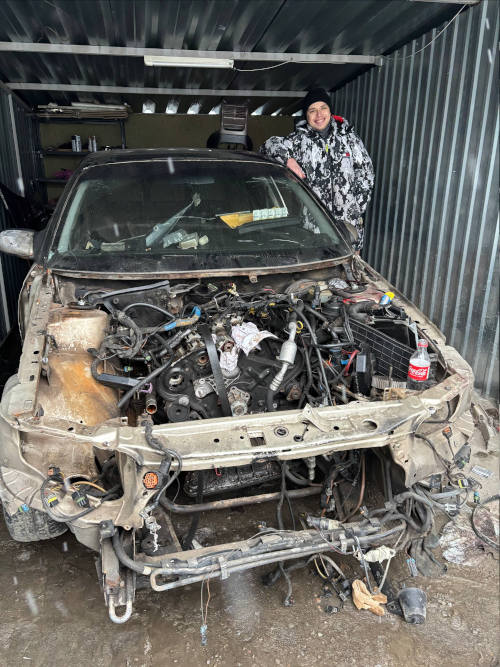
GMC Sierra 1500
GMC Sierra 1500 engine swap compatibility overview
The GMC Sierra 1500 is a full-size, body-on-frame pickup sold in the US market across several generations, including the GMT400-era Sierra lineage, GMT800, GMT900, K2XX, and T1XX trucks. Because the Sierra 1500 has used different GM truck platforms, engine families, transmissions, wiring systems, emissions packages, and 2WD/4WD layouts over time, engine swap compatibility must be judged by generation rather than by displacement alone.
The most important point is simple: an engine that physically fits in a GMC Sierra 1500 is not automatically compatible. A same-brand V8 may still fail as a practical swap if the mounts, oil pan, transmission, ECU, immobilizer, body control module, exhaust, cooling system, or emissions monitors do not work together. This is especially true on newer EcoTec3 trucks, where engine control, transmission control, security, CAN communication, and emissions readiness are more closely linked than on older trucks.
This part defines the main Sierra 1500 swap entity, gives a quick verdict, and explains what compatibility actually means. Later sections should cover platform reality, factory engines, swap options, difficulty levels, execution risks, cost, emissions legality, and practical alternatives.
Entity summary
| Field | Entity detail |
|---|---|
| Vehicle | GMC Sierra 1500, US-market full-size light-duty pickup |
| Generations covered | GMT400 Sierra lineage, GMT800, GMT900, K2XX, and T1XX; exact year boundaries require verification by model year |
| Production years | All Sierra 1500 years; Sierra 1500 nameplate focus is mainly 1999–present, with earlier GMC full-size truck context relevant for older swaps |
| Body/platform type | Body-on-frame pickup, not unibody |
| Factory drivetrain layout | Front-engine, rear-wheel drive or four-wheel drive, depending on trim and configuration |
| Engine orientation | Longitudinal |
| Main factory engine families | GM Vortec V6/V8, Gen III/IV LS-based truck engines, Gen V EcoTec3 gasoline engines, and later 3.0L Duramax diesel applications |
| Transmission types | Manual and automatic transmissions on older trucks; later trucks mainly automatic, including electronically controlled 4-speed, 6-speed, 8-speed, and 10-speed units depending on generation |
| Main swap difficulty range | Level 1 to Level 5, from same-code replacement to full custom cross-brand or diesel redesign |
| Primary compatibility bottleneck | ECU, transmission control, emissions readiness, and 4WD packaging |
| Best-suited swap category | Same-generation GM truck engine family swaps |
| Highest-risk swap category | Cross-brand engines, standalone race builds, and diesel swaps into gasoline trucks |
Quick verdict
| Decision point | Practical verdict |
|---|---|
| Easiest swap type | Same engine code or same-generation GM truck engine replacement using matching mounts, harness strategy, sensors, and emissions equipment |
| Best OEM-style swap | A factory-family GM V8 swap from the same platform generation, such as staying within the relevant Vortec, LS-based truck, or EcoTec3 family |
| Best performance-oriented swap | A larger GM truck V8, such as a 6.0L or 6.2L path, when transmission strength, cooling, exhaust, ECU calibration, and emissions requirements are addressed |
| Most difficult swap category | Cross-brand engines, diesel conversions, or standalone ECU race builds that bypass factory control systems |
| Biggest mechanical constraint | Oil pan, front differential, crossmember, exhaust, and driveshaft clearance on 4WD trucks |
| Biggest electronic/ECU constraint | ECM, TCM, BCM, immobilizer, CAN communication, throttle control, and torque-management integration |
| Biggest transmission constraint | Bellhousing pattern, flexplate or converter compatibility, transmission control logic, and torque capacity |
| Biggest emissions/legal risk | OBD-II readiness failure, missing catalyst or EVAP monitors, incomplete oxygen sensor strategy, or state inspection non-compliance |
| Best recommendation | Choose the closest factory-related engine package before considering custom swaps |
The Sierra 1500 is generally better suited to factory-family GM swaps than unusual custom conversions. Older trucks can be more forgiving mechanically and electronically, but they still need correct fuel, ignition, transmission, and emissions planning. Newer trucks may offer strong factory engine options, but their electronic systems are less tolerant of mismatched modules. A daily-driver owner trying to pass inspection should usually prioritize a complete donor-style package over a bare engine purchase.
What “compatible” actually means
Engine swap compatibility is not a single yes-or-no question. For the GMC Sierra 1500, true compatibility means the engine can be installed, controlled, cooled, driven, diagnosed, inspected, and used reliably under load. Mechanical fitment is only the first layer.
1. Mechanical compatibility
Mechanical compatibility covers physical placement in the engine bay. The engine mounts, frame brackets, oil pan, steering shaft, front crossmember, exhaust manifolds or headers, accessory drive, and firewall clearance all matter. A 2WD truck may have more room around the oil pan area, while a 4WD Sierra owner may run into front differential and axle clearance problems. For example, a builder installing a larger GM V8 into a 4WD truck may find that the engine bolts near the correct location, but the oil pan or exhaust routing still prevents a clean installation.
2. Electronic compatibility
Electronic compatibility includes the ECM or PCM, transmission controller, body control module, immobilizer, CAN bus, sensors, throttle control, fuel system communication, and diagnostic behavior. Older cable-throttle trucks are usually less networked than newer EcoTec3 trucks, but “older” does not mean wiring-free. A mechanic dealing with a no-start after a swap may not have a mechanical problem at all; the issue may be an immobilizer mismatch, missing crank signal, wrong pedal module, or ECM that cannot communicate correctly with the rest of the truck.
3. Transmission compatibility
Transmission compatibility depends on more than bolt pattern. The bellhousing, torque converter, flexplate, crank spacing, starter position, transmission control logic, torque capacity, shift calibration, crossmember, transfer case, and driveshaft alignment must match the swap plan. Keeping the factory automatic can reduce fabrication, but only if the transmission can be controlled correctly and survive the torque curve of the new engine. A larger engine paired with an undersized or poorly calibrated automatic may run, shift badly, overheat, or fail early.
4. Emissions and inspection compatibility
Emissions compatibility is critical for any road-driven Sierra 1500. OBD-II readiness, catalyst monitoring, EVAP operation, misfire monitoring, oxygen sensor placement, fuel tank venting, EGR where applicable, and secondary air systems where applicable can decide whether the truck passes inspection. A swapped engine can start, idle, and drive while still failing readiness monitors. This is why a daily-driver swap should retain a complete emissions strategy from a compatible engine package whenever possible.
5. Cooling and driveline compatibility
Cooling and driveline compatibility determine whether the swap survives after the first test drive. The radiator, fan control, coolant routing, transmission cooler, exhaust heat, axle gearing, rear differential strength, driveshaft angle, U-joints, and transfer case load all affect durability. More torque is useful only if the driveline can handle it. A performance-oriented Sierra swap should be evaluated as a complete truck system, not just as an engine upgrade.
The next section should examine the GMC Sierra 1500 platform reality and factory engine baseline before ranking specific swap options.
Before you start researching parts and pricing, check whether the swap you have in mind actually fits – and whether it's worth doing.
Check My Engine SwapGMC Sierra 1500 platform reality and factory engine baseline

Before comparing engine swap candidates, the original GMC Sierra 1500 platform needs to be understood. Factory architecture determines far more than what physically fits between the frame rails. It establishes engine mount locations, transmission compatibility, electronics strategy, cooling requirements, emissions expectations, and drivetrain durability limits. The closer a swap remains to the factory baseline, the easier it usually becomes to retain reliability, serviceability, and inspection compliance.
Platform and chassis reality
The GMC Sierra 1500 is a body-on-frame, front-engine, longitudinal-layout pickup built around rear-wheel-drive and four-wheel-drive configurations. Across the GMT400, GMT800, GMT900, K2XX, and T1XX generations, the basic architecture remained remarkably consistent: a longitudinal powertrain mounted between full-length frame rails with the transmission positioned directly behind the engine and, on 4WD models, a transfer case mounted at the rear of the transmission.
From a swap perspective, this layout is generally more accommodating than a transverse-engine front-wheel-drive platform. The engine bay is relatively long, and the frame structure provides flexibility for mount placement. However, that does not mean all engines fit equally well. The Sierra's front suspension, steering components, front differential location on 4WD models, and crossmember geometry create important packaging constraints.
One of the most significant factors is the difference between 2WD and 4WD trucks. On many 4WD Sierra 1500 applications, the front differential occupies space directly beneath the engine. Oil pan shape becomes critical. An engine that appears physically compatible may require a different truck-specific oil pan before it can clear the differential and front axle assembly. This is one reason why factory truck V8 families tend to integrate more easily than passenger-car engine variants.
Steering system placement also affects exhaust routing. Most Sierra generations position steering components in areas that can interfere with custom headers or non-factory exhaust manifolds. Builders frequently discover that exhaust clearance becomes a larger challenge than basic engine placement. Accessory drives can create additional complications, especially when mixing truck and passenger-car engine variants that use different front accessory spacing.
Radiator and fan packaging vary by generation and engine package. Factory cooling systems were designed around specific heat loads and transmission combinations. A truck originally equipped with a smaller engine may require cooling upgrades when moving to a larger displacement V8 or a higher-output performance application.
Serviceability matters as well. An engine swap that physically fits but leaves no room for spark plug access, exhaust service, oil filter replacement, or accessory maintenance can create long-term ownership problems. Practical compatibility is broader than installation day.
Generation differences that affect swaps
Although the Sierra 1500 maintained a consistent truck layout over time, electronics and emissions systems changed dramatically.
The GMT400 generation represents the simplest environment. Earlier models used comparatively straightforward engine management systems, while later GMT400 trucks transitioned into OBD-II compliance. Electronic integration exists, but the vehicle network complexity is significantly lower than later generations.
The GMT800 generation established the foundation for many of the modern GM truck swaps seen today. Gen III LS-based truck engines, relatively modular wiring systems, and broad aftermarket support make these trucks popular swap platforms. Electronic integration is present but generally manageable compared to later generations.
GMT900 trucks introduced greater electronic sophistication. Variable valve timing, Active Fuel Management on certain engines, more advanced body control systems, and expanding CAN communication increased integration requirements. Engine swaps began involving more than engine mounts and wiring harnesses.
K2XX trucks moved into the Gen V EcoTec3 era. Direct injection, expanded CAN communication, advanced transmission control strategies, and tighter module integration significantly increased swap complexity. Factory systems became more dependent on communication between the ECM, TCM, BCM, ABS module, and other vehicle controllers.
The current T1XX generation adds even more electronic discipline requirements. Dynamic Fuel Management, advanced diagnostics, sophisticated transmission calibration, and increasingly complex emissions monitoring make incomplete swaps much more difficult to execute successfully.
A practical example illustrates the difference. A GMT800 owner replacing a 5.3L with a similar GM truck engine may primarily focus on mounts, wiring, and calibration. A T1XX owner attempting a similar powertrain change may also need to account for security systems, module communication, transmission logic, emissions readiness, and software compatibility.
For swap planning purposes, newer Sierra generations generally require greater attention to electronics than older generations, even when the mechanical installation appears straightforward.
Factory engines offered
| Engine code/name | Displacement | Configuration | Fuel type | Valvetrain/timing | Power | Torque | Production years | Donor vehicles | Known issues |
|---|---|---|---|---|---|---|---|---|---|
| 4.3L Vortec V6 | 4.3L | V6 | Gasoline | OHV | Varies by generation | Varies by generation | Multiple generations | GM trucks and SUVs | Age-related component wear; exact issues vary |
| LR4 Vortec 4800 | 4.8L | V8 | Gasoline | OHV Gen III | Approximately 255–285 hp | Varies by year | GMT800 era | Sierra, Silverado, related GM trucks | Typical aging LS-platform issues |
| LM7 Vortec 5300 | 5.3L | V8 | Gasoline | OHV Gen III | Approximately 270–295 hp | Varies by year | GMT800 era | Sierra, Silverado, Tahoe, Yukon | Knock sensor and intake-related issues reported |
| LQ4 / LQ9 | 6.0L | V8 | Gasoline | OHV Gen III | Varies by application | Varies by application | HD-related applications | GM HD trucks and SUVs | Requires verification by model year |
| LY5 / LMG / LC9 | 5.3L | V8 | Gasoline / Flex Fuel | OHV Gen IV | Varies by year | Varies by year | GMT900 era | Sierra, Silverado, Yukon | AFM-related concerns on some applications |
| LV3 EcoTec3 | 4.3L | V6 | Gasoline | OHV DI | Approximately 285 hp | Requires verification | K2XX era | Sierra, Silverado | Direct-injection complexity |
| L83 EcoTec3 | 5.3L | V8 | Gasoline | OHV DI | Approximately 355 hp | Requires verification | K2XX era | Sierra, Silverado | AFM and direct-injection concerns |
| L84 EcoTec3 | 5.3L | V8 | Gasoline | OHV DI | Varies by year | Varies by year | T1XX era | Sierra, Silverado | DFM-related concerns reported |
| L86 EcoTec3 | 6.2L | V8 | Gasoline | OHV DI | Approximately 420 hp | Requires verification | K2XX era | Sierra Denali and related GM vehicles | AFM and direct-injection complexity |
| L87 EcoTec3 | 6.2L | V8 | Gasoline | OHV DI | Varies by year | Varies by year | T1XX era | Sierra, Silverado, Escalade | Generation-specific concerns require verification |
| L3B TurboMax | 2.7L | Turbocharged I4 | Gasoline | DOHC Turbo | Varies by calibration | Varies by calibration | T1XX era | Sierra, Silverado | Higher electronic integration requirements |
| LM2 / LZ0 Duramax | 3.0L | Turbocharged I6 | Diesel | DOHC Diesel | Varies by year | Varies by year | T1XX era | Sierra, Silverado | Complex diesel emissions systems |
The table highlights a clear pattern. Factory Sierra powertrains evolved through several generations of GM truck engine families rather than constantly changing architecture. This continuity is important because mounts, transmission patterns, accessory layouts, and drivetrain expectations often remain more compatible within a family than between unrelated engine platforms.
Factory specifications, GM truck documentation, and long-established owner communities consistently show that Sierra swaps become more predictable when they remain within the original engine family and generation. The challenge increases significantly when moving across major technology transitions such as Gen III LS to Gen V EcoTec3, or gasoline to diesel.
Why the factory engine baseline matters
Mount geometry
The original engine family determines mount location, engine height, oil pan design, accessory spacing, and clearance around the steering and front suspension. Factory truck engines were packaged around Sierra-specific chassis requirements, particularly on 4WD models.
Bellhousing and transmission patterns
Factory transmission pairings define what can realistically remain in the truck. Some swaps retain the original transmission with relatively minor changes, while others require adapters, different flexplates, custom driveshafts, or complete transmission replacement.
ECU and wiring expectations
Every factory engine was designed to communicate with specific control modules, sensors, throttle systems, and diagnostic logic. The farther a swap moves from the original electronics strategy, the more integration work is usually required.
Cooling and exhaust capacity
Radiators, fan systems, transmission coolers, exhaust routing, catalytic converter placement, and heat shielding were engineered around known factory outputs. Significant increases in power or torque often require supporting upgrades.
Emissions and inspection logic
Factory emissions systems establish readiness monitor expectations, catalyst monitoring behavior, EVAP operation, oxygen sensor strategy, and diagnostic thresholds. A swap that ignores these systems may run correctly but still fail inspection.
Transmission behavior and driveline durability
Factory torque output influences transmission calibration, converter selection, shift scheduling, driveshaft loading, differential stress, and axle durability. When power increases substantially, the driveline becomes part of the swap equation rather than an afterthought.
Once the factory platform and engine baseline are clear, the next step is to evaluate potential engine swap options and rank them according to integration difficulty, compatibility risk, and overall feasibility.
Enter your vehicle and target engine to see a compatibility verdict, estimated cost, required changes, and whether it's the right move for your build.
Get My Swap VerdictBest engine swap options for the GMC Sierra 1500, ranked by difficulty

Once the GMC Sierra 1500 platform and factory engine baseline are understood, swap options can be ranked by integration depth rather than by peak horsepower. A swap that stays close to the original GM truck engine family usually has the strongest chance of working as a reliable street truck. A swap that crosses generations, fuel systems, transmission strategies, or manufacturer ecosystems may still be possible, but it should be treated as a custom build, not a normal replacement.
How swap difficulty levels actually work
For the GMC Sierra 1500, swap difficulty is mainly about how many factory systems must be preserved or replaced. Same-family swaps are usually the lowest risk because the truck was already engineered around a longitudinal GM truck engine, matching bellhousing patterns, frame-mounted powertrain placement, and rear-wheel-drive or four-wheel-drive driveline geometry.
That does not make every GM V8 swap automatic. A GMT800 5.3L-to-6.0L swap is widely discussed in Silverado/Sierra communities as a realistic path, but even those discussions usually involve tuning, transmission strength, injector matching, gear ratio, and sometimes 4L80E planning rather than a bare-engine drop-in. Community threads on GM-Trucks, SilveradoSierra, and PerformanceTrucks commonly treat the 6.0L upgrade as feasible but calibration-dependent, not magic.
Later Sierra generations raise the bar. A K2XX L83-to-L86 swap may be reported by owners as straightforward when the donor engine is very close in year and architecture, but that evidence is still generation-specific and should not be stretched across every 2014+ truck. One GM-Trucks owner report described a 2015 L83-to-2018 L86 swap as close to plug-and-play, while still noting intake/fuel-system details that may vary by truck.
Standalone ECU strategies can simplify engine control on older or race-focused builds, but they can complicate factory gauges, automatic transmission behavior, traction control, EVAP monitoring, catalyst readiness, and inspection compliance. On a Sierra 1500 that must remain street legal, the cleanest swap is usually the one that keeps the most factory control logic intact.
Level 1 swaps – lowest risk, OEM-style compatibility
Level 1 swaps are same-code or very close same-family replacements. These are the best candidates for daily-driver use because mounts, accessory placement, bellhousing alignment, cooling layout, exhaust routing, and emissions logic are more predictable. They still require verification by generation, engine code, drive type, and emissions package.
| Engine code/name | Why it belongs in Level 1 | Main benefit | Main challenge | Best use case |
|---|---|---|---|---|
| Same-code replacement engine | Matches the original Sierra 1500 engine family, sensors, mounts, and calibration expectations | Lowest integration risk | Wrong model year, emissions package, crank/cam sensor pattern, or harness detail can still cause problems | Repairing a failed engine while keeping factory drivability and inspection stability |
| LM7 5.3L Vortec | Factory-style GMT800 5.3L truck V8 baseline | Common, well-supported, and familiar to GM truck builders | Knock sensor, intake, harness, and PCM details vary by year | GMT800 daily-driver replacement or mild upgrade |
| LR4 4.8L Vortec | Same Gen III truck family as many GMT800 V8 Sierra applications | Budget-friendly replacement path | Less torque than 5.3L or 6.0L options | Basic repair where cost and simplicity matter more than performance |
| LY5 / LMG / LC9 5.3L | Same Gen IV truck-family baseline for many GMT900 trucks | OEM-style replacement for 2007–2013-era trucks | AFM, VVT, flex-fuel, and calibration differences must be checked | GMT900 replacement where the owner wants factory-like behavior |
| L83 / L84 5.3L EcoTec3 | Factory-family Gen V 5.3L baseline for K2XX and T1XX trucks | Best path for retaining modern factory systems | Direct injection, AFM/DFM, CAN communication, and transmission control increase complexity | Modern Sierra replacement using a close donor package |
Level 1 does not mean “no work.” It means the work is more predictable. A mechanic replacing a failed 5.3L in a GMT800 truck is usually solving a different problem than a builder trying to merge a modern direct-injected engine into an older chassis.
Level 2 swaps – moderate complexity
Level 2 swaps stay within the GM ecosystem but move beyond the closest original package. These swaps can make sense when the goal is more torque, better towing behavior, or a stronger performance baseline. They should be planned as engine-system swaps, not just long-block swaps.
| Engine code/name | Why it belongs in Level 2 | Main benefit | Main challenge | Best use case |
|---|---|---|---|---|
| LQ4 / LQ9 6.0L | Same broad Gen III LS/Vortec truck family, commonly discussed as a 5.3L upgrade | More displacement and torque without leaving the GM truck V8 ecosystem | Tune, injectors, converter, cooling, exhaust, and 4L60E durability must be evaluated; 4L80E planning is common in higher-load builds | GMT800 performance, towing, or off-road build where OEM-style GM architecture is preferred |
| L96 6.0L | Later GM truck 6.0L, same manufacturer but not always native to the exact 1500 package | Strong truck-engine foundation | Gen IV electronics, VVT, emissions equipment, and transmission compatibility require model-year matching | Work-truck-style upgrade where wiring and calibration support are available |
| L86 6.2L EcoTec3 | Factory Gen V 6.2L used in related GM truck/SUV applications and some Sierra trims | Factory-style high-output gas V8 path | Direct injection, larger intake/throttle details, fuel system, ECM/TCM calibration, and emissions readiness must match the truck | K2XX OEM-plus performance build using a closely matched donor |
| L87 6.2L EcoTec3 | Modern Gen V 6.2L path for later trucks, but tightly tied to T1XX electronics | Strong factory output potential | DFM, modern module communication, 8/10-speed logic, and year-specific calibration risk | T1XX factory-style performance replacement with donor electronics verified |
The 6.0L swap is the classic moderate-complexity Sierra path. Community evidence supports that it is realistic in older GM truck platforms, but the recurring warnings are consistent: tune it correctly, verify the transmission plan, and do not assume the stock driveline is automatically ready for the extra load.
Level 3–5 swaps – high-effort custom builds
Level 3 to Level 5 swaps move away from factory-like integration. These builds may use GM performance engines, cross-brand engines, diesel conversions, forced induction, or standalone control systems. They can work, but they change the Sierra from a factory-serviceable truck into a custom vehicle.
| Engine code/name | Difficulty level | Main benefit | Dominant integration risk | Recommended only if… |
|---|---|---|---|---|
| LS3 6.2L | Level 3 | Strong naturally aspirated performance and broad LS aftermarket support | Passenger-car accessory drive, oil pan, intake, emissions calibration, and transmission pairing may not match truck systems | The build has a clear ECU, exhaust, cooling, and inspection strategy |
| Aftermarket LS / LSX-based engine | Level 4 | Large performance ceiling | Standalone ECU, high-output fuel system, drivetrain stress, cooling, and street-legality risk | The truck is a performance or race-focused build with upgraded transmission and axle planning |
| LT1 / LT4 Gen V car engine | Level 4 | Modern performance potential | Direct injection, accessory packaging, ECM integration, transmission control, and emissions readiness | The builder has Gen V tuning support and accepts custom integration work |
| 3.0L Duramax diesel conversion | Level 4–5 | Diesel torque and fuel-economy potential | Diesel emissions systems, DEF/SCR/DPF packaging, fuel system, cooling, CAN communication, and inspection legality | A complete donor strategy is available and the goal justifies diesel-level complexity |
| Cummins 6BT | Level 5 | High torque and custom-truck appeal | Weight, firewall clearance, front suspension load, custom mounts, transmission adapter, cooling, exhaust, and legal risk | The truck is a fabrication-heavy custom project, not a normal street replacement |
| Cross-brand gasoline engines | Level 5 | Novelty or race-specific packaging goals | Mounts, bellhousing, standalone ECU, CAN loss, gauges, emissions, and driveline adaptation | The build is custom-only and not expected to behave like a factory Sierra |
High-effort swaps are not automatically bad, but they are rarely the best answer for a normal Sierra 1500 owner. The larger the gap between the donor engine and the original GM truck system, the more the builder must replace factory assumptions with custom engineering.
Engine swap option table
| Engine code/name | Difficulty level | Engine type | Fuel type | Donor vehicles | Evidence type | Main benefits | Main risks | Recommended only if… |
|---|---|---|---|---|---|---|---|---|
| Same-code replacement | Level 1 | Original factory engine | Same as factory | Same-generation Sierra/Silverado or exact matching GM truck donor | Factory-supported | Best chance of retaining factory mounts, wiring, emissions monitors, and transmission behavior | Incorrect year, RPO, emissions package, or sensor configuration | The goal is reliable repair, not a custom performance build |
| LM7 5.3L | Level 1 | Gen III GM truck V8 | Gasoline | GMT800 Sierra, Silverado, Tahoe, Yukon; verify exact years | Factory-supported / community-documented | Common, serviceable, strong donor availability | PCM, harness, knock sensor, and emissions differences by year | The truck is a GMT800 or closely related LS-based platform |
| LR4 4.8L | Level 1 | Gen III GM truck V8 | Gasoline | GMT800 GM trucks; verify donor details | Factory-supported | Low-cost same-family replacement | Lower torque output than larger V8s | Budget and simplicity matter more than power |
| LY5 / LMG / LC9 5.3L | Level 1 | Gen IV GM truck V8 | Gasoline / flex-fuel variants | GMT900 Sierra/Silverado/Yukon/Tahoe; verify RPO | Factory-supported | Correct baseline for many 2007–2013 trucks | AFM/VVT/flex-fuel calibration mismatch | The donor matches the truck’s generation and control strategy |
| L83 / L84 5.3L EcoTec3 | Level 1–2 | Gen V GM truck V8 | Gasoline direct injection | K2XX or T1XX Sierra/Silverado; verify year | Factory-supported | Best modern OEM-style replacement path | DI, AFM/DFM, CAN, TCM, and emissions integration | A complete compatible donor package or verified calibration path is available |
| LQ4 / LQ9 6.0L | Level 2 | Gen III GM truck/SUV V8 | Gasoline | GM HD trucks, Escalade, Yukon Denali, related applications; verify exact donor | Same-family documented / community-discussed | More torque and displacement than 4.8L/5.3L | Transmission durability, tuning, injectors, exhaust, and cooling | The builder plans the transmission and calibration before buying the engine |
| L96 6.0L | Level 2–3 | Gen IV GM truck V8 | Gasoline | GM HD trucks and vans; verify year | Same-manufacturer custom | Strong truck-engine foundation | VVT, emissions, ECU, and transmission pairing issues | The truck’s electronics strategy is compatible or professionally integrated |
| L86 / L87 6.2L EcoTec3 | Level 2–3 | Gen V GM truck V8 | Gasoline direct injection | Sierra/Silverado upper trims, Escalade, related GM SUVs; verify year | Factory-related / community-documented | OEM-style high-output gas V8 path | Fuel system, DI, AFM/DFM, CAN, intake, and transmission calibration | The donor engine, ECM strategy, and emissions package are closely matched |
| LS3 | Level 3 | Gen IV performance V8 | Gasoline | Camaro/Corvette-style donors; verify application | Aftermarket-supported / custom | Strong performance aftermarket | Truck accessory, oil pan, ECU, exhaust, and inspection mismatch | The build accepts custom tuning and supporting hardware changes |
| Aftermarket LS / LSX | Level 4 | Performance V8 | Gasoline | Crate or aftermarket engine | Aftermarket-supported / custom-only | High power ceiling | Standalone ECU, drivetrain stress, cooling, emissions risk | The truck is being built for performance use with upgraded supporting systems |
| LT1 / LT4 | Level 4 | Gen V performance V8 | Gasoline direct injection | Camaro/Corvette/Cadillac performance donors; verify exact engine | Custom-only / requires verification | Modern high-output performance | DI control, CAN, accessory drive, transmission, and inspection complexity | The builder has expert Gen V swap and tuning support |
| 3.0L Duramax | Level 4–5 | Turbo diesel inline-six | Diesel | Modern Sierra/Silverado 1500 diesel donors; verify generation | Factory-related but custom as a conversion | Diesel torque and efficiency potential | Diesel emissions, fuel system, cooling, CAN, DEF/SCR/DPF packaging | A complete donor truck and emissions strategy are available |
| Cummins 6BT | Level 5 | Heavy-duty inline-six diesel | Diesel | Dodge/Ram and industrial-style donors; verify application | Community-documented custom-only | Extreme torque and custom appeal | Weight, fabrication, transmission adapter, front-end load, emissions legality | The project is a fabrication-heavy custom truck |
Best swap by use case
Best daily-driver swap: The best daily-driver swap is usually the same-code replacement engine or the closest same-generation GM truck engine. This keeps the Sierra’s transmission behavior, emissions monitors, cooling layout, and service procedures as close to factory as possible. For a truck that needs to start every morning and pass inspection, boring is often better.
Best budget swap: For older LS-based trucks, a 4.8L or 5.3L same-family replacement is usually the most practical budget path. The main tradeoff is performance; a cheap engine still needs the correct sensors, harness, tune, and emissions equipment.
Best OEM-style swap: A same-generation 5.3L-to-6.0L or 5.3L-to-6.2L GM truck-family upgrade can be the best OEM-style performance path, depending on generation. It works best when the donor engine is close to the original platform and the builder plans the ECM, TCM, fuel system, exhaust, and inspection strategy together.
Best performance swap: For GMT800/GMT900-style builds, a 6.0L GM truck V8 is usually the most sensible performance-oriented step before moving into race-engine territory. For K2XX/T1XX trucks, a factory-related 6.2L EcoTec3 path is more logical than trying to force an unrelated engine into a highly networked modern truck.
Best off-road/towing swap: A truck-oriented 6.0L or factory-related 6.2L can make sense when the transmission, axle gearing, cooling system, and transfer case are matched to the torque increase. The mistake is treating towing performance as an engine-only question.
Best race/custom swap: An aftermarket LS or LSX-based engine is the cleanest custom-performance direction because the GM V8 ecosystem has broad support. It is still not a normal street swap when standalone control, big power, custom fuel delivery, and drivetrain upgrades enter the project.
Swap to avoid for most users: Cross-brand gasoline engines, Cummins diesel conversions, and incomplete modern EcoTec3 swaps should be avoided by most Sierra 1500 owners. These swaps can be impressive when fully engineered, but they usually create more problems than they solve for a street-driven truck.
Choosing the engine is only the beginning. The next section should cover execution reality, common failure points, cost, legality, alternatives, and the practical questions that decide whether a Sierra 1500 swap is worth doing.
Engine swap execution reality for the GMC Sierra 1500
Choosing an engine for a GMC Sierra 1500 is only the beginning of the project. The final result depends on planning, measurement, integration quality, calibration, validation, and emissions requirements. A swap can look correct during installation and still fail later because of drivetrain vibration, incomplete wiring, poor cooling control, transmission mismatch, or inspection readiness problems.
Planning and measurement before removal
A Sierra 1500 swap should start as a measurement and systems-planning job, not as a parts-shopping exercise. Before the original engine is removed, the builder should document engine mount position, oil pan clearance, steering shaft clearance, crossmember location, firewall space, accessory drive depth, radiator and fan room, exhaust path, transmission position, driveshaft angles, axle layout, wiring connectors, ECU location, and emissions equipment.
This is especially important on 4WD trucks. The front differential and transfer case can turn an otherwise normal GM V8 swap into a packaging problem. A small oil pan or mount-position error can create axle interference, vibration, exhaust contact, or poor service access. The same applies to cooling and exhaust. A larger V8 may fit in the bay, but if the radiator, fan shroud, catalyst placement, or header clearance is wrong, the truck may overheat or fail inspection.
Test fitting, mounting, and driveline alignment
The first real execution stage is mockup. The engine and transmission should be test-fitted before final wiring, plumbing, or exhaust work begins. Mounts must be verified under load, not just lined up visually. The transmission must sit correctly in the tunnel, the bellhousing must align cleanly, and the flexplate, flywheel, torque converter, clutch, starter, and crank spacing must match the chosen engine and gearbox.
On 4WD Sierra 1500 models, transfer case alignment is part of the swap. Driveshaft angles, front shaft clearance, rear shaft length, shifter or selector position, and differential stress all need to be checked. A swap that starts, idles, and moves under its own power can still be wrong if the drivetrain angle creates vibration or U-joint wear. Serviceability also matters. If spark plugs, belts, sensors, or exhaust fasteners cannot be reached after installation, the swap may become expensive to maintain.
Wiring, ECU strategy, and first start validation
Wiring and ECU strategy often decide whether a swapped Sierra behaves like a usable truck or a permanent project. The cleanest street-focused swaps usually retain an OEM ECU strategy that matches the engine, transmission, throttle system, fuel system, and emissions equipment. A donor ECU can work, but immobilizer, BCM communication, VIN/security data, CAN messages, pedal modules, sensor signals, and transmission control must be addressed.
A standalone ECU can simplify engine operation in race or custom builds, but it may complicate factory gauges, automatic transmission behavior, traction control, OBD readiness, and inspection compliance. Grounding, shielding, connector quality, and documentation are not small details. Poor wiring can produce intermittent misfires, no-starts, charging faults, throttle errors, and random communication codes.
First start is not the finish line. It is the beginning of validation. Oil pressure, charging voltage, idle stability, fuel pressure, coolant circulation, fan control, throttle response, transmission engagement, exhaust leaks, and scan-tool data should be verified before road use. The truck should then be tested through heat soak, repeated drive cycles, part-throttle driving, full operating temperature, and restart conditions.
Common failure scenarios
| Failure scenario | Why it happens | Symptoms | Prevention |
|---|---|---|---|
| Incomplete or poorly documented wiring | Harness changes are made without diagrams, labels, or proper grounding | No-start, intermittent misfires, sensor codes, charging faults | Use correct diagrams, label circuits, verify grounds, and test continuity before first start |
| ECU or immobilizer mismatch | ECM, BCM, key/security system, or VIN data does not match the truck | Crank-no-start, security light, throttle disable, module codes | Plan ECU/BCM/security strategy before buying the donor engine |
| CAN bus communication errors | Later trucks expect engine, transmission, ABS, BCM, and cluster messages | Warning lights, limp mode, missing gauges, unstable transmission behavior | Keep compatible modules together or use a verified integration strategy |
| Incorrect transmission pairing | Bellhousing, converter, flexplate, TCM logic, or torque capacity is mismatched | Harsh shifts, slipping, overheating, no gear engagement, early failure | Match engine, transmission, converter, controller, and calibration as a system |
| Bad driveline angles | Engine or transmission sits too high, low, forward, or rearward | Vibration, U-joint wear, transfer case noise, driveshaft binding | Measure angles during mockup and correct mount/crossmember placement |
| Undersized cooling system | Radiator, fan control, coolant routing, or transmission cooler is not upgraded for load | Overheating, heat soak, high transmission temperature | Size cooling parts for engine output, towing load, and operating climate |
| Exhaust heat management problems | Headers, cats, or pipes sit too close to wiring, steering, fuel lines, or floor | Melted wiring, hot cabin, knock, fuel vapor issues, exhaust leaks | Plan routing, heat shielding, oxygen sensor placement, and catalyst location early |
| Fuel system mismatch | Pump pressure, return/returnless layout, injector data, or DI requirements do not match | Lean codes, hard starts, misfires, poor throttle response | Match pump, regulator, injectors, fuel rails, and ECU calibration to the engine |
| Emissions readiness failure | EVAP, catalyst, oxygen sensor, misfire, or EGR/AIR monitors are incomplete | Check engine light, not-ready monitors, inspection failure | Keep emissions hardware and ECU strategy compatible with inspection requirements |
| Poor serviceability after installation | Engine position or accessories block routine maintenance access | High labor time for plugs, belts, sensors, exhaust, or oil service | Check maintenance access during test fit, not after final assembly |
Engine swap cost and timeline reality
Cost is driven by integration depth, not engine price alone. The lowest-cost category is usually a same-code replacement using a compatible donor engine and retaining the original transmission, wiring strategy, emissions equipment, and cooling layout. Even then, gaskets, sensors, fluids, mounts, exhaust repairs, tuning, and unexpected broken hardware can add cost.
Moderate same-manufacturer swaps cost more because they add calibration work, transmission planning, cooling changes, exhaust fabrication, accessory changes, and sometimes driveshaft or differential upgrades. High-effort custom swaps move into custom build territory because fabrication, wiring, standalone control, fuel-system redesign, cooling, exhaust, and driveline work grow together. Costs can rise non-linearly: solving one mismatch often exposes another. Project downtime also matters. A truck used for work or daily transportation may become impractical if the swap requires repeated troubleshooting cycles.
Legal and emissions considerations
A swapped Sierra 1500 can run well and still fail inspection. For OBD-II trucks, readiness monitors matter. Catalyst monitoring, EVAP operation, oxygen sensor behavior, misfire detection, fuel trim control, and any required EGR or secondary air systems must align with the ECU strategy. On diesel-related swaps, emissions complexity can include DPF, SCR, DEF, EGR, sensors, and diesel-specific diagnostics.
Street legality depends on location, model year, engine year, emissions equipment, inspection type, and local rules. A standalone ECU may be acceptable for an off-road or race-only truck, but it may not support the readiness monitors required for street inspection. Local regulations should be verified before parts are purchased. This section is not legal advice; it is a warning that legality must be planned as part of the swap, not checked after the engine runs.
When an engine swap is the wrong solution
An engine swap is not always the best fix. If the goal is reliability, a rebuild or same-code replacement may be smarter than changing engine families. If the goal is better towing, gearing, transmission health, cooling restoration, or maintenance catch-up may produce a more reliable improvement than a larger engine.
For performance, a higher-trim factory Sierra, a factory 6.2L truck, or a different platform may be cheaper and more dependable than building a custom swap from scratch. Conservative upgrades can make sense when the original engine and transmission are healthy, but they still need tuning and supporting hardware. The honest answer is that avoiding an unnecessary swap often saves money, downtime, and long-term frustration.
Frequently asked questions
What is the easiest engine swap for the GMC Sierra 1500?
The easiest swap is usually a same-code replacement from the same generation and drivetrain configuration. It keeps mounts, wiring, transmission behavior, cooling, and emissions logic closest to factory.
What is the cheapest engine swap for the GMC Sierra 1500?
The cheapest practical swap is usually a compatible used factory-family engine, not an exotic or high-output build. The final price still depends on labor, sensor condition, tuning needs, exhaust work, and unexpected repairs.
Is a same-family swap better than a cross-brand swap?
For most street-driven Sierra 1500 trucks, yes. Same-family GM truck swaps usually preserve more factory compatibility, while cross-brand swaps add mounts, adapters, wiring, ECU, emissions, and driveline problems.
Can the factory transmission be reused?
Sometimes, but it depends on engine torque, bellhousing pattern, converter or clutch compatibility, and transmission control logic. Reusing the factory transmission is safest when the replacement engine stays close to the original factory package.
Do I need a standalone ECU?
Not for most OEM-style swaps. A standalone ECU is more common in race, custom, or high-output builds, but it can create problems with factory gauges, automatic transmission control, OBD readiness, and street inspection.
Why do engine swaps fail inspection?
They often fail because the engine runs but the emissions system is incomplete. Missing catalyst monitoring, EVAP faults, oxygen sensor problems, misfire monitor issues, or unsupported readiness monitors can all cause failure.
Can a swapped GMC Sierra 1500 be reliable?
Yes, if the swap is planned as a complete system and validated properly. Reliability drops when the engine, transmission, wiring, cooling, emissions equipment, and driveline are treated as separate problems.
What usually causes swap projects to go over budget?
Wiring corrections, tuning, exhaust fabrication, cooling upgrades, transmission problems, missing donor parts, and repeated troubleshooting are common budget drivers. The engine purchase is often only the beginning.
Is a performance swap better than rebuilding the factory engine?
Not always. If the truck needs dependable daily use, rebuilding or replacing the factory engine may be more sensible. A performance swap makes more sense when the owner also budgets for transmission, cooling, fuel, exhaust, and calibration work.
Which swap should most owners avoid?
Most owners should avoid cross-brand engines, heavy diesel conversions, and standalone-controlled custom builds unless they have the budget, fabrication support, and legal plan to finish them correctly.
Final rule for choosing the right swap
An engine swap is a system redesign, not just an engine replacement. The best GMC Sierra 1500 swap is not the most powerful engine; it is the engine that can work cleanly with the mounts, transmission, ECU, cooling system, emissions equipment, and driveline. If those connections cannot be verified, budgeted, and maintained, rebuilding the original setup or choosing a closer factory-family engine is usually the better rule.
Stop comparing specs in your head. Enter your GMC Sierra 1500 and the engine you want – get a structured verdict with cost, complexity, and a clear recommendation.
See If This Swap FitsYears
No year pages with content are configured for this model yet.