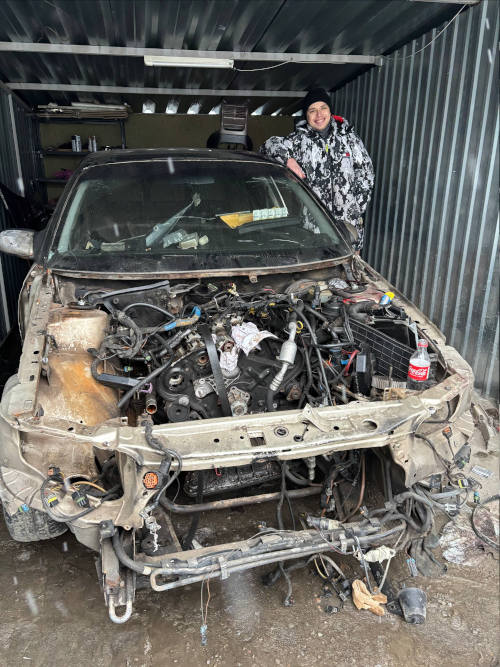
The Honda Civic is one of the most commonly engine-swapped cars ever built, but there is no single answer to the question, “What engine fits a Honda Civic?” A swap that makes sense in a 1998 Civic can be a completely different project in a 2005, 2018, or 2024 Civic.
Civic engine swap compatibility depends on the generation, original engine, transmission, electronics, immobilizer system, emissions equipment, and the amount of fabrication you are prepared to do. Some swaps are well-supported with mounts, wiring solutions, axles, and ECU options. Others are technically possible but turn the Civic into a custom fabrication project.
This guide covers the most practical Honda Civic engine swap options by generation, explains which engines are close to direct replacements and which require major conversion work, and gives realistic planning ranges for cost and difficulty.
Important: Civic specifications vary by country and trim. Engine codes and compatibility should always be verified against the exact donor vehicle and recipient chassis before buying parts.
Honda Civic Engine Swap Compatibility Chart
The chart below is a starting point, not a promise that an engine will bolt directly into every Civic listed. “Best swap directions” means the combinations with the strongest technical logic, aftermarket support, or history of successful builds.
| Civic Generation | Approx. Years | Common Original Engine Families | Best Swap Directions | Difficulty | Main Challenge |
|---|---|---|---|---|---|
| 1st Gen | 1973–1979 | Early Honda 4-cylinder engines | Period-correct Honda engines; D/B/K only as custom builds | High | Very limited space, fabrication, brakes, suspension and driveline |
| 2nd Gen | 1980–1983 | Early CVCC / Honda 4-cylinder | Later Honda 4-cylinder conversions, D-series, B-series or K-series with fabrication | High | Mounts, axles, transmission, fuel system and chassis integration |
| 3rd Gen | 1984–1987 | Early D-series / related Honda engines | D-series, selected B-series conversions | Moderate–High | Mount and transmission compatibility |
| 4th Gen / EF | 1988–1991 | D-series | D-series, B-series, K-series with conversion hardware | Moderate–High | Mounts, axles, wiring and transmission conversion |
| 5th Gen / EG | 1992–1995 | D-series | D-series, B16/B18/B20, K20/K24 | Low–Moderate for D/B; High for K | OBD matching, transmission, mounts, axles and ECU |
| 6th Gen / EK | 1996–2000 | D-series | D-series, B-series, K20/K24 | Low–Moderate for D/B; High for K | OBD2 wiring, ECU, mounts, axles and shifter conversion |
| 7th Gen | 2001–2005 | D17; K-series in selected performance models | D17 replacement, K-series conversion | Low for like-for-like; High for K conversion | Mount architecture, transmission, wiring and immobilizer |
| 8th Gen | 2006–2011 | R18; K20 in Si | R18 replacement, K20 replacement, selected K24 builds | Low–High | CAN electronics, transmission and ECU integration |
| 9th Gen | 2012–2015 | R18; K24 in Si | Same-family replacement, K-series performance builds | Low–High | Electronics, immobilizer and complete drivetrain matching |
| 10th Gen | 2016–2021 | K20C2, L15 turbo, K20C1 in Type R | Same-code replacement; cross-family swaps only with major supporting work | Moderate–Very High | CAN communication, fuel system, transmission and security |
| 11th Gen | 2022–Present | Modern Honda 2.0L, 1.5T and hybrid powertrains depending on year/trim | Matching powertrain replacement; custom performance conversions | Moderate–Very High | Networked electronics, security, transmission and emissions systems |
Before you start researching parts and pricing, check whether the swap you have in mind actually fits – and whether it's worth doing.
Check My Engine SwapQuick Civic Engine Compatibility Answers
A recurring mistake is assuming that because two engines came from Honda Civics, they are interchangeable. Generation changes matter.
- Will a 2005 Civic engine fit a 2004 Civic? Potentially, if both cars use compatible versions of the same D17 family. Verify the complete engine code, transmission, sensors, ECU, harness and emissions configuration.
- Will a 2006 Civic engine fit a 2004 Civic? Not as a direct replacement. The 2006 Civic moved to a different platform and powertrain architecture, with the R18 used in common non-Si US models instead of the earlier D17.
- Will a 1997 Civic engine fit a 2002 Civic? Do not treat this as a direct interchange. The sixth- and seventh-generation cars use substantially different engine and chassis architectures.
- Can a newer Civic engine be installed in an older Civic? Yes in many cases, but “possible” is not the same as “direct fit.” K-series swaps into older Civics are a good example: extremely well documented, but they still require the correct mounts, transmission, axles, wiring, ECU strategy, cooling and exhaust.
- Can you put a V6 or V8 into a Civic? Physically, almost anything can be done with enough fabrication. Practically, V6 and especially V8 Civic builds are custom projects rather than conventional engine swaps.
What Makes a Honda Civic Engine Swap Compatible?
Engine compatibility has several levels. Two engines can have similar displacement or even come from the same manufacturer and still require completely different supporting systems.
1. Engine Mount Compatibility
The engine must sit at the correct height and angle while maintaining clearance around the hood, subframe, steering system, exhaust, intake and accessory drive. The correct mount kit is especially important when moving between D-, B- and K-series engines.
2. Transmission Compatibility
Swapping only the engine is not always possible. Performance swaps commonly require the transmission designed for that engine family, along with compatible shifter cables or linkage, clutch hydraulics, intermediate shaft and axles.
3. Axles and Driveline Geometry
Axles need more than matching spline counts. Length, intermediate-shaft location, hub compatibility and engine position determine whether the drivetrain operates correctly through suspension travel and engine movement.
4. Wiring, ECU and Immobilizer
Electronics become progressively more important in newer Civics. An older D- or B-series swap can often be solved with a known ECU and conversion harness strategy. A late-model Civic may require multiple modules to agree on engine state, throttle position, torque requests, immobilizer authentication and transmission behavior.
5. Fuel System
Fuel pressure, injectors, return versus returnless systems, direct injection and high-pressure fuel requirements can make two mechanically compatible engines very different projects.
6. Cooling and Exhaust
More power generally means more heat. Radiator capacity, fan control, hose routing, exhaust clearance and underhood airflow need to be planned as part of the swap rather than added after overheating appears.
7. Emissions and Inspection Requirements
A running car is not automatically a street-legal car. Engine-swap rules vary by jurisdiction. If the vehicle must pass emissions or OBD inspection, ECU strategy, catalytic converters, evaporative emissions equipment and readiness monitors may determine whether the project is usable on public roads.
Best Honda Civic Engine Swap Options by Generation
1973–1983 Civic: Including 1980, 1981 and 1982 Engine Swaps
Early Civics attract engine-swap searches because the cars are extremely light, but they should not be approached like an EG or EK Civic. A 1981 or 1982 Honda Civic does not have a modern “drop-in” performance engine equivalent.
Later Honda engines can be installed, including D-, B- and even K-series engines in sufficiently ambitious builds, but the project may require custom mounts, transmission adaptation, axles, hubs, fuel-system changes, cooling upgrades, wiring and brake or suspension improvements.
For an early Civic, the best engine is usually determined by the goal of the car. A lightweight, naturally aspirated Honda four-cylinder can make far more sense than selecting the largest engine that can physically be forced into the bay.
Best approach: treat 1970s and early-1980s Civic swaps as complete vehicle builds, not engine-only replacements.
1988–1991 EF Civic Engine Swap Options
The EF Civic is one of the classic Honda swap platforms. Keeping a D-series engine is generally the least disruptive route. A B-series conversion is the traditional performance step, while K-series conversions offer much greater modern performance potential at substantially higher cost and complexity.
| EF Swap | Why Builders Choose It | Typical Complexity |
|---|---|---|
| D-series | Budget, simplicity, low vehicle weight | Low–Moderate |
| B16 / B18 | Classic VTEC performance and period-correct character | Moderate |
| K20 / K24 | More torque, power potential and modern aftermarket support | High |
1992–1995 EG and 1996–2000 EK Civic Engine Swaps
EG and EK Civics are where Honda engine swapping becomes especially attractive. Decades of aftermarket development have produced mount kits, axles, wiring solutions, shifter systems and documented combinations for many D-, B- and K-series builds.
For a 1998 Honda Civic, one of the queries frequently associated with Civic engine swaps, the main options can be divided into three levels:
- D-series replacement or upgrade: usually the lowest-cost path when the goal is to repair the car or gain modest performance without rebuilding the whole drivetrain.
- B-series swap: the classic solution for a period-correct high-revving Honda build. B16 and B18 combinations remain popular where engines and supporting parts are available.
- K20/K24 swap: generally the strongest modern performance route, but it requires considerably more supporting hardware than a D-series replacement.
A well-planned K-swap into an EG or EK may involve a K-series engine and transmission, engine mounts, compatible subframe arrangement where required, axles/intermediate shaft, shifter box and cables, conversion wiring, ECU/tuning solution, fuel-system changes, cooling, intake and exhaust.
2001–2005 Honda Civic Engine Swap Options
The seventh-generation Civic deserves its own discussion because searchers frequently ask about 2001, 2002, 2003, 2004 and 2005 Civic compatibility.
Common North American non-Si Civics in this generation use D17-family engines. That makes another compatible D17 the logical starting point for a replacement. Even within the D17 family, however, engine code, VTEC configuration, emissions equipment, automatic versus manual transmission and electronics need to be checked.
A D16 from a 1990s or 2000 Civic should not be assumed to bolt into a 2001–2005 Civic simply because both engines belong to Honda's D-series lineage. The D17-era chassis uses different mounting and electronic architecture.
Best Performance Swap for a 2001–2005 Civic
A K-series conversion is the performance path most builders consider, particularly because Honda itself sold K-powered versions of the seventh-generation Civic in certain trims and markets. However, converting a D17-powered Civic to a K-series powertrain still requires much more than replacing the long block.
Expect the project to involve the engine, compatible transmission, mounts, axles, shifter system, ECU, wiring, immobilizer strategy, exhaust, cooling and supporting hardware.
2004 vs. 2005 Civic Engine Compatibility
A 2004 and 2005 Civic with matching or compatible D17 configurations are much closer to a legitimate interchange than a 2004 and 2006 Civic. Still, verify the complete engine code and external components instead of ordering a replacement based only on model year.
2006–2011 Honda Civic Engine Swap Options
The eighth-generation Civic changed the equation again. Common non-Si North American Civics use the R18 engine family, while the Civic Si uses the K20Z3.
The easiest engine replacement is therefore usually like-for-like:
- R18 to compatible R18 for a standard Civic;
- K20 to the correct K20 configuration for a Civic Si.
Turning an R18 Civic into the equivalent of a K-powered Si is not an engine-only conversion. The transmission, mounts, axles, ECU, wiring and other systems need to be considered as a package.
Can a 2006 Civic Engine Go in a 2004 Civic?
This is one of the most useful examples of why model name alone does not determine compatibility. A typical 2004 Civic and a typical 2006 Civic belong to different generations and use different primary engine families. An R18 from a 2006 Civic should therefore be treated as a custom conversion into a D17-era 2004 chassis, not as a replacement engine.
2012–2015 Honda Civic Engine Swap Options
Ninth-generation non-Si Civics continued with the R18 family in major North American configurations, while the Civic Si moved to the larger K24.
That makes a matching R18 replacement the rational choice for most standard Civics and a compatible K24 replacement the logical starting point for an Si.
Installing an Si K-series drivetrain into a non-Si Civic can be done as a performance project, but the parts list extends beyond the engine. Transmission, axles, mounts, ECU, harness, immobilizer, exhaust, cooling and other supporting systems must be planned together.
2016–2021 10th-Gen Civic Engine Swap Options
Tenth-generation Civics introduced an even larger electronics gap between a normal engine replacement and a performance swap. Major North American engine choices include the naturally aspirated K20C2 2.0L and turbocharged L15-family 1.5L engines, with the high-performance Type R using the K20C1.
2016 Civic Touring Engine Swap
If the goal is to replace a failed engine in a 2016 Civic Touring, sourcing a compatible replacement from the same engine family and configuration is normally the simplest route. Changing engine families turns the repair into a conversion involving the powertrain, electronics, fuel system and supporting components.
What Engines Can Fit a 2018 Honda Civic?
The answer depends heavily on whether the car started as a 2.0L, 1.5L turbo, Si or Type R. A matching engine is the straightforward replacement. Moving between K20C2, L15-family and K20C1 powertrains should not be viewed as swapping only the engine.
A Type R K20C1 conversion into a standard 10th-generation Civic is technically possible as a custom performance project, but drivetrain, electronics, cooling, fuel delivery and chassis requirements make it significantly more involved than the shared “Civic” name suggests.
2022–Present 11th-Gen Civic Engine Swaps
An 11th-generation Civic is fundamentally different from the older swap-friendly EG and EK cars. Modern vehicle networks tie the engine and transmission into security, instrumentation, stability control, emissions monitoring and other vehicle systems.
For a daily-driven 11th-generation Civic, a matching replacement powertrain is normally the lowest-risk route. A cross-family or cross-brand swap can be engineered, but the project quickly becomes a complete systems-integration exercise.
If the goal is simply more power, upgrading the existing platform may be substantially more practical than replacing the engine architecture.
Honda Civic Hybrid Engine Swaps
Civic Hybrid models require special caution. The gasoline engine is only one part of the propulsion system. Hybrid-specific electronics, motor-generator hardware, battery systems, transmission behavior and control modules are integrated with the engine.
Replacing a failed hybrid engine with the correct compatible engine is fundamentally different from converting a Civic Hybrid to a conventional gasoline drivetrain.
A non-hybrid conversion can require enough drivetrain, wiring, ECU, fuel-system and interior electronic changes that buying a conventional Civic may be more economical than converting the hybrid chassis.
Most Popular Honda Civic Engine Swap Families
| Engine Family | Best Known Use | Advantages | Limitations |
|---|---|---|---|
| D-Series | Older Civic replacement and budget builds | Light, simple, inexpensive relative to performance engines | Lower stock power ceiling |
| B-Series | EF/EG/EK performance builds | Classic Honda character, strong aftermarket, VTEC options | Age, availability and engine pricing |
| K20 | EG/EK swaps, performance Civics, later Honda platforms | Strong aftermarket, power potential, good transmission choices | Conversion hardware and electronics on older chassis |
| K24 | Torque-focused K-swaps | More displacement and torque than many K20 combinations | Clearance and parts selection vary by chassis |
| R18 | 2006–2015 standard Civic replacement | Logical like-for-like replacement | Less attractive as a performance swap into older Civics |
| L15 Turbo | Modern turbo Civics | Compact turbo powertrain and strong factory torque | Direct injection, electronics and thermal complexity |
| J-Series V6 | Custom high-torque Honda builds | Honda V6 torque and displacement | Packaging, weight, transmission and fabrication |
| V8 / Cross-Brand | Specialty fabrication projects | Extreme build potential | Not a conventional Civic swap; major chassis and drivetrain redesign |
D-Series vs. B-Series vs. K-Series: Which Civic Swap Is Best?
D-Series: Best for Budget and Simplicity
If an older Civic already uses a D-series engine and the goal is simply to keep the car running or build an inexpensive lightweight street car, staying D-series can be the smartest choice. The project preserves more of the existing vehicle architecture and avoids paying for performance you may not need.
B-Series: Best for a Classic Honda Build
B-series swaps became popular for a reason. In compatible older Civic chassis they combine high RPM capability, VTEC options, period-correct character and a massive history of successful builds.
The disadvantage in 2026 is no longer engineering knowledge – it is parts age and availability. Clean B-series engines and transmissions can cost enough that a K-series build becomes worth comparing before committing.
K-Series: Best All-Around Performance Direction
For many serious EG and EK performance builds, the K20/K24 family is now the benchmark. It offers strong naturally aspirated performance, large aftermarket support, good transmission choices and significant turbo potential.
However, a K-swap is not cheap simply because a used K24 long block can be inexpensive. The supporting parts often determine the real project cost.
How Much Does a Honda Civic Engine Swap Cost?
There is no useful single price for a Civic engine swap. A used replacement engine installed in an otherwise stock car and a K24-swapped EK Civic are both “engine swaps,” but they have completely different budgets.
The following figures are broad US planning ranges rather than quotes:
| Type of Civic Engine Swap | Rough Planning Range | What Drives the Cost |
|---|---|---|
| Like-for-like used engine replacement | $2,500–$6,000+ | Engine price, labor, fluids, seals, accessories and regional rates |
| Older D-series / simple Honda-family build | $2,000–$5,000+ | Donor completeness, wiring, transmission and DIY labor |
| B-series EG/EK performance swap | $3,000–$8,000+ | Engine/transmission rarity, mounts, ECU, axles and condition |
| K20/K24 EG/EK swap | $5,000–$10,000+ DIY/parts-focused build | Engine, transmission, mounts, axles, wiring, ECU, shifter, fuel and exhaust |
| Professionally completed K-swap | $10,000–$20,000+ possible | Labor, premium hardware, tuning, brakes, suspension and finishing work |
| Modern Civic cross-family swap | $8,000–$20,000+ | Electronics, drivetrain conversion, fabrication and troubleshooting |
| V6, V8 or cross-brand custom build | $15,000–$30,000+ | Custom fabrication, drivetrain, electronics, cooling and chassis work |
These ranges can move dramatically. Buying a complete donor car can lower the cost of small components that otherwise accumulate one by one. Paying a shop for fabrication, wiring and diagnosis can move the total in the opposite direction.
The Engine Is Often Not the Most Expensive Part
A common budgeting mistake is finding a $1,500 engine and assuming the project will cost around $2,000. A complete swap may also need:
- Transmission
- Engine mounts
- Axles and intermediate shaft
- Clutch and flywheel
- Shifter and cables
- ECU
- Conversion harness or custom wiring
- Immobilizer solution
- Fuel-system components
- Radiator and cooling hoses
- Header and exhaust
- Intake
- Sensors
- Fluids and service parts
- Tuning
- Brakes, tires or suspension appropriate for the new performance level
How Hard Is It to Engine Swap a Honda Civic?
The Civic has a reputation as an easy car to swap, but that statement mainly applies to well-documented combinations in older chassis.
| Difficulty Level | Example | What It Means |
|---|---|---|
| 1 – Replacement | Matching D17, R18 or another correct original engine | Mostly conventional engine replacement work |
| 2 – Same-era Honda upgrade | D/B-family upgrade in a well-supported older Civic | Known mounts, wiring and drivetrain solutions exist |
| 3 – Major Honda-family conversion | K24 into EG/EK | Complete powertrain integration required |
| 4 – Modern cross-family conversion | Changing engine architecture in a 10th-gen Civic | Mechanical and electronic systems must both be redesigned |
| 5 – Custom powertrain | V6, V8, VR30, diesel or other cross-brand swap | Fabrication project with few factory assumptions left |
Enter your vehicle and target engine to see a compatibility verdict, estimated cost, required changes, and whether it's the right move for your build.
Get My Swap VerdictHonda Civic Engine Swap Parts Checklist
Before purchasing an engine, build the swap around a complete parts list. The exact components depend on generation, but most projects should address the following categories.
Engine and Transmission
- Complete engine or long block
- Matching or compatible transmission
- Starter and alternator
- Flywheel, clutch and pressure plate for manual conversions
Mounting and Driveline
- Engine/transmission mount kit
- Axles
- Intermediate shaft where applicable
- Compatible hubs if required
Shifter
- Shifter box or linkage
- Shift cables
- Clutch hydraulics for automatic-to-manual conversions
Electronics
- Engine harness
- Conversion harness where required
- ECU
- Immobilizer-compatible components or approved integration strategy
- Compatible sensors
- Tuning solution
Fuel and Cooling
- Fuel pump and regulator if required
- Fuel lines and fittings
- Radiator
- Fans and fan-control strategy
- Correct radiator hoses
Intake and Exhaust
- Intake system
- Header or exhaust manifold
- Exhaust system
- Catalytic converter configuration where required
Why a Civic Engine Can Physically Fit but Still Not Work
Physical engine-bay clearance is only the first test. A successful swap must remain functional while the engine moves under torque, the suspension travels and temperatures rise.
The more modern the Civic, the more likely the real obstacle is electronic rather than mechanical. CAN communication, electronic throttle control, immobilizer validation, ABS and stability-control torque requests, transmission communication and emissions monitoring can all depend on the original powertrain architecture.
This is why a modern engine can sometimes be harder to integrate into a modern Civic than a K-series engine is to install in a 1990s Civic with a mature aftermarket conversion ecosystem.
Common Honda Civic Engine Swap Problems
Buying an Engine Before Planning the Transmission
An inexpensive engine is not a bargain if the correct transmission, axles or ECU are rare or expensive. Plan the drivetrain as one system.
Mixing OBD Generations Without a Wiring Strategy
Older Civic swaps often cross OBD generations. Sensors, distributors, ECU connectors and emissions requirements can differ even between closely related Honda engines.
Ignoring the Immobilizer
Later Civics may require the ECU, key, immobilizer hardware and related modules to be correctly paired. This should be solved before first start, not after the engine has already been installed.
Wrong Axle Geometry
An axle that can be installed is not necessarily an axle that operates correctly. Engine position, intermediate shaft alignment and suspension movement affect joint angles and long-term durability.
Insufficient Cooling
A swapped Civic may idle correctly in the garage and overheat after repeated acceleration or highway driving. Radiator sizing is only part of the solution; fan control and underhood airflow matter as well.
Underestimating Small Parts
Fittings, brackets, hoses, sensors, belts, fluids, clamps and hardware can add hundreds or thousands of dollars to a project that initially appeared inexpensive.
Building Around Peak Horsepower Instead of the Whole Car
Power changes what the tires, brakes, suspension, clutch and transmission must handle. A well-balanced 220-hp Civic can be far more usable than a poorly integrated 400-hp build.
Can You V6 Swap a Honda Civic?
Yes. Honda J-series V6 Civic builds exist, and staying within the Honda family provides more logical donor choices than many cross-brand alternatives.
However, a J-series swap is substantially more involved than a conventional D-, B- or K-series conversion. The engine is physically larger and heavier, and transmission selection, mounts, axles, cooling, exhaust and front-end packaging become major design considerations.
A V6 swap makes the most sense when the V6 itself is part of the goal. If the goal is simply to make a Civic fast, a K-series build is usually supported by a much deeper Civic-specific aftermarket.
Can You V8 Swap a Honda Civic?
A V8 Civic is possible, but it should not be described as a normal engine swap. Most Civics are front-wheel drive and were never designed around the size, drivetrain orientation or torque of a typical V8.
Depending on the design, a V8 build can require major structural fabrication, drivetrain redesign, custom suspension and steering solutions, a different rear driveline layout, cooling, fuel-system changes and standalone electronics.
If someone asks which V8 “fits” a Civic, the better question is how much of the original Civic architecture they are willing to redesign.
Can You Put a Nissan, VR30, Cummins or Other Non-Honda Engine in a Civic?
Cross-brand swaps are mechanically possible, but compatibility support drops dramatically once the build leaves the Honda ecosystem.
A VR30, diesel, Cummins or another unrelated powerplant does not have a normal Civic compatibility path. Mounts, transmission orientation, axles or driveshafts, cooling, fuel system, electronics, instrumentation and vehicle weight distribution may all need custom solutions.
These projects should be evaluated as custom-car engineering projects rather than alternatives to a B- or K-series swap.
Engine Swap vs. Rebuilding the Existing Civic Engine
An engine swap is not always the best answer to a failed or underpowered Civic.
If the car is a daily driver and the existing engine architecture already meets the goal, rebuilding or replacing the original engine often preserves:
- Factory wiring
- Factory transmission compatibility
- Air conditioning and accessories
- Diagnostic capability
- Emissions readiness
- Parts availability
- Resale predictability
A swap becomes more compelling when the original engine family cannot reasonably deliver the desired performance or when the project itself is the purpose of the car.
Legal and Emissions Considerations
Engine-swap regulations vary by state and country, so legality should be checked before buying a donor engine.
Questions to answer include:
- Does the replacement engine need to be the same model year or newer?
- Must the donor engine retain its original emissions equipment?
- Will the vehicle need OBD readiness monitors?
- Can an aftermarket or standalone ECU pass local inspection?
- Does an engine-number or displacement change need to be registered?
A mechanically successful Civic swap can still become impractical if it cannot be registered or inspected where the car is driven.
Frequently Asked Questions
What is the best engine swap for a Honda Civic?
There is no single best swap for every Civic. For many 1992–2000 performance builds, B-series and K-series engines are the most established directions. A D-series can make more sense for a budget daily driver, while later Civics are usually easiest to repair with a matching original engine family.
What is the best cheap Honda engine swap for a Civic?
On older D-series Civics, staying within the D-series is generally the cheapest route because more of the original transmission, mounting and electronics architecture can potentially be retained. The cheapest engine purchase is not always the cheapest complete swap.
What engine swap is best for a 1998 Honda Civic?
A 1998 Civic is one of the most flexible swap platforms. A D-series replacement is the simplest, a B16/B18-style build is the classic performance route, and a K20/K24 is the more modern high-performance direction.
What is the best engine swap for a 2002 Honda Civic?
If reliability and cost matter most, a compatible D17 replacement is the logical choice. For a performance build, a K-series conversion is much more capable but requires a complete drivetrain-and-electronics plan rather than an engine-only swap.
What engine swaps work in a 2004 or 2005 Honda Civic?
Compatible D17-family replacements are the closest to a normal engine replacement. K-series conversions are the major performance option, but require transmission, mounts, axles, wiring, ECU and supporting systems.
Can a 2006 Civic engine fit a 2004 Civic?
Not as a direct replacement. The 2006 Civic belongs to the next generation and commonly uses the R18 rather than the D17 architecture found in ordinary 2001–2005 North American Civics.
What engine swaps can fit a 2018 Honda Civic?
Start with the exact original powertrain. A 2018 Civic may use different engines depending on trim. A matching engine is the practical replacement, while moving between the 2.0L, 1.5 turbo, Si or Type R architectures requires additional drivetrain and electronic integration.
Can you engine swap an 11th-gen Civic?
Yes, but modern engine swapping is much more electronics-dependent than an EG or EK build. Cross-family swaps must account for ECU communication, immobilizer systems, transmission control, emissions logic and other networked modules.
How long does a Honda Civic engine swap take?
A straightforward replacement can be completed far faster than a custom conversion. A planned same-engine replacement may take a professional shop days, while a K-swap or heavily customized project can take weeks or months once fabrication, wiring, tuning and troubleshooting are included.
How much does it cost to engine swap a Honda Civic?
A normal used-engine replacement can land in the low-thousands, while a properly completed performance swap commonly costs several thousand dollars before professional labor. K-series builds frequently reach $5,000–$10,000 or more, and high-end or custom projects can easily move into five-figure budgets.
Can I use the same engine mounts when swapping engines between Civic generations?
Do not assume so. Engine mounts are specific to the chassis and engine/transmission combination. Moving between EF, EG, EK, seventh-generation and later Civic platforms commonly requires different brackets or purpose-built swap mounts.
Is engine swapping a Honda Civic hard?
A matching engine replacement is normal mechanical work. A documented B- or K-series conversion into an older Civic is an advanced project but benefits from extensive aftermarket support. Swapping an unrelated engine into a modern Civic is substantially harder because fabrication and electronics both have to be engineered.
Final Recommendation
The best Honda Civic engine swap is not the largest engine that can physically fit. It is the combination that matches the chassis, budget and purpose of the car while keeping the drivetrain, electronics, cooling and legal requirements manageable.
For older Civics, D-, B- and K-series engines provide a clear progression from simplicity to performance. For 2001–2015 Civics, exact engine-family and drivetrain compatibility becomes more important. For 2016 and newer Civics, electronics and module integration are often as important as the mechanical installation.
Before buying an engine, identify the exact Civic year, trim, original engine code, transmission and target engine. Build the complete parts list first. A $1,500 engine with $7,000 of missing supporting hardware is not a $1,500 swap.