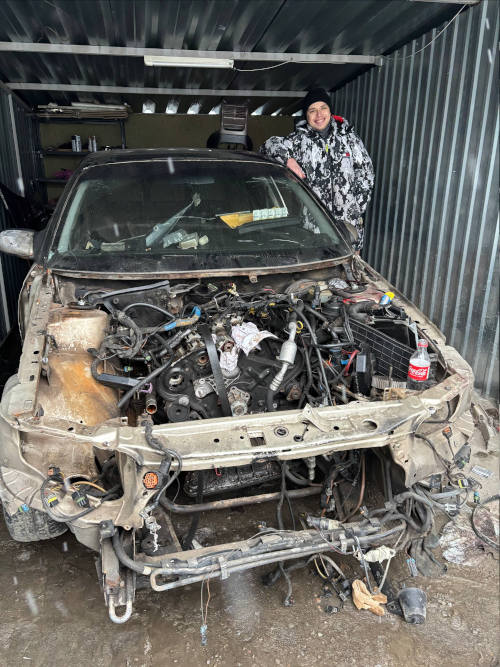
Kia Optima
Kia Optima, which is marketed in the US, would never provide you with truck-like swap freedom. Each generation is an unibody front-wheel-drive sedan designed around a transverse powertrain. So the real consideration is not if an engine can be lowered into the bay, but if the chassis, electronics, and emissions system will still behave like an Optima. This is especially true for first-time builders. The Optima moves from simple early-2000s packaging to more complex direct-injection, turbocharging, hybrid drivetrains, dual-clutch calibration, and greater network dependence in the later years. In terms of engineering and design, the platform is better suited to simple, clean, same-family configurations rather than overly creative setups.
TL;DR
- On the Kia Optima, compatibility means three things at once: mechanical fitment, electronic integration, and emissions survivability.
- Engines that physically fit still fail when the car rejects the control strategy, cooling load, driveline geometry, or inspection logic.
- Every U.S.-market Optima is a unibody, transverse front-wheel-drive sedan, so swap freedom is narrower than many builders assume.
- Early Optimas are less electronically hostile, while 2011–2015 and especially 2016–2020 cars punish mismatched engine, transmission, and module combinations much harder.
- Level 1 swaps stay close to factory relationships and usually mean same-generation, same-package, or factory-adjacent replacements.
- Level 2 swaps still use believable Optima-family engines, but cooling, transmission logic, and supporting electronics start dominating the project.
- Levels 3–5 are not just harder engine swaps, they are system builds that redefine how the car runs, cools, communicates, and survives inspection.
- Most builders underestimate higher levels because fabrication solves only the visible part of the problem, while network logic, thermal behavior, and validation consume the real effort.
- The lowest-risk swaps are exact or near-exact Optima powertrain replacements that preserve the original engine-transmission-emissions relationship.
- Factory-upgrade paths inside the Optima family can work, but they stop being simple once turbo hardware, DCT logic, or hybrid systems enter the picture.
- Cross-generation swaps look easier than they are because the engine may belong to the platform family while the control environment does not.
- Cross-brand swaps escalate fast because OEM commonality disappears and the remaining car no longer shares a believable operating language with the new powertrain.
- Standalone ECU builds can run an engine, but they do not automatically preserve normal cluster behavior, body control logic, transmission interaction, or inspection readiness.
- The engine itself is usually not the main cost; wiring, debugging, rework, validation, and dead-end decisions are.
- Timelines stretch because assembly is only part of the job, while fault tracing, thermal fixes, and systems reconciliation take much longer than expected.
- Budgets and motivation usually collapse when the project reaches “running but not usable” status and keeps demanding more integration work.
- The most common failures are fragmented wiring strategy, misapplied cooling capacity, wrong driveline angles, and accessory-drive geometry that only reveals trouble after real use.
- Most swap failures are delayed, not immediate, because heat soak, vibration, load, and repeated operating cycles expose what mock-up and first start do not.
- OEM ECU-based swaps usually have the best U.S. inspection outlook because they preserve a production-style control and readiness strategy.
- Legality and emissions planning cannot be left until the end, because a car that runs but cannot behave like a clean, monitor-ready road vehicle is not finished.
- Rebuilding the original engine, using conservative boost, or improving gearing often solves the real problem more cleanly than changing the entire powertrain identity.
Kia Optima Engine Swap Compatibility Overview
Defining Compatibility
For the Kia Optima, compatibility consists of a three-pronged test. First, the engine must be able to fit mechanically within the constraints of a transverse front-drive engine bay, which has tight relationships between the subframe, steering gear, radiator stack, and axle centerlines. Second, the entire engine and transmission package has to be able to integrate, electronically, with the car’s control architecture, which becomes much more complex after the 2011 redesign, and again after the 2016 generational change. Lastly, the completed vehicle has to survive the reality of U.S. emissions logic and inspections, meaning the swap must keep OBD behavior, catalyst monitoring, EVAP, and a calibration path that won’t continually revert to readiness or fault-code issues.
This definition is stricter than both “shares displacement” and “shares bellhousing pattern.” A later model Theta II 2.4 GDI engine may appear close enough to an earlier Theta-based four-cylinder engine to justify a shortcut, but the car will determine if it runs correctly based on fuel system architecture, control strategy, sensor expectations, and transmission behavior. The same goes for the case when a donor engine fits under the shock towers, but the original design requires thermal load, axle geometry, exhaust position, or cooling requirements to be operated within the expectations of the front structure and modules. On an Optima, a swap is compatible only when the car functions coherently as a unit.
Mechanical vs electronic vs emissions compatibility
Starting with mechanical compatibility, it combines hard dimensions with other components such as engine mount spacing, bracket angles, sump shapes, downpipe routes, radiator and fan clearances, compressor placements, and driveline angles. The Optima's front structure, in regard to its transverse layout, is compact and organized. When changing the donor engine case size or the transmission width, the halfshaft plunge, inner-joint, and rack-to-subframe relationships become critical. A combination that clears static measurements may destroy CV life, overload a mount, or push the exhaust into heat management,t which the chassis is not designed for.
Electronic compatibility is where a lot of Optima projects move from just “engine swaps” to systems-integration challenges. The early cars are less module dense, but the later ones have more. The ECM, TCM, BCM, ABS/ESC, steering, cluster, smart-key, and infotainment systems are expected to communicate. The driver assist systems complicate things further. The engine controller becomes more than just an engine controller. It becomes a source of torque modeling, load requests, and state information that other modules expect to see on the network.
The third filter is emissions compatibility, and this is the one that punishes optimistic bench racing the most. The U.S. Optima line includes configurations varying by type of port injection, GDI, turbo GDI, conventional automatic, DCT, hybrid, and plug-in hybrid, each with its own catalysts, fuel delivery strategies, monitor logic, and subsystems, as well as expectations and behaviors downstream of the catalysts. Even when a swapped car can start and move, it can still fail for reasons such as the non-matching calibration of the platform for the oxygen sensor location, catalyst light-off behavior, EVAP routine, purge control, misfire detected, and readiness sequencing. An Optima survivor swap must have an emissions story as coherent as its mount geometry.
Why do the fitting engines still fail?
The most apparent failure mode is the common misinterpretation of physical insertion as platform compatibility. A unibody sedan’s frame rails may allow spatial accommodation of a drivetrain, but they would still fail to meet the criteria for an immobilizer handshake, cluster recognition for valid status messages, or a transmission system’s reception of torque-reduction information during shifts. Those issues do not arise during mock-up work but only during the operational stage in the form of start-and-stall behavior, harsh shifts, limp mode, random warning lamps, unstable idle, or an ESC system that strongly contradicts the powertrain.
The Optima punishes swaps that do not take other systems into account. changes in cooling load can exceed the original radiator, including the strategy fan pack, when changes move from naturally aspirated hardware to turbocharged ones. Changes in driveline angle can induce vibration or stress on halfshafts long before anything breaks if it isn’t visible. The hybrid and plug-in hybrid variants further raise the stakes, as in their normal operation, electric oil pumps, inverter cooling, battery-state logic, motor clutches, and high-voltage interlocks are not optional extras.
Torque modeling is another hidden failure point. Later Optimas do not simply respond to the opening of the throttle; they execute a synthesis of calculated torque, requested shifts, stability-control intervention, and expected drive modes. When such messages do not correlate with reality, the car may still move, but it behaves unpredictably. Builders often refer to that situation as a tuning problem, when in reality, it is a problem in the overall platform where the powertrain system may not be in agreement with how it is supposed to operate.
Generational Differences Overview
The U.S. Optimas First Generation cars (2001-2005) have the least electronic complexity and the simplest approach. The 2001-2005 model cars are still front-drive unibody sedans. They have simple engines, either automatic or manual transmissions, and less dependency on networks than the cars that come after. They still require consideration of subframe geometry and transverse packaging, but do not complicate the swap with GDI, turbo, DCT, hybrid, or ADAS module expectations. Although age, parts condition, and timing belt maintenance will complicate the honesty of the swap, the complexity of the later generations falls on GDI, turbo, DCT, and hybrid modules.
The 2006.5-2010 generation cars are in the middle. Although still front-drive unibody sedans, the next generation cars have updated powertrains with newer generation 4-cylinder and V6 engines, 5-speed automatic transmissions, and a more contemporary control feel. By the year 2009, the generation achieves greater power output and a more refined drive train. 2010 models achieve greater drive train control. Though they are contemporary, they still don't encourage a solely engine-dominant approach to thinking.
The 2011-2015 Optima is described as a tipping point as Kia steps into a completely new territory with a mid-size vehicle. This includes a new stiffer unibody structure, a 2.0T GDI engine with direct injection, an option for a hybrid engine, and a standard engine that is transverse and Front Wheel Drive. The new structure has a more complex control layer, which is intolerant of mismatches with engine, transmission, and body side electronics. Here,' same shape, different logic' starts becoming a real trap.
The 2016 - 2020 Optima is one that is most punishing for casual logic swaps. The more rigid body structure has a greater presence of high-strength steel, more structural adhesive, better control of NVH, broader feature variation, as well as a 1.6T with a 7-speed DCT, and updated calibrations of 2.0T and 2.4. Late hybrids and plug-in hybrid systems controllers are more integrated into the structure. In these vehicles, changing the engine also has implications on the vehicle’s assumptions for steering, drive mode, transmission, thermal management, and, in the case of electrified trims, high-voltage operation. Merely mechanical changes will not resolve the issues.
Before you start researching parts and pricing, check whether the swap you have in mind actually fits – and whether it's worth doing.
Check My Engine SwapKia Optima Platform Reality: What It Allows and What It Punishes
Structural architecture and chassis behavior
All the Kia Optima models available in the US market are produced as unibody sedans, and that specificity guides the entire conversation surrounding swaps. The engine, transmission, front suspension, and steering systems operate within a unitized shell that directs the load from the powertrain to the front structure, subframes, side members, and mount points as opposed to a separate frame. This provides the vehicle with great packaging and road manners; however, it means that the mount geometry, torsional inputs, and vibration parameters are more susceptible to changes as opposed to vehicles that have structurally more forgiving layouts.
The 2011 redesign started to feature higher torsional stiffness and more serious body structures, which helped with the refinement of the Optima, but lessened the amount of sloppy powertrain behavior that could be tolerated. The 2016 redesign continued the trend with more than 50% of the structure being made of advanced high-strength steel, more structural adhesives, with larger crossmember bushings, and a considerable increase in torsional rigidity. In terms of swaps, this means that later models react more aggressively to improper mount rates, poor exhaust isolation, unfavorable driveline angles, and any vibration source, where the original car would have relied on careful control of NVH through tuned NVH architecture to filter. The chassis gets stronger, but also less forgiving.
It is important to consider the mounting of subframes and load paths because the front structural design of the Optima relies on the specific placement of engine mass, direction of torque, and placement of engine accessories. The assumptions made for the design of the front structure define the limits of what the structure will support. The load path will change for each specific configuration of the engine. The paths change for each configuration for the engine support mounts, front cradles, the rails, and the passenger cell. That is the reason why an engine swap that is visually appealing during a static inspection will, during road use, be the cause of cabin boom, steering-column buzz, axle shudder, and repeated failure of engine mounts.
Mounts, Crossmembers, RS, and Steering
The design of the engine bay of the Optima imposes an artificial limit to what is possible because it is organized around a transverse package, and that package uses space very efficiently. There is a design competition for the same space between the front crossmember, the position of the steering rack, the geometry of the lower control arms, the position of the cooling module, and the engine and transmission. For the oil pan, the depth of the oil pan, the rear bank exhaust, V6, the position of the compressor and alternator, and the routing of the downpipe for the turbo, all have to interface with the firewall, rack, and the radiator stack. Those details on paper are packaging details. However, in practice, they determine if the vehicle will be difficult to service and if it will last.
When considering design, the position and stiffness of the mounts are critical factors when looking at the Optima. If an engine is slightly higher, it can alter the hood and radiator clearance. If an engine is slightly lower, it can disrupt the alignment of the axle, the routing of the exhaust, and then the protection of the oil sump. Additionally, the steering arms, if shifted laterally, can alter the length of the drive shafts enough to create torque steer and stress on the CV joints. That is easily achievable, without any exotic donor, even if a single-engine family is used.
Choosing a transmission also adds to the mechanical complexity. A standard automatic transmission will have different packaging, cooling, and calibration than the 1.6T/DCT, and newer hybrid and plug-in hybrid models will need additional space to accommodate the electric motor and control logic of an oil pump. Additionally, the different auxiliary loads will also mean that the engine bay will hold more than the engine, but also the specific transmission, additional accessories, and thermal components that are configured to be used together. In that way, the more the donor package departs from the recipient’s original configuration, the more the Optima punishes improvisation.
Electronic limitations (CAN bus, BCM, ABS, security)
As each generation progresses, the complexity of electronics builds up, and that’s the single most important reason for the non-linear difficulty of Optima swaps. Earlier models had less reliance on modules and simpler expectations from the powertrain. 2006.5–2010 models added refinement and features related to security and convenience, while later models already demonstrate the increased system coupling related to proximity keys and higher trim packages. Starting with the 2011 platform, the powertrain begins to operate in a modern CAN system, where the engine and transmission, body, and stability systems expect consistency in identity and torque messaging.
The complexity of control continues to grow with the 2016 generation. Drive Mode Select, new configurations for the steering system, 7-speed DCT logic for the 1.6T cars, new calibrations for the turbo and naturally aspirated engines, and, later on, controllers for hybrids and plug-in hybrids increase the number of modules that have to be coordinated. The engine control unit (ECU) needs to “talk” to the transmission control module (TCM), body control module (BCM), anti-lock brake system / electronic stability control (ABS/ESC), steering, instrument cluster, and the immobilizer and security systems. If the engine control unit (ECU) doesn’t receive an authorization signal from the immobilizer, the engine control unit (ECU is designed to cut off the engine. If torque messages aren’t sent, the transmission control module (TCM) and electronic stability control (ESC) modules will operate under the assumption that the vehicle is “lying” to them.
Security and body-side electronics can affect many potential business models and the associated discussions. Problems in smart-key systems, cluster gateways, body control logic, and networked fault management can turn a fault-starting success into a permanent fault-start situation. The platform's recall history and electronic complexity of HECU/ABS hardware and documented electrical shorts of the later models document the fact that these vehicles are not simple cars. They rely on Built Up Complexity with Integrated Electronics, not simple subsystems. Just because there is Built Up Complexity does not mean that these vehicles are unswappable, as previous models have demonstrated.
The Why of Shortcuts/Why Shortcuts are Bad
The Optima punishes; it is a false completion. A builder can clear a warning, fake a signal, or simply ignore a missing subsystem long enough to hear the engine run, but the cost of chaos is unpaid. While the engine starts, the chaos is out of control. High load fan control may get it wrong. Transmission protection may not align with the actual torque. Cold-start fueling no longer fits with the logic of the catalyst. Gauge readings may become too believable to disguise real thermal or charging problems. The car seems finished until it is driven as a car.
Debt severity increases with Theta II GDI and turbo-era cars due to known engine-family problems, making baseline health even more critical. Rod bearing-related recalls and warranty interventions on theta II engines mean the most baseline-verified mechanical starting point, not just an intriguing donor idea, is the smartest swap baseline. When an uncertain donor engine is paired with cobbled-together network logic or unplugged emissions loops, troubleshooting becomes multilayered guessing. On an Optima, shortcuts don’t merely pile up; they multiply.
Factory Engines Offered in the Kia Optima (All Years)
Complete Factory Engine Specification Table
| Engine Code / Name | Displacement | Engine Type & Cylinders | Fuel Type | Valvetrain / Timing | Power | Torque | Production Years | Donor Vehicles | Known Issues |
|---|---|---|---|---|---|---|---|---|---|
| 2.4 DOHC I4 | 2.4L | Inline-4 | Gasoline | DOHC, 16-valve, timing belt | 149 hp | 159 lb-ft | 2001–2002 | 2001–2002 Optima, period Sonata applications | Timing-belt service discipline matters; age now creates more risk from seals, ignition parts, and neglected maintenance than from the original output level. |
| 2.5 DOHC V6 | 2.5L | V6 | Gasoline | DOHC, 24-valve, timing belt | 169–170 hp | 169 lb-ft | 2001 | 2001 Optima | Launch-year engine; verify by VIN because first-generation early production details matter more than later catalog assumptions. Timing-belt age and accessory-condition issues dominate today. |
| 2.7 DOHC V6 | 2.7L | V6 | Gasoline | DOHC, 24-valve, timing belt | 178 hp | 181 lb-ft | 2002 | 2002 Optima, related Hyundai/Kia V6 applications of the period | Transitional first-generation V6. Timing-belt service and age-related cooling and sealing issues are now the main concerns. |
| 2.4 DOHC I4 | 2.4L | Inline-4 | Gasoline | DOHC, 16-valve, timing belt | 138 hp | 147 lb-ft | 2003–2005 | 2003–2005 Optima | Lower-output facelift-era four-cylinder. Reliability is mostly about maintenance history, belt intervals, and age-related wear rather than an inherent performance flaw. |
| 2.7 DOHC V6 | 2.7L | V6 | Gasoline | DOHC, 24-valve, timing belt | 170 hp | 181 lb-ft | 2003–2005 | 2003–2005 Optima, related Hyundai/Kia V6 models | Still straightforward by later standards, but belt service, oil leaks, and transmission-condition drift matter on surviving cars. |
| Theta 2.4 MPI I4 | 2.4L | Inline-4 | Gasoline | DOHC, CVVT, chain-driven | 162 hp | 164 lb-ft | 2006.5–2008 | 2006.5–2008 Optima, related Hyundai/Kia midsize applications | Useful update over the earlier four-cylinder baseline, but still dependent on a healthy automatic, cooling system, and clean maintenance history. |
| Mu 2.7 V6 | 2.7L | V6 | Gasoline | DOHC, CVVT, chain-driven | 185 hp | 182 lb-ft | 2006.5–2008 | 2006.5–2008 Optima, related Hyundai/Kia V6 front-drive models | Better output than the earlier 2.7, but donor-condition screening still matters more now than factory spec sheets. |
| Theta II 2.4 MPI I4 | 2.4L | Inline-4 | Gasoline | DOHC, dual CVVT, chain-driven | 175 hp | 169 lb-ft | 2009–2010 | 2009–2010 Optima, related Hyundai/Kia midsize models | More modern baseline and stronger output. Late second-generation electronics are still manageable, but no longer primitive. |
| Mu 2.7 V6 | 2.7L | V6 | Gasoline | DOHC, CVVT, chain-driven | 194 hp | 184 lb-ft | 2009–2010 | 2009–2010 Optima | The highest-output factory V6 Optima in the U.S. line before the turbo-four era takes over. |
| Theta II 2.4 GDI I4 | 2.4L | Inline-4 | Gasoline | DOHC, GDI, chain-driven | 200 hp | 186 lb-ft | 2011–2013 | 2011–2013 Optima, Sonata, related Hyundai/Kia 2.4 GDI applications | Part of the Theta II family linked to rod-bearing/seizure recall activity on affected vehicles; verify engine history before using any donor. |
| Theta II 2.0T GDI I4 | 2.0L | Turbocharged inline-4 | Gasoline | DOHC, GDI, turbo, chain-driven | 274 hp | 269 lb-ft | 2011–2015 | 2011–2015 Optima SX/SXL, related Hyundai/Kia 2.0T GDI applications | Strong factory performance baseline, but also inside the same broader Theta II risk environment for bearing-related failures on affected vehicles. |
| Theta II 2.4 GDI I4 | 2.4L | Inline-4 | Gasoline | DOHC, GDI, chain-driven | 192 hp | 181 lb-ft | 2014–2015 | 2014–2015 Optima, related Hyundai/Kia 2.4 GDI applications | Still a Theta II GDI engine, so donor history matters more than the spec change suggests. |
| Theta II 2.4 GDI I4 | 2.4L | Inline-4 | Gasoline | DOHC, GDI, chain-driven | 185 hp | 178 lb-ft | 2016–2020 | 2016–2020 Optima LX, related Hyundai/Kia 2.4 GDI applications | Later-body Optima baseline engine. Output is lower, but network and emissions integration are more demanding than on earlier cars. Theta II caution still applies. |
| Gamma 1.6T GDI I4 | 1.6L | Turbocharged inline-4 | Gasoline | DOHC, GDI, turbo, chain-driven | 178 hp | 195 lb-ft | 2016–2020 | 2016–2020 Optima LX 1.6T, related Hyundai/Kia 1.6T applications | Mechanically reasonable, but tightly linked to the 7-speed DCT and later control logic, so it is not a casual drop-in substitute for 6AT cars. |
| Theta II 2.0T GDI I4 | 2.0L | Turbocharged inline-4 | Gasoline | DOHC, GDI, turbo, chain-driven | 245 hp | 260 lb-ft | 2016–2020 | 2016–2020 Optima SX/SXL, related Hyundai/Kia 2.0T applications | Retuned a later-generation turbo engine inside a more integrated vehicle. Strong donor on paper, but electronics and calibration complexity rise sharply. |
| Theta II 2.4 MPI Hybrid I4 | 2.4L | Inline-4 hybrid | Gasoline-electric | DOHC, MPI, hybrid transaxle | 206 hp combined | 195 lb-ft combined | 2011–2012 | 2011–2012 Optima Hybrid | Early Optima hybrid baseline. Electrified hardware adds motor, clutch, battery, and control dependencies that make it a systems donor rather than an engine donor. |
| Theta II 2.4 MPI Hybrid I4 | 2.4L | Inline-4 hybrid | Gasoline-electric | DOHC, MPI, hybrid transaxle | 159 hp engine / 199 hp combined | 154 lb-ft engine / 235 lb-ft combined | 2013–2016 | 2013–2016 Optima Hybrid | More mature than the first hybrid setup, but still packaging- and software-heavy. Hybrid donor logic must include motor, inverter, battery, and control modules. |
| Nu 2.0 GDI Hybrid I4 | 2.0L | Inline-4 hybrid | Gasoline-electric | DOHC, GDI, hybrid transaxle | 154 hp engine / 192–193 hp combined | 140 lb-ft engine / 271 lb-ft combined | 2017–2020 | 2017–2020 Optima Hybrid, Sonata Hybrid | Later hybrid systems add more integration, including electric auxiliary systems and broader module coordination. Use only as a complete-system baseline. |
| Nu 2.0 GDI Plug-In Hybrid I4 | 2.0L | Inline-4 plug-in hybrid | Gasoline-electric | DOHC, GDI, PHEV transaxle | 154 hp engine / 202 hp combined | 140 lb-ft engine / 276 lb-ft combined | 2017–2020 | 2017–2020 Optima Plug-In Hybrid, Sonata Plug-In Hybrid | Highest integration burden in the Optima line. High-voltage hardware, control logic, charging systems, and electric oil-pump strategy make this a complete-electrified-platform donor only. |
Best Engine Swap Options for the Kia Optima, Ranked by Difficulty
How swap difficulty levels actually work
Swap difficulty does not say how hard it is to actually hang an engine in the bay. For the Kia Optima, the levels indicate how much of the completed car still acts like a production vehicle when the new powertrain is installed. Level 1 means the swap is still factory-like, the mounts logic is similar, the trans is known, and the control systems are not being asked to adopt a new role. Level 2 begins when the engine could still be factory correct for some variant of Optima, but the recipient car needs a bigger set of compatible subsystems for it to work. Levels 3 to 5 are not about engine choices anymore, but about architecture choices.
The challenges associated with systems integration are compounded because additional modifications exponentially increase the number of interdependent systems. For example, the same generation of the same model of vehicle may require specifying compatible engine management, sensors, and emissions components. In contrast, a factory upgrade swap, such as replacing a naturally aspirated 2.4L engine with a turbocharged one, requires a different set of components such as cooling systems, charge air assemblies, torque management, exhaust systems, and sometimes different transmissions or transmission software. Once a vehicle's components are sourced from different generations or different types of vehicles (e.g., hybrid, PHEV), systems integration becomes more complex and the vehicle becomes more of a systems network than a simple assortment of interchangeable parts.
The challenges of integrating electronics, heat management, and other systems start comparatively low in the parts catalogue. Because the Optima vehicle is a front-drive, compact sedan and not a vehicle with a more modular engine compartment, systems integration challenges start low in the parts catalogue. In later generations of vehicles, systems integration involves the communication of controllers with one another and may include torque modeling, shift logic, stability control, and the authorization of other vehicle systems (such as side doors or windows). The challenges of heat management typically emerge earlier than one may expect and become more complicated with turbocharged engines, which require modified charge air pathways, changes in the demands placed on the radiator, modified airflow and exhaust cooling control, and changes in the logic governing fan control. Vehicle hybrid and plug-in hybrid (PHEV) systems add other components such as inverter cooling systems, electric pumps, high voltage monitoring systems, and logic within the transaxle that cannot be ignored.
Having fabrication skills is great, but it does not lessen the challenges and difficulties of an automotive project. Clean brackets, nice welds, and neat piping address the surface of an issue. For example, a fabricated mount does not allow a BCM to accept a different engine, a more rigid intercooler mount doesn’t solve torque-hang problems, and a clean exhaust does not address catalyst monitoring or readiness issues. On the Optima, most effective actions are usually those that are closest to established OEM design relationships and not doing an entire system build that leads to a lot of under-built components.
Level 1 Swaps (Lowest Risk, Nearly Bolt-In)
Level 1 Optima swap attempts are most successful because they replicate the factory engine placement. They utilize engines in the same family as those that the generation of the car is made for, or they put in a new engine of the same family as that of the engine that was previously in the car (packaged, along with the same shell, harness, cooling, emissions, and fixture) and this keeps the project within the design parameters defined by the OEM. This is where the mounts, axles, accessories, transmission, and everything else is predictable and the swap does not become a body control issue.
Here, engines next to factories matter, because the Optima appreciates commonality more than ambition. If the engine is already in that body generation and trim family, the car is less likely to contend over immobilizer logic, cluster expectations, shift scheduling, and thermal management. At this level, emissions survivability is also far better because the placement of catalysts, sensor families, EVAP strategies, and readiness logic tend to remain within the boundaries the chassis already expects.
| Engine Code / Name | Engine Type & Cylinders | Fuel Type | Donor Vehicles & Years | Valvetrain / Timing | Swap Challenges (Specific to Optima) |
|---|---|---|---|---|---|
| 2.4 DOHC I4 | Inline-4 | Gasoline | 2001–2005 Kia Optima 2.4, closely related period Sonata 2.4 donors | DOHC, 16-valve, timing belt | Best as a same-generation replacement. Harness connector age, automatic-transmission compatibility, and early immobilizer differences matter more now than physical fitment. |
| 2.7 DOHC V6 | V6 | Gasoline | 2002–2005 Kia Optima 2.7, related Hyundai/Kia transverse V6 donors of the same era | DOHC, 24-valve, timing belt | Near bolt-in only when replacing an existing V6 package. Four-cylinder shells require V6-specific cooling, exhaust, and transmission-side hardware, which pushes the job out of Level 1. |
| Theta 2.4 MPI I4 | Inline-4 | Gasoline | 2006.5–2008 Kia Optima 2.4, related Hyundai/Kia midsize 2.4 donors | DOHC, CVVT, timing chain | Works best with the original generation’s transmission and engine-side accessories. Intake routing, accessory brackets, and sensor-family mismatches between donor trims need attention even when the block family is correct. |
| Mu 2.7 V6 | V6 | Gasoline | 2006.5–2010 Kia Optima 2.7, related Hyundai/Kia transverse 2.7 V6 donors | DOHC, CVVT, timing chain | Low-risk when it replaces a factory 2.7 setup. The project becomes less predictable if the donor intake, front accessory layout, or transmission calibration does not match the recipient year range. |
| Theta II 2.4 MPI I4 | Inline-4 | Gasoline | 2009–2010 Kia Optima 2.4, related Hyundai/Kia 2.4 donors using the same generation control environment | DOHC, dual CVVT, timing chain | Still straightforward, but late-second-generation electronics are less forgiving than earlier cars. Matching throttle, sensor set, and transmission strategy matters more than on the belt-drive era cars. |
| Theta II 2.4 GDI I4 | Inline-4 | Gasoline | 2011–2015 Kia Optima 2.4 GDI, related Sonata 2.4 GDI donors of the same generation | DOHC, GDI, timing chain | Near bolt-in when the recipient is already a 2.4 GDI car. High-pressure fuel system parts, year-specific emissions hardware, and engine-history quality are the real filters, not bay clearance. |
| Theta II 2.0T GDI I4 | Turbocharged inline-4 | Gasoline | 2011–2015 Kia Optima 2.0T, related same-generation Hyundai/Kia 2.0T donors | DOHC, GDI, turbo, timing chain | Low-risk only as a turbo-to-turbo replacement. Turbo plumbing, intercooler hardware, and turbo-calibrated control expectations keep this inside Level 1 only when the shell already supports the full 2.0T package. |
| Theta II 2.4 GDI I4 | Inline-4 | Gasoline | 2016–2020 Kia Optima 2.4 GDI, related same-generation Hyundai/Kia 2.4 GDI donors | DOHC, GDI, timing chain | Best as an exact-engine replacement. Later Optimas are module-heavy, so year match, calibration family, and emissions configuration matter almost as much as the long block itself. |
| Gamma 1.6T GDI | Turbocharged inline-4 | Gasoline | 2016–2020 Kia Optima 1.6T donors with matching 7-DCT package | DOHC, GDI, turbo, timing chain | Predictable only when the donor includes the 7-speed DCT ecosystem. Treating the engine as separate from the DCT and its control logic usually turns a simple replacement into a stalled integration project. |
| Theta II 2.0T GDI I4 | Turbocharged inline-4 | Gasoline | 2016–2020 Kia Optima 2.0T donors | DOHC, GDI, turbo, timing chain | Near bolt-in as a same-package replacement, especially when the shell already carries the SX or SXL cooling and steering hardware. Turbo hardware, exhaust heat management, and trim-specific electronics still have to remain matched. |
Level 2 Swaps (Moderate Complexity)
Level 2 starts with the engine still being a factory Optima option, but the recipient car was no longer built around that exact powertrain package. This is where electronics and heat management become the focus. The engines are not really the issue, the issue is everything that has to move with them like; transmission logic, cooling package, axle and mount assumptions, intake and exhaust layout, and the body-side systems that expect a certain engine-transmission combo.
More planning will be required at this level, as opposed to actual construction, since the hard parts are usually known beforehand. The real question is whether the builder has accounted for the entire operating package rather than the long block. Level 2 swaps often stall because the donor engine finally fits in the bay, the major mechanical work is done once the core swaps is done, and only then do the many unresolved issues appear such as; intercooler packaging, turbo heat shielding, transmission mismatch, steering-rack clearance, or anything where the systems logic no longer agrees with the new torque source.
| Engine Code / Name | Engine Type & Cylinders | Fuel Type | Donor Vehicles & Years | Valvetrain / Timing | Swap Challenges (Specific to Optima) |
|---|---|---|---|---|---|
| 2.7 DOHC V6 | V6 | Gasoline | 2002–2005 Kia Optima 2.7 donors | DOHC, 24-valve, timing belt | Into a 2001–2005 2.4 shell, the challenge is not basic fit but the complete V6 package: transmission pairing, front exhaust routing, cooling stack, and V6-specific ancillary hardware. |
| Mu 2.7 V6 | V6 | Gasoline | 2006.5–2010 Kia Optima 2.7, related Hyundai/Kia transverse V6 donors | DOHC, CVVT, timing chain | Into a 2.4 second-generation shell, this swap depends on bringing over the V6 drivetrain environment. The engine itself belongs, but mount loading, transmission compatibility, cooling, and exhaust packaging stop it from being a casual bolt-in. |
| Theta II 2.0T GDI I4 | Turbocharged inline-4 | Gasoline | 2011–2015 Kia Optima 2.0T, Sonata 2.0T donors of the same generation | DOHC, GDI, turbo, timing chain | Into a 2011–2015 2.4 GDI car, the engine is factory-correct for the body, but the shell still needs the turbo cooling package, charge-air routing, exhaust heat strategy, and correct transmission-side logic to remain stable. |
| Theta II 2.4 GDI I4 | Inline-4 | Gasoline | 2011–2015 Kia Optima 2.4 GDI donors | DOHC, GDI, timing chain | Into a 2011–2015 2.0T car, the swap removes turbo hardware but does not erase the recipient’s original control and cooling assumptions. It works best when the donor set includes the matching naturally aspirated engine-management environment, not just the engine itself. |
| Theta II 2.0T GDI I4 | Turbocharged inline-4 | Gasoline | 2016–2020 Kia Optima 2.0T donors | DOHC, GDI, turbo, timing chain | Into a 2016–2020 2.4 car, this is the most realistic “upgrade” path for the later chassis, but it still brings turbo-specific cooling, higher thermal load, trim-linked steering and electronics differences, and the need for the correct supporting transmission environment. |
| Theta II 2.4 GDI I4 | Inline-4 | Gasoline | 2016–2020 Kia Optima 2.4 donors | DOHC, GDI, timing chain | Into a later 2.0T chassis, the difficulty is lower than most turbo upgrades, but the car still needs its naturally aspirated calibration logic and matching emissions hardware to avoid permanent systems disagreement. |
| Gamma 1.6T GDI + 7-DCT package | Turbocharged inline-4 | Gasoline | 2016–2020 Kia Optima 1.6T donors | DOHC, GDI, turbo, timing chain | Into a 2016–2020 2.4 shell, the project looks smaller on paper because the engine is smaller, but the DCT package, its control strategy, and the 1.6T-specific thermal and drivability logic make planning more important than fabrication. |
| Nu 2.0 GDI Hybrid system | Inline-4 hybrid | Gasoline-electric | 2017–2020 Optima Hybrid donors | DOHC, GDI, hybrid transaxle | Into another later hybrid shell, this can remain moderate if the donor is effectively complete. Into a non-hybrid car it immediately escalates out of Level 2 because the drivetrain is only one part of the system. |
High-Effort Engine Swaps (Levels 3–5)
We must consider system builds for Levels 3 to 5 rather than engine choices. At this stage, it is not a question of engine fitment. It is a question of whether the Optima can be repositioned to adopt a new powertrain identity without leaving the chassis conflicted with its transmission, security, cooling, steering, stability, and emissions sub-systems. Such initiatives require a donor strategy, not a shopping list.
The last bit of production commonality is removed when cross-brand integrations are considered. For a same-family Hyundai/Kia engine, there is at least some familiarity with packaging and assumption for the transverse layout. A non-Optima donor from elsewhere in the Hyundai/Kia catalog already requires new thinking around subframe loading, accessory placement, gearbox, and driveshaft. Cross-brand engines impose yet another layer as the OEM network logic dialect differs from the body shell that remains.
Standalone ECUs are becoming more common as factory engine management systems are not able to manage factory engine systems on their own. While it appears as though it is making the process easier, it is actually making the task more difficult. Once a builder takes over control of the engine, the builder is left to address the questions surrounding the original gauges, body control module, security system, transmission control, abs and electronic stability control, and emissions. An engine is left to run an engine as a standalone, but it does not keep the rest of the Optima as a normal commuter car.
There are more redesigns and packaging for driveline and cooling for more transversal V6s and larger drivelines. Engineering access, exhaust routing, and mount paths are all altered. Turbo cross-generation moves, more required new control and sensor combinations. Hybrid plug-in conversion and hybrids shift the focus of battery placement, and the strategies of the center of the project. By this point, it is all on the engine is the only the swap, but the real work is the architecture around it.
| Engine Code / Name | Difficulty Level (3 / 4 / 5) | Engine Type & Cylinders | Fuel Type | Donor Vehicles | Dominant Integration Risks |
|---|---|---|---|---|---|
| Theta II 2.0T GDI, cross-generation installation | 3 | Turbocharged inline-4 | Gasoline | 2011–2015 Optima 2.0T into 2016–2020 shell, or 2016–2020 2.0T into 2011–2015 shell | Different control environments, year-specific emissions logic, and trim-dependent supporting hardware create a swap that looks factory on paper but behaves like a mixed-architecture build in practice. |
| Gamma 1.6T GDI into non-1.6T later Optima without full DCT ecosystem match | 3 | Turbocharged inline-4 | Gasoline | 2016–2020 Optima 1.6T donors | DCT dependency, torque-management expectations, and module coordination dominate. The engine alone is not the swap, the engine plus transmission control system is the swap. |
| Lambda 3.3 V6 | 4 | V6 | Gasoline | Hyundai Azera, Kia Cadenza, Kia Sorento, related transverse Hyundai/Kia V6 donors | Subframe load path changes, front-end packaging pressure, transmission selection, axle geometry, exhaust heat management, and the likely loss of normal factory electronics integration make this a full platform adaptation. |
| Lambda 3.8 V6 | 4 | V6 | Gasoline | Selected Hyundai/Kia transverse V6 donors | Even tighter packaging, higher thermal rejection, uncertain service clearance, and greater dependence on custom drivetrain choices push the Optima beyond factory-adjacent behavior. |
| Nu 2.0 GDI Hybrid system into non-hybrid Optima | 4 | Inline-4 hybrid | Gasoline-electric | 2017–2020 Optima Hybrid donors | Battery packaging, motor-transaxle control, electric oil and water pump strategy, HV safety logic, and hybrid-specific communication requirements make this a vehicle-system conversion, not an engine swap. |
| Nu 2.0 GDI Plug-In Hybrid system | 5 | Inline-4 plug-in hybrid | Gasoline-electric | 2017–2020 Optima Plug-In Hybrid donors | Charging architecture, high-voltage battery placement, inverter and motor control, HV interlocks, electric accessory strategy, and body-side integration move the project into full electrified-platform reconstruction. |
| Cross-brand transverse performance engine with standalone ECU | 5 | Varies | Gasoline | Non-Hyundai/Kia transverse donors | Engine control can be made to work, but the remaining vehicle loses OEM commonality. Transmission choice, driveshaft geometry, cluster behavior, security bypass, ABS/ESC coordination, and inspection survivability all become independent engineering problems. |
Enter your vehicle and target engine to see a compatibility verdict, estimated cost, required changes, and whether it's the right move for your build.
Get My Swap VerdictUniversal Engine Swap Execution Reality
Planning & Measurement
Initially the section decides whether the project is a controlled integration job or actually serial rework. On Kia Optima’s, planning is not just carrying out engine bay measurement, but a way of defining the overall package for instance engine, transmission, accessory layout, cooling stack, charge air path if turbocharged, axle position, control strategy and emissions logic. The platform remains transverse and front-wheel drive over the United States but over the period the drivetrain has become wider to include GDI engines, turbocharged, a 1.6T paired with 7-speed DCT, a hybrid and plug-in hybrid. The initial checkout is whether the suggested combination acts and behaves like a single, integrated manufacturing system and not a set of systems which may just fit together.
So, the trouble is not that we have a big mistake in tape measures but an incomplete boundary definition of that well-established set of parts. Usually the engine is fit approximately into the space, and this is done inadvertently omitting the points on the transmission, cooling, steering clearances, network expectations or inspection path. The Optima punts this one, though, as the later cars are not merely engine mantels with opening. They are integrated on road cars complete with unique rims, a variable one, turbo and non turbo thermo, and also whole new set of single system architecture on the electrified cars.
Any baseless presumption introduced at this point will be passed from one check point to another.
Engine Removal
When engines are being removed from faulty Optimas, this is where the original idea will meet the actual condition. Normally, this discloses age, rust, earlier repairs, perished mounts, worn- out wires, and how the cooling system was maintained. On the other hand, this will involve at least a brief assessment of the fundamental flat engine family it belongs to, given that the recall of Kia as well as Nhtsa for engines inspection and replacement exercises point at 2011-201 products of Kia Optimas covered the above descriptions. This is why such projects get costlier before the new engine even enters the bay.
Usually, it is a case of strategic drift at this stage. When the original engine is removed, it is tempting to escalate the scope as the project appears ‘half completed’ at that point given that the bay is empty. That point separates the budgets and the original intentions. Removal from an Optima should validate that the body is ready for the prescribed swap and not be the reason for a different electronics strategy, a more advanced thermal package than the car was designated for, or an unexpected leap to an original transmission.
Test fit should never be viewed as a major visual progress because it is a check point for system interference. For example, even engine that falls between the towers can still fail the Optima due to the fact that transversely mounted sedans do not give away unused space. This means that clearance should be good not only at a static level as a result of a mock-up, but also it should be good for dynamic. Smaller cars have at the radiator stack, fans, condenser, accessory drive, sub frame, axle sweep, steering rack, downpipe path and hood line sharing the same space in the front compartment. For the turbo-charged combos, there is a boost charge routing and this aggravates the intensity of the heat besides there being other cars late in production of them as they have different steering system layouts that add a different level of packaging sensitiveness.
As a result, what often goes wrong is that static fit is confused with usable fit. This means that the project seems to be actually solved as long as its engine is at a stop only to conflict in the time of engine running, expansion of the inlet system, or repair of service. This also under estimates the hoot cold soak. Even when it is cold a set up still can be such that it covers up the radiator package and runs away with an underalton hood temperature or it might bring sensitive components too close to an exhaust side when the car is finally put under real loaded. This kind of breakdown is serious, delayed, costly and, often, expected.
When discussing vehicle performance the most important issue is the frame mounting precision in relation to the mount. In U.S the unibody is installed in m every Optima model hence the install location has a direct relation on the way the torque and the vibrations flows in the front structure and the front subframe. Much later a vehicle becomes a lot more rigid and well structured, thus this improves the NVH and at the same time further penalizing its chances of modification if and when the driveline is shifted. In the same way, a cloth cover could disguise the true locations of the vents and other grilles. So the larger the aft tree, to be applied to the informed influencers in the social, political and business arena, the more causal and empirical negative events can be explored and attributed.
The most usual pattern of failure is somewhat insidious. This may be something that becomes obvious later, when the vehicle may have a clunky steering shaft, popping axle joints, torque-steering on pavement that is worsening, failed mounts or an active muffler that condemns itself every time the engine has woken up. These are relevant to a multitude of areas in life, It could be social psychology, the eradication of small pox, political science among other. On any front-drive Optima, it simply is not good enough to place the driveline sharply. It is a part of performance endurance, tractional behavior, and long-term transmission life. It is not evident that something is incorrect with the automotive. It is more of an entertainment that must be supplemented.
Wiring & ECU Strategy
The process requires only that a vehicle donor be taken apart and fitted into several other cars. The control layer in the first Optimas required less input from the user, but by the time the vehicle was redesigned in 2011, it already had a more modern engine that ran on them and by 2016 the platform spread over 2.4 GDI, and the 1.6T with 7-speed DCT then 2.0T with a 2.0L version, and hybridized variants with wider module interaction. This was an engine management department that did not work alone. Such systems are responsible for transmission response, drive mode logic, the acceptability of the outside of the doors, and the network expectations of the rest of the vehicle structures.
What causes cars not to be finished here, more often than not, is not a single bad wire. It is a strategy that is segregated. While the project typically maintains the engine management of the donor, it maintains a part of the original body control of the donor, improvises on the immobilizer and cluster, and assumes that one will work for the rest of the mistake. Most of the time, that does not happen. If the engine, transmission, BCM, cluster, ABS/ESC, and security logic do not share a believable operating story, the car becomes a permanent debugging platform. Although a standalone ECU can run an engine, it will not necessarily return the other Optimas to their previous interaction.
First Start & Initial Validation
This first start is not actually success yet. It is simply a proper demonstration that the project is now functioning on its own. For the Optima that is first being built, the initial validation questions are a bit more difficult: ‘Does the engine start, idle, charge, cool down, can it talk, can it walk though the operational paces which are usable by the rest of the car?’ Yet, existing car production depends on stable rheostat characteristics, predictable faning, ability of the transmission to know it’s been coordinated, and valid absent hall-effect sensor that suddenly rotated off of cam signal-time stops.
However, the first furniture to burn can do so regardless of whatever is on ground. False closure is commonly what’s happening. It is once the engine starts and the builder hears it running that he can categorize the project mentally to be “almost done”. These are however the real issues behind hard problems, closed-loop fuelling, fan control, overheating, networked-figure one sensor out. Attribute the many false, misleading conclusions and illusion of ‘almost done’ to them.
It is perhaps the beginning of the validation era rather than ideal closer of the engine begins and strikes a car by installing the “chevy” transmission brackets to it.
On a modern Optima, though, especially GDI powered, turboed, DCT equipped, hybrid and PHEV era cars the first running day is more accurately referred to as the beginning of the validation period.
Engine Swap Cost & Timeline Reality
Budget Ranges by Difficulty Level
The cost for swaps typically doesn't follow a straightforward pattern and the pricey element in swaps is not usually the long block. Level 1 work is typically the easiest and least costly since it typically stays within a given factory relationship and avoids major structural and control system shifts. In level 2, we actually have a considerable jump in cost as even in factory compliant engines modules, different thermal control, transmission logic as well as additional supportive modules start to get dragged into the equation whereas levels 3-5 increase more tremendously since the scope of the project shifts from a simple engine exchange to a redesign project for how the car operates, cools, communicates, and survives inspection.
This is why wide ranges will be truthful compared to small promises. Risk-averse factory-adjacent work can still get costly if the donor car is a lemon, the receiving car is an old piece of crap, or the wiring plan is a cluster. The swaps that are about to be done on the higher levels will cost a lot because of the additional integration that is required, disassembly will have to be done repeatedly, wrong assumptions will need to be replaced, and usability of the car will be affected because it will be unfinished. The sunk cost of time that is lost actually matters the most. A car that takes up space while decisions are made is actually a lot more expensive than spreadsheets will show.
Realistic Time Estimates
If time could be simplified to a singular linear pattern, it may be easier to assign time estimates to near-factory replacement work, assuming the donor package, controls strategy, and emissions path are defined. For moderate-complexity swaps, the time estimates may be consistent in the initial stages, but will be interrupted when time alignment is required for cooling, network logic, and transmission behavior. For high-effort builds, it is clear that tasks are not all equally challenging, after a series of difficult tasks, unblocked dependencies will impede the tasks that can be completed. A single unmade decision in the systems area can cause a standstill in up to five other areas.
The majority of swap timelines incorrectly assume, and naturally so, that assembly time assumes, time spent on assembly, is the single most dominant factor. This is not the case on the Optima, where it is often the time spent on debugging that is most dominant instead. A car that is physically complete can spend a far greater amount of time in validation, fault tracing, rework, and troubleshooting emissions readiness than it spent on the removal and installation. Cars built later in the process tend to spend more time in these areas as well as the integration of the modules, and the interactions between them, become more complex than in earlier generations, leading to even more module and drivetrain selection interactions.
The Consistent Underestimation by Builders
The three areas of wiring, rework, and partial usability are consistently underestimated. In the case of wiring, it is often viewed as a labor volume issue when in fact it is an architectural one. Rework is often an isolated estimate but is actually more complex. When an early decision is made incorrectly, it can lead to multiple cascading changes downstream that are not of the single fix variety. A car is not considered functionally finished if it is running but not able to pass inspection, manage heat, or operate consistently under load. Thus, partial usability is also consistently underestimated.
The Optima adds one more common blind spot: starting with a weak baseline. On impacted Theta II applications, baseline engine history matters because the donor itself can carry risk before the swap even begins. If the builder misjudges that, the project could end up absorbing the cost of incorporating a questionable engine into a car that will require a lot of validation afterwards. Finding out that the original plan was too optimistic is a bad place to be.
Common Kia Optima Engine Swap Failure Scenarios
Wiring that is incomplete or fragmented
In this case, the system does not completely shut down, but instead shows inconsistent behavior, which is the reason for the delay. The car might start, and run, and possibly drive fairly well initially. However, after a while, the car may begin to demonstrate inconsistent behavior. This behavior may be caused by a combination of vibration, thermal cycles, changes in the charging system, or transitions of modules from active to inactive. The primary concern is often not about missing a particular circuit, but rather that the central control narrative is missing holistic integration from the system. The engine management system has one version of the car while the body and transmission control units have another. The faults typically only surface after the car has been used in the real world for a long time, which exposes the integration gaps.
With the later released Optimas, the issue becomes increasingly common as the platform incorporates various engine and transmission combinations, including the 1.6T/DCT layout and trim-dependent steering and drive mode. A fragmented wiring strategy can cause issues such as harsh and unstable shifting, warning lights, erratic idle, and a variety of issues that operate in isolation instead of as a unified system. As a result, wiring issues appear random after the replacement, but the source has always been structural rather than random.
Under-sized or Misapplied Cooling Systems
Cooling system failures often occur after a car has been driven for a decent amount of time and appears healthy. The engine warms up normally, the fans cycle, and nothing seems wrong. The heat soak, traffic, and repeated pulls (not to mention the heat) expose that the cooling system was designed for a specific set of expectations rather than the entire operational load. Turbocharged swaps are particularly susceptible as the configuration of the radiators, intercoolers, and under-hood temperature field all alter simultaneously.
The Optima's sensitivity here comes from the fact that the front package is compact and closely layered. A cooling system, even though one is technically present, can be poorly applied if airflow is congested, the fan's operating behavior no longer corresponds to the new thermal load, or if heat from the exhaust side starts to deteriorate adjacent systems over time. These types of failures are, by nature, delayed. Rarely are they present with the first start, the first long drive often does, however, reveal them.
Misaligned Driveline Angles
This failure often presents itself first as “minor vibration.” Until time proves otherwise to be the case that is. Angles that are only slightly wrong may not inhibit the car from leaving the shop, but successive load cycles will amplify the effect of the wrong angles on the CV joints, bearings, and mounts, and entice the traction behavior to change. What starts as a small shudder can lead to axle wear, crack the mounts, and cause torque steer that is much worse than expected or even lead to a chronic condition that continuously pulls other components out of their intended positions.
The Optima's layout means that even small errors in junction geometry can have big effects. Given that the chassis is unitized, and later models have a higher degree of structural stiffness, the shell transmits these errors much more starkly than a more lenient platform would. However, this neglect is a slow build up until the operating angle is incorrect, and the chassis teaches itself to wear in a pattern that is wrong.
Issues that will likely cause problems in the future because of poor accessory drive and belt geometry are often disregarded. Compared to the engine, transmission, and ECU, accessory drives seem unimportant, so even after the build phase, they remain unaddressed. However, after the car goes through heat cycles and the parts are exposed to real RPM for the first time, the problems may start to manifest in the form of belt tracking issues, erratic charging, inconsistent compressor performance under load, and accessory bearings that can't operate in their designed position. The front-end drive system often reveals fatal flaws that the builder may have hoped to ignore.
This is significant for Optima since the bay is transverse with limited space and is sensitive to small changes in bracket position and engine placement. An swapped engine positioned even slightly off, or with accessories that are not fully aligned to the final mounting strategy, can have a belt path that is functionally correct but mechanically unhappy. This sort of problem tends to manifest only after on-road operation and not on the stand or during idle validation.
Final Rule: Choosing the Right Tool
The most correct engine swap for a Kia Optima is not the most powerful option available. It is the one that keeps the car usable, stable, inspectable, thermally manageable, and diagnostically clear once the excitement from the build fades away. On this platform, cost, time, reliability, and legality all travel together. If one is ignored, the others will not be unaffected. The decisive rule is simple. If the new engine means the car can no longer be considered a coherent road car, then it is fundamentally the wrong engine for the car.
Frequently Asked Questions
Why do 2011–2015 Kia Optima swaps behave differently from 2001–2010 cars even when the engine families look similar?
The difference comes from how the vehicle is organized around the engine, not just from the engine itself. Earlier Optimas operate with simpler control relationships and fewer cross-module dependencies, so the powertrain can change without forcing the rest of the car to reinterpret torque behavior, stability intervention, and transmission logic. Once the 2011 redesign introduced direct injection engines and turbocharged variants, the engine controller began participating in a much broader conversation with the rest of the vehicle.
That shift means later cars react strongly when the powertrain identity changes. The cluster, transmission control, stability systems, and other modules expect consistent information about torque production, throttle interpretation, and operating state. A swap that looks mechanically correct may still disrupt that communication. The result is not necessarily a no-start condition; more often it is subtle instability in shifting, idle behavior, or system warnings that appear only after real driving begins.
Why does the transverse layout of the Kia Optima limit engine swap freedom compared with rear-wheel-drive platforms?
The Optima’s transverse architecture compresses multiple systems into a short front compartment. The engine, transmission, steering rack, cooling stack, and axle centerlines share the same structural envelope. In a rear-wheel-drive layout those systems spread across the length of the chassis, which naturally gives builders more freedom to reposition components without disrupting the rest of the vehicle.
In the Optima, a small shift in engine position can change halfshaft geometry, steering clearance, and exhaust routing at the same time. That sensitivity forces the builder to respect the original relationships among components rather than treating the engine bay as open space. The car remains structurally capable of accepting different engines, but only when the new package respects the original geometry the chassis was built around.
What makes the 2016–2020 Kia Optima generation significantly harder for engine swaps than earlier models?
The later generation introduces a more integrated control environment and broader drivetrain variation within the same body platform. The lineup includes naturally aspirated GDI engines, turbocharged variants, a 1.6-liter turbo paired with a dual-clutch transmission, and hybrid and plug-in hybrid systems. Each of those powertrains carries a different expectation for cooling behavior, torque communication, and module interaction.
Because the body and electronic architecture evolved alongside those powertrains, the car expects the engine and transmission combination to match its original design. When a swap mixes those identities, the vehicle may still run but begins interpreting signals incorrectly. Builders often describe that situation as a tuning issue, yet the underlying cause is usually architectural disagreement between modules that were never meant to operate together.
Why do hybrid and plug-in hybrid Optima models rarely make good engine swap starting points?
Hybrid and plug-in hybrid variants rely on a drivetrain architecture that extends beyond the internal combustion engine. The powertrain includes electric motors, battery management systems, inverters, and specialized cooling circuits. Those elements are integrated into the transmission housing and vehicle control network rather than existing as optional add-ons.
When the combustion engine changes, the entire hybrid system must still interpret torque demand, battery state, and regenerative braking behavior correctly. Removing or replacing only part of that system breaks the coordination that allows the drivetrain to function normally. As a result, hybrid Optimas behave less like engine-swap candidates and more like integrated electrified platforms.
Why do turbocharged Optima swaps often struggle with heat management even when the engine itself fits?
Turbo engines change the thermal environment of the front compartment in ways that static measurements cannot capture. The turbocharger concentrates exhaust heat in a small area and adds additional airflow requirements through the radiator stack and intercooler system. That heat also radiates toward nearby components that the original naturally aspirated configuration never exposed to those temperatures.
When builders evaluate only physical clearance, they overlook how sustained load affects airflow and heat rejection. During extended driving or hot weather operation, the cooling system may struggle to maintain stable temperatures. The problem appears later because the first start or short test drive does not reproduce the thermal conditions that reveal the limitation.
Why does the transmission choice matter as much as the engine during a Kia Optima swap?
In the Optima platform the transmission is tightly linked to the engine’s control strategy. Automatic and dual-clutch transmissions depend on accurate torque estimates from the engine controller to schedule shifts and manage clutch pressure. If the engine’s behavior no longer matches what the transmission expects, the driveline begins operating outside its calibrated assumptions.
That mismatch rarely appears immediately. The car may shift acceptably during light driving but behave inconsistently during heavier load or rapid acceleration. The transmission interprets torque signals as requests for protection or intervention, leading to harsh shifts, delayed engagement, or repeated fault conditions. The root issue is not the transmission itself but the loss of a shared torque model between engine and gearbox.
Why do some Kia Optima swaps run well initially but develop driveline vibration after several weeks of driving?
Driveline geometry errors often reveal themselves gradually rather than immediately. A small deviation in axle angle or engine mount position may not create noticeable vibration at idle or during the first road test. However, repeated acceleration cycles place stress on CV joints and mounts that were designed to operate within a narrower range of motion.
Over time the joints begin to articulate at angles they were never intended to sustain continuously. The resulting vibration increases slowly as wear accumulates. Builders often misinterpret this as a failing component, when in reality the root cause is an alignment problem introduced during installation.
Why do Optima swaps that rely on standalone engine management often struggle with everyday drivability?
Standalone control systems excel at managing engine operation but rarely replicate the communication behavior of a production ECU. The factory controller participates in a larger network that includes transmission logic, stability control, and body electronics. Those modules expect specific data messages that represent engine torque, load, and operating state.
When the standalone ECU replaces that communication, the rest of the vehicle receives incomplete or simplified information. The car may still operate mechanically, yet other modules begin reacting unpredictably because their assumptions are no longer valid. This mismatch explains why some standalone swaps run strongly yet behave awkwardly during normal driving conditions.
Why do builders sometimes regret choosing a cross-generation engine from another Hyundai or Kia model?
Engines within the Hyundai–Kia family often share similar architecture, which creates the impression that they will integrate easily across different vehicles. However, those engines evolve alongside new control strategies and emissions hardware. A later version of the same engine family may expect sensors, fuel systems, or network signals that an earlier chassis does not provide.
The result is a swap that appears compatible at the mechanical level but forces complex adjustments in the electronic environment. Builders must bridge differences in calibration logic, diagnostic routines, and module communication. Those tasks rarely become obvious until the engine is already installed, which is why cross-generation swaps often consume more effort than expected.
Why does a Kia Optima swap sometimes trigger stability-control warnings even though the engine runs normally?
Modern stability systems rely on predicted engine torque to coordinate braking intervention and traction control. The stability controller calculates how much power the drivetrain should be producing in response to throttle input. If the engine delivers a different response, the system interprets the difference as a loss of traction or a control fault.
In a swapped Optima this mismatch can occur when the engine controller communicates torque values that no longer match actual output. The stability module reacts defensively, illuminating warning indicators or intervening unnecessarily. The engine itself may be functioning perfectly; the issue lies in how the rest of the vehicle interprets its behavior.
Why do some Optima owners pursue engine swaps when their real goal is improved acceleration feel?
Drivers often associate performance improvements with engine output because horsepower is the most visible metric. In practice, perceived acceleration depends on a broader set of factors including gearing, throttle calibration, and vehicle weight distribution. When those elements are poorly matched to the engine’s power band, the car may feel slower than its specifications suggest.
An engine swap can solve that sensation, but it does so by changing the entire drivetrain identity. If the underlying issue is gearing or response calibration, replacing the engine introduces unnecessary complexity. Many projects that begin with a simple desire for stronger acceleration become full system integrations because the original problem was misidentified.
Why does the Kia Optima’s unibody structure influence engine swap durability?
Unlike body-on-frame vehicles, the Optima’s unibody construction distributes drivetrain loads directly through the vehicle shell. Engine mounts attach to structural points that also support suspension and steering components. When the engine’s weight or torque characteristics change, those loads travel through the same structure that defines ride and handling behavior.
If the swap alters those load paths significantly, the body experiences stresses it was never designed to manage. The effects may appear as increased vibration, accelerated mount wear, or subtle changes in steering feel. The engine itself may operate correctly, yet the vehicle gradually reveals that its structural balance has shifted.
Why do some Kia Optima engine swaps reach a “running but unfinished” stage that lasts months or years?
This pattern emerges when the project reaches basic mechanical operation before its system integration is complete. Once the engine runs, motivation often declines because the remaining tasks are less visible yet more complex. Resolving wiring logic, thermal stability, and drivability behavior demands patience and diagnostic discipline rather than fabrication.
The car becomes functional enough to move under its own power, which removes the urgency to complete the remaining work. However, those unresolved systems prevent the vehicle from behaving like a finished road car. Without a clear integration strategy, the project stalls in a state where it technically runs but never fully matures.
Why do experienced builders emphasize planning over fabrication on the Kia Optima platform?
The Optima rarely defeats a builder because of welding or machining difficulty. Most fabrication challenges can be solved with time and skill. The real difficulty lies in aligning the engine, transmission, electronics, and thermal systems so they behave as one coherent drivetrain. That alignment is determined during the planning stage, long before the first bracket is fabricated.
When planning defines the correct relationships between those systems, fabrication becomes the process of executing a clear design. When planning is incomplete, fabrication merely produces parts that later need to be replaced or repositioned. Experienced builders understand that a well-planned swap reduces complexity before tools ever touch the vehicle.
Stop comparing specs in your head. Enter your Kia Optima and the engine you want – get a structured verdict with cost, complexity, and a clear recommendation.
See If This Swap FitsYears
No year pages with content are configured for this model yet.