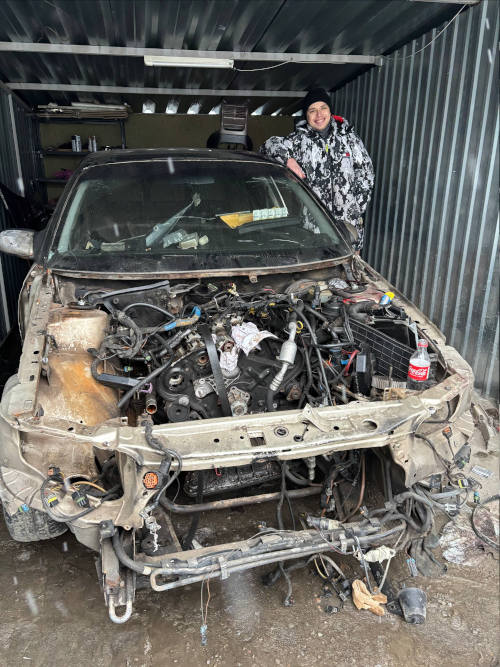
Kia Sorento
The position of the Kia Sorento in the crossover and SUV segmentation is complex, given that multiple aspects of its construction, including its platform, driveline, and electronics, are changing with every generation. The Sorento travels the same as other midsize SUVs in the US market. However, the mechanical underpinnings are crossovers that pivoted from a traditional body-on-frame truck to a fully unibody construction with a modern set of electronics. It is these structural and electronic changes that dictate the landscape of engine swapping. Most builders of Sorentos assume that engines from other Hyundai-Kia platforms will overlap, but modern vehicles take compatibility far beyond shared bolt patterns and similar engine bay dimensions.
Swap potential in the Sorento is achievable only through three aspects, including the physical platform, the vehicle’s electronic network, and the jurisdiction’s emissions compliance applicable to the United States. Each generation presents a unique equilibrium of these three elements. Earlier models allow for more mechanical experimentation, but come with severe packaging restraints on the drivetrains. Conversely, later models come with a high degree of electronic dependencies that make changing engines far more complex, even when it is a simple mechanical fit. Therefore, observing the Sorento solely from the standpoint of the physical size of the engine bay or from the configuration of the elements therein is bound to provide highly inaccurate assessments of the challenges associated with a swap.
TL;DR
- Engine compatibility in the Kia Sorento means mechanical fitment, electronic integration, and emissions system coherence working together.
- Engines that physically fit still fail when the ECU logic, transmission expectations, or cooling system cannot support them.
- Early Sorento models tolerate mechanical experimentation better, while later generations punish electronic mismatches.
- Swap difficulty levels represent system integration complexity, not just fabrication effort.
- Level 1 swaps stay close to factory engine families and preserve predictable electronics and emissions behavior.
- Level 2 swaps introduce higher thermal load, torque changes, and calibration challenges that often stall projects.
- Levels 3–5 swaps become full system builds involving drivetrain layout changes, packaging redesign, and standalone ECU strategies.
- Cross-brand engine swaps escalate complexity quickly because the engine management ecosystem no longer matches the Sorento’s control network.
- The lowest-risk swaps come from closely related Hyundai–Kia engines that share mounting patterns and ECU logic.
- Performance-oriented engines or longitudinal powertrains usually require extensive fabrication and custom electronics.
- The engine itself is rarely the main cost driver in a Sorento swap project.
- Budgets and timelines expand due to wiring integration, cooling redesign, driveline geometry correction, and repeated debugging cycles.
- Many swaps appear successful at first start but reveal instability after heat soak, load, and repeated driving cycles.
- Common delayed failures include fragmented wiring logic, inadequate cooling capacity, driveline angle errors, and unstable accessory drive alignment.
- OEM ECU–based swaps maintain better inspection survivability because they preserve factory diagnostic logic.
- Standalone ECU swaps offer control flexibility but often disrupt emissions monitoring and system communication.
- Emissions and inspection strategy must be defined early because correcting them later is expensive and sometimes impractical.
- Rebuilding the original engine often preserves drivetrain behavior, electronics coherence, and inspection readiness better than swapping.
- Mild forced induction or drivetrain optimization can address performance complaints without replacing the entire engine architecture.
- The decisive rule is simple: choose the solution that preserves the highest total system integrity for the Sorento’s intended use.
Before you start researching parts and pricing, check whether the swap you have in mind actually fits – and whether it's worth doing.
Check My Engine SwapKia Sorento Engine Swap Compatibility Overview
What 'compatible' actually means.
When it comes to the Kia Sorento, engine compatibility cannot be reduced to whether the engine fits in the engine bay. Real compatibility goes far beyond the mere mechanical fitment of the engine. It also calls for the adjustment or integration of the vehicle’s electronic systems and the compliance of the vehicle’s emissions systems. An engine swap that is successful on the mechanical front, but fails on the electronic integration or emissions compliance fronts, is still practically non-viable.
An example of a particular type of compatibility in engines is mechanical compatibility, or how the engine fits and aligns within the Sorento chassis and within the transmission, driveline, cooling, and accessory systems. Even if two engines have the same displacement and are even from the same manufacturer, they may have different mounting bosses, oil pans, exhaust systems, and accessory drives that may result in a less-than-good fit.
A good example of this type of compatibility is electronic compatibility. This type of compatibility becomes more and more important with the more recent generations of the Sorento. The electronic engine control module (ECM), in order to function, has to communicate with the control body module (BCM), anti-lock braking system (ABS), the transmission control module (TCM), and the vehicle's network architecture security system. If everything is in place, and a mechanical engine operates while it is running, the ECM may still trigger system faults, which will disable the drivability features.
Emissions compatibility is the last type of compatibility. In the United States, it is necessary for modern vehicles to have an engine management system that is combined with an emissions control unit. This is called onboard diagnostics (OBD). The engine management system relies on the vehicle's catalytic converter, the vehicle's exhaust gas recirculation, and the vehicle's oxygen sensors to function as they are expected to. If this is not the case, the vehicle will trigger a diagnostic trouble code and will not pass an emissions test.
Mechanical fitment involves the engine swap planning. Builders look at the engine block sizes, positions of the mounts, transmission bolt patterns, and drivetrain alignments. This process is complicated with the Sorento because the model changed from longitudinal drivelines in the earlier generations to transverse in the later ones. This alteration alone changes the number of engines that can be realistically integrated into the chassis.
The model of the Sorento also uses an extensive amount of electronics, with a lot of modules that contain specific engineered functions. They help share engine torque, throttle position, and the predicted loads of the drivetrain to help control the vehicle. Replacing the vehicle’s engine control module can cause the other modules to disable the traction control systems, throttle control, and the vehicle's stability control.
Emissions incorporation is also a complex area. Sorentos in the U.S. monitor the efficiency of the catalysts, fuel trim, the system of evaporative emissions, and the exhaust gas. If the engine replacement uses different devices or locations of emissions, the onboard diagnostics system will see the problems. Even if the engine is running normally, the vehicle could be stuck in a “not ready” state if the engine runs normally due to the inspection cycles.
Why the fitment still might fail
Most swap attempts fail since mechanical fitment can be misleading for overall compatibility. Some engines can be bolted onto the transmission or fit into engine bays nicely. However, the surrounding systems work with data and behavior that the new engine most likely cannot provide. The Sorento, for example,e has stability control and traction control systems that have torque modeling information that comes from the engine control module. When such information is scarce or even non-existent, systems can be triggered, read, and throttle restrictions can be imposed.
Another common area of failure is the coolant system. Systems that have higher thermal loads, such as engines, require changes to the original system design for radiator capacity, coolant flow routing, and also the fan control strategies. When these systems are left unattended, the car could run fine under lighter driving conditions, but it will certainly overheat during sustained driving or high-ambient temperatures.
Swap failures can also be attributed to driveline geometry. Increase in height and change of placement of the engine in the front or the rear also influence the angle of the driveshaft and the alignment of the gearbox. If the angle of the driveline is too great, the vibration will be excessive, and the life of the universal joint will be shortened substantially. Even small engine mounts that change geometry can create reliability issues in the driveline that are only apparent after too much use.
Brief generational differences
The 3 generations of the Kia Sorento have shown 3 major shifts in architecture and the compatibility of future engine swaps. The unique issues of each generation are a result of the individual platform strategies and the different levels of electronic integration.
For example, the body-on-frame design, where the first-generation Kia Sorento was produced and sold in the US from the early 2000s until the 2010s, included a body that was built separately from the frame. SUV-style drivetrains and longitudinal engine mounts were used. Electronics were incorporated, but were far more primitive than in later generations.
The second-generation Sorento is where structural changes begin. Kia Sorento was shifted to a unibody chassis and now had to work with a transverse engine placement. This design is more in line with a passenger vehicle than a truck. The systems become more electronic and interconnected.
Generations three and four of the Sorento continue the trend of crossovers and their associated architecture. In these generations, a sophisticated network of electronic systems exists. The engine control system, stability control system, transmission control system, and driver assist systems are all interconnected via a CAN network and exchange data. This high level of interdependence makes engine swaps far more complex than in earlier generations.
Kia Sorento Platform Reality: What It Allows and What It Punishes
Body-on-frame benefits and drawbacks
The first-generation Kia Sorento body-on-frame design uses a ladder frame that supports the drivetrain and suspension components. This construction separates the body of the vehicle from the structural loads while allowing critical components of the drivetrain to be mounted to the frame rails and crossmembers. This design is similar to the construction used for traditional truck platforms that have historically made engine swaps to/from a vehicle easier from a mechanical point of view. The frame rails create several locations for mounting the engine and transmission crossmembers. Many builders working on the early Sorento models have more options to design and fabricate engine- or transmission-mounts as the frame structure will disperse the loads independently from the body shell. This also means that they can reposition the engine and drivetrain assembly without introducing a lot of stress in the vehicle body.
Nonetheless, body-on-frame designs also present some challenges. The engine must be positioned perfectly in line with the transmission and, in the case of four-wheel drives, the transfer case. The frame crossmembers determine the limits for the engine to be positioned within the confines of the crossmembers. The height of the oil pan may be a consideration when working above the front differential and steering components; this can restrict engine position in the swap. Subsequent generations of the Sorento move away from a ladder frame and instead utilize a unibody construction that has integrated subframes. This change means that the ride quality and frame rigidity increase, but the construction also means moving the modular drivetrain frame components, which means a loss of the flexibility that the construction once offered.
The Sorento as a vehicle has mechanical limitations that are mainly a result of the relationship of the engine, the transmission, and where the chassis frame interfaces with the vehicle’s frame. The engine can also be attached to the frame ridge or to the sub-frame ridges, depending on the vehicle generation. From this, the engine can only be placed in a few locations vertically, laterally,y and in the direction of travel.
Also, if poorly positioned, the engine may cause the drive shaft to be placed at an angle that is outside of the design parameters, which can cause the shaft and surrounding components to become worn too quickly due to the vibration from the friction. The design of the oil pan on the engine is also important due to the design of the vehicle, as the design of the engine cylinder block allows the engine to be positioned with respect to the chassis, the engine and the steering components may still interfere.
The placement of components like alternators, power steering pumps, and air conditioning compressors, which are all positioned low on modern engines, results in further challenges. Depending on the original platform from which the replacement engine is sourced, these components can interfere with subframe structures or suspension arms. Almost every generation can find differences in the level of restriction. For example, in the early Sorentos, the engine management systems are much less complicated than those of the newer generations. While the newer systems have a vast number of control modules and utilize something called a controller area network, or CAN, to connect all the modules as well as provide real-time updates on the engine, brakes, and steering.
The body control module is the primary means of collating and consolidating several different systems in the vehicle. This means it is the primary point of contact with the engine control module, the transmission control module, the instruments, and the security module. If a processor in the engine control module does not provide the expected inputs to the BCM, such as torque requests, throttle position, or engine speed, the BCM may conclude that a fault occurred in that module. The security module that is integrated with the engine control module is another factor complicating compatibility. If the engine control module does not match the identity of the vehicle, the vehicle’s security module will trigger the immobilizer, and the engine may crank but will not start or will immediately shut down after ignition.
The module for engine control also gets torque reduction signals from anti-lock braking and stabilization. A system of stabilization control requests temporary torque reductions from the system for each instance of wheel slip. If the replacement engine control module does not understand these requests, stability control may turn off, or there can be stability control warning lights.
Why does long-term debug debt occur from shortcuts?
Bypassing rather than addressing changes can lead to long-term problems, as these changes are subtle. The system may start, and it may let the system run; however, these changes may lead to problems during operation that are less obvious initially. An electrical bypass that disables warning lights as a change disables modules that are diagnostic and may tend from that point to hide bad compatibility.
These changes are particularly problematic in the long-term. Shifts in mechanics under load may happen at the alignment of the drivetrain, increasing vibration. Engine mounts may shift, and under the additional load, increase vibration.
Engine control modules, in this regard, are the most significant source of persistent troubleshooting. During the faults, the modules shift from controlling one part of the system to another, and these systems lose control. A module that fails to provide needed data during system control causes other modules to compensate and to control other systems. The faults hide the original cause. The original cause may remain dormant during multiple faults.
Factory Engines Offered in the Kia Sorento (All Years)
Complete Factory Engine Specification Table
| Engine Code / Name | Displacement | Engine Type & Cylinders | Fuel Type | Valvetrain / Timing | Power | Torque | Production Years | Donor Vehicles | Known Issues |
|---|---|---|---|---|---|---|---|---|---|
| G6CU V6 | 3.5L | V6 | Gasoline | DOHC, timing belt | 192 hp | 217 lb-ft | 2003–2006 | Kia Sorento, Hyundai Terracan | Timing belt service sensitivity, oil leaks |
| G6DB V6 | 3.3L | V6 | Gasoline | DOHC, timing chain | 242 hp | 226 lb-ft | 2007–2009 | Kia Sorento, Hyundai Sonata | Oil consumption in high-mileage engines |
| G4KE Theta II | 2.4L | Inline-4 | Gasoline | DOHC, timing chain | 175 hp | 169 lb-ft | 2011–2015 | Kia Sorento, Hyundai Santa Fe | Rod bearing failures in early production |
| G6DC Lambda II | 3.5L | V6 | Gasoline | DOHC, timing chain | 276 hp | 248 lb-ft | 2011–2013 | Kia Sorento, Hyundai Santa Fe | Carbon buildup, occasional oil leaks |
| G6DG Lambda II | 3.3L | V6 | Gasoline | DOHC, timing chain | 290 hp | 252 lb-ft | 2014–2020 | Kia Sorento, Kia Cadenza | Direct injection carbon buildup |
| G4KH Theta II Turbo | 2.0L | Inline-4 Turbo | Gasoline | DOHC, timing chain | 240 hp | 260 lb-ft | 2016–2018 | Kia Sorento, Kia Optima | Rod bearing wear, turbo heat stress |
| G4KJ Theta II | 2.4L | Inline-4 | Gasoline | DOHC, timing chain | 185 hp | 178 lb-ft | 2016–2020 | Kia Sorento, Hyundai Santa Fe | Rod bearing recall history |
| Smartstream G2.5 | 2.5L | Inline-4 | Gasoline | DOHC, timing chain | 191 hp | 181 lb-ft | 2021–Present | Kia Sorento, Kia K5 | Limited long-term data |
| Smartstream G2.5T | 2.5L | Inline-4 Turbo | Gasoline | DOHC, timing chain | 281 hp | 311 lb-ft | 2021–Present | Kia Sorento, Hyundai Santa Fe | High thermal load under sustained boost |
| 1.6L T-GDI Hybrid | 1.6L | Inline-4 Turbo Hybrid | Gasoline Hybrid | DOHC, timing chain | 227 hp combined | 258 lb-ft combined | 2021–Present | Kia Sorento Hybrid | Hybrid system complexityBest-Ranked |
d Engine Swap Options for Kia Sorento, Based on Difficulty
How Do We Measure Swap Difficulty?
Engine swap difficulty levels consider the overall integration effort needed for mechanical packaging, electronic integration, and emissions system compliance. The levels recorded aren't just physical challenges. Instead, they detail the number of vehicle sub-systems that need to be reconciled for the engine to be operationally safe and integrated within the Sorento platform.
Difficulty levels increase non-linearly due to the fact that additional layers of integration increase the needed complexity for the swap. A simple engine swap may require the modification of engine mounts and the repositioning of accessories, but a more complex level may create challenges for network communications, torque modeling, and transmission control. Each new layer of complexity introduces an entirely new set of dependencies, and those problems need to be solved before the cycle begins again.
The highest levels of difficulty are correlated to electronics, thermal control, and vehicle system integration. Many modern engine control units (ECUs) are designed to communicate with each other and adjust operational parameters. The integrated systems will react in undesired ways if the new engine doesn't provide the expected signals and in the expected torque range. The Sorento was designed with a particular set of cooling and thermal control engineering, and the range of its designed thermal envelope is exceeded with a more powerful engine; the integrated systems will be affected (intercoolers, routing of exhaust, etc.) too.
Fabrication skills do not, on their own, decrease the difficulty of the swap. Engine mounts will not fix problems with network communication or emissions monitoring. Even the most seasoned builders hit integration walls when the engine management system requires calibration information or specific relationships of the sensors that the new engine does not provide.
Level 1 Swaps (Lowest Risk, Closest to Bolt-In)
Level 1 swaps are performed on engines that are more or less directly compatible with the ones that were factory-installed in the Sorento or with ones that were used in more or less directly compatible Hyundai-Kia platforms. These engines are designed to use the same mounting points, the same transmission, and the same engine management system. Given the fact that the electronic control unit (ECU) is designed to control and monitor the same engines, the integration problems are more or less the same.
Factory-adjacent engines are important because they are compatible with the Sorento’s transmission calibration and emissions logic; in other words, control modules are already calibrated to understand the load behavior of these engines, thus, the control unit will not malfunction stability control or transmission control. Although some wiring changes need to be made, most of the systems will continue to operate as designed.
| Engine Code / Name | Engine Type & Cylinders | Fuel Type | Donor Vehicles & Years | Valvetrain / Timing | Swap Challenges (Specific to Sorento) |
|---|---|---|---|---|---|
| G6DG Lambda II 3.3L | V6 | Gasoline | Kia Cadenza (2014–2019), Kia Sorento (2014–2020) | DOHC, timing chain | Accessory drive layout differences may interfere with the Sorento radiator fan shroud and upper radiator hose routing. |
| G6DC Lambda II 3.5L | V6 | Gasoline | Hyundai Santa Fe (2010–2013), Kia Sorento (2011–2013) | DOHC, timing chain | ECU calibration mismatch can trigger transmission shift irregularities if the donor ECU is retained |
| G4KJ Theta II 2.4L | Inline-4 | Gasoline | Kia Optima (2016–2020), Hyundai Santa Fe (2016–2020) | DOHC, timing chain | Exhaust manifold orientation may conflict with the Sorento catalytic converter placement. |
| Smartstream G2.5 | Inline-4 | Gasoline | Kia K5 (2021–Present), Hyundai Santa Fe (2021–Present) | DOHC, timing chain | Transmission torque model expectations must align with the Sorento transmission controller software. |
Level 2 Swaps (Moderate Complexity)
The second level of swaps adds more engines that still fall under the Hyundai-Kia umbrella bu, but move away the most from the Sorento’s default engine lineup. These engines may have different types of forced induction, different fuel injection methodologies, or even have output torque levels that the factory tuning would be considered excessive.
From this point onward, the priority is focused more on the electronics and thermal management. For example, turbocharged engines create more thermal load than the baseline engine, and therefore require more specialized cooling systems and greater intercooling capacity. Similarly, the engine control modules will need specific tuning to ensure that boost, fuel, and torque requests are executed in a way that the Sorento’s baseline would not expect.
Unresolved integration issues often stall further progress and may lead to a project being abandoned. A builder resolves mechanical fit and initial wiring issues only to find that the transmission control module is not accepting torque signals from the new engine. Poorly executed calibration will often lead to seemingly random power reductions or to disabling traction control.
| Engine Code / Name | Engine Type & Cylinders | Fuel Type | Donor Vehicles & Years | Valvetrain / Timing | Swap Challenges (Specific to Sorento) |
|---|---|---|---|---|---|
| G4KH Theta II Turbo 2.0L | Inline-4 Turbo | Gasoline | Kia Stinger (2018–2020), Kia Optima SX (2016–2020) | DOHC, timing chain | Turbocharger placement increases heat near the Sorento firewall insulation and the brake master cylinder area. |
| Smartstream G2.5T | Inline-4 Turbo | Gasoline | Kia K5 GT (2021–Present), Hyundai Sonata N-Line (2021–Present) | DOHC, timing chain | Higher torque output can exceed the Sorento transmission calibration limits without updated torque mapping. |
| G6DP Lambda II 3.3L Twin-Turbo | V6 Twin-Turbo | Gasoline | Kia Stinger GT (2018–Present), Genesis G70 (2019–Present) | DOHC, timing chain | Twin-turbo plumbing conflicts with the Sorento front subframe and steering rack clearance |
High-Effort Engine Swaps (Levels 3–5)
An engine swap at Level 3-5 must be categorized as a complete system build, not as an engine replacement. At this stage, the replacement engine has diverged from the Sorento’s original architecture. Integration issues will go beyond the engine to include the alignment of the driveline, cooling systems, electrical systems, and vehicle dynamics.
When considering a cross-brand swap, the engine control modules and associated engine management systems create an entirely disparate set of electronic ecosystems, independent from the cross-brand swap. Change to control module communications, network topologies, and dissimilar sensor setups,s as well as differing security access protocols. Consequently, these swaps often demand the replacement of the factory ECU with a standalone engine management system.
There are exacerbating issues relative to packaging constraints. The Sorento’s transverse driveline configuration offers little accommodation to longitudinal performance platforms. Integration of these engines requires a complete reconfiguration of transmission interfaces, subframe structure modifications, and reconfiguration of driveshaft lengths. The cooling and exhaust systems will often need to be reworked to accommodate the higher thermal loads.
| Engine Code / Name | Difficulty Level | Engine Type & Cylinders | Fuel Type | Donor Vehicles | Dominant Integration Risks |
|---|---|---|---|---|---|
| GM LS3 6.2L | 4 | V8 | Gasoline | Chevrolet Camaro, Corvette | Complete drivetrain layout incompatibility with the Sorento transverse architecture |
| Toyota 2JZ-GTE | 4 | Inline-6 Turbo | Gasoline | Toyota Supra | Longitudinal engine geometry conflicts with the Sorento engine bay orientation and transmission alignment. |
| Ford Coyote 5.0L | 5 | V8 | Gasoline | Ford Mustang | Electronic ecosystem mismatch and major subframe modification requirements |
| Toyota 1UZ-FE | 3 | V8 | Gasoline | Lexus LS400 | Transmission integration and CAN network incompatibility with Sorento control modules |
Universal Engine Swap Execution Reality
The first step in any successful engine swap is planning all systems - not just parts. For the Kia Sorento, this means consolidation of the engine, transmission operation, electronics, cooling package, exhaust, accessories, and how they all fit for inspection. It's very common for builders to evaluate the engine bay in isolation, forgetting the logic of the rest of the vehicle.
It's extremely rare for planning failures to come from one big mistake, but instead a multitude of smaller mistakes compound. These issues can manifest later as incompatibilities, a transmission that behaves oddly, or a vehicle that runs but never reaches a stable inspection-ready state (meaning the vehicle can run, but the systems/vehicle overall cannot pass inspection). While early Sorento generations mechanically rework your planning, the later generations electronically rework planning, so the pattern remains the same. What is not planned correctly at the beginning ends up being expensive rework later.
There is also a difference in the type of measurements that are needed. For example, not all measurements can be static, like clearance , for example. An engine that planning shows will fit might actually not fit due to things like engine torque, expansion due to heat, driveline load, etc. If the first plan fails to outline how the Sorento will carry the load, communicate across modules, and manage heat, then the project begins with a hidden load of instability.
Engine Disassembly
The beginning of work order splitting begins here. Disassembly of the engine involves a more complicated risk assessment than simply losing the engine, the harnesses, modules, brackets and plumbing, or losing the engine because of difficulty making sure everything gets documented for those parts, ample time can be lost trying to make sure everything gets documented, the builder can lose the necessary baseline to reconstruct the correct relationships inside the Sorento chassis.
That baseline is critical because the factory vehicle has already solved the problems related to the packaging of the engine, cooling, and the routing of the control and power harnesses, the grounding, and the interaction of the transmission with the engine. When parts are taken out in a fragmented and undocumented way, the later work can be completed in the order of installation and, more often than many builders would admit, this is where projects stall because the removal phase creates hidden disorder that only becomes obvious during the reassembly of the order.
This is the case with the Sorento, especially when the swap involves crossing different generations, different fuels, and different types of induction. Small details, especially those removed without the context of support brackets, routing paths, or the logic of where to place modules later, affect the behavior of vibration and belt tracking, harness strain, and thermal. The removal phase,e thus, is not only disassembly, but it is also the last opportunity to maintain the system relationships that are known to work.
Fitment & Clearance
The test fit should not be seen as just confirming whether the engine fits in the bay or not. For the Sorento platform, the builder has to consider the combined distance to the firewall, subframe contact, radiator depth, steering clearance, accessory sweep, intake, and exhaust routing and exits. A test fit that only looks at the position of the block will create failures downstream.
Clearance issues often remain unnoticed because at this phase, the vehicle is stationary. The engine hasn’t moved due to torque, the cooling system hasn’t reached thermal equilibrium with the heat-soaked compartment, and the suspension hasn’t cycled through the road load. This is why what looks like good clearance gets close to contact, rubbing, thermal damage, and/or recurring vibrations from the vehicle being driven normally.
The Sorento is particularly affected by this because packaging in later unibody generations becomes tighter around the engine bay and major systems. This tight packaging leads to a compounded effect of small mistakes. A few millimeters lost at the wrong location can force a fan strategy, exhaust route, or accessory layout that is difficult to service and becomes unstable over time.
Mounting & Driveline Geometry
Mounting goes way beyond just holding the engines secure. It determines where the torque reactions go, how the vibrations enter the chassis, how the transmission is positioned relative to the vehicle, and whether the driveline operates within a sustainable geometric envelope. In the case of the Sorento, this checkpoint determines if the swap feels integrated or permanently improvised.
Issues at this stage are likely to be hidden until the vehicle sees heat, throttle load, and goes through repeated cycles. An installation is likely to be temporary, or an install, mount, or modify may permit or allow movements to be so, allow stresses to be intentionally or unintentionally introduced into the subframe, or shift the working position of a transmission to create a situation of long-term distress to the driveline system. Signs of trouble may be felt as vibration under load, erratic or inconsistent behavior of an axle, or rapid failure of a component and recurrent fatigue to the system without an obvious mechanical collapse.
Partial thinking is also punished with the geometry of the driveline. The engine and configuration of the transmission, final drive, and mount stiffness all interact. In the case of the Sorento, and more so with all-wheel-drive variations, bad geometry goes beyond a single component. It spans and is the reason for the many “running” swaps to not feel correct in the long term. It goes through axle angle, mount load, bearing, chassis vibration, and so on.
Wiring & ECU Strategy
Wiring and ECU strategy provide the 'real' decision core of most current Sorento swaps. It is not about whether current can be supplied to the engine. The real question is whether the engine management strategy can integrate with the other vehicle systems, including the transmission, body, immobilizer, instrument cluster, faults, body control,s and inspection system.
At such a crossroads, many projects lose their way and end up spending lots of money. The Sorento seems to expose a lot of compromises, such as unresolved communication, limp modes, missing functions, and issues with control of idle stability under load or ignition readiness.
Choosing a standalone ECU may not be the right decision to simplify a project, as it will solve one type of integration problem at the cost of creating a new one, especially if the vehicle will require more OEM interactions. An OEM-based IConfiguration strategy will preserve much of the factory functionality as long as the engine family is close enough, but as far as the swap goes from the factory architecture, the control strategy becomes part of the build,d not a design decision.
First Start & Initial Validation
First Start is one of the more cryptic project milestones, though builders often take it as confirmation of their effort. A Sorento that starts, idles, and responds to throttle has only completed the narrowest possible test. It has not demonstrated thermal stability, load drivability, articulation of the transmission, charging stability, or repeatable sensor logic across real operating conditions.
Initial validation is, therefore, a systems checkpoint and not a celebration. The first question is whether the engine remains stable after heat soak, whether the electrical behavior is consistent with the engaged accessories, whether network-dependent functionality remains predictable, and whether the drivetrain behaves coherently under light and moderate load. Many swaps look finished at first start, then show their real condition after the subsequent operational cycles.
In particular, the Sorento illustrates incomplete validation because it is not a stripped platform. It is a family-use vehicle with integrated comfort, safety, and driveline expectations. That means a swap has to behave correctly not just at idle, but also in traffic after multiple thermal cycles, with the cooling fans running, with the transmission adaptive, and the rest of the vehicle in a condition that requires stable data.
Enter your vehicle and target engine to see a compatibility verdict, estimated cost, required changes, and whether it's the right move for your build.
Get My Swap VerdictEngine Swap Cost & Timeline Reality
Cost Estimates Based on Level of Difficulty
Costs of engine swaps cover a wide range of variability, but once the Sorento moves beyond factory-adjacent combinations, the range widens further. Engine swaps that are low on risk typically remain within the range of a major repair or advanced replacement. Engine swaps that are deemed moderate are categorized as integration, and engine swaps that are high effort typically behave as though a complete engineering project is being done on the entire vehicle instead of just replacing the engine.
When estimating the cost of a project, this non-linearity is, above all else, the most important factor to consider. The cost associated with a project is not a straight line function that increases with the level of difficulty of an engine swap; instead, each increment of difficulty increases the work associated with a larger number of subsystems that need to be addressed. Issues concerning electronic integration, cooling systems, driveline repositioning, repeated fabrication, and debugging all increase exponentially with each level of difficulty. The builder is not just charged for the engine swap, but also for all of the work associated with solving problems, which are the result of the work that preceded it.
It is important to distinguish between real costs and visible costs. The visible costs cover the engine, and associated hardware and fabrication. Real costs cover entire garage immobilization, external tuning assistance, repeated teardowns for rework, wrong assumptions, and factory serviceability loss. In the more aggressive Sorento swaps, real costs run the original costs out of the water.
Time Estimates
Time is like money. It is valuable and is perceived the same way. A relatively simple engine swap would likely fit in the project time estimate if the Sorento’s engine family, transmission type, and ECU logic are close to what the Sorento is equipped with. If the project is of moderate complexity, the estimated time runs out, and all you are left with is installation labor. The rest of the time will be spent on unwanted integrations.
High effort swaps are perhaps the most misleading. In the beginning, they appear to be making significant movement. The engine is in, and there is likely to be a first start before the bay is even complete. But things will stall and get tedious from there on. It’s like building until a bunch of problems emerge. These include more than expected drivability issues, cooling issues, conflicts with the CAN bus communication, thermal cycle problems, and so on. What looked like a fast build is now a slow debugging cycle.
Opportunity cost and workshop time matter here. A Sorento stuck in an extended swap is more than a project vehicle; it’s more often than not a vehicle taken out of regular use, which alters the real timeline burden significantly. The build is competing with transport needs, storage space, tool availability, and most importantly, the builder’s attention. Many swaps do not fail because they are impossible; they fail because the project outlasts the time structure of the builder.
What Builders Consistently Underestimate
Wiring resolution, stable calibration, and small packing mistakes are consistently underestimated by builders. So is the amount of rework. Builders consistently underestimate the Sorento’s systems and capabilities. Climate control, charging, and communication are other systems builders tend to overlook, and once compromised, the vehicle ceases to feel complete, even if the swap still functions.
Another major blind spot is heat. Many projects are built around assumptions about engine output and mounting feasibility. However, they are often pushed back due to the challenges of packaging and routing radiators, airflow path limitations, under-the-hood temperature management, and the secondary impacts heat has on wiring and accessories. Heat is rarely a simple, one-time issue. It is cumulative, and the stress impacts the vehicle's performance over time.
Lastly, builders underestimate the impact of overlapping debugging. A vibration problem is really a combination of mount stiffness, driveline angle plus heat-softened clearances. An issue with a transmission could stem from the ECU strategy and torque modeling being mismatched, as well as from load signals being missing. In the Sorento, these overlaps take a disproportionate time because the vehicle’s systems continuously interpret one another, as opposed to behaving like isolated systems.
Common Kia Sorento Engine Swap Failure Scenarios
Wiring Issues
Wiring issues rarely foreshadow more serious problems on day one. The engine may start, the sensors may seem functional, and the project may survive some short test drives. The real failure pattern appears after some time, again, when things such as heat, vibration, and loaded repeated transitions showcase the aforementioned issues. Wiring, connections, grounds, and the partial bits of logical communication that have not been resolved.
In the Sorento, most of the time, partial wiring creates problems on the road that take time to develop, as opposed to immediate hard failures. The vehicle may start to quickly develop communication issues, inconsistent charging, sensor failures, or even functional modules that seem to develop after heating issues. This increasing problem is one of the most, if not the most, annoying issues with any swap: a vehicle that seems to have been fully repaired in the workshop, but in real-world use goes back to being unreliable, and in some cases, worse than before.
The more worrisome problem is more deeply architectural. Partial wiring means that the swap is lacking a single tree of coherent electrical logic. Instead, ithas aa multiplicity of logics – each partial, and layered on top of each other. That condition rarely improves with time. It usually becomes more and more difficult to troubleshoot as the vehicle accrues alterations because later faults no longer point to any one subsystem directly.
Undersized or Misapplied Cooling Systems
Cooling failures most commonly occur in Sorento swaps after looking successful. The vehicle may appear to idle properly, drive short distances, and perform normally in warm weather. However, overheating, traffic, long hills, or repeated acceleration will show that the cooling system was designed to only cope with static vs dynamic thermal loads.
Cooling system misapplication failures include loss of core capacity, poor airflow, insufficient sustained heat load coolant pumping, and creation of chronic underhood heat environments. These problems contribute to the overall expense of the cooling system, as the issue is mostly dormant until surrounding components show thermal damage. By the time the damage is evident, other components are already absorbing thermal loads they were not designed to handle.
The construction details of the new Styler models using the Sorento platform are adding further problems as the amount of available packaging, details, and airflow paths is all limited and/or constrained by other remaining front-end materials. Cooling performance is all about the entire heat-exchanger system, including and beyond just the radiator, and how it performs in a still reasonable envelope for normal street use. When the system gets undersized, the system starts behaving and feeling like a collective of instabilities, rather than a single, pushing problem of overheating.
Misaligned Driveshaft Angles
Misaligned driveline geometry is one of those issues that typically only emerges after the swap has been used enough for the builder to think that all of their hard work is finished. Sure, the car may drive and feel fine without problems in the short-term, but the issues will start to manifest in vibration and harshness as the speed and load increase, and unrelated components will likely wear out prematurely. At this stage, the only way to resolve the problem is to rework a lot of the work that they initially intended to finish.
Because the Sorento was designed to traverse a wide range of circumstances with great ease and smoothness, driveline angles can cause difficulties with the vehicle. Small errors in a simpler construction that may be overlooked, in crossovers and SUVs, become more pronounced, which require the vehicle to be smooth and refined at throttle, cruise, and load transitional moves. The outcome is often a vehicle that functions, but feels incomplete.
The reason that these issues are often overlooked is that the problems caused by incorrect geometry are more of an accumulation of stress. Bearing, joints, mounts, and other supporting components often do not fail right away, but the wear is accelerated, and the vibration increases. The load is shifted to other components until the vehicle develops mechanical fatigue, and a pattern of discomfort that is persistent.
Issues with the geometry of the drive accessories and belts, pulleys, and other drive components are often long-term sources of failure in the Sorento swaps. While the belt path may look fine to an assembler, it often becomes one of the first sources of failure. Once the belt becomes warm and the accessories have been used, the small misalignments can become more than just a periodic belt squeal,and can also cause fluctuating output and early failure of components. The net result is the user losing confidence in the vehicle.
Such issues are rarely isolated, and accessory geometry interacts with mounting behavior, bracket stiffness, thermal expansion, and the precise location of surrounding parts. If, due to packaging constraints,s the engine is even slightly off center, the belt system compensates that, and over time, a workaround compromise is a maintenance and reliability penalty.
These failures matter not because they are dramatic, but because they create a partially unreliable condition, and that condition doesn’t really go away. For a Sorento swap intended to remain usable on the street, that background unreliability is just as important as the engine's outright function.
Legal & Emissions Considerations (USA)
OEM ECU-Based Swaps
ECU OEM swaps tend to provide the best path to surviving inspection as they retain more of the logic implied in a modern U.S.-market vehicle. As long as the engine family, emission behavior, and module communication stay factory adjacent, the Sorento should be able to retain coherent diagnostics, stable readiness, and normal fault reporting. While this does not make the swap easy, it does allow the builder to remain within a familiar system architecture.
Perhaps the most beneficial aspect of an OEM-style approach is that the vehicle continues to function in factory terms. This means that most of the vehicle’s other control units will likely gel with the sensors, catalyst monitoring, idle logic, torque reporting, and network messages, etc., the closer to the factory logic the swap should be, the more likely it is to avoid a frustrating and counterproductive mechanical success v. inspection failure scenario.
However, success in this approach is not guaranteed. An OEM ECU approach is only beneficial when the engine, transmission, and emission logic are still coherent. Once a builder incorporates too many conflicting premises, the vehicle may end up with factory components without any more factory logic.
Standalone ECU Swaps
Standalone ECU swaps entail a legal and emissions situation where one views engine control freedom first versus factory systems integration last. In the case of the Sorento, the engine may be easier to control on its own, but the vehicle does not receive the appropriate diagnostic and operational logic that it was designed to receive. This is the case, especially when it comes to the inspection systems and onboard monitoring.
From a systems perspective, a standalone approach removes the operational integration between engine and vehicle inspection systems. The engine could be operating, responding, and performing well, but the vehicle does not provide the necessary emissions monitoring that a factory system would provide. This is especially true for swaps on street-use vehicles as opposed to dedicated race cars.
Standalone control impacts supportability differently, too. Once the Sorento is fully custom and no longer utilizes OEM logic, fault finding will rely on the custom systems developed as part of the swap. This is attainable, although it will no longer operate like a vehicle that is easily serviceable. The challenge of inspection and the challenges that arise from long-term ownership are often highly correlated.
Inspection Reality
In the United States, the inspection reality is not as much about the possible legality as it is about whether the finished Sorento actually behaves as a coherent, emissions-compliant road vehicle. If the swap results in persistent readiness gaps, unresolved fault logic, abnormal catalyst monitoring, or non-integrated control behavior, it becomes that much harder to keep the project usable in the real world. It does not matter that the engine is a physical fit; the vehicle will not be able to pass through the normal ownership friction points.
This is why the survivability of the inspections needs to be part of the earliest swap decisions, not the last. The earlier these decisions are made, the cheaper and more realistic the corrections will be. The inspection question is not separate from the engineering question. In the case of the Sorento, these are the same project, just seen from two different sides.
OEM-like coherence usually ages better than raw swap novelty. A Sorento that remains readable, diagnosable, and consistent under inspection pressure stays usable. A Sorento that works only within the logic of its custom build becomes harder to own as time goes on and as the vehicle moves farther from its service ecosystem.
When an Engine Swap Is the Wrong Solution
Dramatic Problem Solving
Rebuilding an engine can also be viewed as an escape route. In numerous instances, especially in numerous Sorentos, such impulses are illogical. In cases where the underlying problem involves wear and tear, declining reliability, excessive oil consumption, or loss of power, confidence may be restored by rebuilding the engine. Simply rebuilding the powertrain system architecture may offer an easier solution to the problem than Engel's solution.
When a transmission system is rebuilt, the relationship with the emissions control system, transmission, electronics, and service logic incorporated in the vehicle is maintained. This means that instead of changing to a new system, the builder can focus on perfecting an existing system. This scenario occurs predominantly in Sorentos, and often the results can be quite favorable. Even in instances where the rebuild is quite costly.
The problem in such a scenario is that not every engine that is unsatisfactory engine is given the benefit of the doubt. In such an instance, the solution to the problem is to restore the unity of the system, incorporating the coherence of the original system. However, such a solution is often not considered, leaving the system at a higher risk of integration.
Conservative Forced Induction.
Not all builders want to do an engine swap because the current one isn’t right for the vehicle. Sometimes, conservative forced induction is more applicable because it achieves the goal with less disruption to the systems, as long as the original engine and transmission can handle the changes. It’s not about maximum performance; it’s about keeping the Sorento’s original form while increasing the usable torque range.
It mainly avoids the large structural and system problems that a full engine replacement would create. If the goal is to improve performance moderately and avoid large changes to the vehicle’s architecture, a mild boost is going to satisfy your needs much more than a performance engine swap would.
The assumption in many cases is that more output needs a different engine. More often than not, the right question is whether the current engine can be developed conservatively, without compromising the rest of the vehicle’s identity.
Transaction & Gearing Complaints
Not all complaints about the Sorento are really engine complaints. Some complaints are about the way the vehicle transmits torque, the way the transmission uses the engine, or the way the driveline multiplies the available output in the day-to-day. If those are the real concerns, replacing the engine is probably the most expensive way to answer the wrong question.
Often, concerns regarding the feel of acceleration, behavior of towing, and responsiveness are more directly addressed by gearing and driveline optimization than by an engine swap. This is particularly the case when the platform has more than enough engine for the job on paper, and the value of the engine is not being utilized in a way the driver expects. In those scenarios, replacing the engine is likely to add more complexity than value to the concerns.
It is critical to see the difference between horsepower dissatisfaction and behavior dissatisfaction. Dissatisfaction with a behavior likely stems from dissatisfaction with the driveline behavior, and in most cases, an engine swap is not going to address those concerns.
Final Rule: Choosing the Right Tool
When considering a Kia Sorento engine swap, the first question to ask is not, ‘Can I make the engine fit?’ The first question is whether the vehicle will be able to retain mechanical stability, electronic integrity, survive inspection, and be usable in the future. If those criteria are unattainable within a reasonable budget, timeframe, and skill set, then the swap is not a good choice,e regardless of how great the engine choice is on paper.
The Sorento is not a blank canvas. It has layering, packaging restrictions, driveline and module interdependencies, and post-ownership limits. A swap is only worth it when it solves more problems than it creates, and when the result is supportable after the build phase is completed.
The bottom line in determining the best course of action is simple: preserve the most total system integrity for the operational goal. If a swap adds power but reduces reliability, legality, serviceability, or daily drivability, then it is not a positive change. It is a performance disguise conversion penalty.
Frequently Asked Questions
Why do first-generation Sorento swaps behave so differently from 2011-and-newer Sorento swaps?
The first-generation Kia Sorento operates like a traditional SUV, not like the later crossover-based models. Its body-on-frame layout, longitudinal drivetrain orientation, and less densely integrated electronics create a very different swap environment. That does not make the early trucks simple, but it means the hard problems tend to stay mechanical for longer before they become electronic.
The 2011-and-newer Sorento changes the whole logic of the project. Once the platform moves to a transverse unibody layout, engine choice is no longer just about physical fit or bellhousing alignment. The engine, transmission behavior, chassis packaging, and control-module expectations become tightly linked, so a swap that looks reasonable on paper can fail because the rest of the vehicle no longer recognizes the powertrain as coherent.
Why is transmission behavior such a major issue in Kia Sorento engine swaps, even when the engine itself runs well?
In the Sorento, a running engine does not guarantee a usable drivetrain. The transmission expects a certain torque profile, load calculation, throttle interpretation, and engine-response pattern. When the replacement engine delivers power in a different way, or the ECU reports torque differently, the transmission starts making decisions based on bad assumptions.
That is why some swaps feel acceptable at idle and low speed, then become awkward during part-throttle driving, shifts, or hill load. The issue is not always a hard incompatibility;y, it is often a control mismatch. On this platform, keeping the transmission behavior believable matters almost as much as making the engine run.
Does the Sorento’s AWD system make engine swaps much harder than front-drive-based configurations?
Yes, because AWD in the Sorento adds more than extra hardware. It changes packaging, driveline angle sensitivity, thermal load distribution, and how the vehicle reacts under real road use. Once the rear driveline and coupling system are in the picture, engine placement and transmission position become less forgiving.
The practical difficulty is that AWD does not tolerate casual geometry decisions very well. A setup that seems workable in a front-drive-only context can create vibration, axle stress, or unpredictable driveline behavior once torque is sent through the entire system. On the Sorento, retaining AWD usually pushes the project toward more careful integration and less improvisation.
Why do Hyundai Santa Fe donor engines look attractive for the Sorento, yet still create swap friction?
Santa Fe donors look logical because the platforms often share engine families, overall architecture, and broad design philosophy. That makes them far more credible than unrelated donor vehicles. However, “related” does not mean identical once accessory layout, transmission pairing, calibration strategy, and emissions packaging enter the conversation.
The friction usually comes from details that sit around the engine rather than inside it. Cooling hose routing, manifold position, engine harness shape, module expectations, and torque reporting can all differ enough to turn an apparently safe donor into a longer project. In the Sorento, related-platform swaps work best when the whole system relationship stays close, not just the long block.
Why are turbocharged swaps in later Sorentos more difficult than their displacement suggests?
A later Sorento does not react to turbocharging as just “more power from a smaller engine.” Turbocharged engines bring a different heat profile, different airflow demands, different torque delivery, and different control behavior. Those changes affect the transmission, cooling system, intake routing, and underhood temperature management all at once.
That is why a modern turbo four can be harder to integrate than a larger naturally aspirated engine from the same manufacturer family. On the Sorento, the difficulty comes less from fitting the engine block and more from supporting the engine’s operating environment. Once heat and torque arrive earlier and more aggressively, the rest of the vehicle has to believe that behavior is normal.
Why do Stinger-derived engines create more trouble in a Sorento than many builders first expect?
Stinger engines often attract interest because they come from a performance-oriented Hyundai-Kia product and promise strong output. The problem is that the Stinger is built around a very different vehicle mission, drivetrain layout, and control strategy. What works inside that performance architecture does not automatically translate into a Sorento that still needs crossover packaging discipline and stable day-to-day drivability.
The trouble usually appears atthee system level. Torque delivery, thermal demand, transmission expectations, and physical routing priorities differ enough that the Sorento starts needing a custom solution rather than a clever family swap. Once the project crosses that line, the donor’s brand relationship stops being the main advantage.
How much does hybrid architecture change the engine swap conversation for 2021-and-newer Sorentos?
Hybrid Sorentos change the conversation completely because the powertrain is no longer just an engine and transmission pairing. The vehicle manages propulsion through a broader coordination strategy that includes electrical assistance, battery behavior, control logic, and integrated torque management. That makes the engine only one part of a much larger operating system.
As a result, hybrid models are poor candidates for causal engine experimentation. Even if a replacement combustion engine could be made to run, the surrounding system still expects a specific relationship between electric support, load transitions, and diagnostic behavior. On this platform, hybrid architecture turns the swap question from “Can the engine work?” into “Can the whole propulsion system still make sense?”
Why do some Kia Sorento swaps seem successful at first and then become worse after a few weeks of driving?
The Sorento often exposes delayed failure rather than immediate failure. Heat soak, repeated torque movement, charging load, fan cycling, and long-drive operating conditions reveal problems that a short first start never shows. A swap can look stable in the garage while still carrying unresolved issues in wiring stability, cooling margin, mount behavior, or driveline geometry.
This pattern is especially common when the project is judged too early. Early success usually confirms only that the engine can run, not that the vehicle can stay coherent. In the Sorento, real validation happens after the system has seen enough temperature cycles and load variation to expose whether the build is actually stable.
Why do V6-to-inline-four swap ideas often look easier on paper than they feel in execution on the Sorento?
The paper logic seems simple: an inline-four is physically smaller, often lighter, and sometimes easier to source within the Hyundai-Kia ecosystem. But the Sorento does not care only about size. It also cares about how the engine delivers torque, how the transmission interprets that torque, how the mounts carry the mass, and how the electronics model the powertrain.
That means a smaller engine can still create a more difficult integration if its behavior does not match what the vehicle expects. The swap may reduce one packaging problem while introducing drivability or calibration problems elsewhere. On this platform, smaller does not automatically mean simpler.
Do later Sorentos punish custom wiring more harshly than early models?
Yes, because later Sorentos depend more heavily on coordinated module behavior. In the early trucks, incomplete or imperfect wiring can still leave the core vehicle functional if the main engine systems remain intact. In later generations, missing or unstable signals can ripple outward into throttle behavior, cluster communication, transmission response, stability systems, and fault logic.
The important difference is that the latter vehicle interprets the powertrain through a network, not just through isolated sensor inputs. That makes partial solutions age badly. A custom wiring plan on a newer Sorento must be internally consistent because the vehicle continuously checks whether the engine still belongs there.
Why does cooling system design matter so much more in a Sorento than builders sometimes assume?
The Sorento is not a stripped platform with excess airflow and open mechanical access. It is a tightly packaged road vehicle that expects stable temperature control in traffic, on highway pulls, with climate load, and across repeated heat cycles. That means cooling has to work as a whole system, not just as a radiator-sized guess.
Builders often underestimate how quickly thermal issues spread into other areas. Once underhood heat rises, nearby wiring, accessories, intake temperatures, fan behavior, and even transmission performance can start drifting away from the intended operating window. In the Sorento, cooling mistakes do not stay contained; they usually trigger secondary problems that make diagnosis harder.
Is towing-focused engine swapping in the Sorento usually a smart path, or does it create more problems than it solves?
Towing-focused swaps sound rational because the goal seems practical rather than performance-driven. In reality, towing pushes the Sorento directly into the hardest part of swap engineering: sustained load. Under towing conditions, weaknesses in cooling, transmission logic, torque management, driveline geometry, and long-term thermal stability become much more visible than they do in normal commuting.
That is why a towing-oriented swap often needs more discipline, not less. The vehicle has to remain stable under the exact conditions that expose marginal integration. On the Sorento, towing use raises the standard for what counts as a finished swap because the platform has no patience for half-resolved system behavior under load.
When does rebuilding the original Sorento engine make more engineering sense than changing engine families?
Rebuilding usually makes more sense when the real problem is deterioration, not architecture. If the Sorento already delivers acceptable packaging, transmission behavior, electronics stability, and inspection survivability, then replacing the engine family may solve one issue while creating several new ones. A rebuild keeps the vehicle inside a known system that already works together.
This matters most in street-driven examples where reliability and usability matter more than novelty. Once the original engine can be restored to stable condition, the owner avoids the integration penalties that come with changing the powertrain’s identity. On the Sorento, that often produces a better engineering outcome than chasing a swap simply because the existing engine feels disappointing.
Why do some Sorento builders underestimate how much “daily-driver behavior” matters in a swap?
Because engine swaps are often judged by startup, power feel, and visible fabrication quality, while daily-driver quality is quieter and harder to measure. In a Sorento, however, daily-driver behavior is a large part of whether the project actually succeeds. Smooth part-throttle response, predictable shifting, stable idle under accessory load, reasonable heat control, and fault-free operation all matter more than they would in a purely recreational build.
The Sorento exposes this quickly because it was designed to be a usable family vehicle, not a bare platform. If the swap degrades refinement, serviceability, or repeatable drivability, then the owner ends up with a more complicated vehicle that is worse at its actual job. On this platform, usability is not a bonus outcome; it is part of the engineering target.
Stop comparing specs in your head. Enter your Kia Sorento and the engine you want – get a structured verdict with cost, complexity, and a clear recommendation.
See If This Swap FitsYears
No year pages with content are configured for this model yet.