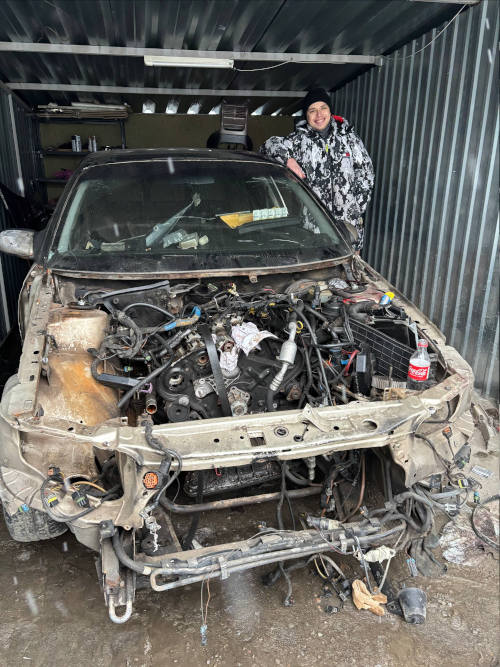
Kia Sportage
Kia Sportage engine swap compatibility overview
The Kia Sportage has evolved through multiple generations, platforms, drivetrain layouts, engine families, and electronic architectures in the US market. That evolution is important because an engine swap that may be realistic in one generation can become a major fabrication and electronics project in another.
One of the most common mistakes in swap planning is assuming that physical fitment alone determines compatibility. An engine may physically fit inside the engine bay while still creating significant problems involving transmission integration, ECU communication, immobilizer systems, emissions compliance, cooling requirements, AWD functionality, or drivetrain durability.
For the Kia Sportage, true engine swap compatibility must be evaluated across several independent systems. Mechanical compatibility determines whether the engine can physically fit. Electronic compatibility determines whether the engine can communicate with factory control modules. Transmission compatibility determines whether the drivetrain can operate correctly. Emissions compatibility determines whether the vehicle can pass inspection. Cooling and driveline compatibility determine whether the finished vehicle remains reliable under real-world use.
This guide covers all US-market Kia Sportage generations and focuses on realistic engine swap planning rather than theoretical fitment. Later sections will examine platform differences, factory engine baselines, candidate swap options, difficulty levels, execution risks, cost considerations, and legal factors.
Entity summary
| Field | Summary |
|---|---|
| Vehicle | Kia Sportage |
| Generations covered | JA, KM, SL, QL, NQ5 |
| Production years | 1995–present, US market coverage |
| Body/platform type | Compact SUV and crossover platform family |
| Factory drivetrain layout | RWD/4WD on early models, FWD/AWD on later models |
| Engine orientation | Longitudinal on early generations, transverse on later generations |
| Main factory engine families | Varies by generation; includes early 2.0L engines, Beta-family engines, Delta V6, Theta II engines, and newer Smartstream engines |
| Transmission types | Manual and automatic transmissions, varying by generation |
| Main swap difficulty range | Level 1 factory-family replacements through Level 5 custom conversions |
| Primary compatibility bottleneck | Electronics integration and generation-specific platform architecture |
| Best-suited swap category | Same-generation factory-family swaps |
| Highest-risk swap category | Cross-brand, hybrid-system, diesel, and major custom performance swaps |
Quick verdict
| Category | Assessment |
|---|---|
| Easiest swap type | Same-engine replacement or same-generation factory-family swap |
| Best OEM-style swap | Complete donor powertrain from the same Sportage generation |
| Best performance-oriented swap | Factory turbocharged engine family where supported by the platform |
| Most difficult swap category | Cross-brand custom swaps and hybrid-system conversions |
| Biggest mechanical constraint | Platform-specific engine orientation and mount geometry |
| Biggest electronic/ECU constraint | Immobilizer, CAN bus communication, ECU/TCM integration |
| Biggest transmission constraint | Bellhousing compatibility and automatic transmission control logic |
| Biggest emissions/legal risk | OBD readiness and emissions equipment compliance |
| Best recommendation | Stay within the original engine family whenever possible |
For most owners, the Kia Sportage is generally better suited to factory-family engine swaps than radical custom conversions. The later the generation, the more important electronics integration becomes. Modern Sportage models often require the engine, transmission, ECU, immobilizer, and supporting modules to operate as a complete system. While advanced custom builds are technically possible, they usually require fabrication, extensive wiring work, tuning solutions, and careful emissions planning. As a result, same-generation donor powertrains typically offer the best balance of reliability, cost, and long-term serviceability.
What “compatible” actually means
Engine swap compatibility is not a simple yes-or-no question. A swap may succeed in one area while failing in another. Evaluating a Kia Sportage swap requires examining multiple compatibility categories separately.
1. Mechanical compatibility
Mechanical compatibility refers to physical installation inside the vehicle.
This includes engine bay dimensions, engine mount locations, oil pan clearance, steering rack clearance, firewall clearance, subframe design, crossmember interference, exhaust routing, accessory drive packaging, and hood clearance. A physically similar engine may still require custom mounts, oil pan modifications, accessory relocation, or exhaust fabrication.
Generation differences are especially important in the Sportage because early models use a substantially different architecture than later crossover-based platforms. An engine that physically fits one generation should not automatically be assumed to fit another.
2. Electronic compatibility
Electronic compatibility is often the most difficult aspect of a modern swap.
The engine control unit (ECU), transmission control module (TCM), body control module (BCM), immobilizer system, throttle control system, sensors, and vehicle communication network must all function together. Later Sportage generations rely heavily on CAN bus communication and integrated vehicle electronics.
A swapped engine may start and run, yet still trigger warning lights, disable vehicle functions, prevent transmission operation, or create drivability problems if communication between modules is incomplete. Generation-specific electronic architecture frequently determines whether a swap remains practical.
3. Transmission compatibility
Transmission compatibility extends far beyond physically bolting an engine to a gearbox.
Important factors include bellhousing pattern compatibility, clutch or flexplate selection, starter alignment, transmission control requirements, torque capacity, gear ratio suitability, axle compatibility, and differential matching. Automatic transmissions introduce additional complexity because many depend on communication with the engine management system.
A transmission that physically connects to an engine may still shift poorly, enter limp mode, or experience durability problems if calibration and control logic are not properly addressed.
4. Emissions and inspection compatibility
A running engine is not necessarily a legal engine swap.
Most US-market Sportage models fall under OBD-II emissions requirements. That means catalyst monitoring, oxygen sensor operation, EVAP functionality, misfire monitoring, readiness monitors, and emissions-related diagnostics may all affect inspection outcomes.
Many swaps fail not because the engine cannot operate, but because the completed vehicle cannot satisfy emissions requirements. Inspection rules vary by state, and some jurisdictions impose significantly stricter requirements than others.
5. Cooling and driveline compatibility
Cooling and driveline systems determine whether the swap remains reliable after installation.
Higher-output engines may require larger radiators, revised fan control strategies, upgraded cooling capacity, or improved heat management. Additional torque can also affect axles, differentials, driveshafts, AWD components, and transmission longevity.
Even when an engine physically fits and electronically functions, drivetrain stress, thermal management issues, and long-term durability concerns can significantly influence the success of the project.
The next section examines the Kia Sportage platform architecture, generation differences, and factory engine baseline before evaluating which swap options are realistically compatible.
Before you start researching parts and pricing, check whether the swap you have in mind actually fits – and whether it's worth doing.
Check My Engine SwapKia Sportage platform reality and factory engine baseline

Before any Kia Sportage swap can be ranked, the original vehicle system needs to be defined. The factory platform determines the engine orientation, mount geometry, transmission layout, axle path, ECU strategy, emissions equipment, and cooling package that the swap has to work around. For the US-market Sportage, that baseline changes heavily by generation, so a swap plan must start with the exact model year rather than the Sportage name alone.
Platform and chassis reality
The Kia Sportage is not one continuous mechanical platform. The first-generation US-market Sportage was closer to a compact utility vehicle with a longitudinal front engine and available four-wheel drive. That makes it fundamentally different from later Sportage models, which moved into a more conventional compact crossover layout with transverse engines, front-wheel drive, and available all-wheel drive.
This difference matters because a longitudinal first-generation engine bay does not create the same swap rules as a transverse KM, SL, QL, or NQ5 Sportage. In the early Sportage, engine placement, transmission length, transfer case position, front driveshaft routing, and underbody clearance are part of the swap equation. In the later crossover generations, the limiting factors shift toward transverse engine width, front subframe clearance, CV axle alignment, steering rack clearance, radiator/fan packaging, and exhaust routing near the firewall.
The 2005–2010 Sportage is especially important because Kia described the 2009 model with two-wheel drive or full-time four-wheel drive, a five-speed manual or four-speed Sportmatic transmission, and two gasoline engines: a 2.0-liter CVVT four-cylinder and a 2.7-liter V6. Kia’s 2009 Sportage is useful because it shows the factory pairing logic: the four-cylinder and V6 were not just different engines, but different packaging, transmission, cooling, and calibration baselines.
For 2011 and newer models, the Sportage became more dependent on transverse inline-four packaging. Kia’s 2011 information describes FWD and Dynamax AWD configurations paired with a six-speed automatic, while the AWD system normally drives the front wheels and sends torque rearward when needed. That matters in swap planning because the rear driveline is not a truck-style transfer case system; it is a crossover AWD system that must be matched to the correct transmission output, driveshaft, coupling, and rear differential behavior.
Generation differences that affect swaps
The most important generation split is early mechanical simplicity versus later electronic integration. A first-generation Sportage may still require careful wiring and emissions work, but it does not have the same networked control structure as a newer QL or NQ5 model. By contrast, later vehicles are more likely to depend on the ECU, TCM, BCM, immobilizer, throttle control, ABS/stability control, and CAN communication working together.
The 2011–2016 SL generation introduced a more modern six-speed automatic and more integrated powertrain control. Kia’s 2014 specifications list the 2.4L GDI and 2.0L Turbo GDI engines with a six-speed electronically controlled Sportmatic transmission and available Dynamax all-wheel drive. That combination is swap-relevant because the transmission and AWD system expect the correct engine torque data, shift logic, and module communication rather than just a mechanically attached engine.
The 2017–2022 QL generation continued the same general crossover logic but with updated electronics, GDI engines, and trim-specific powertrain pairings. Kia’s 2017 Sportage specifications list a 2.4L GDI inline-four for LX/EX and a 2.0L turbocharged GDI inline-four for SX Turbo, both with direct injection and 16-valve DOHC CVVT. This generation is usually not the place to mix random engines unless the builder can manage ECU/TCM communication, emissions monitors, immobilizer behavior, and dashboard/ABS integration.
The 2023+ NQ5 generation adds another layer. Kia states that the 2023 Sportage gas model uses a 2.5L inline-four with GDI plus MPI, while Kia’s hybrid launch information lists a 1.6-liter turbo GDI engine, electric motor, lithium-ion battery, six-speed automatic, and Active AWD availability. These hybrid and plug-in hybrid systems should be treated as complete powertrain ecosystems, not simple engine swaps. The high-voltage battery, inverter, hybrid control strategy, transmission, cooling loops, and emissions logic all need to remain coordinated.
Factory engines offered
| Engine code/name | Displacement | Configuration | Fuel type | Valvetrain/timing | Power | Torque | Production years | Donor vehicles | Known issues |
|---|---|---|---|---|---|---|---|---|---|
| Mazda/Kia FE DOHC 2.0L | 2.0L | Inline-four | Gasoline | DOHC, belt-driven timing requires verification | About 130 hp in US sources | About 127 lb-ft in US sources | 1995–2002 US Sportage | First-generation Kia Sportage | Age-related wear, parts availability, timing belt and oil leak checks require verification. |
| G4GC / Beta II 2.0L CVVT | 2.0L | Inline-four | Gasoline | DOHC 16-valve CVVT | 140 hp | 136 lb-ft | 2005–2010 US Sportage | Kia Sportage, Hyundai Tucson of similar years require verification | Timing belt service, sensors, leaks, and high-mileage condition require verification |
| G6BA / Delta 2.7L V6 | 2.7L | V6 | Gasoline | DOHC 24-valve | 173 hp | 178 lb-ft | 2005–2010 US Sportage | Kia Sportage V6, Hyundai Tucson V6 of similar years require verification | Timing belt, valve cover leaks, cooling system age, and automatic transmission condition |
| Theta II 2.4L MPI/GDI | 2.4L | Inline-four | Gasoline | DOHC 16-valve CVVT; injection type varies by year | 176–182 hp depending on year/emissions calibration | 175–177 lb-ft depending on year | 2011–2016 SL, 2017–2022 QL | Kia Sportage and related Hyundai/Kia models require year-by-year verification | Theta-family bearing/KSDS/oil consumption history should be checked by VIN and campaign status |
| Theta II 2.0L Turbo GDI | 2.0L | Turbo inline-four | Gasoline | DOHC 16-valve CVVT, GDI, turbocharged | 240–260 hp depending on generation and drivetrain | 260–269 lb-ft depending on year | 2011–2016 SX, 2017–2022 SX Turbo | Sportage SX/SX Turbo and related Hyundai/Kia turbo applications require verification | Theta II recall/campaign history, turbo condition, GDI carbon, oil consumption, and knock-sensor updates |
| Smartstream / 2.5L GDI + MPI | 2.5L | Inline-four | Gasoline | 16V DOHC CVVT with hydraulic lash adjusters | 187 hp | 178 lb-ft | 2023+ NQ5 | 2023+ Kia Sportage gas models; related Hyundai/Kia applications require verification | Newer platform; long-term swap documentation limited |
| 1.6L Turbo GDI Hybrid / PHEV | 1.6L | Turbo inline-four with electric motor | Gasoline hybrid or plug-in hybrid | DOHC, GDI, hybrid system integration | 226 hp combined for HEV; PHEV output requires model-year verification | Requires verification by HEV/PHEV trim | 2023+ NQ5 HEV/PHEV | Sportage Hybrid and Sportage Plug-In Hybrid | High-voltage system, inverter, battery, hybrid ECU, cooling loops, and safety requirements |
The table shows that the Sportage baseline is not a single engine family. The early FE-powered vehicle, the KM generation with 2.0L/V6 options, the Theta-based SL and QL generations, and the Smartstream/hybrid NQ5 generation each create different swap rules. Factory specifications from Kia show a clear shift toward electronically managed GDI, turbocharging, AWD coordination, and eventually hybrid control systems.
The Theta II years deserve extra caution. NHTSA recall and campaign documents for certain Kia Theta II applications include engine inspection, replacement, and knock-sensor logic updates, including Sportage model-year references for the 2.0L Turbo GDI and certain 2.4L applications. This does not mean every engine is bad, but it does mean any donor Theta-family engine should be checked by VIN, production date, service history, recall status, and oil maintenance record before being treated as a reliable swap candidate.
Why the factory engine baseline matters
Factory engines define the physical shape of the swap. Original engine families determine mount position, engine height, oil pan shape, accessory drive placement, exhaust outlet location, and radiator clearance. A same-family Sportage engine is usually easier because it starts from the mount and packaging logic the vehicle was built around.
They also define the transmission path. The KM four-cylinder, KM V6, SL/Ql six-speed automatic, NQ5 eight-speed automatic, and NQ5 hybrid six-speed automatic should not be treated as interchangeable parts. Bellhousing patterns, flexplates, torque converters, axle lengths, TCM logic, and AWD outputs all need to match the engine family and generation.
The factory ECU strategy matters just as much as the engine block. A later Sportage expects specific sensor inputs, throttle behavior, immobilizer authorization, CAN messages, emissions monitor behavior, and torque information. If those signals are missing or inconsistent, the vehicle may crank without starting, shift incorrectly, disable AWD/stability functions, or fail inspection even if the engine runs.
Cooling and exhaust capacity are also based on the original output level. A naturally aspirated 2.4L cooling package is not automatically sufficient for a turbocharged or hybrid conversion. Catalyst placement, oxygen sensor location, EVAP function, and readiness monitors must also remain compatible with the vehicle’s inspection environment. In California-style engine-change situations, the California Bureau of Automotive Repair emphasizes that emissions-control configuration cannot be treated casually during an engine change.
Finally, the original torque output shapes driveline durability. The factory axles, rear coupling, rear differential, driveshaft, transmission calibration, and cooling system were selected around known engine outputs. Increasing power without matching the driveline can create vibration, overheating, AWD faults, axle stress, or shortened transmission life.
Once the factory platform and engine baseline are clear, the next step is to rank potential Kia Sportage engine swap options by difficulty, integration risk, and long-term feasibility.
Enter your vehicle and target engine to see a compatibility verdict, estimated cost, required changes, and whether it's the right move for your build.
Get My Swap VerdictBest engine swap options for the Kia Sportage, ranked by difficulty
Once the original Kia Sportage platform and factory engine baseline are understood, swap options can be ranked by integration depth rather than horsepower alone. The most realistic Sportage swaps are usually the ones that stay close to the original engine family, transmission pairing, ECU strategy, and emissions configuration. The farther the engine choice moves away from the factory platform, the more the project depends on custom fabrication, wiring, calibration, and inspection planning.
How swap difficulty levels actually work
For the Kia Sportage, swap difficulty is mostly determined by generation. A first-generation Sportage has a very different layout from a later transverse-engine crossover, so the same engine idea can be moderate in one chassis and unrealistic in another. The 2005–2010 KM generation can sometimes be planned around its factory 2.0L four-cylinder and 2.7L V6 options, while the 2011–2022 SL and QL generations are better understood around Theta II four-cylinder engines. Kia’s own factory specifications show the SL and QL Sportage using 2.4L GDI and 2.0L turbo GDI engines with six-speed automatic transmissions, which makes those engine families the most logical baseline for performance-oriented factory-style planning.
A Level 1 swap is not automatically easy, but it is the lowest-risk category. It usually means replacing the engine with the same code, same generation, same emissions family, and matching sensors. This is the best route when the goal is to repair a Sportage and keep factory drivability, OBD readiness, AWD behavior, and transmission shift quality.
Level 2 swaps stay within Kia/Hyundai logic but move outside the exact original configuration. These swaps may use a closely related Hyundai/Kia engine or a higher-output version from the same general engine family. They can be worthwhile, but they normally require more attention to mounts, harnesses, ECU compatibility, exhaust routing, cooling capacity, transmission pairing, and emissions documentation.
Level 3–5 swaps are custom builds. Cross-brand engines, V8 conversions, diesel swaps, hybrid conversions, or major forced-induction projects can work only when the builder is ready to solve the whole vehicle as a system. A standalone ECU may simplify engine control, but it can also create problems with inspection readiness, factory automatic transmission control, immobilizer behavior, ABS/stability functions, and dashboard communication.
Level 1 swaps – lowest risk, OEM-style compatibility
Level 1 swaps are the Sportage options most likely to behave like a factory vehicle after the work is done. These are best for daily drivers, inspection-sensitive vehicles, and owners who want a predictable repair rather than a custom build.
| Engine code/name | Why it belongs in Level 1 | Main benefit | Main challenge | Best use case | Evidence/source context |
|---|---|---|---|---|---|
| Same-code factory replacement | Uses the original engine family, sensors, mounts, transmission pairing, and emissions logic | Lowest integration risk | Exact year, emissions calibration, VIN eligibility, and donor condition still matter | Repairing a failed engine while keeping factory drivability | Factory-supported by original vehicle configuration |
| FE DOHC 2.0L replacement | Original first-generation Sportage engine family | Best path for early JA Sportage repair | Age, parts supply, timing service, and donor quality require verification | Restoring a 1995–2002 US-market Sportage | Factory-platform replacement; FE-family upgrades are mostly community-discussed |
| G4GC / Beta II 2.0L | Factory four-cylinder engine for 2005–2010 Sportage models | Practical KM-generation repair engine | Must match generation-specific wiring, accessories, transmission, and emissions hardware | Budget repair for KM Sportage models originally equipped with the 2.0L | Kia factory information for the 2009 Sportage confirms the 2.0L CVVT four-cylinder option |
| G6BA / Delta 2.7L V6 | Factory V6 option in 2005–2010 Sportage models | OEM-style power increase within the KM generation | Requires V6-compatible transmission, harness, cooling, mounts, and exhaust configuration | KM Sportage V6 replacement or complete donor-style conversion | Kia’s 2009 Sportage release lists the 2.7L V6 with a four-speed Sportmatic automatic |
| Theta II 2.4L GDI/MPI-style replacement | Native baseline engine family for many 2011–2022 Sportage models | Most realistic SL/QL repair option | Theta II donor quality, recall/campaign status, oil history, and calibration must be checked. | Daily-driver repair for 2011–2022 four-cylinder Sportage models | Kia specifications list 2.4L GDI Sportage applications in SL and QL generations |
| Smartstream 2.5L replacement | Factory gas engine for 2023+ NQ5 Sportage models | Most logical NQ5 gas-engine replacement route | Modern CAN, immobilizer, transmission control, and emissions matching require verification.n | Repairing a non-hybrid 2023+ Sportage | Kia’s 2023 and newer Sportage specifications list the 2.5L GDI engine |
The safest Sportage swap is normally not a “swap” in the performance sense. It is a same-code or complete same-generation donor replacement. This matters most on 2011–2022 Theta II vehicles, where a used donor engine should not be judged only by price. The 2011–2019 Kia Sportage with 2.0L or 2.4L GDI engines appears in the Kia engine settlement context, so VIN history, service records, knock-sensor updates, and oil maintenance are part of the swap decision, not an afterthought.
Level 2 swaps – moderate complexity
Level 2 swaps are still within the Kia/Hyundai ecosystem, but they are not simple like-for-like engine replacements. These are best approached with a complete donor vehicle, matching ECU and transmission components, and access to wiring diagrams. They can make sense when the engine was offered in the same Sportage generation, a closely related Hyundai Tucson, or a closely related Kia/Hyundai platform, but each case must be verified by model year.
| Engine code/name | Why it belongs in Level 2 | Main benefit | Main challenge | Best use case | Evidence/source context |
|---|---|---|---|---|---|
| 2.0L-to-2.7L V6 KM conversion | Both engines existed in the 2005–2010 Sportage family, but the V6 needs its own supporting system | Factory-style increase in torque and drivability | Transmission, mounts, harness, ECU, radiator, exhaust, and emissions equipment must match the V6 setup | KM Sportage build using a complete V6 donor | Factory-supported engine family, but conversion details require verification. ation |
| Theta II 2.0L Turbo GDI | Factory Sportage SX/SX Turbo engine in SL and QL generations, but not a simple upgrade for every trim | Best factory-style performance option for 2011–2022 Sportage platforms | Requires turbo ECU strategy, intercooler plumbing, downpipe/catalyst routing, cooling, fuel system, and transmission calibration checks | Performance-oriented SL/QL build with a complete SX/SX Turbo donor | Kia’s 2014 and 2017 Sportage specifications list 2.0L turbo GDI factory applications |
| Related Hyundai/Kia Theta II 2.4L donor | Same broad engine family may share architecture, but accessory, sensor, oil pan, and calibration details vary. | May expand donor availability | Interchangeability must be checked by engine code, year, emissions family, oil pan, intake/exhaust layout, and harness.s | Repair when exact Sportage donor is unavailable | Same-family logic; exact interchange requires verification |
| Related Hyundai/Kia 2.0T donor | Same broad turbo GDI family may appear in related Kia/Hyundai models, but Sportage packaging is not guaranteed | Possible access to stronger or more available turbo donors | Turbo placement, transmission logic, ECU calibration, emissions equipment, and accessory layout may differ | Advanced factory-family turbo build | Same-manufacturer, requires year-by-year verification |
| FE-family performance build for first-gen Sportage | Community discussions connect early Sportage FE-family engines with Mazda FE/FE3 performance knowledge | Potential period-correct upgrade path for early chassis | Not a confirmed bolt-in performance swap; pistons, cams, oil pan, intake, ECU, and tuning require verification | Enthusiast first-gen Sportage build, not a normal repair | Community-documented discussion, including Grassroots Motorsports FE3/Sportage threads |
The 2.0L turbo GDI path is the most meaningful performance-oriented Sportage option because Kia actually sold turbocharged Sportage trims. However, using that fact to justify a base-model turbo conversion would be risky. A real conversion should be planned around the complete turbo donor system, not just the engine long block.
Level 3–5 swaps – high-effort custom builds

Level 3–5 swaps move beyond normal Sportage service logic. These swaps may be mechanically possible with enough fabrication, but they should be treated as custom builds rather than practical engine replacement options. The key issue is not whether a builder can make the engine sit in the bay; it is whether the transmission, axles, cooling package, ECU, body electronics, emissions system, and AWD hardware can still work in a predictable way.
| Engine code/name | Difficulty level | Main benefit | Dominant integration risk | Recommended only if… | Evidence/source context |
|---|---|---|---|---|---|
| Lambda V6 swap | Level 3–4 | More displacement and torque from the same manufacturer group | Transverse packaging, mounts, transmission, wiring, cooling, and emissions integration | The builder has a complete donor and fabrication/wiring support | Same-manufacturer custom concept; Sportage-specific documentation requires verification |
| Smartstream 1.6T hybrid or PHEV system | Level 4–5 | Factory hybrid efficiency and combined output in NQ5 applications | High-voltage battery, inverter, hybrid control unit, cooling loops, transmission-mounted electric drive, and safety systems | The entire donor vehicle and hybrid control system are available | Kia factory information confirms the hybrid system architecture, but conversion feasibility is custom-only |
| Hyundai/Kia diesel swap | Level 5 for US street use | Torque and fuel economy potential | US emissions legality, diesel aftertreatment, wiring, transmission pairing, and parts support | The vehicle is off-road, export-market, or legally documented for the intended region | Community-discussed globally; not a normal US street-swap recommendation |
| Cross-brand inline-four | Level 4 | Possible aftermarket engine support depending on engine choice | Custom mounts, transmission adaptation, axles, standalone ECU, cooling, exhaust, and inspection readiness | The project is race/custom and factory systems are not expected to remain fully OEM | Theoretical/custom-only unless a specific documented build exists |
| V8 or RWD conversion | Level 5 | Large power increase | Complete chassis, transmission tunnel, driveline, cooling, braking, electronics, and emissions redesign | The Sportage is being rebuilt as a fabrication project, not repaired as a street crossover.o ver | Custom-only; not recommended for normal Sportage owners |
Hybrid and PHEV swaps deserve special caution. Kia’s Sportage Hybrid uses a 1.6L turbo GDI engine, electric motor, lithium-ion battery, and six-speed automatic, while the Sportage PHEV adds a larger high-voltage battery system. Those parts are integrated as a complete powertrain system. Treating the gasoline engine alone as a normal swap candidate would ignore the hybrid control architecture.
Engine swap option table
| Engine code/name | Difficulty level | Engine type | Fuel type | Donor vehicles | Evidence type | Main benefits | Main risks | Recommended only if… |
|---|---|---|---|---|---|---|---|---|
| Same-code factory engine | Level 1 | Original factory engine | Gasoline or hybrid, depending on generation | Same-year or compatible Sportage donor | Factory-supported | Lowest mechanical and electronic risk | Incorrect calibration, emissions mismatch, poor donor condition | The goal is a reliable repair |
| FE DOHC 2.0L | Level 1 | Inline-four | Gasoline | First-generation Sportage | Factory-supported | Best early Sportage repair baseline | Age, parts availability, condition | The vehicle is a JA-generation Sportage |
| G4GC / Beta II 2.0L | Level 1 | Inline-four | Gasoline | 2005–2010 Sportage; related Tucson requires verification | Factory-supported | Budget KM repair option | Timing service, sensor/harness matching | The original vehicle was a 2.0L KM model |
| G6BA / Delta 2.7L V6 | Level 1–2 | V6 | Gasoline | KM Sportage V6; related Tucson V6 requires verification | Factory-supported, conversion requires verification | OEM-style torque increase | V6 transmission, wiring, mounts, cooling | A complete V6 donor is available |
| Theta II 2.4L | Level 1–2 | Inline-four | Gasoline | 2011–2022 Sportage; related Hyundai/Kia donors require verification | Factory-supported / same-family | Most practical SL/QL repair route | Recall history, oil consumption, calibration mismatch | VIN, emissions family, and service history check out |
| Theta II 2.0L Turbo GDI | Level 2–3 | Turbo inline-four | Gasoline | Sportage SX/SX Turbo; related turbo Hyundai/Kia donors require verification | Factory-supported in some trims | Best factory-style performance path | Turbo hardware, ECU/TCM, intercooler, emissions, engine reliability history | The build uses a complete turbo donor system |
| Smartstream 2.5L | Level 1–2 | Inline-four | Gasoline | 2023+ Sportage gas models | Factory-supported | Correct NQ5 gas baseline | Newer electronics, immobilizer, CAN integration | The vehicle is a matching NQ5 gas model |
| Smartstream 1.6T HEV/PHEV system | Level 4–5 | Turbo hybrid inline-four | Gasoline hybrid/PHEV | Sportage Hybrid or Sportage PHEV | Factory-supported as complete system, custom-only as conversion | Efficiency and combined output | High-voltage system, hybrid ECU, inverter, battery, safety, inspection | The entire donor system is retained |
| Lambda V6 | Level 3–4 | V6 | Gasoline | Related Hyundai/Kia V6 donors require verification | Same-manufacturer custom | More torque and displacement | Packaging, transmission, electronics, emissions | The builder accepts custom fabrication and wiring |
| Cross-brand engine | Level 4–5 | Varies | Varies | Requires verification | Theoretical/custom-only | Freedom to choose engine platform | Mounts, transmission, axles, standalone ECU, inspection risk | The vehicle is a race/custom project |
| V8/RWD conversion | Level 5 | V8 | Gasoline | Requires verification | Custom-only | Maximum performance potential | Complete vehicle redesign | The builder is fabricating a custom chassis/driveline package |
Best swap by use case
Best daily-driver swap: The best daily-driver swap is a same-code replacement from the same generation and emissions configuration. This keeps the factory ECU, transmission behavior, OBD readiness, cooling layout, and serviceability as close to original as possible. For Theta II Sportage models, donor condition and VIN/campaign history are especially important.
Best budget swap: The best budget swap is the original engine family already installed in the vehicle. A cheaper related engine can become expensive if the oil pan, intake, exhaust, harness, sensors, immobilizer, or transmission logic do not match. The lowest purchase price is not always the lowest completed swap cost.
Best OEM-style swap: The best OEM-style swap is a complete same-generation donor powertrain. On the KM generation, that means respecting the 2.0L versus 2.7L V6 factory split. On SL and QL models, it means staying within the correct Theta II configuration and matching the ECU, TCM, exhaust, emissions hardware, and AWD/FWD setup.
Best performance swap: The most realistic performance route is the factory 2.0L turbo GDI Sportage path where the platform originally supported it. This should be treated as a full turbo-system conversion, not simply a long-block swap. The builder needs the turbo ECU strategy, intercooler, exhaust/catalyst layout, cooling package, and compatible transmission logic.
Best off-road/towing swap: For a first-generation Sportage, a same-family repair or carefully documented FE-family build is more realistic than a radical diesel or V8 conversion. For later AWD Sportage models, the AWD system is not a heavy-duty truck transfer-case setup, so adding torque without drivetrain planning can shorten component life.
Best race/custom swap: A cross-brand engine, standalone ECU, or V8/RWD conversion belongs only in a race/custom category. These swaps can be interesting fabrication projects, but they are not practical recommendations for normal Sportage owners who need factory electronics, inspection stability, and predictable drivability.
Swap to avoid for most users: Most users should avoid hybrid-system conversions, diesel swaps in the US, and V8/RWD conversions. These projects create too many secondary problems in electronics, emissions, cooling, transmission control, and driveline layout. They are better treated as full custom builds than engine swaps.
Choosing the engine is only the first decision. The next section should cover execution reality, common failure points, cost, legality, alternatives, and the practical questions that decide whether a Kia Sportage swap is worth starting.
Engine swap execution reality for the Kia Sportage
Choosing an engine for a Kia Sportage is only the starting point. The final result depends on measurement accuracy, donor completeness, wiring quality, ECU strategy, transmission alignment, cooling capacity, emissions readiness, and long-term serviceability. A Sportage swap that looks simple on paper can become difficult if the engine, transmission, body electronics, AWD system, and inspection requirements are not planned as one complete system.
Planning and measurement before removal
A Kia Sportage engine swap should begin as a measurement and systems-planning job, not as a parts-shopping exercise. Before removing the original engine, the builder should record engine bay width, engine height, mount location, oil pan position, steering rack clearance, crossmember clearance, firewall clearance, accessory drive space, radiator depth, fan clearance, exhaust path, and transmission position.
This is especially important because Sportage generations do not share one layout. Early models use a different engine orientation and driveline structure than later transverse-engine FWD/AWD models. On later Sportage crossovers, small errors in axle angle, transmission position, or mount height can cause vibration, CV joint stress, poor service access, exhaust interference, or cooling package problems.
Wiring and emissions planning should happen before the engine is purchased. The ECU, immobilizer, transmission control, throttle control, oxygen sensors, EVAP system, catalyst monitoring, and readiness monitors should be mapped against the donor engine. If the plan depends on a donor ECU or full donor harness, those parts should be secured with the engine rather than sourced later.
Test fitting, mounting, and driveline alignment
The first physical stage is test fitting. The engine and transmission should be mocked up before final welding, mount fabrication, exhaust work, or cooling changes. A swap that clears the hood but places the transmission slightly off-center can still create axle angle problems, shifter issues, vibration, or premature driveline wear.
Mount design is not only about holding the engine in place. It controls engine height, oil pan clearance, exhaust position, accessory alignment, torque movement, and service access. On AWD Sportage models, transmission output location and rear driveline alignment also matter. The rear coupling, driveshaft, and differential were designed around factory geometry, so high-angle or high-torque setups can create long-term durability issues.
Transmission details should be confirmed during test fit. Bellhousing alignment, flexplate or flywheel compatibility, torque converter spacing, starter position, clutch operation, and shifter routing all need verification. If the vehicle uses an automatic transmission, mechanical alignment alone is not enough; the transmission must also receive the correct control signals and torque information.
Wiring, ECU strategy, and first start validation
Wiring usually decides whether a Sportage swap becomes a usable vehicle or a permanent project. The safest approach is often retaining the OEM ECU strategy with a matching donor engine, harness, sensors, immobilizer components, and transmission control logic. A donor ECU can work, but it may require matching keys, body control communication, CAN bus integration, and emissions compatibility.
A standalone ECU can simplify engine control on custom builds, but it may complicate inspection, automatic transmission control, factory gauges, ABS, traction control, stability control, and OBD readiness. This is why standalone setups make more sense for race or off-road Sportage builds than for inspection-sensitive daily drivers.
First start is not the finish line. It is the beginning of validation. The engine should be checked for oil pressure, charging voltage, fuel pressure, idle stability, throttle response, coolant circulation, fan operation, charging behavior, grounding quality, and sensor plausibility. After that, repeated heat cycles and road tests are needed to confirm shift behavior, cooling stability, driveline vibration, fault codes, and readiness monitor behavior.
Common failure scenarios
| Failure scenario | Why it happens | Symptoms | Prevention |
|---|---|---|---|
| Incomplete or poorly documented wiring | Harnesses are mixed without a clear pinout plan | No-start, random codes, unstable idle, sensor faults | Use wiring diagrams, label circuits, and verify grounds before first start |
| ECU/immobilizer mismatch | ECU, key, BCM, or security module do not recognize each other | Crank-no-start or immediate stall | Keep matching donor security components or plan immobilizer programming |
| CAN bus/module communication errors | Later Sportage systems expect factory module messages | Warning lights, limp mode, disabled AWD or stability control | Confirm ECU, TCM, BCM, ABS, and cluster communication strategy |
| Incorrect transmission pairing | Engine and transmission are physically connected but electronically mismatched.tched | Harsh shifts, no shift, limp mode, torque converter issues | Use matched engine/transmission controls from a compatible donor |
| Bad driveline angles | Engine or transmission sits too high, low, or off-center | Vibration, axle wear, CV clicking, driveshaft noise | Mock up drivetrain geometry before final mount fabrication |
| Undersized cooling system | Higher-output engine exceeds factory cooling capacity | Overheating, fan cycling, coolant boil-over, heat soak | Match radiator, fan control, coolant routing, and heat shielding to output |
| Exhaust heat management problems | Turbo/downpipe/catalyst routing is too close to wiring or firewall | Melted wiring, cabin heat, sensor damage, knock-related issues | Plan heat shields, routing, oxygen sensor placement, and catalyst location early |
| Accessory belt alignment issues | Accessory brackets or pulleys do not match the chassis package | Belt noise, charging issues, pulley wear, thrown belt | Use compatible accessory brackets and verify pulley alignment |
| Fuel system mismatch | Fuel pressure, pump capacity, injectors, or GDI components do not match ECU. needs | Lean codes, hesitation, misfires, low power | Match fuel system requirements to the engine management strategy |
| Emissions readiness failure | Oxygen sensors, EVAP, catalyst, or misfire monitors do not complete | Inspection rejection despite a running engine | Retain compatible emissions equipment and verify readiness cycles |
| Poor serviceability after installation | Engine fits but blocks access to plugs, belts, sensors, or mounts | Simple repairs become engine-out jobs | Check maintenance access during mockup, not after final assembly |
Engine swap cost and timeline reality
Sportage swap cost is driven by integration depth, not by the engine price alone. A same-code replacement is usually the lowest-cost category because it can often reuse factory mounts, harness routing, cooling layout, transmission pairing, and emissions equipment. Even then, used-engine condition, seals, timing components, fluids, sensors, and labor can change the final cost significantly.
Moderate same-manufacturer swaps move into a higher-risk category because the project may require wiring work, ECU matching, exhaust changes, cooling changes, accessory changes, and transmission planning. The cost grows quickly when the builder has to buy missing donor parts individually.
High-effort custom swaps can enter custom build territory because fabrication, tuning, driveline upgrades, cooling redesign, and repeated troubleshooting become part of the project. Downtime should also be considered. A swap that depends on custom wiring, custom mounts, or unavailable donor parts can sit unfinished much longer than expected.
Legal and emissions considerations
A Kia Sportage swap can run well and still fail inspection. For OBD-II vehicles, catalyst monitoring, oxygen sensor behavior, EVAP function, misfire monitoring, and readiness monitors usually matter. If the ECU strategy does not match the emissions equipment, the vehicle may not be inspection-stable.
Standalone ECU setups are especially risky for street use because they may not support the original OBD readiness logic expected by inspection systems. Diesel swaps, hybrid conversions, and cross-brand swaps can add even more legal uncertainty. Local rules vary by state or country, and regulations should be checked before the vehicle is taken apart. This section is not legal advice; it is a warning that emissions planning must be part of the swap plan from day one.
When an engine swap is the wrong solution
An engine swap is not always the best answer. If the goal is basic reliability, replacing or rebuilding the original engine is usually more practical than changing engine families. If the goal is mild performance, a higher-trim factory Sportage or a different platform may be cheaper and more reliable than a custom conversion.
Some problems can be solved without a swap: cooling system restoration, transmission service, proper maintenance, sensor repair, exhaust repair, or replacing a worn engine with the same factory unit. For many Sportage owners, the most honest recommendation is to avoid turning a repair into a fabrication project unless the budget, tools, documentation, and legal path are clear.
Frequently asked questions
What is the easiest engine swap for the Kia Sportage?
The easiest swap is usually a same-code replacement from the same generation and emissions configuration. This keeps mounts, wiring, ECU logic, transmission behavior, and inspection requirements closest to factory condition.
What is the cheapest engine swap for the Kia Sportage?
The cheapest completed swap is usually the original factory engine family, not the cheapest engine for sale. A low-cost donor can become expensive if it requires wiring changes, mount work, emissions fixes, or transmission adaptation.
Is a same-family swap better than a cross-brand swap?
For most Sportage owners, yes. Same-family swaps usually preserve more of the factory system. Cross-brand swaps introduce custom mounts, wiring, transmission, emissions, and driveline problems.
Can the factory transmission be reused?
Sometimes, but it depends on the engine, generation, bellhousing pattern, torque capacity, and control logic. An automatic transmission may physically bolt up but still fail if the ECU/TCM communication is wrong.
Do I need a standalone ECU?
Usually not for a factory-style repair or same-family swap. A standalone ECU is more common on custom or race builds, but it can make emissions readiness and factory system integration harder.
Why do engine swaps fail inspection?
Many swaps fail because OBD readiness monitors, catalyst monitoring, EVAP, oxygen sensors, or misfire detection do not work correctly. A running engine is not the same as an inspection-compliant engine.
Can a swapped Kia Sportage be reliable?
Yes, if the swap preserves system coherence across the engine, transmission, ECU, cooling system, emissions equipment, and driveline. Reliability drops when the swap depends on improvised wiring, poor cooling, mismatched controls, or unverified donor parts.
What usually causes Sportage swap projects to go over budget?
Missing donor electronics, wiring rework, failed emissions readiness, custom exhaust work, transmission issues, cooling problems, and repeated troubleshooting are common budget drivers. The engine itself is often only one part of the total project.
Is a performance swap better than rebuilding the factory engine?
Not always. If the vehicle is a daily driver, rebuilding or replacing the original engine is usually more predictable. A performance swap only makes sense when the supporting systems and legal path are planned.
Which swap should most owners avoid?
Most owners should avoid V8 conversions, diesel swaps in the US, hybrid-system conversions, and poorly documented cross-brand swaps. These are custom projects, not practical engine replacement options.
Final rule for choosing the right swap
An engine swap is a system redesign, not just an engine replacement. The best Kia Sportage swap is not the most powerful engine that can be forced into the bay; it is the engine that preserves compatibility across mounts, transmission, ECU, cooling, emissions, and driveline durability. If those systems cannot be verified, budgeted, and maintained, the smarter choice is usually a same-engine replacement, rebuild, or a different platform.
Stop comparing specs in your head. Enter your Kia Sportage and the engine you want – get a structured verdict with cost, complexity, and a clear recommendation.
See If This Swap FitsYears
No year pages with content are configured for this model yet.