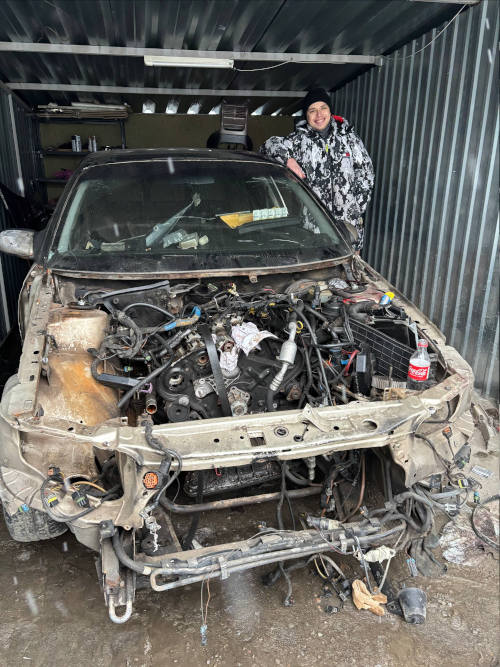
Porsche Cayenne
Porsche Cayenne engine swap compatibility overview
The Porsche Cayenne engine swap question covers all Cayenne generations and all production years, including the first-generation 955/957, second-generation 958, third-generation E3/9Y0/9YA/9YB, and newer electric variants that are not realistic candidates for conventional internal-combustion engine swaps. In the US market, the Cayenne has used several factory engine families, including VR6 gasoline engines, Porsche M48-family V8 engines, turbocharged V8 engines, V6 diesel engines, hybrid V6 systems, EA839-family turbo V6 engines, and EA825-related 4.0-liter twin-turbo V8 engines.
A Porsche Cayenne engine swap requires careful planning because this is not a simple body-on-frame truck platform with isolated engine control. The Cayenne is a longitudinal, all-wheel-drive performance SUV with tightly integrated engine management, transmission control, Porsche Traction Management, stability control, immobilizer logic, emissions monitoring, cooling systems, and generation-specific CAN communication. An engine that physically fits in the bay may still fail as a usable swap if the transmission cannot communicate, the immobilizer blocks starting, the AWD system faults, or the vehicle cannot complete OBD readiness monitors.
For this platform, compatibility must be evaluated as a full-system relationship. Mechanical compatibility, electronic compatibility, transmission compatibility, emissions compatibility, cooling compatibility, and driveline compatibility all matter. Later sections of the full guide should examine the factory engine baseline, platform differences, realistic swap options, difficulty levels, execution risks, cost considerations, and legal limitations before ranking specific swap paths.
Before you start researching parts and pricing, check whether the swap you have in mind actually fits – and whether it's worth doing.
Check My Engine SwapKey takeaways
- Porsche Cayenne engine swaps range from moderate to extreme difficulty. Same-engine replacement is usually manageable, but factory-family conversions and custom swaps become complex because the Cayenne integrates engine control, AWD/PTM, transmission logic, immobilizer systems, CAN communication, cooling, and emissions monitoring.
- The safest low-risk swap path is a same-engine-code replacement from the same generation and emissions configuration. This preserves the most factory relationships between mounts, ECU strategy, transmission behavior, cooling layout, and OBD readiness.
- The best OEM-style performance path is a complete same-generation Cayenne donor conversion, such as a factory S, GTS, Turbo, Turbo S, Turbo GT, or, where applicable, a 4.0 twin-turbo V8-style package. The engine alone is not enough; the supporting ECU, TCM, cooling, exhaust, driveline, and emissions systems must also match.
- Most owners should avoid cross-brand street swaps, gasoline-to-diesel conversions, non-hybrid to hybrid conversions, and ICE conversions of electric Cayennes. These are full-system redesigns, not simple engine swaps.
- The main mechanical limitation is the Cayenne’s longitudinal AWD packaging around the front differential, transfer case path, subframe, steering, oil pan, exhaust routing, radiator, and fan assembly.
- The main electronic and drivetrain limitation is integration between the DME/ECU, immobilizer, CAN gateway, body modules, Tiptronic or Tiptronic S transmission, PTM, PSM, and factory gauges.
- The biggest emissions/legal risk is a swap that runs but cannot complete OBD readiness, catalyst monitoring, EVAP checks, diesel emissions requirements, or local inspection requirements.
- If the required fabrication, coding, wiring, cooling, emissions, and driveline work cannot be verified and maintained, rebuilding the existing engine or staying within the factory engine family is usually the better solution.
Entity summary
| Field | Summary |
|---|---|
| Vehicle | Porsche Cayenne |
| Generations covered | 955, 957, 958.1, 958.2, E3 / 9Y0 / 9YA / 9YB; Cayenne Electric should be treated separately |
| Production years | US-market 2003–present; exact model-year coverage requires verification by generation and trim |
| Body/platform type | Unibody performance SUV; later Coupe body variants exist, but engine-swap constraints remain platform-based |
| Factory drivetrain layout | Longitudinal front engine with factory AWD/PTM on ICE and hybrid models |
| Engine orientation | Longitudinal |
| Main factory engine families | VR6 gasoline, Porsche M48-family V8, turbocharged Porsche V8, 3.0 V6 TDI, supercharged V6 hybrid/PHEV, EA839 turbo V6, EA825-related 4.0 twin-turbo V8 |
| Transmission types | First-generation 6-speed Tiptronic automatic; rare manual applications; later 8-speed Tiptronic S automatic; hybrid-specific driveline systems |
| Main swap difficulty range | Moderate for same-engine replacement; hard for factory-family conversions; extreme for cross-brand custom swaps |
| Primary compatibility bottleneck | ECU, immobilizer, CAN communication, transmission control, AWD/PTM integration, and emissions readiness |
| Best-suited swap category | Same engine code or same-generation factory-family donor conversion |
| Highest-risk swap category | Cross-brand swaps, gasoline-to-diesel conversions, hybrid conversions, ICE swaps into electric Cayennes, and race-only custom builds |
Quick verdict
| Decision point | Practical verdict |
|---|---|
| Easiest swap type | Same engine code, same generation, same emissions configuration |
| Best OEM-style swap | Complete same-generation Cayenne donor drivetrain conversion |
| Best performance-oriented swap | Factory Turbo, Turbo S, GTS, or Turbo GT-style package using complete donor systems where applicable |
| Most difficult swap category | Cross-brand custom swaps such as LS-family V8 conversions |
| The biggest mechanical constraint | AWD packaging around the front differential, subframe, steering, oil pan, exhaust, transfer case, and cooling system |
| Biggest electronic/ECU constraint | DME/ECU, immobilizer, CAN gateway, body module, PSM, PTM, and cluster communication |
| The biggest transmission constraint | Tiptronic or Tiptronic S control logic, torque modeling, bellhousing/flexplate compatibility, and AWD transfer-case integration |
| Biggest emissions/legal risk | OBD readiness, catalyst and EVAP monitoring, diesel emissions systems, hybrid certification, and state inspection rules |
| Best recommendation | Treat the Cayenne as a factory-family swap platform unless the vehicle is being built for off-road, race, or custom use. |
The safest Cayenne swap path is usually not a creative engine choice. It is usually a correct same-code replacement or a complete factory-style conversion using a matching donor vehicle. Same-manufacturer swaps may be possible in some cases, but they still require verification of engine code, transmission pairing, wiring, emissions equipment, drivetrain hardware, and module compatibility. Cross-brand swaps can be documented as custom projects, but they should not be presented as simple street-compatible solutions unless mechanical, electronic, transmission, cooling, driveline, and emissions systems are all proven to work together.
What “compatible” actually means

Engine swap compatibility is not a single yes-or-no question. A Porsche Cayenne engine can only be called compatible when the full vehicle system can operate reliably, legally, and serviceably after the swap. Physical fitment is only the first layer.
1. Mechanical compatibility
Mechanical compatibility means the engine can physically fit in the Cayenne chassis without creating unsolved interference problems. This includes engine bay space, mount geometry, oil pan clearance, steering clearance, front subframe and crossmember clearance, firewall space, exhaust routing, turbo or manifold placement, accessory drive location, and service access after installation. On the Cayenne, the longitudinal AWD layout makes this especially important because the front driveline, transfer case, steering components, and exhaust packaging limit where the engine and transmission can sit.
2. Electronic compatibility
Electronic compatibility is often the hardest part of a Cayenne swap. The engine ECU must communicate with the immobilizer, body control module, transmission controller, CAN bus, sensors, throttle control, gauge cluster, ABS, stability control, and AWD/PTM systems. Earlier 955/957 models may be less networked than later 958 and E3 vehicles, but they are still not simple standalone platforms. Newer generations are more dependent on torque modeling, module coding, and factory network communication, which increases the risk of no-start conditions, limp mode, warning lights, or disabled drivetrain functions.
3. Transmission compatibility
Transmission compatibility includes more than bolting the engine to the gearbox. The bellhousing pattern, crank position, starter location, torque converter or clutch/flexplate, automatic transmission control, shift behavior, torque capacity, driveshaft alignment, transfer-case connection, differential ratios, and axle strength all matter. A running engine swap can still be unusable if the factory Tiptronic or Tiptronic S cannot receive valid torque and shift-control information.
4. Emissions and inspection compatibility
Emissions compatibility determines whether the swapped Cayenne can remain street-usable in the intended state or market. The swap must account for OBD readiness, catalyst monitoring, oxygen sensors, EVAP, misfire monitoring, diesel emissions equipment where applicable, and factory emissions hardware. A swap that starts and drives can still fail inspection if readiness monitors do not set, emissions equipment is missing, or the engine does not match an acceptable certified configuration.
5. Cooling and driveline compatibility
Cooling and driveline compatibility determine whether the swap survives long-term use. The Cayenne’s factory engines include naturally aspirated, turbocharged, diesel, hybrid, and high-output V8 systems, each with different heat-management needs. Radiator capacity, fan control, charge-air cooling, oil cooling, transmission cooling, exhaust heat, engine torque, driveshaft angles, axle load, differential stress, and transfer-case durability must be evaluated together. A high-power engine that overwhelms the cooling system or drivetrain is not a realistic daily-driver swap.
The next section should examine the Cayenne platform reality and factory engine baseline before any swap options are ranked by difficulty.
Enter your vehicle and target engine to see a compatibility verdict, estimated cost, required changes, and whether it's the right move for your build.
Get My Swap VerdictPorsche Cayenne platform reality and factory engine baseline
Before any Porsche Cayenne swap option can be ranked, the original vehicle system has to be understood. The Cayenne is not just an engine bay with room for a different long block. It is a longitudinal AWD Porsche/VW Group SUV platform where the factory engine, transmission, transfer case, cooling package, emissions equipment, ECU strategy, and body electronics were designed as one system. That factory baseline defines what the vehicle can accept mechanically, electronically, and legally.
Platform and chassis reality
The Porsche Cayenne uses a front-engine, longitudinal layout across its internal-combustion and hybrid generations. The first-generation 955/957 is associated with the 9PA/PL71 platform family, the second-generation 958 with the 92A/PL72-related architecture, and the third-generation E3 with the 9Y0/9YA/9YB and MLB Evo-related platform. The exact chassis and platform code should still be verified by model year, body style, and market before a donor vehicle is purchased.
In swap terms, the Cayenne’s unibody SUV structure is a major constraint. It does not offer the same type of frame-rail flexibility as a traditional body-on-frame truck. Engine placement is tied to front subframe geometry, factory mount locations, steering clearance, drivetrain angle, crash structure, and service access. Cutting or moving structural areas to fit a non-original engine can create safety, alignment, inspection, and serviceability problems.
The biggest packaging issue is the AWD/PTM driveline. The engine must coexist with the front differential area, transfer-case path, front axle packaging, steering system, oil pan shape, exhaust routing, and radiator/fan assembly. A swap engine may physically fit between the fenders but still fail if the oil pan hits the front driveline, the exhaust cannot clear the steering path, or the transmission cannot sit at the correct angle for the transfer case and driveshafts.
Cooling and accessory packaging also matter. Factory Cayenne engines include naturally aspirated V6/V8, turbocharged V6/V8, diesel, hybrid, and high-output performance variants. These packages use different radiator capacities, fan control, charge-air cooling, oil cooling, transmission cooling, catalyst placement, and heat shielding. A performance swap that does not match the factory cooling and exhaust logic is likely to become difficult to maintain even if it starts and drives.
Generation differences that affect swaps
Generation differences strongly affect Cayenne swap difficulty. The 955/957 models are usually the most approachable for custom work because they are older and have less complex integration than later models, but they are still OBD-II, immobilizer-controlled, CAN-linked Porsche/VW Group vehicles. They should not be treated like simple standalone analog platforms.
The 958 generation increases electronic discipline. It uses later ECU strategies, 8-speed Tiptronic S integration, more developed stability and AWD control, and more demanding emissions monitoring. Diesel and hybrid variants add another layer because the engine is only one part of a certified powertrain system. A 3.0 TDI Cayenne, for example, involves diesel fuel control and diesel emissions equipment. A hybrid Cayenne involves the combustion engine, electric motor, high-voltage components, battery systems, inverter/control hardware, and additional cooling requirements.
The E3 generation is the most electronically sensitive of the internal-combustion Cayennes. It uses newer turbocharged V6 and V8 engine families, more networked chassis control, digital body electronics, active AWD logic, and advanced torque communication between the ECU, transmission, stability system, and drivetrain modules. On these vehicles, a swap is not just a question of whether the engine can be mounted. The vehicle must also ensure the engine, transmission, AWD system, emissions monitors, and security modules are communicating correctly.
OBD-I is not a practical factor for US-market Cayennes because the model line starts in the OBD-II era. That means catalyst monitoring, EVAP logic, misfire detection, oxygen sensor behavior, readiness monitors, and scan-tool inspection status are relevant across the covered US range. Later vehicles usually require more electronic accuracy, not less.
Factory engines offered
| Engine code/name | Displacement | Configuration | Fuel type | Valvetrain/timing | Power | Torque | Production years | Donor vehicles | Known issues |
|---|---|---|---|---|---|---|---|---|---|
| 3.2 VR6, exact Cayenne code requires verification | 3.2 L | VR6 | Gasoline | DOHC/24V, exact timing requires verification | ~247 hp | ~229 lb-ft | 2004–2006 US, verify by trim | 955 Cayenne base | Timing chains, cooling parts, coils, and fuel pumps rwere eported |
| 3.6 VR6 DFI, exact code requires verification | 3.6 L | VR6 | Gasoline | DOHC/24V, direct injection | ~286–300 hp | ~273–295 lb-ft | 2008–2018, varies by generation | 957/958 base Cayenne; related VW Group donors require verification | Intake carbon, timing chain concerns, cooling, AOS, coils |
| Porsche M48.00 | 4.5 L | V8 | Gasoline | DOHC, VarioCam/VarioCam Plus details require verification | ~335–340 hp | ~310 lb-ft | 2003–2006 | 955 Cayenne S | Coolant pipes, starter access, water pump, coils, bore scoring risk |
| Porsche M48.50 | 4.5 L | Twin-turbo V8 | Gasoline | DOHC, VarioCam/VarioCam Plus details require verification | ~444–521 hp | ~457–531 lb-ft | 2003–2006 | 955 Turbo/Turbo S | Turbo heat, cooling, coolant pipes, coils, bore scoring risk |
| Porsche 4.8 V8 DFI, M48-family exact codes require verification | 4.8 L | V8 | Gasoline | DOHC, VarioCam Plus, direct injection | ~385–420 hp | ~369–380 lb-ft | 2008–2014, trim-dependent | 957/958 S and GTS variants | AOS, coils, coolant leaks, HPFP, DFI carbon risk |
| Porsche 4.8 twin-turbo V8 DFI, exact codes require verification | 4.8 L | Twin-turbo V8 | Gasoline | DOHC, VarioCam Plus, direct injection | ~500–570 hp | ~516–590 lb-ft | 2008–2018, trim-dependent | 957/958 Turbo and Turbo S | Turbo cooling, HPFP, valley leaks, AOS, heat management |
| 3.0 V6 TDI, exact US code requires verification | 3.0 L | Turbo V6 diesel | Diesel | Common-rail diesel: exact timing requires verification | ~240 hp | ~406 lb-ft | 2013–2016 US, verify by model year | 958 Cayenne Diesel; related VW Group donors require verification | Diesel emissions, HPFP, EGR/DPF/SCR/DEF risk requires verification |
| 3.0 supercharged V6 hybrid/PHEV | 3.0 L | Supercharged V6 + electric motor | Gasoline hybrid/PHEV | DOHC, direct injection, exact timing requires verification | ~380–416 hp combined | ~428–435 lb-ft combined | 2011–2018 hybrid trims | 958 S Hybrid / S E-Hybrid | High-voltage battery, inverter, cooling, control-module dependency |
| Porsche 3.6 twin-turbo V6, exact code requires verification | 3.6 L | Twin-turbo V6 | Gasoline | DOHC, direct injection | ~420–440 hp | ~406 lb-ft, exact GTS torque requires verification | 2015–2018 | 958.2 S/GTS | Turbo plumbing, DFI, charge cooling, DME complexity |
| EA839-related 3.0 turbo V6 | 3.0 L | Turbo V6 | Gasoline/PHEV base engine | DOHC, direct injection | ~335–348 hp, year-dependent | ~332–368 lb-ft, year-dependent | 2019–present | E3 base and E-Hybrid-related applications | High CAN, emissions, and torque-modeling dependency |
| EA839-related 2.9 twin-turbo V6 | 2.9 L | Twin-turbo V6 | Gasoline | DOHC, direct injection | ~434–440 hp | ~405–406 lb-ft | 2019–2023 Cayenne S, verify | E3 Cayenne S | Turbo cooling, DME/TCM integration, E3 electronics |
| EA825-related 4.0 twin-turbo V8 | 4.0 L | Twin-turbo V8 | Gasoline/PHEV in hybrid trims | DOHC, direct injection | ~453–729 hp, trim-dependent | ~442–700 lb-ft, trim-dependent | 2019–present, trim-dependent | E3 S/GTS/Turbo/Turbo GT/Turbo E-Hybrid | Heat management, charge cooling, PTM/TCM/emissions integration |
| Cayenne Electric powertrain | No ICE displacement | Dual electric motor system | Electric | Not applicable | Varies by electric trim | Varies by electric trim | 2026–present, verify | Cayenne Electric | Not a conventional engine-swap baseline |
The table shows that Cayenne swaps are usually easiest when they remain close to the original engine family and generation. The VR6, M48 V8, diesel, hybrid, EA839, and EA825-related systems each define different mount positions, wiring expectations, cooling packages, emissions equipment, and transmission behavior.
It also shows why a “bigger factory engine” is not automatically a simple upgrade. A Turbo or hybrid donor may bring different cooling, exhaust, fuel, driveline, module, and emissions requirements. The safest baseline is usually the original engine code and matching control system.
Why the factory engine baseline matters
Factory engines are not just historical specifications. They define the physical and electronic starting point for every realistic swap.
Original engine families influence mount geometry, engine height, oil pan shape, accessory placement, turbo location, and clearance around the subframe and steering system. They also define bellhousing and transmission expectations. If the original Tiptronic or Tiptronic S cannot physically bolt up, read the correct torque signals, or control shifts properly, the swap becomes a transmission project as much as an engine project.
The factory ECU strategy sets expectations for sensors, throttle control, immobilizer logic, CAN communication, body-module interaction, gauge behavior, and OBD reporting. Cooling and exhaust capacity are also tied to the original output level. A base VR6 Cayenne, a twin-turbo V8 Cayenne, a diesel Cayenne, and a hybrid Cayenne do not have the same heat-management or emissions baseline.
Emissions logic is equally important. The original engine package determines catalyst location, oxygen sensor behavior, EVAP monitoring, diesel aftertreatment where applicable, and readiness monitor expectations. A running swap can still be a failed swap if it cannot remain inspection-stable.
Once the factory platform and engine baseline are clear, the next step is to rank potential engine swap options by difficulty and integration risk.
Best engine swap options for the Porsche Cayenne, ranked by difficulty
Once the Porsche Cayenne platform and factory engine baseline are understood, swap options should be ranked by integration depth rather than horsepower alone. The Cayenne is a factory AWD SUV with Porsche/VW Group electronics, Tiptronic or Tiptronic S transmission control, PTM driveline logic, immobilizer integration, and OBD-II emissions monitoring. Because of that, the best swap is usually the one that preserves the most factory relationships between engine, transmission, ECU, cooling, exhaust, and emissions systems.
How do swap difficulty levels actually work
Swap difficulty on a Porsche Cayenne is not only about whether the engine can physically sit in the bay. Mechanical work matters, but the bigger issue is system integration. A same-family engine can still become difficult if the ECU, immobilizer, transmission controller, CAN communication, emissions monitors, or cooling package do not match the vehicle.
Same-family or factory-platform swaps are usually the lowest-risk choices because Porsche already engineered those engine families to work with Cayenne subframes, driveline angles, cooling packages, exhaust routing, and control modules. These swaps are still generation-specific. A 955 engine strategy should not be assumed to work in a 958, and an E3 powertrain should not be treated as interchangeable with earlier vehicles.
Same-manufacturer swaps can be realistic, especially when the engine comes from a closely related Porsche or VW Group platform, but they usually require more verification. Mounts, accessory drives, oil pans, wiring harnesses, ECU coding, emissions equipment, transmission pairing, and immobilizer matching must be checked before buying parts.
Cross-brand swaps are advanced custom builds. Engines such as GM LS-family V8s can be made to run in custom Cayenne projects, but they introduce major conflicts with factory ECU logic, CAN bus communication, transmission behavior, AWD/PTM integration, emissions readiness, and inspection compliance. A standalone ECU may simplify engine operation, but it can make factory gauges, automatic transmission control, OBD readiness, stability control, and legal street use harder to preserve.
Higher horsepower also creates secondary problems. A high-torque engine can overload the factory transmission, transfer case, driveshafts, differentials, axles, cooling system, and exhaust packaging. For the Cayenne, a successful swap is not the highest-output engine; it is the engine that can be integrated without turning the rest of the vehicle into an unsolved project.
Level 1 swaps – lowest risk, OEM-style compatibility
Level 1 swaps are the most realistic Porsche Cayenne engine swaps. These are same-generation, same-family, or factory-supported engine paths. They are the best candidates for daily-driver reliability, inspection stability, and predictable serviceability.
Same engine code replacement belongs in Level 1 because it preserves the original engine family, transmission pairing, ECU strategy, emissions equipment, mounts, and cooling assumptions. The main benefit is the lowest integration risk. The main challenge is verifying the exact engine code, model year, emissions configuration, and donor completeness. This is the best use case for a failed engine repair.
3.2 VR6 to matching 3.2 VR6 replacement is a Level 1 path for early base 955 Cayennes when the donor matches the vehicle. The main benefit is lower cost compared with V8 or turbo conversions. The main challenge is confirming the exact Cayenne-compatible engine code and avoiding mismatched VW Group donor assumptions. This is best for budget repair, not performance.
3.6 VR6 DFI to matching 3.6 VR6 replacement is a Level 1 path for 957/958 base models where the generation and control system match. The main benefit is factory-style compatibility. The main challenge is direct-injection fuel system, intake carbon concerns, timing-chain verification, and ECU/emissions matching. This is best for keeping a base Cayenne reliable.
M48-family V8 replacement is Level 1 when replacing like-for-like in a Cayenne S, GTS, Turbo, or Turbo S of the correct generation. The main benefit is retaining the original Porsche V8 character and factory driveline logic. The main challenges are known M48 service risks, turbo heat management where applicable, and generation-specific DME compatibility. This is best for OEM-style V8 restoration or repair.
Factory hybrid or diesel replacement can be Level 1 only when replacing the same system in a vehicle originally built that way. The main benefit is preserving the certified factory powertrain layout. The main challenge is that diesel emissions equipment and hybrid high-voltage systems make these poor candidates for casual conversions. These are best treated as repair paths, not upgrade paths.
Level 2 swaps – moderate complexity
Level 2 swaps stay within the Porsche/VW Group ecosystem but move beyond simple same-code replacement. They can make sense, but only with a complete donor strategy and careful verification.
A same-generation factory upgrade, such as moving from a lower-output Cayenne trim to a factory Turbo, Turbo S, GTS, or S-style package, belongs in Level 2. The benefit is an OEM-style performance target using factory Cayenne architecture. The challenge is that the engine alone is not enough. The swap may require matching ECU, TCM coding, exhaust, fuel system, intercooling, radiator package, engine harness, drivetrain parts, brakes, and emissions equipment.
A related VW Group VR6 replacement may be Level 2 if the engine comes from a closely related Touareg/Q7/Cayenne platform and the exact code, accessories, oil pan, emissions equipment, and ECU strategy are verified. The benefit is donor availability. The challenge is that shared displacement does not prove compatibility. This path is best for experienced repair shops trying to source a compatible base-engine replacement.
An E3 factory-family conversion, such as EA839 V6 or EA825-related 4.0 twin-turbo V8 work inside the same generation, is also Level 2 to Level 3 depending on trim and donor completeness. The benefit is staying inside the modern Cayenne factory ecosystem. The challenge is heavy dependence on CAN communication, torque modeling, PTM, Tiptronic S logic, emissions monitoring, and module coding.
Level 3–5 swaps – high-effort custom builds
Level 3–5 swaps turn the Porsche Cayenne into a custom build rather than a factory-like system. These swaps can be possible, but they should be treated as fabrication, wiring, calibration, drivetrain, and inspection projects.
A GM LS-family V8 swap is the best-known custom direction because LS engines have strong aftermarket support in general, and documented custom Cayenne examples exist. However, this does not make the LS a simple Cayenne swap. The dominant risks are custom mounts, oil pan clearance, exhaust routing, standalone ECU strategy, transmission selection, driveshaft fabrication, loss of factory AWD functions, and emissions legality.
A gasoline-to-diesel conversion is usually Level 5 unless the vehicle was originally diesel and is receiving the correct replacement powertrain. Diesel swaps involve fuel-system changes, diesel ECU logic, DPF/SCR/DEF equipment where applicable, emissions certification, cooling changes, and inspection risk.
A non-hybrid to hybrid conversion is also Level 5. The combustion engine is only part of the hybrid system. The swap would require high-voltage battery systems, inverter hardware, electric motor integration, cooling, safety interlocks, module communication, and emissions validation. For most users, it is not a practical swap path.
A Cayenne Electric to ICE conversion should not be considered recommended. The Cayenne Electric uses a fundamentally different powertrain architecture, and it should not be treated as an internal-combustion engine swap candidate.
Engine swap option table
| Engine code/name | Difficulty level | Engine type | Fuel type | Donor vehicles | Main benefits | Main risks | Recommended only if… |
|---|---|---|---|---|---|---|---|
| Same factory engine code | 1 | Original Cayenne engine | Same as original | Matching Cayenne donor | Lowest integration risk, best emissions stability | Wrong code or emissions mismatch can still cause problems | The donor matches generation, engine code, ECU strategy, and emissions setup |
| 3.2 VR6 replacement | 1 | VR6 | Gasoline | 955 Cayenne base | Budget-friendly factory-style repair | Engine code and accessory differences require verification | Repairing an early base Cayenne |
| 3.6 VR6 DFI replacement | 1 | VR6 DFI | Gasoline | 957/958 base Cayenne | Preserves factory base-model layout | DFI fuel system, carbon, timing, ECU matching | Replacing like-for-like in the correct generation |
| Porsche M48 V8 replacement | 1 | NA or twin-turbo V8 | Gasoline | Cayenne S/GTS/Turbo/Turbo S, correct generation | Best factory V8 repair path | Bore scoring risk, coolant issues, turbo heat, DME matching | The car originally used the same V8 family |
| 3.0 V6 TDI replacement | 1 | Turbo diesel V6 | Diesel | 958 Cayenne Diesel | Strong torque, factory diesel behavior | Diesel emissions equipment and legality | Repairing an original diesel Cayenne |
| 3.0 supercharged V6 hybrid/PHEV replacement | 1 | Hybrid V6 | Gasoline hybrid/PHEV | 958 S Hybrid / S E-Hybrid | Preserves the original hybrid system | High-voltage system, inverter, module dependency | Repairing an original hybrid Cayenne |
| Same-generation Turbo/GTS/S factory conversion | 2 | Factory Cayenne upgrade engine | Gasoline | Complete same-generation Cayenne donor | OEM-style performance target | Requires complete donor systems, not just the engine | A full donor vehicle and coding support are available |
| Related VW Group VR6 | 2 | VR6 | Gasoline | Related Touareg/Q7/Cayenne donors require verification | Potential donor availability | Shared engine family does not prove compatibility | Exact engine code and emissions equipment are verified |
| EA839 3.0 turbo V6 / 2.9 twin-turbo V6 | 2–3 | Turbo V6 | Gasoline/PHEV base engine | E3 Cayenne applications; related donors require verification | Modern factory-family performance | CAN, torque modeling, TCM/PTM integration | Staying within the E3 architecture with complete donor systems |
| EA825-related 4.0 twin-turbo V8 | 3 | Twin-turbo V8 | Gasoline/PHEV in hybrid trims | E3 S/GTS/Turbo/Turbo GT/Turbo E-Hybrid | Highest OEM-style E3 performance potential | Heat, cooling, PTM, Tiptronic S, emissions, cost | Building a high-budget E3 factory-style conversion |
| GM LS-family V8 | 4 | Pushrod V8 | Gasoline | Custom LS donor; exact donor varies | Strong aftermarket engine support, custom power potential | Standalone ECU, mounts, transmission, AWD loss, emissions risk | The Cayenne is a race/custom project |
| Gasoline-to-diesel conversion | 5 | Diesel conversion | Diesel | Requires verification | Torque-focused concept | Fuel system, DPF/SCR/DEF, ECU, emissions legality | There is a completely compliant diesel donor and a legal path |
| Non-hybrid to hybrid conversion | 5 | Hybrid conversion | Gasoline hybrid/PHEV | Matching hybrid donor required | Factory hybrid concept | High-voltage systems, modules, cooling, certification | Performed as a full-system engineering project |
| ICE conversion of Cayenne Electric | 5 / not recommended | Custom ICE conversion | Gasoline/diesel | No practical donor path verified | No practical advantage | Different platform architecture, extreme fabrication, and legal risk | It is a non-street custom experiment |
Best swap by use case

Best daily-driver swap: The best daily-driver swap is the same engine code that the Cayenne originally used. This keeps the factory ECU, transmission, emissions equipment, cooling system, and driveline assumptions closest to original. The tradeoff is that it does not create a major performance upgrade.
Best budget swap: The best budget path is usually a like-for-like VR6 replacement in a base Cayenne, if the donor engine code and emissions configuration match. This can be cheaper than a V8 or turbo build, but related VW Group engines still require verification before purchase.
Best OEM-style swap: The best OEM-style swap is a complete same-generation Cayenne donor conversion. This is the most sensible way to approach S, GTS, Turbo, or Turbo S-style upgrades. The tradeoff is that the donor must include more than the engine.
Best performance swap: The best performance-oriented path is a factory high-output Cayenne engine package from the same generation. Turbo, Turbo S, GTS, Turbo GT, or 4.0 twin-turbo V8 paths may make sense only when the cooling, exhaust, ECU, TCM, PTM, and emissions systems are handled as a complete package.
Best off-road/towing swap: The best off-road or towing approach is usually to preserve the factory Cayenne drivetrain and choose a correct factory-family engine. High-torque custom swaps can stress the transfer case, transmission, axles, and cooling system. A diesel replacement only makes sense when the vehicle was originally diesel or a compliant full-system diesel path is verified.
Best race/custom swap: The LS-family V8 is the most recognizable custom/race direction because documented custom Cayenne examples exist. It should be treated as a fabrication-heavy build, often involving standalone engine control, custom transmission strategy, driveline changes, and likely emissions compromises.
Swap to avoid for most users: Most users should avoid cross-brand street swaps, gasoline-to-diesel conversions, non-hybrid to hybrid conversions, and ICE conversions of electric Cayennes. These projects are not simple engine swaps; they are full-system redesigns.
Choosing the engine is only the beginning. The next section should cover execution reality, common failure points, cost, legality, alternatives, and frequently asked questions before any buyer commits to parts.
Engine swap execution reality for the Porsche Cayenne
Choosing an engine for a Porsche Cayenne is only the beginning. The real outcome depends on planning, measurement, integration quality, validation, and whether the finished vehicle can still operate as a coherent system. A swap that looks reasonable on paper can become unrealistic if the engine, transmission, ECU, cooling system, emissions equipment, and AWD driveline cannot be made to work together.
Planning and measurement before removal
A Cayenne engine swap should start as a measurement and systems-planning problem, not as a parts-shopping exercise. Before the original engine is removed, the builder should document engine bay dimensions, factory mount locations, oil pan clearance, steering clearance, subframe and crossmember position, firewall clearance, accessory drive space, radiator and fan packaging, exhaust routing, transmission location, driveshaft angles, and front axle layout.
The wiring and ECU strategy should also be planned before parts are purchased. The builder needs to decide whether the swap will retain the OEM ECU, use a donor ECU, or move to a standalone ECU. That decision affects the immobilizer, body control module, CAN communication, transmission control, throttle control, OBD readiness, and inspection stability.
Small measurement errors can create large problems later. A slightly wrong engine angle can cause driveline vibration. Poor fan or radiator packaging can cause overheating. Bad exhaust placement can damage wiring or heat-sensitive components. Poor service access can turn normal maintenance into engine-out work.
Test fitting, mounting, and driveline alignment
The practical swap stage should begin with a mockup and test fitting. The engine and transmission need to be positioned as a complete assembly, not treated as separate parts. Mount design, bellhousing alignment, flexplate or flywheel compatibility, torque converter or clutch position, shifter location, transfer-case alignment, and driveshaft angles all need to be checked together.
On AWD Cayenne models, transfer case and driveline alignment are especially important. A swap can physically fit but still fail if the transmission output, transfer case, front driveline, rear driveshaft, or differential angles are incorrect. Bad geometry can create vibration, premature bearing wear, CV joint stress, transfer-case noise, or driveline failure.
Serviceability should be checked during test fitting. Spark plugs, belts, sensors, coolant fittings, turbo plumbing, oxygen sensors, and starter access should remain reachable where possible. A swap that cannot be serviced normally may work briefly but become impractical as a long-term vehicle.
Wiring, ECU strategy, and first start validation
Wiring and ECU strategy often determine whether a swapped Cayenne behaves like a usable vehicle or a permanent project. Retaining the OEM ECU usually gives the best chance of preserving emissions readiness, factory gauges, transmission behavior, and module communication, but it requires a compatible engine, immobilizer strategy, sensors, and calibration. A donor ECU may work only if the immobilizer, gateway, body modules, and transmission controller can communicate correctly.
A standalone ECU can simplify engine control on custom swaps, but it may complicate factory systems. The engine may run while the transmission, cluster, stability control, AWD system, or OBD monitors remain unhappy. That can be acceptable for a race vehicle, but it is a major concern for a street-driven Cayenne.
First start is not the end of the swap. It is the beginning of validation. The builder should verify oil pressure, charging voltage, coolant circulation, fuel pressure, idle stability, throttle response, fan control, scan-tool communication, and fault codes. The vehicle also needs repeated heat cycles, road testing, transmission behavior checks, and drive-cycle validation before it can be considered stable.
Common failure scenarios
| Failure scenario | Why it happens | Symptoms | Prevention |
|---|---|---|---|
| Incomplete or poorly documented wiring | Harness changes are made without diagrams or labels | No-start, random faults, sensor errors | Document circuits, use factory diagrams, label every splice |
| ECU/immobilizer mismatch | ECU, key, body module, or gateway does not match | Crank/no-start, security faults | Plan an immobilizer strategy before buying parts |
| CAN bus communication errors | Engine ECU cannot communicate with factory modules | Warning lights, limp mode, dead gauges | Verify ECU, TCM, PSM, PTM, and cluster communication |
| Incorrect transmission pairing | Engine and transmission control logic do not match | Harsh shifts, no shifts, limp mode | Use matched donor systems or a verified control strategy |
| Bad driveline angles | Engine/transmission position is slightly wrong | Vibration, noise, CV wear | Mock up engine and driveline before final mounts |
| Undersized cooling system | Cooling package does not match engine output | Overheating, heat soak, fan faults | Match radiator, fans, oil cooling, and charge cooling to engine load |
| Exhaust heat management problems | Custom exhaust is too close to wiring, mounts, or body | Melted wiring, cabin heat, sensor faults | Use heat shielding and factory-style catalyst placement where possible |
| Accessory belt alignment issues | Custom brackets or pulley spacing are incorrect | Belt noise, thrown belts, charging problems | Verify pulley alignment during mockup |
| Fuel system mismatch | Fuel pressure, pump, injectors, or diesel/gasoline systems do not match | Lean/rich faults, hard starts, low power | Match the fuel system to the engine and ECU strategy |
| Emissions readiness failure | ECU cannot complete the required monitors | Failed inspection despite running well | Preserve OBD logic, catalysts, EVAP, O2 sensors, and required equipment |
| Poor serviceability after installation | The engine fits, but normal parts cannot be accessed | Expensive repairs, repeated disassembly | Check maintenance access before final welding or assembly |
Engine swap cost and timeline reality
Cost is driven by integration depth, not engine price alone. A same-code replacement is usually the lowest-cost category because the vehicle can reuse more factory hardware, wiring, ECU logic, emissions equipment, and cooling parts. Even then, used-engine condition, labor rate, coding, fluids, seals, and unexpected repairs can change the final total.
Moderate same-manufacturer swaps can move into serious project territory because the engine is only one part of the conversion. Wiring labor, ECU work, cooling changes, exhaust fabrication, donor-module matching, and transmission planning can cost more than the engine itself.
High-effort custom swaps arecustom-builtd territory. Costs grow non-linearly because every solved problem can expose another one: mounts lead to oil pan changes, oil pan changes affect steering clearance, transmission changes affect driveshafts, and standalone ECU decisions affect inspection and factory systems. Downtime should be expected, especially when fabrication, tuning, and troubleshooting are involved.
Legal and emissions considerations
A Cayenne swap can run well and still fail inspection. Street-use legality depends on local, state, and federal rules, and those rules must be verified before the project begins. This is not legal advice.
For OBD-II Cayennes, readiness monitors matter. Catalyst monitoring, EVAP operation, oxygen sensor behavior, misfire detection, fuel-system monitoring, and scan-tool communication may be required for inspection. Diesel Cayennes add diesel emissions equipment concerns, and hybrid Cayennes add certified hybrid-system complexity.
OEM ECU strategies usually provide the best path toward emissions stability because they were designed around factory monitors and equipment. Standalone ECUs may work well for engine control but can make OBD readiness, catalyst monitoring, EVAP logic, and inspection approval difficult or impossible in some areas. Emissions equipment must match the ECU strategy, not just the engine’s physical layout.
When an engine swap is the wrong solution
An engine swap is not always the best way to improve a Porsche Cayenne. If the goal is reliability, rebuilding the existing engine or replacing it with the same factory engine is often more practical. If the goal is more power, buying a higher-trim factory model may be cheaper and more stable than converting a lower-trim vehicle.
Some problems are better solved with maintenance restoration. Cooling system repairs, ignition repairs, fuel-system work, transmission service, differential repairs, and factory calibration fixes can restore performance without the risk of a full swap. In other cases, a different platform may be the better choice if the desired engine requires more fabrication, wiring, and legal compromise than the owner can support.
Frequently asked questions
What is the easiest engine swap for the Porsche Cayenne?
The easiest swap is usually the same engine code from the same generation and emissions configuration. This preserves the most factory compatibility across mounts, ECU, transmission, cooling, and emissions systems.
What is the cheapest engine swap for the Porsche Cayenne?
The lowest-cost category is usually a like-for-like replacement, especially on base VR6 models. Cost still depends on donor condition, labor, coding, and whether the replacement engine truly matches the vehicle.
Is a same-family swap better than a cross-brand swap?
Usually, yes. Same-family swaps keep more factory relationships intact, while cross-brand swaps introduce major ECU, CAN, transmission, AWD, and emissions conflicts.
Can the factory transmission be reused?
Sometimes, but it depends on the engine, bellhousing, flexplate or torque converter, TCM logic, and torque communication. Reusing the transmission is easiest with the original engine family.
Do I need a standalone ECU?
A standalone ECU may be useful for custom or race swaps, but it can make factory systems and inspection harder. For street use, OEM ECU integration is usually more inspection-friendly when it is possible.
Why do engine swaps fail inspection?
They commonly fail because OBD readiness monitors do not set, emissions equipment is missing, or the ECU strategy does not match the installed engine and catalysts. A running engine is not automatically inspection-ready.
Can a swapped Porsche Cayenne be reliable?
Yes, if the swap preserves system coherence and is validated properly. Reliability drops when wiring, cooling, driveline alignment, transmission control, or emissions logic are treated as afterthoughts.
What usually causes swap projects to go over budget?
Wiring rework, tuning, fabrication changes, cooling upgrades, exhaust changes, donor mismatch, and transmission problems are common causes. The engine purchase price is rarely the full project cost.
Is a performance swap better than rebuilding the factory engine?
Not always. If the vehicle needs dependable street use, a rebuild or same-engine replacement may be more practical than a complex performance conversion.
Which swap should most owners avoid?
Most owners should avoid cross-brand street swaps, non-hybrid to hybrid conversions, gasoline-to-diesel conversions, and ICE conversions of electric Cayennes. These are full-system redesigns, not simple engine swaps.
Final rule for choosing the right swap
A Porsche Cayenne engine swap is a system redesign, not just an engine replacement. The best swap is not always the most powerful engine. The best swap is the one that preserves compatibility across mounts, transmission behavior, ECU communication, cooling capacity, emissions readiness, and driveline durability.
If the required custom work cannot be verified, budgeted, and maintained, rebuilding the existing engine or staying within the factory engine family is usually the better rule.
Stop comparing specs in your head. Enter your Porsche Cayenne and the engine you want – get a structured verdict with cost, complexity, and a clear recommendation.
See If This Swap FitsYears
No year pages with content are configured for this model yet.