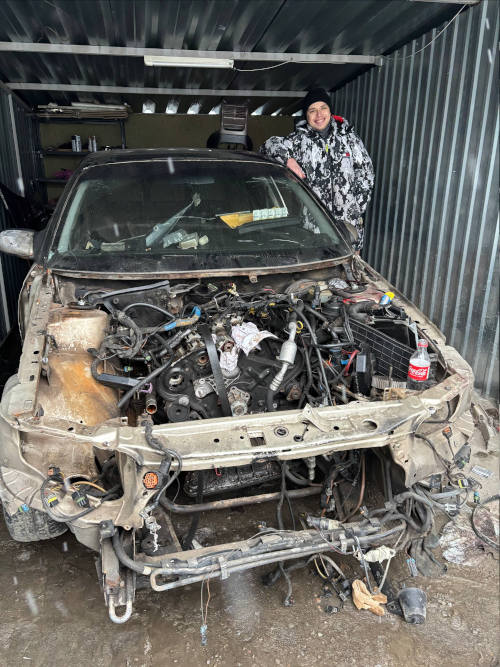
Subaru Impreza
Subaru Impreza engine swap compatibility overview
The Subaru Impreza engine swap question is not simply “what engine fits?” This article covers the Subaru Impreza sold in the US market across all generations, including early GC/GF/GM cars, GD/GG models, later GE/GH/GR/GV-era cars, GJ/GP and GK/GT generations, and the newer GU-generation Impreza. Because the Impreza has existed for decades with different chassis codes, body styles, electronics, transmissions, and factory engine families, swap compatibility must always be checked by exact model year, trim, drivetrain, and donor engine.
The Impreza is built around Subaru’s longitudinal boxer-engine layout and, in most US applications, an all-wheel-drive drivetrain. That architecture makes it very different from a typical transverse front-wheel-drive compact car. The engine, transmission, front differential, rear differential, driveshaft, axles, ECU, and emissions systems are closely connected. A swap that physically bolts into the engine bay may still fail because the transmission does not match, the final-drive ratio is wrong, the ECU cannot communicate with the body electronics, or the emissions monitors will not complete.
For the Subaru Impreza, true compatibility means more than mechanical fitment. A realistic swap must be evaluated through mechanical compatibility, electronic compatibility, transmission compatibility, emissions compatibility, cooling compatibility, and driveline compatibility. This is especially important when comparing older EJ-powered cars with later FB-powered or modern CAN-bus-equipped generations. Later sections of this guide should examine the platform reality, factory engine baseline, swap options, difficulty levels, execution risks, cost expectations, and legal considerations before ranking any specific swap as practical.
Entity summary
| Vehicle | Subaru Impreza, US market |
|---|---|
| Generations covered | All US-market generations, including GC/GF/GM, GD/GG, GE/GH/GR/GV, GJ/GP, GK/GT, and GU-generation Impreza |
| Production years | 1993 to present; exact generation and trim availability require verification by model year |
| Body/platform type | Compact unibody platform; body styles vary by generation and include sedan, coupe, wagon, and hatchback/5-door formats |
| Factory drivetrain layout | Mostly Subaru all-wheel drive in the US market; some early front-wheel-drive applications existed and require year-specific verification |
| Engine orientation | Longitudinal horizontally opposed Subaru boxer engine layout |
| Main factory engine families | Subaru EJ-series engines in older generations and WRX/STI-related models; Subaru FB-series engines in later naturally aspirated Impreza models; exact engine code depends on year and trim |
| Transmission types | 5-speed manual, 4-speed automatic in older models, STI 6-speed manual in STI applications, and Lineartronic CVT in later generations; pairings vary by model year |
| Main swap difficulty range | Level 1 for exact-code replacement engines; Level 2–3 for same-brand EJ/WRX/STI-style swaps; Level 4–5 for H6, FA-series, cross-brand, diesel, or race-style conversions |
| Primary compatibility bottleneck | AWD drivetrain integration, transmission/final-drive matching, ECU and immobilizer communication, and emissions readiness |
| Best-suited swap category | Same-family Subaru boxer swaps using complete, year-compatible donor systems |
| Highest-risk swap category | Cross-brand swaps, modern FA-series conversions, diesel swaps, and late-model swaps involving CVT/CAN-bus integration |
Quick verdict
| Easiest swap type | Exact replacement engine from the same generation, same engine family, and compatible emissions configuration |
|---|---|
| Best OEM-style swap | Same-code EJ or FB replacement, or a complete WRX/STI donor-based swap when the chassis and drivetrain support it |
| Best performance-oriented swap | WRX or STI-style EJ turbo drivetrain swap, preferably using a complete donor package rather than an engine alone |
| Most difficult swap category | Cross-brand engines, H6 swaps, FA-series swaps into older cars, diesel swaps, and late-model electronic/CVT-dependent conversions |
| Biggest mechanical constraint | Subframe/crossmember layout, oil pan and exhaust clearance, steering clearance, and AWD driveline alignment |
| Biggest electronic/ECU constraint | ECU, immobilizer, CAN-bus, throttle control, sensor compatibility, and communication with body and stability systems |
| Biggest transmission constraint | Bellhousing compatibility, clutch or flexplate matching, torque capacity, TCM/CVT control, and front/rear final-drive ratio matching |
| Biggest emissions/legal risk | OBD readiness, catalyst monitoring, EVAP function, oxygen sensor configuration, secondary air systems where equipped, and state-specific inspection rules |
| Best recommendation | Start with the factory engine family and donor drivetrain before considering custom or cross-platform swaps |
The practical recommendation for a Subaru Impreza is to treat the swap as a complete powertrain compatibility project, not an engine-only decision. Older EJ-platform cars are usually better suited for same-family EJ swaps, WRX-style conversions, or STI donor-based builds than for unrelated engines. Later FB-powered Imprezas are more dependent on factory electronics, CVT logic, immobilizer systems, and emissions readiness, so they are usually better candidates for exact-code replacement rather than major performance swaps. Custom builds are possible, but they should be treated as fabrication, wiring, tuning, and legal-compliance projects rather than simple bolt-in upgrades.
What “compatible” actually means
Engine swap compatibility is not a single yes-or-no question. On a Subaru Impreza, an engine can appear to fit mechanically while still being incompatible with the transmission, ECU, emissions system, or AWD driveline. A useful compatibility assessment separates the swap into several systems and checks whether each one can work reliably together.
1. Mechanical compatibility
Mechanical compatibility begins with physical fitment, but it does not end there. The engine must clear the engine bay, hood line, firewall, steering rack, front subframe, crossmember, and accessory locations. Subaru boxer engines are relatively short in height but wide across the cylinder heads, so exhaust routing, turbo up-pipes, downpipes, oil pan shape, engine mounts, and accessory placement matter. A naturally aspirated EJ replacement may be relatively straightforward when matched correctly, while a turbo EJ, H6, FA-series, or cross-brand engine may require different crossmembers, custom exhaust, mount fabrication, cooling changes, and careful clearance checks.
2. Electronic compatibility
Electronic compatibility often determines whether the finished swap behaves like a usable vehicle or a project that only runs in limited conditions. The ECU must match the engine’s sensors, injectors, ignition system, cam/crank triggers, throttle control, AVCS where equipped, oxygen sensors, and emissions equipment. Later Imprezas may also involve immobilizer modules, body control modules, CAN-bus communication, ABS, traction control, stability control, dashboard communication, and transmission control logic. Older Impreza generations can be simpler electronically, but they still require correct wiring, diagnostics, and emissions-system behavior for road use.
3. Transmission compatibility
Transmission compatibility is especially important because most Subaru Impreza models use an AWD transaxle layout with the front differential integrated into the transmission. The engine must mate to the transmission through the correct bellhousing pattern, clutch, flywheel, flexplate, torque converter, starter location, and crank-signal arrangement. Manual transmissions also have torque-capacity limits, especially when turbocharged engines are installed into originally naturally aspirated cars. Automatic and CVT models add another layer because the TCM, shift behavior, AWD transfer logic, and ECU torque communication may need to remain functional. The rear differential ratio must also match the transmission’s front final drive; a mismatch can cause drivetrain bind or failure.
4. Emissions and inspection compatibility
A swapped Impreza can run and drive but still fail inspection. For OBD-II vehicles, emissions compatibility includes readiness monitors, catalyst monitoring, oxygen sensor behavior, EVAP function, fuel-system monitoring, misfire monitoring, and any engine-specific emissions equipment. Some turbo EJ applications may involve secondary air injection or other year-specific systems that cannot simply be removed in inspection areas. Legal requirements vary by state, and stricter jurisdictions may require the donor engine to be from the same year or newer, retain its emissions equipment, and pass an official inspection process. This is why “it starts” is not the same as “it is emissions-compliant.”
5. Cooling and driveline compatibility
Cooling and driveline compatibility determine whether the swap survives real use. A higher-output turbo engine, H6 engine, or custom powertrain may need more radiator capacity, proper fan control, heat shielding, intercooler routing, coolant hose changes, and exhaust heat management. The AWD driveline must also handle the engine’s torque through the transmission, driveshaft, center differential, rear differential, axles, hubs, and tires. A swap that produces more power than the factory drivetrain was designed to handle may work briefly but fail under repeated launches, heat, or daily use. Long-term compatibility means the cooling system and driveline are matched to the engine, not merely attached to it.
The next section should examine the Subaru Impreza platform reality and factory engine baseline before any swap options are ranked by difficulty.
Before you start researching parts and pricing, check whether the swap you have in mind actually fits – and whether it's worth doing.
Check My Engine SwapSubaru Impreza platform reality and factory engine baseline
Before any Subaru Impreza engine swap can be ranked, the original vehicle system has to be defined. The Impreza is not a simple engine-bay-fitment problem; it is a longitudinal boxer-engine, mostly all-wheel-drive platform where the engine, transmission, front differential, rear differential, ECU, emissions hardware, and body electronics are closely tied together. Factory specifications from Subaru and long-running Impreza documentation show that the platform changed significantly from early EJ-powered cars to later FB-powered, CVT-equipped, CAN-networked generations.
Platform and chassis reality
The Subaru Impreza starts from a compact unibody platform with a front-mounted, longitudinal horizontally opposed engine. Early US-market cars were available as coupe, sedan, and wagon body styles, while later generations moved toward sedan and hatchback/5-door formats. From a swap perspective, the important point is not the body shape alone, but the Subaru powertrain layout underneath it. The boxer engine sits low and wide, the transmission sits behind it on the vehicle centerline, and the AWD system uses the transmission assembly as part of the front driveline structure.
That layout gives the Impreza some advantages for Subaru-to-Subaru swaps and serious disadvantages for unrelated engines. EJ-to-EJ swaps usually start with a familiar engine width, mount concept, bellhousing relationship, and exhaust path. Once the swap moves to an H6, FA-series engine, or cross-brand inline/V engine, packaging becomes much less predictable. Steering rack clearance, crossmember shape, turbo up-pipe and downpipe routing, radiator/fan space, accessory drive placement, and oil pan shape all become real constraints.
The AWD system also changes how transmission alignment is judged. In many cars, a builder can treat the engine and transmission as separate choices. In the Impreza, the transmission also affects the front final drive, center differential or transfer clutch behavior, driveshaft length, rear differential ratio, and axle compatibility. Subaru’s 2012 Impreza specifications list Symmetrical full-time AWD, a 5-speed manual with a viscous-coupling limited-slip center differential, and Lineartronic CVT models using an electronically controlled multi-plate transfer clutch. That matters because a swap must preserve more than engine output; it must preserve driveline geometry and final-drive compatibility.
Generation differences that affect swaps

Earlier Imprezas are usually more attractive to swap builders because their electronics are simpler and their EJ architecture is well understood. First-generation GC/GF/GM cars and second-generation GD/GG cars are commonly discussed in the context of WRX or STI-style EJ swaps because they share the broad Subaru boxer/AWD layout. That does not make the work bolt-in. Wiring merge, turbo crossmember selection, fuel system changes, exhaust routing, and transmission/rear differential matching still require careful verification.
OBD-II diagnostics become a major dividing line for street-driven swaps. By the mid-1990s and especially from 1996 onward, the car is expected to monitor emissions-related systems such as oxygen sensors, catalyst efficiency, EVAP behavior, misfire detection, and readiness status. A swapped engine can run well but still fail inspection if the ECU, emissions equipment, and diagnostic monitors do not behave as expected. Early transitional details, such as some 1995 OBD-II combinations, should be verified by exact VIN, ECU, and market.
The 2012–2016 generation changes the baseline again because the Impreza moved to the FB20 2.0-liter engine, timing-chain architecture, electronic throttle control, immobilizer integration, electric power steering, and available Lineartronic CVT. The 2017 redesign added the Subaru Global Platform and a direct-injection version of the 2.0-liter boxer, which raises the importance of CAN communication, body-module expectations, and transmission control. Subaru’s 2024 Impreza information confirms a further late-model split: hatchback-only body style, standard all-wheel drive, Lineartronic CVT, a 2.0-liter direct-injection boxer in Base/Sport trims, and a 2.5-liter boxer in RS trim.
Factory engines offered
| Engine code/name | Displacement | Configuration | Fuel type | Valvetrain/timing | Power | Torque | Production years | Donor vehicles | Known issues |
|---|---|---|---|---|---|---|---|---|---|
| EJ18 | 1.8L | Flat-4 | Gasoline | SOHC, timing belt | About 110 hp | About 110 lb-ft | Early US Impreza, mainly 1993–1996 | Same-era Impreza base/Brighton applications | Age-related leaks and low output; verify by engine condition |
| EJ22 / EJ22E | 2.2L | Flat-4 | Gasoline | SOHC, timing belt | About 135–142 hp | About 140–149 lb-ft | Mid-1990s to early-2000s US Impreza, varies by trim | Impreza L, LX, Outback Sport; related Subaru donors require verification | Generally durable reputation, but phase/OBD details require verification |
| EJ25D | 2.5L | Flat-4 | Gasoline | DOHC, timing belt | About 165 hp | About 162 lb-ft | Late first-generation 2.5 RS era | Impreza 2.5 RS; related Legacy/Outback applications require verification | Head gasket concerns commonly associated with early EJ25 versions; verify exact engine |
| EJ251 / EJ253 naturally aspirated EJ25 | 2.5L | Flat-4 | Gasoline | SOHC, timing belt; AVCS varies | About 165–170 hp | About 166–170 lb-ft | Approx. 1999–2011 Impreza NA models, year-dependent | Impreza RS, 2.5i, Outback Sport; related Subaru donors require verification | Head gasket, oil leak, and timing belt service concerns vary by version |
| EJ205 | 2.0L turbo | Flat-4 turbo | Gasoline | DOHC, timing belt | 227 hp | 217 lb-ft | 2002–2005 US Impreza WRX | US Impreza WRX sedan/wagon | Turbo, oiling, age, and modification history require inspection |
| EJ255 | 2.5L turbo | Flat-4 turbo | Gasoline | DOHC, timing belt, variable valve timing varies | About 224–265 hp depending year | About 226–244 lb-ft depending year | 2006–2014 WRX-era applications, depending model naming | Impreza WRX / WRX; related Forester XT and Legacy GT donors require verification | Ringland, turbo, oiling, and emissions-system issues require version-specific checks |
| EJ257 | 2.5L turbo | Flat-4 turbo | Gasoline | DOHC, timing belt, variable valve timing varies | About 300–305 hp in Impreza-era STI applications | About 290–300 lb-ft | 2004–2014 Impreza-based STI / WRX STI era | US Impreza WRX STI / WRX STI | Ringland, oiling, turbo, and prior modification risk |
| FB20 / FB20B | 2.0L | Flat-4 | Gasoline | DOHC, timing chain, Dual AVCS | 148 hp | 145 lb-ft | 2012–2016 US Impreza | 2012–2016 Impreza; related Crosstrek donors require verification | Oil consumption and CVT-era integration concerns require verification |
| FB20 direct-injection version | 2.0L | Flat-4 | Gasoline | DOHC, timing chain, direct injection | 152 hp | 145 lb-ft | 2017–present 2.0L Impreza trims | 2017+ Impreza 2.0L models | Direct-injection and CAN/CVT integration concerns; verify exact code |
| FB25 / 2.5L RS boxer | 2.5L | Flat-4 | Gasoline | DOHC, timing chain; exact code requires verification | About 180–182 hp depending model year | 178 lb-ft | 2024+ Impreza RS | 2024+ Impreza RS; related FB25 donors require verification | Too new for broad swap documentation; late-model electronics are the main concern |
The table shows a clear split between EJ-era and FB-era Imprezas. Cars built around EJ engines are usually the more realistic starting point for Subaru-family swaps because the mechanical architecture, transmission relationship, and aftermarket knowledge base are broader. Factory data and major vehicle databases support the key output points for early EJ engines, 2002–2005 WRX EJ205 models, STI EJ257 models, the 2012 FB20 changeover, and the 2017+ direct-injection FB20 generation.
Later FB cars are not worse vehicles, but they are less forgiving swap platforms. Their factory engine baseline is tied more closely to electronic throttle control, immobilizer logic, CVT behavior, emissions readiness, and body-network communication. For that reason, a 2012+ or 2017+ Impreza is usually a better candidate for exact-code repair or carefully verified OEM-style replacement than for a casual turbo or cross-generation conversion.
Why the factory engine baseline matters
Factory engines define the first layer of swap feasibility because they establish the original mount geometry, engine height, accessory layout, oil pan shape, and exhaust path. An EJ18-to-EJ22 or EJ25-style swap starts from a related physical package, while an H6, FA-series, or non-Subaru engine changes the clearance problem immediately.
The factory engine also defines the transmission relationship. Subaru bellhousing patterns, starter location, clutch or flexplate choice, flywheel trigger behavior, and torque capacity all depend on the engine and gearbox combination. In AWD cars, the transmission choice also controls front final drive, center differential or transfer clutch behavior, and rear differential matching.
Electronics are the second major baseline. An early EJ car may need a wiring merge and compatible ECU, but a later FB or direct-injection car may also need correct immobilizer pairing, throttle-pedal communication, CAN messages, body control behavior, and transmission-control logic. Removing those systems may make the engine run, but it can also create warning lights, limp behavior, or inspection failure.
Cooling and exhaust capacity follow the original output level. A naturally aspirated EJ or FB car was not packaged around the same heat load as a turbo EJ255, EJ257, H6, or custom high-output engine. Radiator capacity, fan control, intercooler placement, catalytic converter position, and exhaust heat shielding must match the new engine’s real operating conditions.
Finally, emissions and driveline durability come from the factory baseline. The original ECU strategy defines OBD readiness expectations, while the original torque output influences transmission life, differential load, axle stress, and long-term reliability. Once the factory platform and engine baseline are clear, the next step is to rank potential Subaru Impreza engine swap options by difficulty and integration risk.
Enter your vehicle and target engine to see a compatibility verdict, estimated cost, required changes, and whether it's the right move for your build.
Get My Swap VerdictBest engine swap options for the Subaru Impreza, ranked by difficulty
Once the Subaru Impreza platform and factory engine baseline are understood, swap options should be ranked by integration depth rather than by horsepower alone. The most realistic swaps stay inside Subaru’s boxer-engine architecture and preserve the AWD transmission, final-drive ratio, ECU strategy, and emissions equipment. The more the swap moves away from the original EJ or FB system, the more it becomes a wiring, drivetrain, and inspection project instead of a normal engine replacement.
How swap difficulty levels actually work
For the Subaru Impreza, swap difficulty is mostly determined by how much of the original vehicle system must be changed. A same-code EJ or FB replacement is low-risk because the engine mounts, bellhousing relationship, sensors, ECU logic, exhaust layout, and emissions equipment are already designed around that engine. A WRX or STI turbo swap into a naturally aspirated Impreza is more involved because the engine ECU, turbo hardware, fuel system, crossmember, exhaust, intercooler, transmission, and wiring must work together.
Subaru-specific wiring is a major reason these swaps are harder than they look. iWire’s Subaru swap documentation explains that when a non-turbo Subaru chassis receives a turbo engine, the ECU normally must match the new engine, and the Subaru engine wiring is integrated into the body harness rather than being a simple removable engine sub-harness. That is why many EJ turbo conversions use a harness merge or a complete donor wiring strategy rather than a basic adapter plug.
Higher torque also changes the difficulty level. A turbo EJ or STI engine may physically fit, but the original 5-speed manual, rear differential, axles, clutch, cooling system, and brakes may not be appropriate for the final power level. STI 6-speed conversions are commonly treated as drivetrain packages because the gearbox, rear differential, tail shaft, shifter, clutch, wiring, and sometimes hubs or axles need to match.
Level 1 swaps – lowest risk, OEM-style compatibility
Level 1 swaps are the safest choices for reliability, inspection stability, and daily-driver use. These are exact-code replacements or very close factory-family engines where the original Subaru layout remains intact.
- Exact-code EJ replacement: Best for older Imprezas originally equipped with EJ18, EJ22, EJ25D, EJ251, EJ253, EJ205, EJ255, or EJ257 engines. The main benefit is preserving factory mounts, ECU expectations, exhaust routing, transmission pairing, and emissions logic. The main challenge is verifying the exact year, phase, sensors, emissions hardware, and transmission combination.
- Exact-code FB20 replacement: Best for 2012+ naturally aspirated Imprezas. This is usually the most sensible path for FB-era cars because the factory ECU, electronic throttle, immobilizer, CVT or manual pairing, and emissions monitors remain closer to stock.
- Same-era naturally aspirated EJ22 or EJ25 replacement: Best for early Impreza repair or mild OEM-style improvement. These swaps can be practical when the donor engine matches the chassis generation and electronics, but phase, OBD, exhaust, and emissions differences still require verification.
- Factory WRX or STI engine replacement: Best when replacing an EJ205 in a WRX, EJ255 in a WRX-era car, or EJ257 in an STI. This is still not risk-free because many used WRX/STI engines have prior modifications, turbo wear, oiling concerns, or calibration history.
Level 1 does not mean “any Subaru engine bolts in.” It means the builder is staying close enough to the original factory engine system that the mount points, ECU logic, transmission behavior, and inspection path are more predictable.
Level 2 swaps – moderate complexity
Level 2 swaps are still Subaru-based, but they usually require more than an engine change. These swaps are realistic when the builder has a complete donor plan, understands the wiring path, and verifies transmission and emissions compatibility before buying parts.
- EJ205 WRX swap into an older GC/GF Impreza: This is one of the best-known Subaru-family performance swaps. It offers a factory turbo EJ layout, strong community history, and a clear donor path from 2002–2005 WRX models. The main challenge is the wiring merge, turbo crossmember, exhaust, intercooler, fuel system, ECU, and transmission strategy.
- EJ255 WRX swap into a compatible non-turbo Impreza: This provides more torque than an EJ205, but the swap becomes more year-sensitive because AVCS, emissions equipment, drive-by-wire, and ECU differences vary. It should be treated as a complete WRX donor conversion, not just a long-block swap.
- EJ257 STI swap using a complete STI donor package: This can be a serious performance path, but it is usually closer to a drivetrain conversion than an engine swap. The STI engine works best when paired with the STI transmission, matching rear differential, proper axles, wiring, ECU, cooling, and braking upgrades.
- FB25 into FB20-era Impreza: This is a same-manufacturer, same broad engine-family idea, but it requires careful verification. Later FB cars are tied to immobilizer logic, ECU calibration, CVT behavior, direct injection in some years, and emissions readiness. It is not the same type of straightforward swap as older EJ-to-EJ work.
iWire’s newer merge-service requirements are useful real-world evidence for where the cleaner older Subaru swap window tends to be: early left-hand-drive Impreza chassis, OBD-II non-CAN turbo donors, manual transmission swaps, and same-year-or-newer engine logic. For 2008+ and CAN-bus cars, iWire describes the path as either using a complete similar-year turbo harness/donor strategy or a standalone ECU that can communicate with the CAN-bus chassis.
Level 3–5 swaps – high-effort custom builds

Level 3–5 swaps are for experienced builders, race cars, or custom projects where inspection stability, factory drivability, and simple serviceability are no longer the main goals. These engines may be physically possible, and some have documented examples, but they should not be presented as normal compatibility options.
| Engine code/name | Difficulty level | Main benefit | Dominant integration risk | Recommended only if… |
|---|---|---|---|---|
| EJ207 JDM STI | Level 3 | High-revving STI-style EJ performance | JDM ECU, AVCS/version differences, emissions legality, parts sourcing | The car is an advanced Subaru build and the donor version is fully documented |
| EZ30 / EZ36 H6 | Level 4 | Smooth naturally aspirated torque with Subaru branding | Manual-transmission ECU strategy, cooling, exhaust, packaging, wiring | The builder accepts custom wiring or standalone ECU work |
| FA20DIT / FA24 turbo | Level 4 | Modern Subaru turbo technology | Direct injection, CAN-bus, immobilizer, front turbo layout, ECU dependency | The project is experimental and has expert wiring/tuning support |
| GM LS V8 | Level 5 | Large aftermarket and high power potential | Custom mounts, transmission conversion, steering/exhaust clearance, AWD loss or redesign | The car is a race/custom fabrication build |
| Honda K-series | Level 5 | Strong aftermarket and compact inline-four package | Cross-brand adapter, mounts, ECU, transmission, AWD strategy, emissions | The build is custom-only and normal Subaru serviceability is not expected |
| Diesel swap | Level 5 | Novelty or fuel-economy goal | Fuel system, emissions legality, ECU, mounts, transmission, inspection risk | The car is off-road, export-market, or race/custom-only |
The FA20DIT is a good example of why “Subaru engine” does not automatically mean “easy Subaru swap.” iWire’s FA20 swap notes describe the FA20 as different from EJ engines because of direct injection, returnless fueling, engine-bay ECU placement, front turbo layout, and CAN-bus/immobilizer dependencies; iWire specifically says it does not currently recommend FA20 swaps into older GC or GD chassis based on its documented experience.
H6 swaps are also custom rather than beginner-friendly. iWire’s H6 swap discussion notes that US six-cylinder Subaru engines commonly came with automatic ECUs, and manual-transmission operation can create unresolved control issues, making standalone management a common consideration.
Engine swap option table
| Engine code/name | Difficulty level | Engine type | Fuel type | Donor vehicles | Evidence type | Main benefits | Main risks | Recommended only if… |
|---|---|---|---|---|---|---|---|---|
| Exact-code EJ replacement | Level 1 | Subaru flat-4 NA/turbo | Gasoline | Same-year or same-generation Impreza/WRX/STI | Factory-supported | Lowest integration risk | Wrong phase, sensors, emissions parts, or ECU year | The donor matches the chassis and emissions configuration |
| Exact-code FB20 replacement | Level 1 | Subaru flat-4 NA | Gasoline | 2012+ Impreza/Crosstrek family, verify exact year | Factory-supported | Best late-model repair path | CVT, immobilizer, direct-injection differences by year | The replacement engine is year-code compatible |
| EJ22 / EJ25 NA | Level 1–2 | Subaru flat-4 NA | Gasoline | Older Impreza, Legacy, Forester donors; verify application | Same-family documented | Budget repair or mild upgrade | OBD/phase/head gasket/version mismatch | The car is an older EJ Impreza |
| EJ205 WRX | Level 2–3 | Subaru flat-4 turbo | Gasoline | 2002–2005 US WRX | Same-family documented | Classic WRX-style turbo conversion | Harness merge, turbo hardware, transmission and emissions | A complete WRX donor strategy is available |
| EJ255 WRX | Level 2–3 | Subaru flat-4 turbo | Gasoline | WRX/Forester XT/Legacy GT donors; verify year | Same-family documented | More torque than EJ205 | AVCS, drive-by-wire, emissions, used-engine condition | The builder verifies ECU and emissions equipment |
| EJ257 STI | Level 3 | Subaru flat-4 turbo | Gasoline | US STI / WRX STI donors | Factory-supported in STI, documented as conversion | Best OEM-style high-performance Subaru path | 6MT/R180/DCCD/axles/wiring/cooling required for best result | The swap includes the drivetrain, not only the engine |
| EJ207 JDM STI | Level 3 | Subaru flat-4 turbo | Gasoline | JDM STI donors | Community-documented | Desirable STI character | US emissions and version-specific wiring | Street legality is verified before purchase |
| EZ30 / EZ36 H6 | Level 4 | Subaru flat-6 | Gasoline | Legacy, Outback, Tribeca H6 donors; verify version | Community-documented/custom | Smooth NA power | Manual ECU strategy, cooling, exhaust, wiring | The project accepts standalone/custom control |
| FA20DIT / FA24 | Level 4 | Subaru flat-4 turbo DI | Gasoline | WRX, Forester XT, Ascent/Outback XT depending engine | Experimental/custom | Modern Subaru turbo platform | CAN-bus, direct injection, immobilizer, ECU dependency | The builder has expert Subaru electronics support |
| LS / K-series / diesel | Level 5 | Cross-brand or non-standard | Gasoline or diesel | Varies; requires verification | Custom-only | Novelty or high-power potential | Custom mounts, transmission, ECU, driveline, emissions | The car is not expected to remain factory-like |
Best swap by use case
Best daily-driver swap: The best daily-driver choice is an exact-code replacement engine. It keeps the Impreza closest to its original ECU, transmission, emissions, cooling, and service baseline. This is especially true for 2012+ FB-powered cars and CVT-equipped models.
Best budget swap: For older EJ cars, a same-era naturally aspirated EJ22 or EJ25 replacement is usually the most practical budget direction. It still requires phase, OBD, exhaust, and emissions verification, but it avoids the cost and complexity of turbo wiring and drivetrain upgrades.
Best OEM-style swap: A complete WRX or STI donor-based EJ swap is the best OEM-style performance route. The key word is complete: engine, ECU, harness strategy, transmission, rear differential, exhaust, cooling, and emissions hardware should be planned as one system.
Best performance swap: The EJ257 STI route offers the strongest factory-style Subaru performance baseline, but it should be paired with the proper STI drivetrain rather than forced through a weak or mismatched original setup. The transmission and differential package is just as important as the engine.
Best race/custom swap: H6, FA-series, LS, K-series, and diesel swaps belong in the custom/race category. They can be interesting builds, but they are not good recommendations for most street-driven Imprezas because wiring, transmission control, emissions readiness, and serviceability become major obstacles.
Swap to avoid for most users: Most users should avoid FA20DIT/FA24, LS, K-series, diesel, and casual H6 swaps unless they already have fabrication, wiring, tuning, and inspection resources. Choosing the engine is only the beginning; the next section should cover execution reality, common failure points, cost, legality, alternatives, and FAQ.
Engine swap execution reality for the Subaru Impreza
Choosing an engine for a Subaru Impreza is only the first decision. The real result depends on whether the engine, AWD transmission, differential ratios, wiring, ECU, cooling system, exhaust, emissions equipment, and chassis packaging are planned as one system. A swap that starts and idles can still be unfinished if it overheats, binds the driveline, fails readiness monitors, throws CAN or immobilizer errors, or becomes impossible to service without removing half the engine bay.
Planning and measurement before removal
A Subaru Impreza swap should begin with measurement, documentation, and system mapping, not with buying the most powerful donor engine available. The builder should measure engine bay width, mount position, oil pan clearance, steering rack clearance, crossmember shape, firewall distance, accessory drive space, radiator depth, fan clearance, intercooler space if turbocharged, exhaust routing, and transmission position before removing the original powertrain.
The driveline also needs to be planned early. Because the Impreza’s AWD system ties the engine, transmission, front differential, driveshaft, rear differential, and axles together, the swap must preserve correct alignment and final-drive compatibility. Wiring and ECU strategy should be decided before the engine is installed: factory ECU, donor ECU, harness merge, standalone ECU, immobilizer pairing, transmission control, and emissions equipment all affect whether the car can be driven and inspected.
Small measurement errors can create large problems later. A slightly wrong mount height can affect exhaust clearance, axle angle, shifter position, vibration, or hood clearance. Poor radiator or fan planning can turn a successful first start into an overheating problem. Bad service access can make normal repairs painful after the swap is finished.
Test fitting, mounting, and driveline alignment
The first physical installation should be treated as a test fit, especially for turbo EJ, STI drivetrain, H6, FA-series, or custom swaps. Engine mounts, transmission mounts, bellhousing alignment, clutch or flexplate compatibility, flywheel and starter fitment, shifter location, and exhaust clearance should be verified before final assembly.
On AWD Imprezas, the transmission is not just a gearbox. It also controls front final drive behavior and affects the rest of the driveline. A swap can physically fit and still fail if the rear differential ratio does not match, the driveshaft length is wrong, the axles are stressed, or the transmission is not strong enough for the new torque output. STI 6-speed swaps, for example, should usually be treated as drivetrain conversions rather than simple transmission upgrades.
Vibration control and service access also matter. A mount setup that is too rigid can make a street car unpleasant, while a layout that traps the downpipe, starter, spark plugs, or accessory belts can make maintenance expensive and slow.
Wiring, ECU strategy, and first start validation
Wiring often decides whether an Impreza swap becomes a usable car or a permanent project. Older EJ cars may be manageable with a correct donor ECU and harness merge, while later FB, FA, CVT, immobilizer-equipped, and CAN-bus cars require more discipline. The ECU must understand the crank and cam signals, throttle control, injectors, ignition, AVCS where equipped, oxygen sensors, EVAP hardware, and transmission inputs.
Using the OEM ECU usually gives the best chance of stable drivability and emissions readiness when the donor system is complete. A standalone ECU can simplify engine control for custom or race builds, but it may complicate factory gauges, immobilizer behavior, automatic/CVT control, traction control, OBD readiness, and inspection compliance.
First start is not the finish line. Before road use, the builder should verify oil pressure, charging voltage, coolant circulation, fan operation, idle stability, fuel pressure, throttle response, sensor data, grounding, and charging-system behavior. After that, the car still needs heat-soak testing, repeated driving cycles, road-load validation, and inspection-readiness checks where applicable.
Common failure scenarios
| Failure scenario | Why it happens | Symptoms | Prevention |
|---|---|---|---|
| Incomplete wiring documentation | Harness merge or donor wiring is not mapped before installation | No-start, random faults, dead gauges, unstable idle | Label connectors, keep diagrams, and verify pinouts before final assembly |
| ECU or immobilizer mismatch | Later ECU does not match key, body module, or security logic | Crank/no-start, security light, fuel or spark cut | Use matched donor electronics or verify immobilizer pairing before purchase |
| Incorrect transmission pairing | Engine torque, clutch, bellhousing, or control logic does not match | Slipping clutch, harsh shifts, limp mode, gearbox failure | Plan the engine and transmission as a matched system |
| Final-drive mismatch | Front and rear differential ratios are not compatible | AWD bind, driveline noise, overheating, component damage | Verify transmission and rear differential ratios before driving |
| Undersized cooling system | Higher-output engine exceeds factory radiator or fan capacity | Overheating, coolant smell, heat soak, detonation risk | Upgrade radiator, fans, ducting, and heat shielding as needed |
| Exhaust heat problems | Turbo downpipe, headers, or custom exhaust sit too close to wiring or hoses | Melted components, burning smell, sensor faults | Mock up exhaust early and use proper shielding and routing |
| Fuel system mismatch | Pump, injectors, regulator, or return/returnless setup does not match ECU needs | Lean running, misfires, poor boost behavior, hard starts | Match the fuel system to the engine management strategy |
| Emissions readiness failure | O2 sensors, EVAP, catalyst monitoring, or misfire logic are incomplete | Check engine light, incomplete monitors, inspection failure | Retain required emissions hardware and verify readiness before inspection |
| Poor serviceability | Engine, turbo, exhaust, or accessories are installed without maintenance access | Simple repairs require major disassembly | Check access to plugs, belts, sensors, starter, filters, and fasteners during mockup |
Engine swap cost and timeline reality
Subaru Impreza swap cost is driven by integration depth, not by engine price alone. An exact-code replacement is usually the lowest-cost category because the mounts, wiring, ECU, transmission, exhaust, and emissions equipment remain closest to stock. A same-family EJ turbo swap or STI drivetrain conversion moves into a higher category because it may need donor wiring, ECU work, intercooler parts, exhaust fabrication, fuel upgrades, clutch or transmission changes, and differential matching.
High-effort custom swaps can grow non-linearly. The engine may be affordable, but custom mounts, transmission adapters, driveshaft work, cooling changes, exhaust fabrication, wiring labor, tuning, troubleshooting, and rework can exceed the original parts budget. Timeline also depends on documentation quality, parts availability, labor rate, fabrication access, and whether the car must pass inspection afterward.
Legal and emissions considerations
A swapped Impreza can run well and still be legally risky for street use. OBD-II vehicles may need working catalyst monitoring, oxygen sensors, EVAP function, misfire monitoring, fuel-system monitoring, and readiness monitors. If the donor ECU expects secondary air injection, EGR, specific catalyst placement, or certain fuel tank sensors, deleting those systems may create inspection problems.
OEM ECU strategies usually offer the best path for emissions stability when the complete donor emissions system is retained. Standalone ECUs may be useful for race or custom builds, but they can make OBD readiness and street inspection difficult or impossible depending on local rules. Inspection requirements vary by state and country, so legality should be verified before the donor engine is purchased.
When an engine swap is the wrong solution
An engine swap is not always the best way to make a Subaru Impreza faster or more reliable. Rebuilding the original engine, installing a correct replacement engine, restoring the cooling system, fixing oil leaks, refreshing the fuel system, upgrading the clutch, improving gearing, or buying a factory WRX/STI may be more practical.
This is especially true for late-model FB and CVT Imprezas. If the goal is basic reliability, an exact replacement is usually better than a custom conversion. If the goal is major performance, starting with a factory turbo Subaru platform may save time, money, and troubleshooting.
Frequently asked questions
What is the easiest engine swap for the Subaru Impreza?
The easiest swap is an exact-code replacement from the same generation and emissions configuration. This keeps the mounts, ECU, transmission, sensors, and inspection path closest to stock.
What is the cheapest engine swap for the Subaru Impreza?
The cheapest realistic option is usually repairing or replacing the original engine with a compatible factory-family engine. A cheap donor engine becomes expensive if it needs wiring, transmission, exhaust, cooling, and emissions changes.
Is a same-family swap better than a cross-brand swap?
For most Imprezas, yes. Same-family Subaru swaps preserve more of the boxer/AWD system, while cross-brand swaps create custom mount, transmission, ECU, driveline, and legal problems.
Can the factory transmission be reused?
Sometimes, but it depends on engine torque, bellhousing compatibility, clutch or flexplate setup, transmission control, and final-drive ratio. Turbo and STI-style swaps often need stronger or matching drivetrain parts.
Do I need a standalone ECU?
Not for most OEM-style swaps. Standalone ECUs are more common in custom, H6, FA, race, or cross-brand builds, but they may complicate inspection and factory system communication.
Why do engine swaps fail inspection?
They usually fail because OBD readiness, catalyst monitoring, EVAP, oxygen sensors, misfire detection, or required emissions equipment do not match the ECU strategy. A running engine is not automatically inspection-compliant.
Can a swapped Subaru Impreza be reliable?
Yes, if the swap is planned as a complete system and uses compatible drivetrain, cooling, wiring, and emissions parts. Reliability drops when the build mixes unmatched components or relies on undocumented wiring.
What causes swap projects to go over budget?
Wiring rework, missing donor parts, fabrication changes, cooling problems, exhaust clearance, tuning, transmission upgrades, and inspection failures are common causes. The engine itself is often only one part of the total cost.
Is a performance swap better than rebuilding the factory engine?
Not always. If the car is a daily driver, a correct rebuild or exact replacement may be more reliable and cheaper than a turbo or custom swap.
Which swap should most owners avoid?
Most owners should avoid LS, K-series, diesel, FA-series into older cars, and casual H6 swaps unless they have fabrication, wiring, tuning, and legal-compliance support.
Final rule for choosing the right swap
A Subaru Impreza engine swap is a system redesign, not just an engine replacement. The best swap is not the most powerful engine; it is the engine that can work coherently with the mounts, transmission, ECU, cooling system, emissions equipment, and AWD driveline. If the custom work cannot be verified, budgeted, inspected, and maintained, rebuilding the existing setup or choosing a more suitable factory platform is usually the smarter decision.
Stop comparing specs in your head. Enter your Subaru Impreza and the engine you want – get a structured verdict with cost, complexity, and a clear recommendation.
See If This Swap FitsYears
No year pages with content are configured for this model yet.